Zur Festwiese sits on Schwanthalerstraße in Munich's Ludwigsvorstadt district, a neighbourhood that bridges the Oktoberfest grounds with the city's denser residential fabric. The venue draws a loyal local following that returns not for occasion dining but for the kind of regularity that defines a true neighbourhood anchor. Practical details remain sparse online, making an advance visit or direct inquiry one reliable approach.
Pearl is the En Primeur Club membership app — saves, bookings, and concierge access live there. Same editors, same standards.
- Address
- Schwanthalerstraße 85, 80336 München, Germany
- Phone
- +498951403636
- Website
- zurfestwiese.de
- Directions
- Get directions
 Saves & bookings on Pearl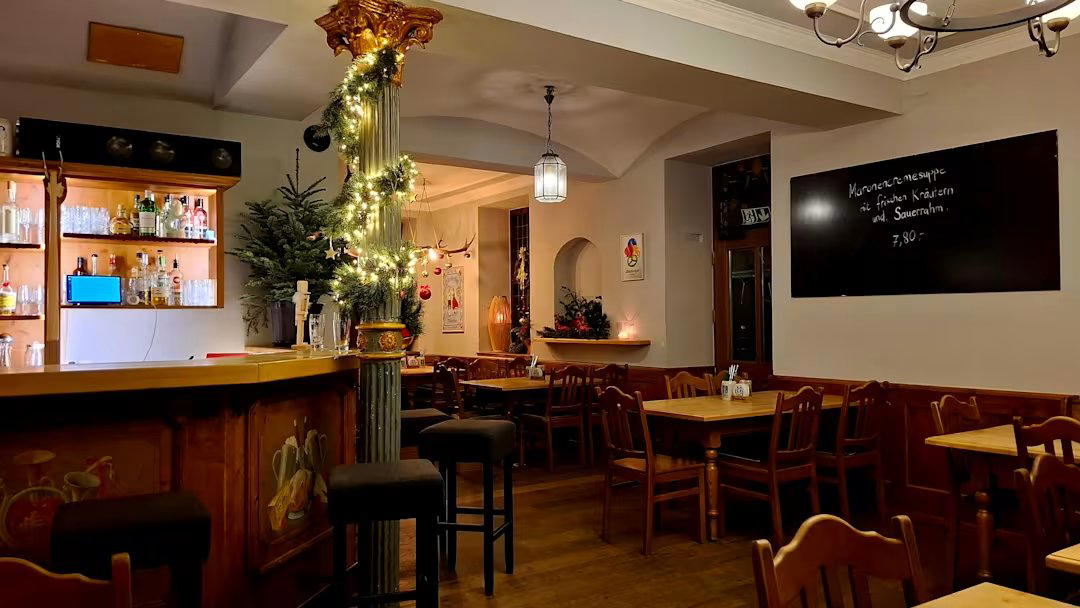
The Address and What It Signals
Schwanthalerstraße 85 places Zur Festwiese in a part of Munich that most international visitors pass through on their way to Theresienwiese rather than stopping at. Ludwigsvorstadt occupies a middle band between the polished retail of Maxvorstadt to the north and the Wiesn itself to the southwest, a zone of apartment blocks, neighbourhood trattorie, and the kind of local bars that have survived multiple rounds of Munich's gentrification without repositioning themselves upmarket. That geographic context matters when reading Zur Festwiese. This is a Traditional Bavarian Gasthaus in Munich, known for a casual dress code, recommended reservations, and an average price of about $35 per person. It is not a venue that sits inside the city's Michelin-decorated dining circuit, which runs through addresses like Tantris, Atelier, and Alois - Dallmayr Fine Dining. It occupies a different register entirely: the kind of place where the clientele is drawn from the surrounding streets rather than from a dining destination circuit.
The name itself is a direct reference to the Festwiese, the festival meadow at the heart of Oktoberfest. In Munich, that association carries weight beyond mere geography. It situates the venue within a specific cultural imagination: the Bavarian tradition of communal eating and drinking, where the function of a table is as much social as gastronomic. For visitors who arrive in Munich to experience something beyond the dining offered at JAN or Tohru in der Schreiberei, venues like Zur Festwiese represent the other end of that spectrum, local, habitual, and anchored in neighbourhood life rather than in the broader German fine dining story told by restaurants like Aqua in Wolfsburg or Vendôme in Bergisch Gladbach.
What Keeps Regulars Returning
The logic of neighbourhood loyalty in Munich's mid-tier dining scene is worth understanding. Munich has one of Germany's most expensive cost-of-living profiles, and the dining market has polarised accordingly: at the leading, a small cluster of destination restaurants attracts both local wealth and international visitors; at the bottom, fast-casual chains and tourist-facing beer hall formats. The middle ground, where genuine neighbourhood restaurants operate with consistent food and known clientele, is smaller than the city's size might suggest. Venues that hold a loyal following in that tier do so not through novelty or awards pressure but through consistency and familiarity.
For regulars, the value of a venue like this lies precisely in what doesn't change. The menu doesn't rotate quarterly to follow trends. The room doesn't get redesigned to signal modernity. The staff, over time, learn preferences, pace tables accordingly, and create the kind of ambient ease that destination restaurants with formal service structures can rarely replicate. Germany's neighbourhood dining culture, particularly in Bavaria, carries a different social contract than the equivalent in Paris or Tokyo: the guest is expected to settle in, and the kitchen responds in kind. That rhythm is what regulars are returning to.
It contrasts meaningfully with the experience at Germany's more architectural dining destinations. Schwarzwaldstube in Baiersbronn, Waldhotel Sonnora in Dreis, and Victor's Fine Dining by Christian Bau in Perl all require planning, occasion framing, and a certain attentiveness from the diner. The neighbourhood restaurant asks none of that. It asks only that you show up, which is why regulars do exactly that, repeatedly and without ceremony.
Munich's Broader Dining Spectrum
To place the restaurant in proper context, it helps to understand how Munich's dining ecosystem is structured. The city's fine dining tier is modest by European capital standards but internally coherent: a handful of Michelin-starred addresses draw from a pool of experienced kitchen talent, and the menus at those venues tend toward French-influenced contemporary cooking or, increasingly, German-Japanese hybrids. Below that tier, the city's Bavarian culinary tradition asserts itself more directly. Pork, dumplings, pretzels, weisswurst with sweet mustard eaten before midday, these are not nostalgic artefacts but active daily practices for a significant portion of the city's population.
Ludwigsvorstadt restaurants that serve this tradition occupy a specific role in the city's food geography. They are not trading on heritage as a concept the way that some of Munich's larger beer halls do for tourist audiences. They are simply continuing a practice. That distinction matters to the regulars who frequent them and to the travellers who seek out the same experience that a neighbourhood local would have on a Tuesday evening rather than during Oktoberfest week.
For comparison, the experiential tier in Munich has also fragmented in ways that parallel international trends. CODA Dessert Dining in Berlin represents the highly conceptual end of German dining; Restaurant Haerlin in Hamburg and Schanz in Piesport operate in the classical luxury register; Bagatelle in Trier holds its own regional position. Against all of those, the restaurant sits in an entirely different competitive frame, closer in spirit to the regulars-first bistro model than to any destination dining category. Internationally, the dynamic has parallels at venues like Le Bernardin in New York City or Atomix, though the price tier and format could not be more different, what connects them is the consistency that generates repeat visits from a loyal core audience, even if the clientele profiles diverge entirely. ES:SENZ in Grassau similarly commands a dedicated regional following, demonstrating that loyalty to a dining address is a German dining-cultural norm that spans from neighbourhood regulars up to the starred tier.
Approaching the Visit
The restaurant is open Monday through Saturday from 5 to 11 PM and Sunday from 5 to 10:30 PM. Reservations are recommended, and the casual setting makes it an easy choice for a direct dinner in the city center.
Cuisine and Recognition
Comparable venues nearby, for context on price, style, and recognition.
| Venue | Cuisine | Price | Notes |
|---|---|---|---|
| Zur FestwieseThis venue — the venue you are viewing | Traditional Bavarian Gasthaus | $$ | Not listed |
| Bamberger Haus | Imperial Austrian-German Court Cuisine | $$ | Milbertshofen |
| Augustiner-Keller | Traditional Bavarian Beer Garden | $$ | Neuhausen |
| Gaststätte Großmarkthalle | Traditional Bavarian Gaststätte | $$ | Ludwigsvorstadt |
| Café Münchner Freiheit | Traditional German Bakery Café | $$ | Schwabing |
| Klinglwirt | Organic Bavarian Tavern | $$ | Haidhausen |
At a Glance
- Rustic
- Cozy
- Classic
- Lively
- Group Dining
- Casual Hangout
- Family
- After Work
- Late Night
- Terrace
- Beer Program
Current opening hours
- Monday
- 5–11 PM
- Tuesday
- 5–11 PM
- Wednesday
- 5–11 PM
- Thursday
- 5–11 PM
- Friday
- 5–11 PM
- Saturday
- 5–11 PM
- Sunday
- 5–10:30 PM
Hours can change for holidays and private events. Last verified .