Zout & Citroen


Zout & Citroen holds a Michelin star in Oosterhout, operating from a converted coach house on Ridderstraat where chef Bram Helleman builds creative menus around organic produce, oriental spice accents, and cross-cultural combinations. The kitchen draws on Persian, Japanese, and Indonesian reference points alongside European technique, placing it at the serious end of North Brabant's dining scene. Lunch and dinner service runs Thursday through Sunday, with Tuesday and Wednesday dark.
Pearl is the En Primeur Club membership app — saves, bookings, and concierge access live there. Same editors, same standards.
- Address
- Ridderstraat 86, 4902 AC Oosterhout, Netherlands
- Phone
- +31 162 450 806
- Website
- zoutencitroen.nl
- Directions
- Get directions
 Saves & bookings on Pearl
A Coach House, a Spice Route, and a Michelin Star in North Brabant
Oosterhout sits between Breda and 's-Hertogenbosch in the North Brabant province, a mid-sized Dutch town without the culinary infrastructure of Amsterdam or Rotterdam but with, at Ridderstraat 86, one of the more quietly compelling Michelin-starred tables in Oosterhout. The address is a former coach house, and its conversion retains a certain architectural clarity: sleek interior lines, a considered fit-out, and garden views that give the room a calm that the kitchen, pulling in flavours from three or four continents simultaneously, does not always share. That tension, composed room, restless cooking, is exactly what the restaurant trades on.
Among the Netherlands' Michelin one-star cohort, the creative category has become especially contested terrain. Kitchens across the country are testing how far European technique can absorb East and Southeast Asian influence without losing structural coherence. The conversation runs from Ciel Bleu in Amsterdam at one end of the ambition and price spectrum to smaller regional addresses at the other. Zout & Citroen operates in the latter register, with a €€€ price point that sits a tier below four-symbol peers like De Librije in Zwolle or Aan de Poel in Amstelveen, making the experience comparatively accessible, without signalling compromise on the kitchen's part.
What the Cooking Is Actually Doing
The menu at Zout & Citroen is built around organic sourcing and a particular kind of flavour cross-referencing that has become recognisable in the more interesting corners of Dutch creative cooking. Chef Bram Helleman is working from a specific cultural logic: the Netherlands has a long, structurally embedded relationship with Indonesian, Japanese, and broader Asian ingredients, one that runs through colonial trade history and a domestic palate shaped by centuries of spice commerce. That context is not decorative here. It informs which combinations get developed and how far they get pushed.
The documented dish combinations illustrate the method clearly. Dorade appears with celery, kombu, kohlrabi, and Granny Smith: a European fish, a Japanese sea vegetable, and a Dutch-adjacent acidic apple, held together by texture contrast rather than any single dominant flavour. Rendang, which is itself a deeply reduced, spice-layered Minang preparation from West Sumatra traditionally applied to beef, here anchors a plate of red mullet, potato, nasturtium, and atjar. The substitution of oily fish for the expected red meat is not a novelty move; it is a study in what rendang's deep spice reduction does to the fat register of a different protein. These are not fusion gestures, they are structural experiments using well-established culinary traditions as the raw material.
Ibérico pork receives similar treatment: presented across three preparations (secreto, barbecued belly, rillettes) alongside polenta and a carrot sauce built on advieh, the Persian spice compound of rose petals, cardamom, cinnamon, and cumin. Advieh sits squarely in the Iranian kitchen, not the Spanish or Italian one, which is exactly the point. The pork is the European anchor; the sauce is the cultural displacement that gives the plate its particular character. This is the consistent logic of the menu: technically grounded European cookery re-routed through Asian and Middle Eastern spice traditions with enough discipline that the combinations produce depth rather than distraction.
The foie gras signature, documented with sambai, oyster, tsukemen broth, and enoki, compresses the approach into a single dish. Tsukemen is a Japanese dipping ramen format, dense and reduced; its broth here likely functions as a concentrated umami base. Sambai is a sweet-sour Japanese condiment. The oyster brings salinity and oceanic register to what would otherwise be a richness-dominant foie gras preparation. The result on paper is a dish pulling simultaneously from Japanese street food culture and French luxury product tradition, two references that share almost no common ground, which is precisely why the combination, if executed as described, becomes interesting rather than arbitrary.
For context on how this creative register sits within the broader Dutch scene, comparable addresses applying similarly adventurous thinking at the €€€ tier include Codium in Goes and 't Amsterdammertje in Loenen aan de Vecht. At the four-symbol level, De Lindehof in Nuenen and Inter Scaldes in Kruiningen represent where the ambition ceiling currently sits in the southern and southwestern Netherlands. Brut172 in Reijmerstok and De Groene Lantaarn in Staphorst each occupy their own niches in the creative regional tier. Fred in Rotterdam and De Bokkedoorns in Overveen anchor the creative fine dining category in larger urban settings. De Lindenhof in Giethoorn shows how the genre translates into rural, destination-format contexts.
The Room and How Service Operates
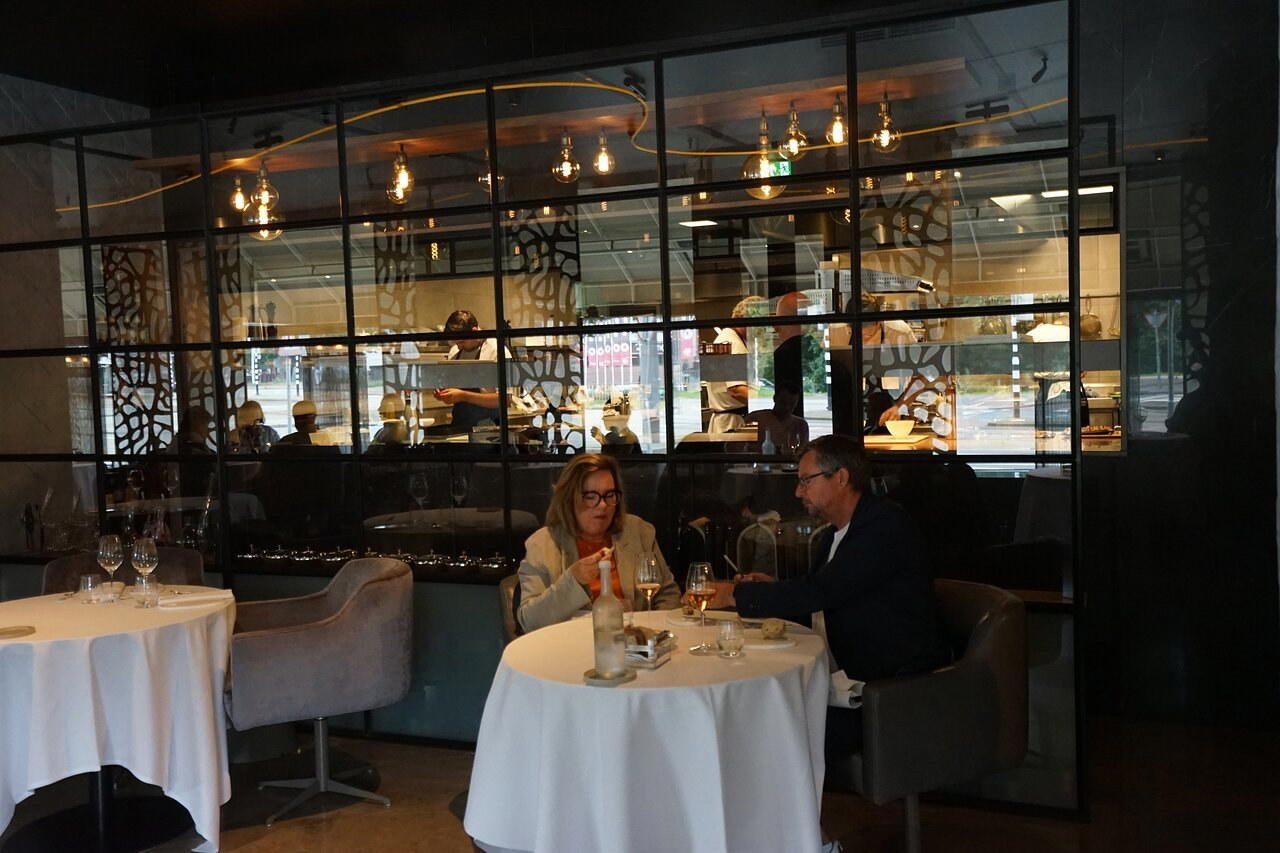
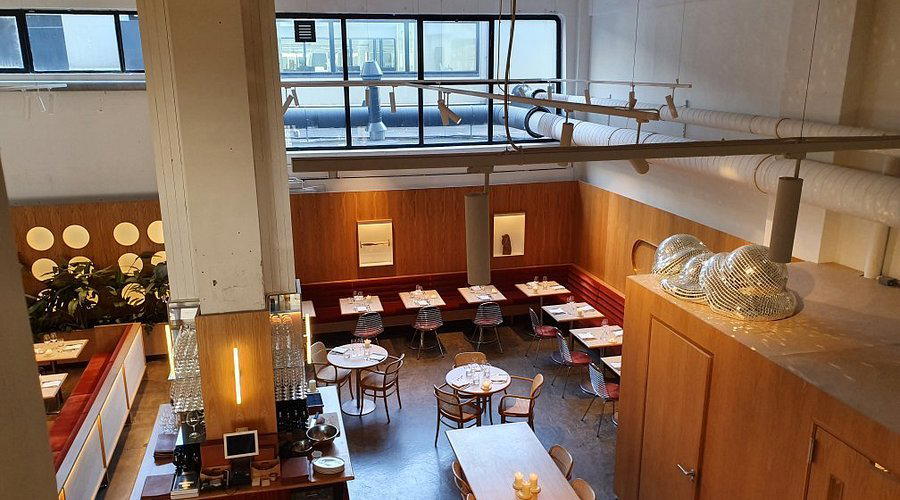
The physical setting matters to the meal in a specific way. A converted coach house carries a particular spatial quality: proportions that were not designed for contemporary dining, which means the room tends to be either awkward or characterful depending on how the conversion has been handled. From the available detail, the Ridderstraat property leans toward the latter, with a sleek interior that uses the garden view as a counterweight to whatever formality the Michelin star might otherwise impose. The result is a room that reads as contemporary without feeling clinical.
Front-of-house at Zout & Citroen is handled by Sjoerd and Patricia, who manage an international wine selection alongside the table service. At this price tier in the Netherlands, wine pairing has become as much a signal of a kitchen's seriousness as the food itself, and the wine operation here functions as a structural component of the experience rather than an afterthought. The recommendation approach, described as astute rather than prescriptive, is consistent with how the better Dutch fine dining rooms have learned to handle the tension between sommelier authority and guest autonomy.
Neighbourhood and Practical Planning
Oosterhout does not have the density of a Breda or a Tilburg, which means Zout & Citroen operates with a different gravitational pull than an urban Michelin address. Guests tend to plan around the restaurant rather than dropping in as part of a wider evening. For those combining the visit with broader time in the region, Wijnhuis De Blauwe Camer, a €€€ French Contemporary address also in Oosterhout, represents the obvious companion at a different register. The town's wider options are mapped in our full Oosterhout restaurants guide.
Price and Recognition
Comparable venues nearby, for context on price, style, and recognition.
| Venue | Cuisine | Price | Awards | Notes |
|---|---|---|---|---|
| Zout & CitroenThis venue — the venue you are viewing | Creative | $$$$ | Michelin 1 Star | Not listed |
| Noeti | Oosterhout, Oriental Fusion Fine Dining | $$$$ | Not listed | Not listed |
| Eetlokaal Klinkers | centrum, Modern French-Dutch Bistro | $$$ | Not listed | Not listed |
| Wijnhuis De Blauwe Camer | Sint Catharinadal, Modern French Bistro | $$$ | Michelin Plate | Not listed |
| Maeve | Not listed | $$$$ | Michelin 1 Star | Binnenstad, Modern French with Dutch influences |
| Château Neercanne | Not listed | $$$$ | Michelin 1 Star | Sint Pieter, Contemporary French Fine Dining |
Recognition history
Dated appearances from independent guides and award organizations, with the underlying list record or original source where available.
Michelin 1 Star
Michelin
We're Smart World 1 Radish
We're Smart World
Michelin 1 Star
Michelin
Continue exploring
More in Oosterhout
Restaurants in Oosterhout
Browse all →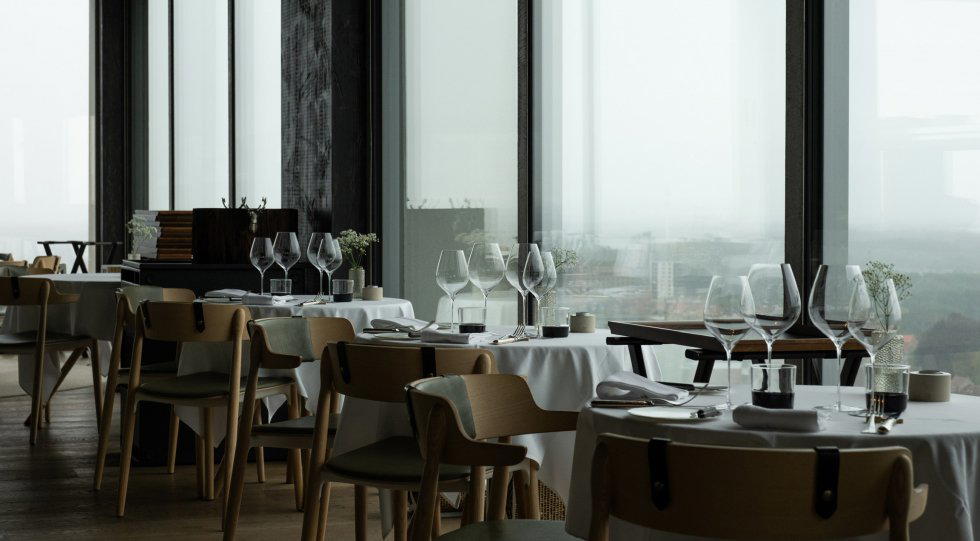
Bars in Oosterhout
Browse all →
At a Glance
- Elegant
- Romantic
- Sophisticated
- Intimate
- Date Night
- Business Dinner
- Celebration
- Special Occasion
- Garden
- Private Dining
- Historic Building
- Design Destination
- Extensive Wine List
- Sommelier Led
- Beer Program
- Zero Proof
- Local Sourcing
- Garden
Current opening hours
- Monday
- 12–3 PM, 6–9 PM
- Tuesday
- Closed
- Wednesday
- Closed
- Thursday
- Closed
- Friday
- 12–3 PM, 6–9 PM
- Saturday
- 12–2 PM, 6–9 PM
- Sunday
- 12–3 PM, 6–9 PM
Hours can change for holidays and private events. Last verified .
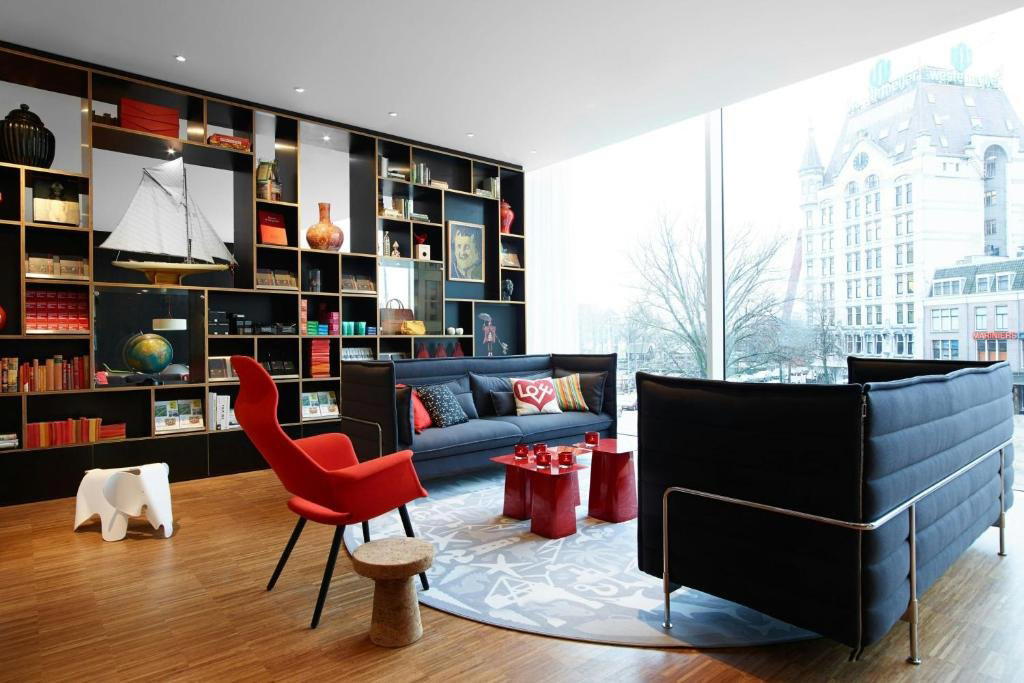
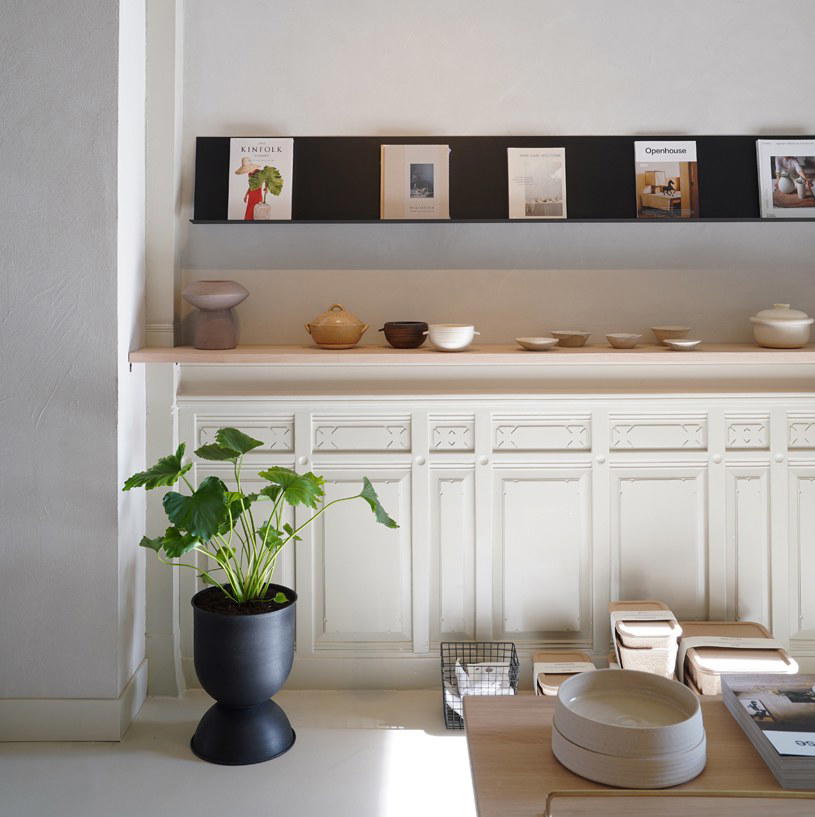
Sleek, contemporary interior design with views of a magnificent English garden; warm, welcoming atmosphere enhanced by attentive service and carefully curated wine pairings.