Öz Şanlıurfa Ciğercisi serves Turkish ciğer house cooking in Bayraklı, with ciğer, lahmacun and urfa kebap on a casual, quick-bite format.
Pearl is the En Primeur Club membership app — saves, bookings, and concierge access live there. Same editors, same standards.
- Address
- 1586/5 Sok. No:37, Bayraklı
- Directions
- Get directions
 Saves & bookings on Pearl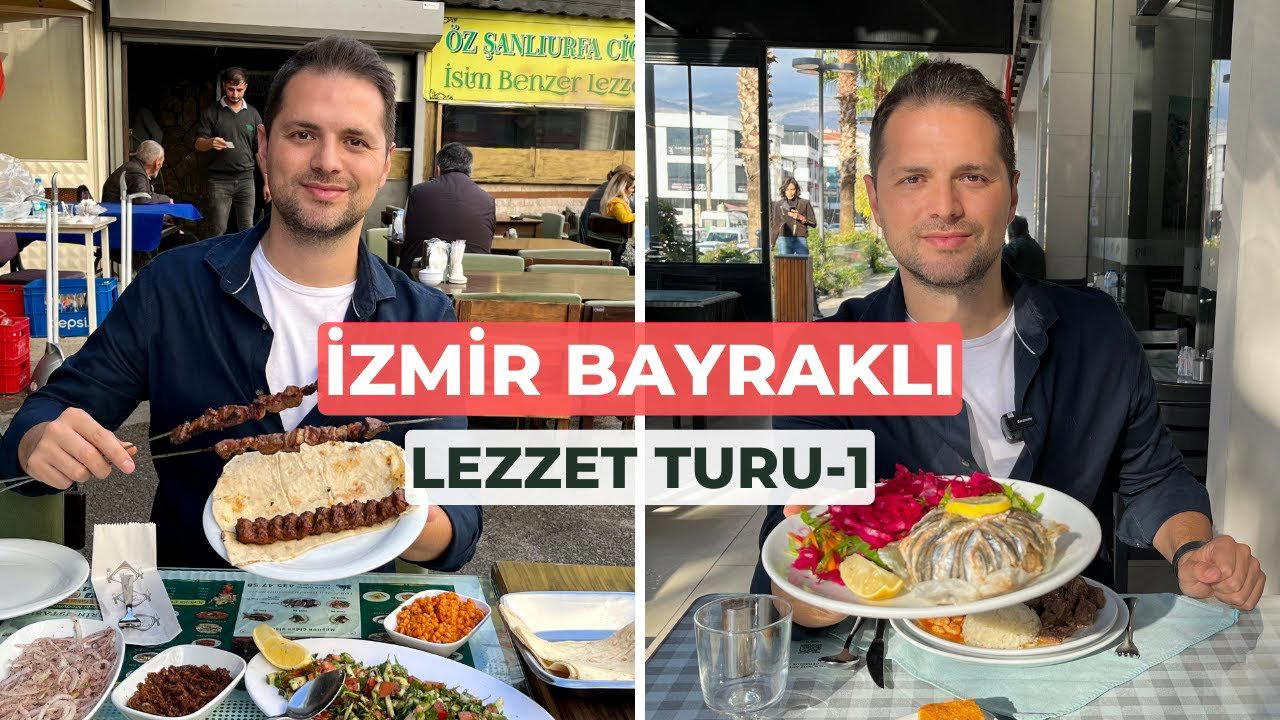
Where Southeastern Liver Tradition Meets Izmir's Working-Day Rhythm
Step onto Sokak 1586/5 in Bayraklı and the signals arrive before you reach the door: the sharp, iron-edged smoke of liver hitting a charcoal grill, the percussion of a cleaver working fast, the small crowd that forms at the counter regardless of the hour. Öz Şanlıurfa Ciğercisi operates in the tradition of the southeastern ciğerci, the specialist liver house that treats offal not as a byproduct but as the main event. That tradition is anchored several hundred kilometres to the east, in Şanlıurfa, where thinly sliced lamb liver grilled over hardwood has been the defining street food for generations. Bayraklı, a dense, working-class district on Izmir's eastern shore, is an unlikely outpost for that cooking — which is precisely why it matters.
The Sourcing Logic Behind Southeastern Liver Cookery
The quality of a ciğerci is almost entirely a function of its sourcing. Liver is an organ that deteriorates faster than most cuts, and the difference between same-day slaughter and anything older is legible on the grill and in the mouth. The Şanlıurfa model, from which this restaurant draws its name and method, demands lamb liver specifically — the fat ratio and texture of beef or chicken liver produce a fundamentally different result, and demands it fresh. Southeastern producers in the Harran plain and surrounding regions supply a consistent volume of lamb to the broader Turkish market, and restaurants operating within this tradition rely on tight local or regional supply chains rather than central distribution. That supply logic is what separates a genuine Şanlıurfa ciğercisi from the liver dishes found on general kebab menus across Turkey. The knife work matters too: the Urfa method involves slicing the liver to near-transparent thinness before grilling, which accelerates cooking time and produces a texture, crisped on the exterior, just-set inside, that thicker cuts cannot replicate.
The garnish structure is equally codified. Raw onion dressed with sumac, flat-leaf parsley, dried chilli, and thin lavaş or dürüm bread are not optional additions but load-bearing elements of the dish. The acidity of the sumac cuts the iron density of the liver; the bread absorbs the dripping fat. Restaurants that deviate from this structure are, by the standards of the tradition, producing something else. For context on how regional specificity shapes Turkey's leading street-food categories, Dürümzade in Beyoglu applies similar geographic discipline to its dürüm format, while Ciğerci Mahmut in Adana runs a parallel liver tradition that diverges sharply in spice profile and bread choice.
Bayraklı as Context: Where This Fits in Izmir's Eating Patterns
Izmir's restaurant conversation tends to cluster around the Kordon waterfront, Alsancak's bar district, and the growing farm-to-table scene in Urla. Hiç Lokanta in Urla and Narımor in Izmir represent that more composed, ingredient-forward direction. Bayraklı sits outside that conversation almost by design. It is a district built around transit, trade, and mid-century apartment blocks, and its food culture reflects that: fast, specific, priced for repetition rather than occasion. A Şanlıurfa liver house in this postcode is addressing the large migrant and working population that moved westward from southeastern Turkey over the past four decades. The restaurant is, in that sense, a piece of Urfa transplanted to the Aegean coast.
That context shapes what to expect. This is not a place that operates on the same axis as Turk Fatih Tutak in Istanbul or Asitane in Fatih, where historical Ottoman sourcing and tasting formats define the experience. Nor does it belong in the same tier as Maçakızı in Bodrum. The peer group here is specialist regional institutions: the liver houses of Urfa itself, the lahmacun specialists like Kısmet Etliekmek ve Lahmacun Salonu in Karaman, and doner operations such as Bayramoğlu Döner in Beykoz. These are venues where the single-product discipline and the sourcing provenance carry the editorial weight, not the room, the wine list, or the tasting menu format. For a broader sweep of where Bayraklı sits in Izmir's wider dining map, our full Bayraklı restaurants guide covers the district in more depth.
The Case for Single-Product Discipline
There is a broader argument to be made about why the single-product format survives, and often thrives, in Turkish food culture at a moment when tasting-menu complexity dominates international food media. Places like Kocak Baklava in Gaziantep demonstrate that deep mastery of one product, its sourcing, its preparation ritual, its correct accompaniments, can sustain a reputation across decades in ways that broad menus rarely do. The ciğerci tradition follows that same logic. The menu is short because the craft is narrow and the standards are high. Comparison to the multi-course precision of Le Bernardin in New York City or the tasting formats at Atomix might seem absurd at first glance, but the underlying discipline, sourcing integrity, technical repetition, format fidelity, runs closer than the price points suggest.
Practical Notes for Visiting
Öz Şanlıurfa Ciğercisi is located at 1586/5 Sokak No:37 in Bayraklı. The address sits within a pedestrian-heavy block typical of the district, accessible by metro from central Izmir via the Bayraklı station on the Izban suburban rail line. As is standard for ciğerci operations of this type, the format is fast and informal: order at or near the counter, eat quickly, leave. Midday to early afternoon is the standard peak window for liver houses of this kind in Turkish cities, the product is freshest and the grill is at full operation. No booking infrastructure exists for venues at this price tier and format. Contact details are not publicly listed. Budget expectations should align with the street-food tier: a full portion with bread and garnish at this category of restaurant across Turkey runs at a fraction of the cost of a sit-down restaurant meal. For nearby contrast in coastal and countryside registers, Casa Lavanda in Sile and Kritikos Meyhane in Mudanya occupy very different positions on the regional eating spectrum. And for those tracking how Turkey's farm-sourcing conversation is developing more broadly, Kartepe Organic Foods in Kartepe and Lokanta Göktürk in Eyupsultan sit at a different point on the sourcing-transparency axis, as does Konya Kebap Evi in Selcuklu within the Anatolian kebab tradition.
Fast Comparison
Comparable venues nearby, for context on price, style, and recognition.
| Venue | Cuisine | Price | Notes |
|---|---|---|---|
| Öz Şanlıurfa Ciğercisi | Turkish Ciğerci (Liver House) | $$ | Bayraklı |
| Zoka Restaurant Yeni nesil eğlence, Yeni nesil meyhane | Modern Turkish Meyhane | $$ | Foça mah. |
| Adana Ocakbasi | Turkish Grill & Kebabs | $$ | Bozkurt |
| Karakoy Gulluoglu | Traditional Turkish Baklava | $$ | Karakoy |
| Morisi Kahvaltı Bostanlı | Turkish Regional Breakfast | $$ | Bostanlı |
| Last Ottoman Cafe & Restaurant | Authentic Turkish Ottoman Cuisine | $$ | Hocapasa |
Continue exploring
More in Bayrakl
Restaurants in Bayrakl
Browse all →
Hotels in Bayrakl
Browse all →
Wineries in Bayrakl
Browse all →
At a Glance
- Rustic
- Cozy
- Family
- Casual Hangout
- Open Kitchen
Casual salaş atmosphere with a bustling, unpretentious feel amid construction surroundings.
Know Before You Go
- Getting there
- 1586/5 Sok. No:37, Bayraklı