Few addresses in Istanbul carry the institutional weight of Karakoy Gulluoglu, a baklava institution that has defined the city's sweet counter culture for generations. Where the modern Turkish dining scene pulls toward tasting menus and chef-driven narratives, Gulluoglu holds its ground on a single, rigorously executed category: layered pastry, clarified butter, and ground pistachio. It is the reference point against which Istanbul's baklava conversation begins.

Pearl is the En Primeur Club membership app — saves, bookings, and concierge access live there. Same editors, same standards.
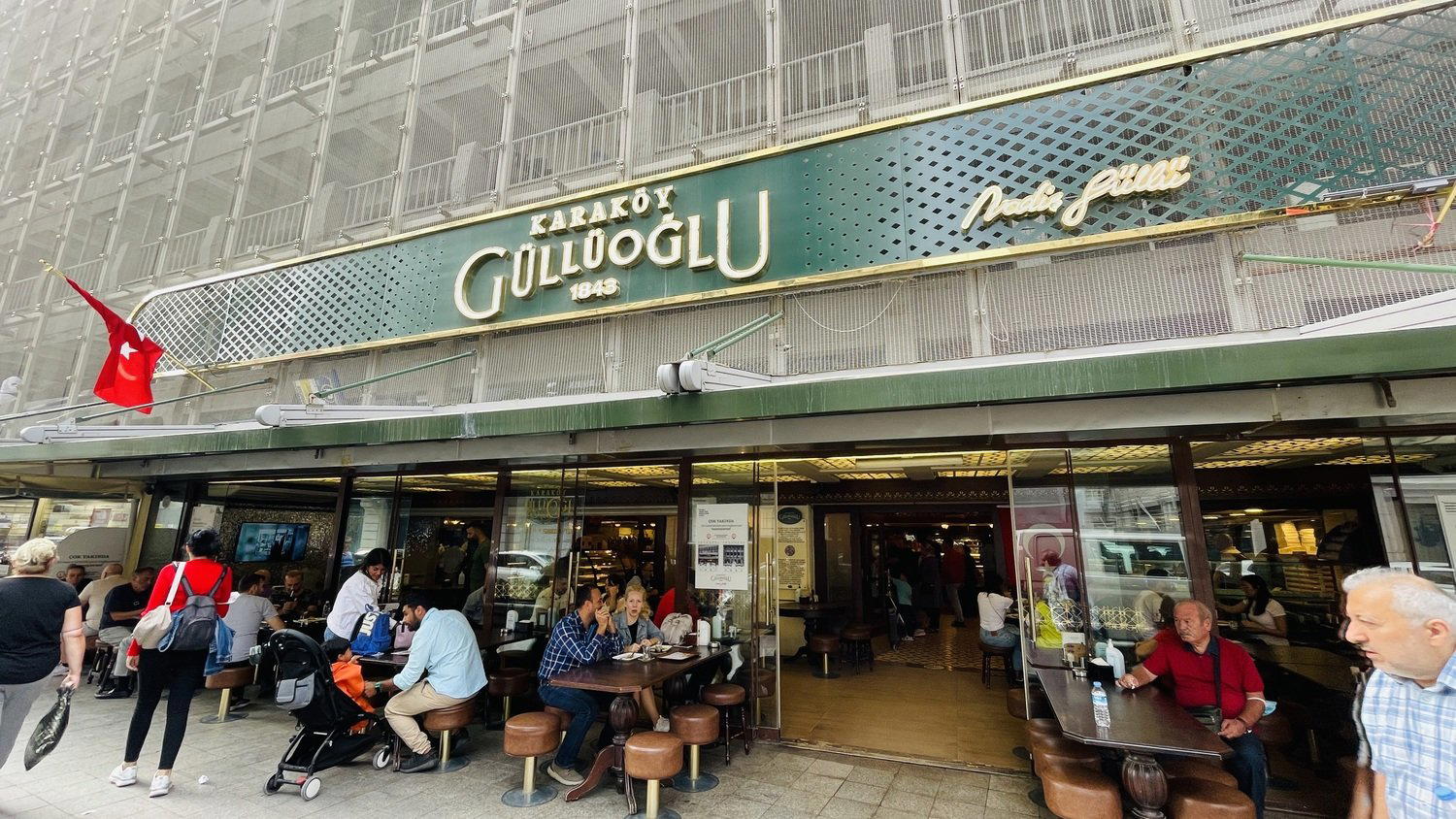
Where Istanbul's Baklava Conversation Starts
Approach the Karakoy waterfront on any given morning and you will find a queue forming before the glass counter is fully stocked. The scene is unremarkable by Istanbul standards, marble surfaces, trays of jewel-green pastry arranged in tight rows, the faint smell of clarified butter warming in the back, but it carries a specific social weight. Karakoy Gulluoglu is not simply a pastry shop. It is a reference institution, the address Istanbulites cite when explaining what baklava is supposed to taste like.
That kind of civic authority is rarely accidental. Istanbul's baklava culture descends from two distinct geographic lineages: the Ottoman palace kitchens, which codified the layered-phyllo format as court cuisine, and Gaziantep, the Anatolian city that holds a Protected Geographical Indication for its pistachio baklava and has produced the families who dominate the premium end of the trade. Gulluoglu traces its roots to that second tradition, arriving in Istanbul from Gaziantep and bringing with it the standards of the southeastern school: Syrian-origin Antep pistachios ground to a specific coarseness, phyllo rolled thin enough to be nearly translucent, and the sade (plain) butter that distinguishes a serious baklava house from a pastry generalist.
The Architecture of the Counter
The counter at Karakoy Gulluoglu functions as a taxonomy of a culinary tradition rather than a list of products. Every tray communicates a position within the baklava hierarchy.
At the foundation sits fistikli baklava, the green-pistachio standard against which everything else is measured. This is the form that carries cultural weight, the one that appears at weddings, bayram celebrations, and formal gift exchanges across Turkey. Its construction is exacting: dozens of phyllo sheets, alternating layers of ground pistachio, a post-bake bath in sugar syrup calibrated for sweetness without cloying density. Move along the counter and the taxonomy extends: cevizli (walnut) baklava signals a more rustic tradition, historically associated with less affluent households before pistachios were widely available. Sütlü nuriye, made with milk syrup rather than the standard sugar base, sits in a lighter, more delicate register. Fıstıklı sarma, the rolled variant, demonstrates the same pistachio filling reorganized into a different structural logic.
What the counter communicates, if you read it as a whole, is that baklava is not one thing but a category with internal distinctions of geography, occasion, ingredient quality, and technique. The premium tier at Gulluoglu is anchored by the Antep pistachio varieties, distinguishable by their vivid green color and lower oil content compared to Iranian or American alternatives, and the house's insistence on clarified butter rather than vegetable shortening, a distinction that separates this tier from the mass-market baklava sold at supermarkets and airport gift shops across Turkey.
Istanbul's Sweet Counter Culture in Context
Turk Fatih Tutak and Mikla occupy the upper tier of the ₺₺₺₺ modern Turkish format, while Neolokal and Arkestra push fusion and reinterpretation. Casa Lavanda holds down a different position in the traditional format. Against that backdrop, a baklava counter might seem categorical apart from restaurant dining, and it largely is. Gulluoglu does not compete in the same space as a tasting menu restaurant. It occupies the parallel track of serious Turkish craft food, where the metric is fidelity to a demanding production standard.
That positioning connects Karakoy to a broader pattern visible across Istanbul's food culture: institutions that derive authority not from chef celebrity or Michelin recognition but from decades of consistent craft execution. Asitane in Fatih does something similar with Ottoman recipe reconstruction. Dürümzade in Beyoglu occupies an equivalent position in the street kebab category. These are venues where the product is the argument, not the setting or the story around it.
Beyond Istanbul, the baklava lineage is worth tracing. Kocak Baklava in Gaziantep represents the source geography, the city where the GI designation protects the pistachio-baklava tradition and where the technical standards that Gulluoglu imports to Istanbul were first codified. Visiting both in sequence gives a clear sense of how a regional craft tradition travels and adapts to an urban market without necessarily losing its defining characteristics.
Internationally, the comparison to precision craft institutions at a different scale is instructive. Venues like Le Bernardin in New York or Atomix operate in entirely different categories but share the underlying logic: sustained authority comes from depth of execution within a defined form, not from breadth of offering. Gulluoglu's counter is a narrower form, a single product category rather than a full tasting menu, but the institutional logic is recognizable.
Karakoy sits along the Golden Horn waterfront, convenient to both the Galata Bridge crossing and the broader Beyoglu district. The shop functions on a retail counter model rather than a sit-down dining reservation system: you order by the kilogram or by the piece. Morning visits tend to offer the freshest trays; the counter restocks throughout the day. Dürümzade in Beyoglu or a transit point on the way to the historic peninsula. For travelers extending their Turkey itinerary, Maçakızı in Bodrum and Narımor in Izmir represent the regional dining register at the other end of the country's culinary geography. For a fuller picture of Istanbul's restaurant scene, the EP Club Istanbul guide maps the city's dining tiers from street food through tasting menus.
Recognition Snapshot
Comparable venues nearby, for context on price, style, and recognition.
| Venue | Cuisine | Price | Notes |
|---|---|---|---|
| Karakoy GulluogluThis venue — the venue you are viewing | Traditional Turkish Baklava | $$ | Not listed |
| Albura Kathisma | Traditional Turkish Kebab House | $$ | Sultan Ahmet |
| Fuego Cafe & Restaurant | Traditional Turkish & Ottoman Cuisine | $$ | Alemdar |
| Hala | Authentic Anatolian Turkish | $$ | Tomtom |
| Constantine's Ark Restaurant & Cafe | Traditional Turkish Mezze & Ottoman | $$ | Hocapasa |
| Ticarethane Sk. No:8 | Turkish with International Flair | $$ | Alemdar |
Continue exploring
More in Istanbul
Restaurants in Istanbul
Browse all →
Bars in Istanbul
Browse all →
Hotels in Istanbul
Browse all →
Wineries in Istanbul
Browse all →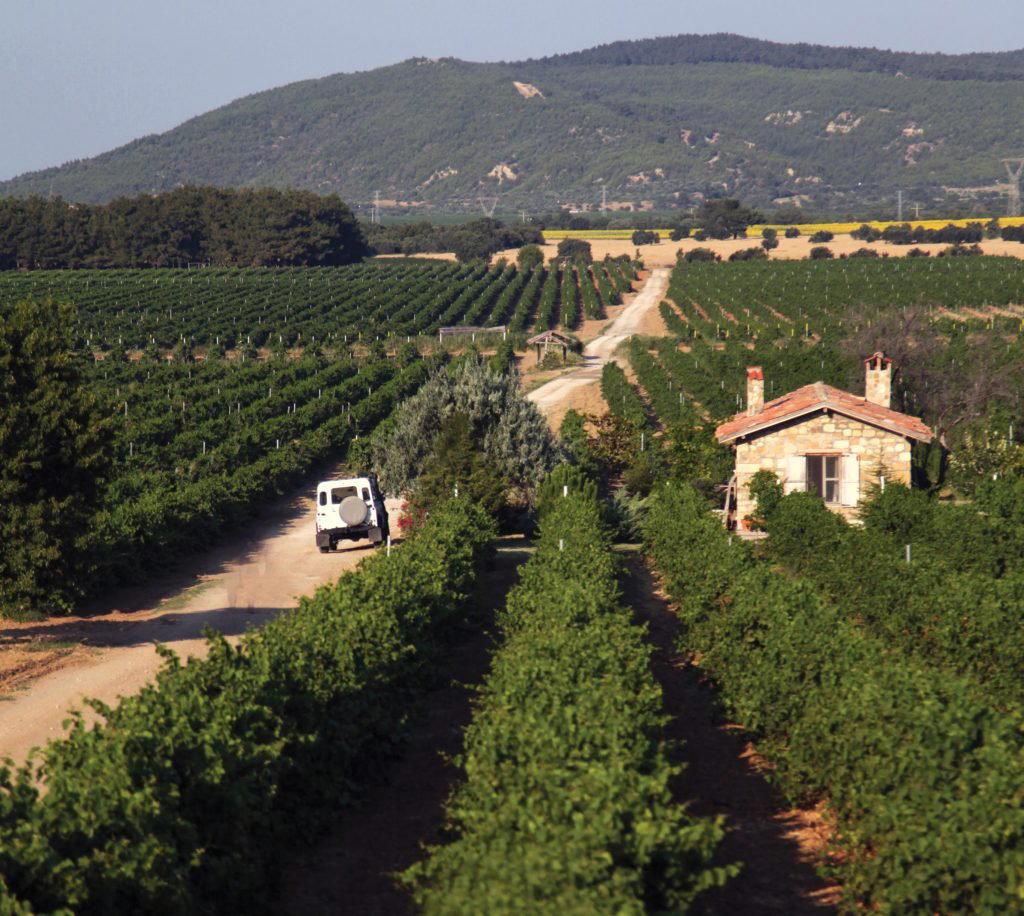

At a Glance
- Classic
- Well Known
- Casual Hangout
- Historic Building
Modern courtyard with indoor seating, self-service counters displaying trays of fresh pastries, and a bustling atmosphere focused on sweet treats.