
Yousafzai Halal brings Pakistani, South Asian, and curry cooking into Fukuoka’s broader conversation about regional Asian dining. Its Tabelog 100 Asian cuisine / Ethnic cuisine WEST selections in 2023 and 2024, modest JPY 1,000–1,999 pricing, vegetarian options, English menu support, and family-friendly setup make it a useful counterpoint to the city’s ramen-and-seafood shorthand.
Pearl is the En Primeur Club membership app — saves, bookings, and concierge access live there. Same editors, same standards.
- Address
- 福岡県福岡市東区多の津1-13-1
- Phone
- +81922926636
- Website
- yousafzai.jp
 Saves & bookings on Pearl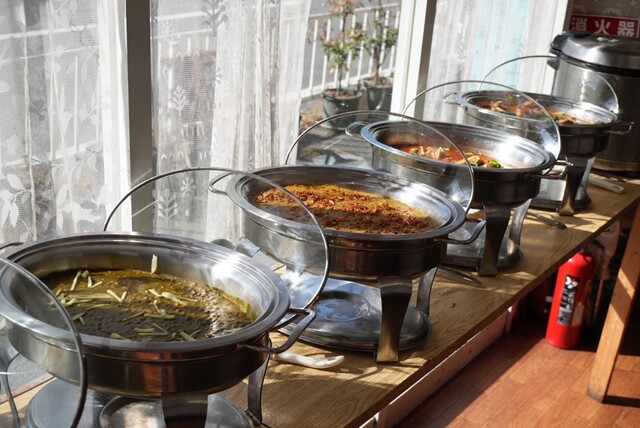
Tanotsu sits away from the usual visitor circuit, and that matters. Fukuoka’s dining reputation often narrows to Hakata ramen, market seafood, and yatai culture, but the city’s more revealing meals are often found in practical districts where immigrant cooking, family traffic, and everyday pricing shape the room. In that context, Yousafzai Halal belongs to a smaller but important category: South Asian cooking that is not staged as luxury, yet has earned enough local attention to enter award conversation.
The category label says plenty before the first order is placed: Pakistani, South Asian, curry. In Japan, “curry” can point in several directions, from yoshoku-style plates to spice-led regional cooking, and Fukuoka has room for both. The sharper editorial distinction here is halal Pakistani food within a Japanese city where Muslim-friendly dining remains thinner than in Tokyo or Osaka. That makes the restaurant useful not only for visitors observing halal requirements, but also for diners trying to read Fukuoka beyond its dominant Kyushu identity.
Pakistani cooking inside Fukuoka's wider Asian dining map
The 2024 Tabelog 100 Asian cuisine / Ethnic cuisine WEST selection places this restaurant in a western Japan frame rather than a narrow neighbourhood one. That recognition is meaningful because the list cuts across a broad field: South Asian, Southeast Asian, Chinese regional, and other non-Japanese Asian formats competing for attention in cities with established local food cultures. A Tabelog score of 3.56 also signals a steady following in a category where national media coverage often trails behind word-of-mouth demand.
Price is part of the story. At JPY 1,000–1,999, the restaurant sits in the same everyday bracket as HALLAL FOOD MARHABA and pain stock, rather than the dinner-led tier occupied by restaurant mamagoto or Yakiniku Horumon Jinsei Daichan. That lower bracket does not make the cooking less serious; it changes the use case. This is the kind of table that can work for a weekday lunch, a family meal, or a spice-focused detour during a Fukuoka trip without turning into a formal evening plan.
Vegetarian options add another layer. South Asian restaurants in Japan often become default safe choices for diners who need meat-free meals, but the better ones avoid treating vegetables as a consolation prize. Here, the public positioning around vegetables and vegetarian options helps explain why the restaurant travels beyond a purely halal audience. It answers a practical gap in Fukuoka dining: accessible spice, non-pork clarity, and a menu structure that can accommodate mixed groups.
A compact room, English menu support, and a casual meal rhythm
The format is small: 18 seats, with table seating rather than a counter-led chef performance. That detail affects expectations. Fukuoka has plenty of restaurants where the drama is in the reservation, the chef’s sequence, or the precision of a narrow omakase format. This is not that genre. The appeal is closer to routine confidence, a compact room built for direct eating rather than ceremony.
English menu support is more than a convenience in this category. It reduces friction for travelers dealing with dietary questions, spice categories, and unfamiliar dish names, and it makes the restaurant more usable than many small local rooms where translation has to happen across a phone screen. Take-out also broadens the format, which matters in a city where hotel dining rooms and train-station food halls can become default fallback choices for visitors staying outside the immediate neighbourhood.
For broader Fukuoka planning, this stop pairs better with a food-focused route than a sightseeing checklist. Readers comparing city options should use Our full Fukuoka restaurants guide for the wider dining map, then sort by mood: South Indian cooking at 106 South Indian Fukuoka tenjin ten, spice-led contemporary interest at Afterglow, local Japanese comfort at Aji Dokoro Taro Gen Sougyou ten, fried fish at Aji Furai Shokudo Kaba, and cutlet culture at Aji no Katsueda. For the rest of a trip, Our full Fukuoka hotels guide, Our full Fukuoka bars guide, Our full Fukuoka wineries guide, and Our full Fukuoka experiences guide give the city’s non-restaurant context.
Why this address changes the reader's expectations
Fukuoka rewards diners who leave the center. Tenjin and Hakata supply convenience, density, and late-night options, but Higashi-ku’s less touristed edges show how the city actually absorbs outside food traditions. Yousafzai Halal is not selling a polished hotel version of South Asian cuisine; its place in the conversation comes from specificity, affordability, and recognition inside a competitive ethnic-dining field.
The better comparison is not with luxury tasting menus, but with restaurants that solve a real dining problem while carrying cultural weight. SACHiA Beef stroganoff works in a similar price band for a different comfort-food register; HALLAL FOOD MARHABA shares halal relevance; higher-priced venues such as restaurant mamagoto and Yakiniku Horumon Jinsei Daichan answer different occasions entirely. This restaurant belongs to the category where the decision is about access, dietary confidence, and spice rather than ceremony.
That also makes it part of a broader Japanese dining pattern. Across the country, specialist casual restaurants increasingly shape how travelers understand cities beyond the usual prestige markers. A curry specialist in Sapporo such as [Curry Senmon Ten] Maruyama Kyoju. Vietnamese cooking at (Shoku) Vietnam in Kawasaki, or a small-format rice shop like Onigiri Time in Pasadena may sit far from Fukuoka, but each shows how focused, accessible food formats can matter as much as formal dining. The same logic applies when looking beyond Japan, from Jōdo Saké Bar in Los Angeles to compact city restaurants such as.cafe in Osaka.know in Kumamoto. 鮪と炭火焼き うお炭 秋葉原店 in Tokyo, and -Grilled beef Sukiyaki- KAMAKURA TANUKIAN 鎌倉 たぬき庵 in Kamakura.
The verdict is practical rather than romantic: choose this for a low-cost, culturally specific Fukuoka meal with halal clarity, vegetarian usefulness, and enough third-party recognition to justify the detour. It is especially strong for travelers who want the city’s food story to include migration, religion, and everyday neighbourhood dining, not only noodles, seafood, and station convenience.
Cost Snapshot
Comparable venues by cuisine and price in the same metro.
| Venue | Cuisine | Price | Notes |
|---|---|---|---|
| Yousafzai HalalThis venue — the venue you are viewing | Not listed | $ | Not listed |
| Hakata Gomasaba Ya | Not listed | $ | Chūō, Fukuoka seafood shokudo & gomasaba specialist |
| French Kashi 16 Ku | Not listed | $ | Chūō, Traditional French patisserie and cakes |
| Fukuchan Ramen Taguma honten | Not listed | $ | Sawara, Traditional Hakata-style tonkotsu ramen shop |
| Yayoi (やよい軒 筑紫口店) | Hakata, Japanese Teishoku | $ | Not listed |
| Yamachan Nakasu ten | Hakata, Nagahama ramen izakaya | $ | Not listed |
Recognition history
Dated appearances from independent guides and award organizations, with the underlying list record or original source where available.
Tabelog 100 #58 · No. 58
Tabelog · Tabelog 100 - Asian cuisine / Ethnic cuisine - WEST - 2024
At a Glance
- Cozy
- Lively
- Family
- Group Dining
- Casual Hangout
- Solo
- Standalone