
Hakata Gomasaba Ya belongs to Fukuoka’s everyday seafood-diner tradition rather than its luxury counter culture. The draw is the local gomasaba ritual, framed in a cafeteria and izakaya register, with Tabelog 100 Diner recognition in 2026 giving a clear quality signal without moving the experience into formal dining territory.
Pearl is the En Primeur Club membership app — saves, bookings, and concierge access live there. Same editors, same standards.
- Address
- Japan, 〒810-0073 Fukuoka, Chuo Ward, Maizuru, 1 Chome−2−11 オガワビル 1F
- Phone
- +81 92-406-5848
- Website
- tabelog.com
 Saves & bookings on Pearl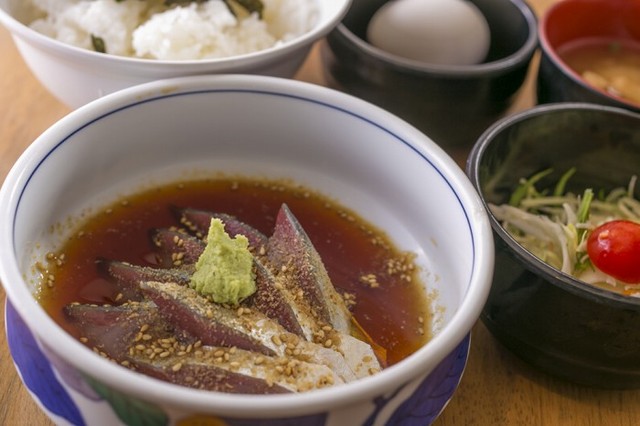
Maizuru’s dining rhythm is less polished than central Tenjin and more useful for people who eat with intent: office workers moving quickly at lunch, small groups turning fish and drinks into a weeknight meal, solo diners using the counter as a practical perch. In that setting, Hakata Gomasaba Ya reads as part of Fukuoka’s working seafood culture, where the meal is judged by freshness, pacing, and value rather than ceremony.
Fukuoka has a particular relationship with mackerel. Gomasaba, generally understood as mackerel dressed with sesame, is not a decorative local specialty but a routine with rules: order decisively, eat while the fish is at its intended texture, and treat rice, soup, pickles, sake, or shochu as supporting structure rather than distraction. The city’s stronger dining identity often gets reduced to ramen and yatai, but seafood cafeterias and izakaya-style counters carry a quieter part of the local appetite.
Gomasaba as a Fukuoka dining ritual, not a luxury performance
The useful way to read this restaurant is through format. It sits in the cafeteria, seafood, and izakaya category, which matters because gomasaba belongs naturally to all three: quick enough for a set-meal lunch, substantial enough for dinner, and compatible with nihonshu or shochu without requiring the choreography of a tasting menu. Tabelog selected Hakata Gomasaba Ya for its 2026 Diner 100 list, following earlier selections in 2024 and 2021, a strong signal in a category where everyday restaurants often compete on consistency rather than spectacle.
That distinction separates it from Fukuoka’s high-spend reservation economy. Sushi Gosuian prices in the JPY 20,000 to JPY 29,999 bracket, while gasutoronomi ya kogakeisuke sits around JPY 15,000 to JPY 19,999. Tori Kami Garden City and Wagyu Steak TEPPANYAKI 10 FUKUOKA also operate in higher dinner bands. Hakata Gomasaba Ya occupies a different lane: the serious local meal that does not ask the diner to treat lunch or dinner as an occasion.
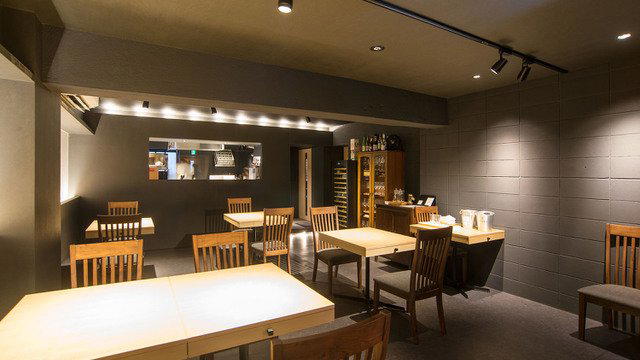
The room’s reported structure reinforces that reading: 32 seats, including counter seating and two-person tables, with private rooms absent. Counter culture in Japan is often discussed through sushi or kappo, but the democratic version is just as revealing. It allows single diners to eat efficiently, keeps turnover visible, and makes the meal feel closer to a shokudo than a polished seafood restaurant. The presence of takeout and group use for 20 to 50 people broadens the format without changing its core purpose.
Where the Maizuru setting changes the meal
Maizuru, near Akasaka Station, sits in a useful middle ground for visitors who want to eat within central Fukuoka without defaulting to station dining or late-night yatai. The area gives access to Tenjin’s density but feels more local in its lunch patterns. That context is important: gomasaba works better when it is treated as part of a day in Fukuoka, not as a trophy reservation. The custom is direct, compact, and tied to the city’s seafood supply rather than to chef authorship.
For readers mapping Fukuoka by genre, the restaurant makes sense beside other casual specialists rather than only beside luxury rooms. Aji Furai Shokudo Kaba and Aji no Katsueda point toward the city’s set-meal and fried-food traditions, while Aji Dokoro Taro Gen Sougyou ten sits closer to the local drinking-and-dining register. 106 South Indian Fukuoka tenjin ten and Afterglow show how Fukuoka’s casual dining range extends beyond Japanese seafood into curry and spice-driven cooking.
The important decision is not whether this is a substitute for a formal sushi counter. It is not. The better comparison is between food-led everyday rooms where ordering is fast, spending remains contained, and repeatability matters. ZAEKA, at a similarly accessible price band among comparison venues, shows how Fukuoka’s lower-cost dining can still be purposeful; the restaurant’s distinction is its fish-specific identity and local mackerel focus.
How to fit it into a sharper Fukuoka itinerary
Use the meal to anchor a central Fukuoka day rather than to close a grand evening. The dining ritual rewards appetite and timing: arrive ready to eat plainly, keep the order focused, and let the fish define the table. Lunch carries the strongest shokudo logic, while dinner shifts the same ingredients toward izakaya use, especially with sake or shochu in the frame. Families are part of the room’s stated audience, and the absence of private rooms suggests a public, practical restaurant rather than a hushed special-occasion address.
For broader planning, Our full Fukuoka restaurants guide gives the strongest local context, with Our full Fukuoka hotels guide, Our full Fukuoka bars guide, Our full Fukuoka wineries guide, and Our full Fukuoka experiences guide filling out the city around the table. Readers comparing everyday Japanese formats beyond Kyushu can also look at -Grilled beef Sukiyaki- KAMAKURA TANUKIAN 鎌倉 たぬき庵 in Kamakura, . 鮪と炭火焼き うお炭 秋葉原店 in Tokyo.cafe in Osaka.know in Kumamoto, (Shoku) Vietnam in Kawasaki, [Curry Senmon Ten] Maruyama Kyoju. in Sapporo, Jōdo Saké Bar in Los Angeles, and Onigiri Time in Pasadena.
The verdict is simple in editorial terms: this is a Fukuoka seafood-diner address with a clear local thesis. Its value is not theatrical scarcity or chef mythology, but the disciplined appeal of a regional dish served in a room built for regular use. For travelers who want to understand what Fukuoka eats between ramen, sushi counters, and yatai, that makes the meal more instructive than many pricier reservations.
Cuisine Context
Comparable venues to calibrate price, style, and recognition.
| Venue | Cuisine | Price | Notes |
|---|---|---|---|
| Hakata Gomasaba YaThis venue — the venue you are viewing | Fukuoka seafood shokudo & gomasaba specialist | $ | Not listed |
| Miyake | Traditional Hakata Udon | $ | Hakata |
| Tanakadashiki Seafood Shokudo Uochu | Tanakadashiki-style seafood set-meal diner | $ | Chūō |
| LAS VEGAS | Japanese Izakaya | $ | Chūō |
| Dai 8 Yachiyo Maru | Traditional Japanese Izakaya & Live-Tank Seafood | $$ | Hakata |
| Grill Sen | Japanese Yoshoku Grill & Steakhouse | $$ | Chūō |
Recognition history
Dated appearances from independent guides and award organizations, with the underlying list record or original source where available.
Tabelog 100 #93 · No. 93
Tabelog · Tabelog 100 - Diner - 2026
At a Glance
- Lively
- Cozy
- Classic
- Solo
- After Work
- Casual Hangout
- Group Dining
- Family
- Standalone
- Beer Program
- Sake Program
- Local Sourcing
Current opening hours
- Monday
- 11 AM–2 PM, 5:30–10 PM
- Tuesday
- 11 AM–2 PM, 5:30–10 PM
- Wednesday
- 11 AM–2 PM, 5:30–10 PM
- Thursday
- 11 AM–2 PM, 5:30–10 PM
- Friday
- 11 AM–2 PM, 5:30–10 PM
- Saturday
- 11 AM–2 PM, 5:30–10 PM
- Sunday
- 11 AM–2 PM
Hours can change for holidays and private events. Last verified .
Bright, clean, and casual cafeteria-style room with counter and small tables; the feel is that of a no-frills neighborhood shokudo/izakaya that gets busy and energetic at peak lunch and dinner times rather than a quiet or romantic space.