
Yonekyu Honten belongs to Asakusa’s older hot-pot tradition, where sukiyaki and nabe sit closer to neighbourhood ritual than theatrical tasting-menu dining. Its house-restaurant setting, tatami rooms, private rooms, and 2024 Tabelog 100 Hot Pot selection place it in a compact Tokyo category for diners who care as much about the room as the beef and broth.
Pearl is the En Primeur Club membership app — saves, bookings, and concierge access live there. Same editors, same standards.
- Address
- 2 Chome-17-10 Asakusa, 台東区 Taito City, Tokyo 111-0032, Japan
- Phone
- +81 3-3841-2702
- Website
- asakusa-hisagodori.com
 Saves & bookings on Pearl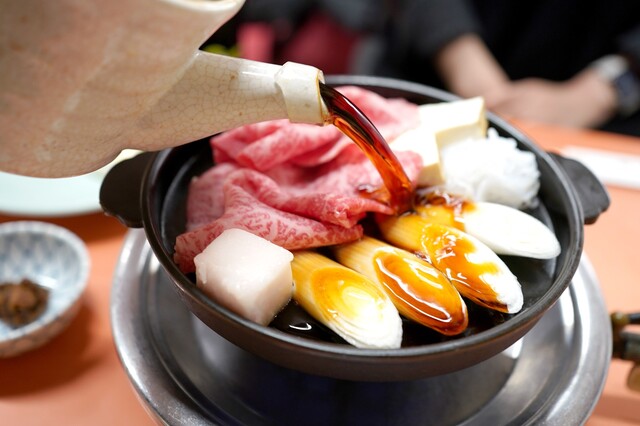
Asakusa changes texture quickly: temple approaches, side streets, low-rise shopfronts, and restaurants that feel built for groups rather than performance. In that setting, hot pot has a different grammar from Tokyo’s counter-driven sushi and kaiseki culture. The room matters because the meal is shared, paced around a table, and shaped by heat, conversation, and the discipline of repetition. Yonekyu Honten fits that older pattern: a house restaurant with tatami space and private rooms, recognised in the 2024 Tabelog 100 Hot Pot selection, working in the sukiyaki and nabe lane rather than the omakase economy.
Asakusa hot pot, read through the room
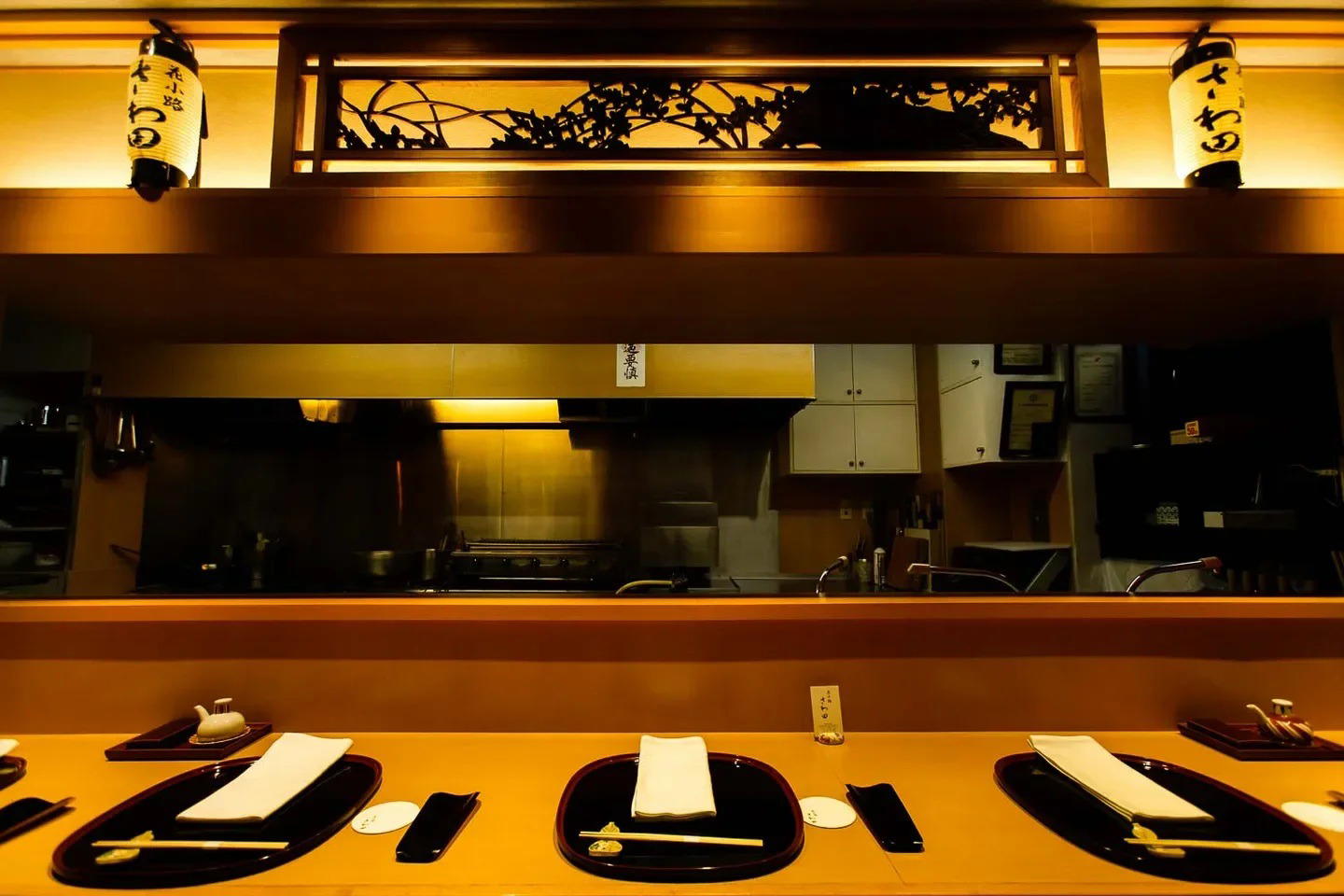
Tokyo’s prestige dining often rewards compression: eight-seat counters, tightly sequenced courses, and chef-facing theatre. Sukiyaki asks for another kind of attention. The architecture is less about spectacle than enclosure, with the table as the centre of gravity and the room setting the rhythm. Tatami seating and private rooms are not decorative trivia here; they signal a format designed for small groups, slower pacing, and a meal that gains meaning from being cooked and eaten communally.
That distinction is useful in Asakusa, where dining culture carries more visible continuity than in many central Tokyo districts. The neighbourhood is not frozen in nostalgia, but its restaurant scene still makes room for formats that predate the city’s current reservation arms race. Nearby comparison points show the range: . 鮪と炭火焼き うお炭 秋葉原店 pulls attention toward seafood and charcoal, 124. KAGURAZAKA (Yakitori) represents the skewer-counter discipline, and 3 Chome no Curry Ya San sits in a separate comfort-food register. Hot pot occupies its own lane: less linear than a tasting menu, more ceremonial than a casual bowl.
The Tabelog 100 Hot Pot 2024 selection matters because the category is narrow and culturally specific. It is not a generic restaurant accolade; it places the restaurant inside a field devoted to sukiyaki, shabu-shabu, and related nabe traditions. In Tokyo terms, that is a meaningful credential for diners comparing specialist formats rather than chasing a single citywide hierarchy.
Sukiyaki as a design problem, not just a dish
Sukiyaki can look simple on paper: beef, sweet soy seasoning, vegetables, heat. In practice, the format depends on control. The table must support shared cooking without turning the meal into disorder. The seating must allow conversation without breaking the pace. The room has to absorb the social nature of the format. This is why a house-restaurant setting can be more persuasive for sukiyaki than a sleek dining room built for camera angles.
Yonekyu Honten’s listed categories, sukiyaki and nabe, place it in a family of Japanese dining that values sequence but not rigidity. The diner is not watching a chef compose every bite at a counter; the table becomes part of the mechanism. That physical arrangement changes expectations. A meal here belongs with friends or small groups more naturally than with solo destination dining, and the private-room signal reinforces that reading. This is communal food with structure, not casual sharing plates with hot soup added as atmosphere.
The comparison with other Tokyo categories is instructive. A place such as 12/10 Shinjuku ten belongs to a denser urban register, while 2D Cafe turns interior design into the subject. Here, design works in quieter service of the meal. Tatami, private rooms, and the house-restaurant container are not flourishes; they are part of the hot-pot apparatus. Remove that container and the meal changes character.
Asakusa also sharpens the distinction between old-format dining and newer novelty. Fruit Parlour Goto, Yakiniku Dan Asakusa, 龍圓, Onigiri Asakusa Yadoroku, and Chiba Ya each speak to a different local appetite, from fruit parlour precision to grilled meat, Chinese cooking, onigiri, and everyday snack culture. Sukiyaki sits higher on the occasion scale, but it does not need fine-dining choreography to make its case. Its seriousness is in the format: shared heat, measured sweetness, and a room built for staying seated.
How to place it in a Tokyo itinerary
For travellers planning Tokyo through dining rather than sightseeing alone, this is the kind of address that explains why Asakusa remains useful beyond Senso-ji. The district rewards meals that match its built environment: low-rise, practical, group-oriented, and less obsessed with the aesthetics of scarcity than parts of Ginza or Aoyama. The restaurant’s Tabelog score of 3.66 and Hot Pot 2024 selection give it external validation, but the stronger editorial reason to go is categorical. It offers a view of Tokyo dining where the room, table, and cooking vessel carry as much meaning as the ingredient list.
That makes it a better fit for diners who want a grounded Japanese meal in an older neighbourhood setting than for those chasing avant-garde plating or counter intimacy. The drink listing spans sake, shochu, and wine, which keeps the meal inside familiar Japanese group-dining territory without turning beverage pairing into the main event. Non-smoking status also matters in this format, because hot pot is prolonged and room comfort has a direct effect on the meal.
Use it as part of a broader Tokyo food map rather than as an isolated trophy booking. For adjacent planning, Our full Tokyo restaurants guide gives the restaurant context across categories, while Our full Tokyo hotels guide, Our full Tokyo bars guide, Our full Tokyo wineries guide, and Our full Tokyo experiences guide help shape the rest of the city around it. For sukiyaki beyond Tokyo, -Grilled beef Sukiyaki- KAMAKURA TANUKIAN 鎌倉 たぬき庵 in Kamakura is the more direct category comparison.
EP Club’s wider restaurant index also shows how different Japanese dining formats travel and mutate across cities:.cafe in Osaka.know in Kumamoto, (Shoku) Vietnam in Kawasaki, [Curry Senmon Ten] Maruyama Kyoju. in Sapporo, and [ki:] in Kyoto each sit in a different dining idiom. Outside Japan, Jōdo Saké Bar in Los Angeles and Onigiri Time in Pasadena show how Japanese categories become more explicit when translated abroad. In Asakusa, the appeal is the opposite: nothing needs to be over-explained. The format, the room, and the neighbourhood already know what they are doing.
Fast Comparison
Comparable venues for orientation by cuisine and category.
| Venue | Cuisine | Price | Notes |
|---|---|---|---|
| Yonekyu HontenThis venue — the venue you are viewing | Traditional Sukiyaki | $$$ | Not listed |
| Matsugen (松玄 恵比寿) | Handmade Soba Noodles | $$$ | Ebisu |
| Hon to Saya | Traditional Charcoal Yakiniku | $$$ | Taitō |
| Imahan Bekkan | Traditional Sukiyaki & Shabu-shabu | $$$ | Taitō |
| 365 Nichi to Nihonbashi | Artisan Japanese Bakery | $$$ | Chūō |
| Sakana ya Ajisen | Seafood-focused Japanese Izakaya | $$$ | Chūō |
Recognition history
Dated appearances from independent guides and award organizations, with the underlying list record or original source where available.
Tabelog 100 #77 · No. 77
Tabelog · Tabelog 100 - Hot Pot - 2024








At a Glance
- Classic
- Cozy
- Elegant
- Intimate
- Date Night
- Group Dining
- Special Occasion
- Business Dinner
- Historic Building
- Standalone
- Sake Program
- Beer Program
- Local Sourcing
Current opening hours
- Monday
- 12–8 PM
- Tuesday
- 12–8 PM
- Wednesday
- Closed
- Thursday
- 12–8 PM
- Friday
- 12–8 PM
- Saturday
- 12–8 PM
- Sunday
- 12–8 PM
Hours can change for holidays and private events. Last verified .
Traditional, authentic, and calm, with a classic Japanese old-restaurant feel that reviewers describe as atmospheric and refined.