
Yakitori Uu. places Gakugei-Daigaku in Tokyo’s serious yakitori conversation without turning the meal into ceremony for ceremony’s sake. The draw is a compact charcoal-counter format, Tabelog 100 Yakitori EAST selection in 2024 and 2025, and a drinks program that treats sake, shochu, and wine as part of the craft rather than an afterthought.
Pearl is the En Primeur Club membership app — saves, bookings, and concierge access live there. Same editors, same standards.
- Address
- Japan, 〒152-0004 Tokyo, Meguro City, Takaban, 2 Chome−20−19W 学芸大学 1階
- Phone
- +81 70-2667-7796
- Website
- yakitoriuu-yoyaku.com
 Saves & bookings on Pearl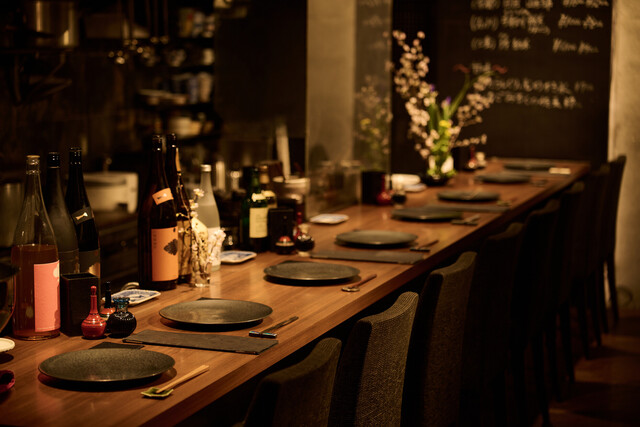
Gakugei-Daigaku moves at a different tempo from the Ginza counter circuit: lower buildings, local foot traffic, and dinner rooms closer to neighbourhood routine than destination theatre. That matters for yakitori, a form built on proximity, heat, timing, and repetition rather than spectacle. In a small counter room, the grill is the argument: smoke management, portion rhythm, and how much of the bird the kitchen treats as worthy.
Tokyo yakitori has split into two lanes. One is casual, beer-led, democratic, and after-work: skewers, salt, tare, speed. The other is a tighter, reservation-driven format where the same chicken vocabulary gets the concentration usually associated with sushi counters. Yakitori Uu. belongs to the latter, but its Meguro address keeps it from becoming a trophy room. Selection for Tabelog 100 Yakitori EAST in 2024 and 2025 places it within a competitive eastern Japan set, and its Tabelog score of 3.75 signals sustained local traction rather than passing novelty.
Charcoal, portion discipline, and the modern yakitori ethic
Yakitori’s sustainability story is not a slogan added later; it is embedded when a kitchen takes the whole bird seriously. The craft has long extracted value from parts Western luxury dining treated as secondary. A strong counter asks a sharper question than many tasting menus: how much pleasure can butchery, seasoning, and fire control draw from one animal?
That gives contemporary Tokyo yakitori its relevance. At the serious end, environmental consciousness is less about credentials than waste reduction through format. Skewers create small, controlled portions. The chef can move across textures and cuts without making abundance the measure of generosity. The rhythm also reduces the need for visual excess: a counter, a grill, and a disciplined sequence can carry the evening.
Yakitori Uu. is listed as yakitori and izakaya, a useful pairing because it sits between specialist counter and relaxed drinking culture. Its drinks direction reinforces that middle ground: sake, shochu, and wine are all part of the program, with a sommelier available. In Tokyo yakitori, that combination signals ambition. Sake and shochu connect the meal to native drinking habits; wine reaches diners who expect acidity, structure, and pairing logic with charcoal cooking.
The better comparison is not high-polish French or sushi counters, but Tokyo rooms where narrow craft becomes a precise evening format. For readers mapping the range, 124. KAGURAZAKA (Yakitori) offers another yakitori reference, while 12/10 Shinjuku ten and . 鮪と炭火焼き うお炭 秋葉原店 show how Tokyo’s charcoal and counter formats cross categories. The distinction here is scale: a compact yakitori room puts guests close to the work, making inconsistency harder to hide and restraint easier to read.
Gakugei-Daigaku gives the counter a local frame
Gakugei-Daigaku is not shorthand for hotel dining or luxury retail dining. It is a Tokyu Toyoko Line neighbourhood where independent restaurants can keep a local base while remaining reachable to diners crossing the city. That changes the mood. Dinner need not announce itself with marble, views, or a lobby entrance; it can be narrow, focused, and still recognised enough to justify a cross-town reservation.
The surrounding area explains why the format works. Nearby comparison venues such as Spice Kurashi, TRASPARENTE Gakugei daigaku ten, スタンドバインミー, MATTERHORN, and M Size point to a neighbourhood with everyday food habits as well as specialist addresses. Yakitori Uu. sits in the more serious evening bracket, yet benefits from a district not flattened into a single luxury identity. The tension is useful: destination-level attention, residential setting.
For environmentally minded diners, the lesson is practical rather than moralistic. A focused yakitori counter can be a lower-waste way to eat ambitiously when its value system is built around whole-bird thinking and controlled portions. No diner should confuse that with a certified sustainability program unless stated, but the tradition offers a credible model: small servings, close heat, minimal garnish dependency, and a long Japanese habit of making secondary cuts central rather than peripheral.
Within Tokyo’s dining map, this is a specialist stop, not a general-purpose restaurant. The city covers every register, from curry rooms such as 3 Chome no Curry Ya San to graphic café culture at 2D Cafe. The restaurant occupies a narrower lane: charcoal-led, drinks-aware, and built for diners who want the meal to unfold through technique rather than menu sprawl.
How to read it against Tokyo's wider food map
Tokyo rewards diners who match venue to evening. A compact yakitori counter is not designed for lingering over a sprawling à la carte table like some izakaya. It is sequence-driven, with room size and grill pace setting the mood, best for guests who care about craft and less for groups wanting a loose, all-night format.
The national context helps. Japan’s regional dining range can run from -Grilled beef Sukiyaki- KAMAKURA TANUKIAN 鎌倉 たぬき庵 in Kamakura to [ki:] in Kyoto.cafe in Osaka.know in Kumamoto, (Shoku) Vietnam in Kawasaki, and [Curry Senmon Ten] Maruyama Kyoju. in Sapporo. Tokyo’s advantage is density: diners can choose an exact category and level of formality rather than a broad genre.
International readers may find a bridge in sake-led Japanese dining abroad, including Jōdo Saké Bar in Los Angeles and Onigiri Time in Pasadena. Those addresses show how Japanese drinking and rice traditions travel; a Tokyo yakitori counter shows the source grammar at higher resolution, especially when the drinks list moves between sake, shochu, and wine.
Use the restaurant for a focused Tokyo dinner where the interest lies in charcoal technique, compact scale, and the ethics of using a bird carefully. For broader planning, Our full Tokyo restaurants guide gives the dining spread, while Our full Tokyo hotels guide, Our full Tokyo bars guide, Our full Tokyo wineries guide, and Our full Tokyo experiences guide place the meal inside a full city itinerary.
Fast Comparison
Comparable venues by cuisine and category.
| Venue | Cuisine | Price | Notes |
|---|---|---|---|
| Yakitori Uu. | Yakitori | $$$ | Meguro |
| 楽亭 | Handmade Soba | $$$ | Kagurazaka |
| Wagyu beef Yakiniku Beef Kitchen Nakameguro | Premium Wagyu Yakiniku | $$$ | Meguro |
| Onikuya Keisuke Sannanbo | Refined Yakiniku & Beef Tongue in Hiroo | $$$ | Shibuya |
| Pretty Pork Factory & Katsu Puripo | Pork-focused Japanese shabu-shabu, samgyeopsal & tonkatsu | $$$ | Shibuya |
| Yakiniku Horumon Kinju Hanare | Yakiniku & horumon with Morioka-style cold noodles | $$$ | Minato |
Recognition history
Dated appearances from independent guides and award organizations, with the underlying list record or original source where available.
Tabelog 100 #76 · No. 76
Tabelog · Tabelog 100 - Yakitori - EAST - 2025












At a Glance
- Intimate
- Sophisticated
- Classic
- Cozy
- Date Night
- Special Occasion
- Group Dining
- After Work
- Solo
- Chefs Counter
- Open Kitchen
- Standalone
- Sake Program
- Beer Program
- Craft Cocktails
- Local Sourcing
Current opening hours
- Monday
- 5:30–11 PM
- Tuesday
- 5:30–11 PM
- Wednesday
- 5:30–11 PM
- Thursday
- 5:30–11 PM
- Friday
- 5:30–11 PM
- Saturday
- 5:30–11 PM
- Sunday
- Closed
Hours can change for holidays and private events. Last verified .
A compact, reservation-friendly yakitori spot with a focused, intimate atmosphere and a refined but unpretentious feel.