
Fukuoka’s yakitori scene rewards small counters where grill work, drink pacing, and room control have to move together. Yakitori Morimoto sits in that serious Haruyoshi bracket: a 16-seat restaurant with counter seating, a private room, Tabelog Yakitori WEST 100 selections in 2024 and 2025, and a dinner spend listed at JPY 10,000 to JPY 14,999.
Pearl is the En Primeur Club membership app — saves, bookings, and concierge access live there. Same editors, same standards.
- Address
- Japan, 〒810-0003 Fukuoka, Chuo Ward, Haruyoshi, 3 Chome−11−19 2F 一番奥です
- Phone
- +81 90-9595-1129
- Website
- s.tabelog.com
 Saves & bookings on Pearl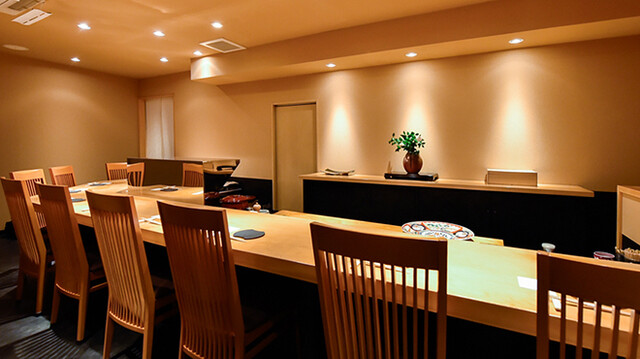
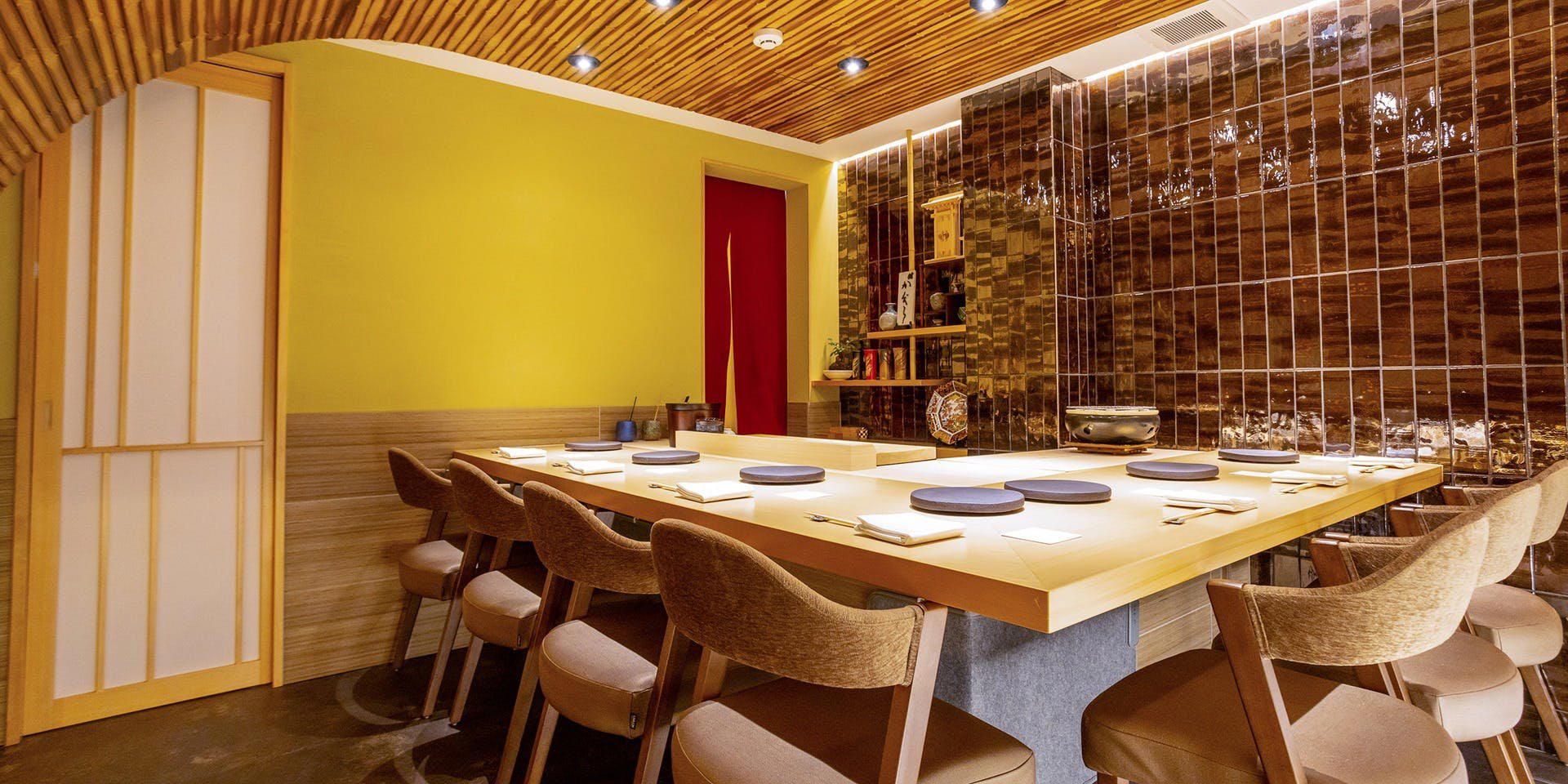
Haruyoshi after dark is built for small decisions: a turn off the main flow, a second-floor address, the shift from street noise to counter discipline. In Fukuoka, yakitori at this level is not a casual skewer stop with better charcoal; it is a paced evening where grill, drinks, and front-of-house timing work as one. Yakitori Morimoto operates in that compact format, with 16 seats split between a 10-seat counter and one private room for 3 to 6 guests.
Fukuoka’s serious dining culture is often discussed through sushi, motsunabe, mizutaki, ramen, and late-night izakaya habits, but yakitori has its own hierarchy. The stronger counters turn repetition into precision: chicken cuts move from familiar to specialist, seasoning is calibrated rather than decorative, and beverage service matters because smoke, salt, fat, and heat change a meal’s rhythm. The listing of sake, shochu, and wine is not incidental; it signals pairing range rather than a single default drink lane.
Haruyoshi's serious yakitori tier runs on timing, not theatre
Fukuoka’s central dining geography makes Haruyoshi a useful base for this kind of restaurant. It sits close enough to Tenjin and Nakasu to catch destination diners, but the neighbourhood has a smaller-scale evening texture than the city’s busier entertainment corridors. That matters for yakitori. A compact counter depends on concentration: the cook’s sequence, the server’s read of the table, the glass arriving before the next skewers, the room staying calm enough for heat and smoke to do the talking.
Yakitori Morimoto’s recognition gives the format outside validation. It was selected for Tabelog Yakitori WEST 100 in 2024 and 2025, a regional list grouping it with western Japan’s stronger yakitori addresses rather than general-purpose Japanese restaurants. Its Tabelog score is 3.61, and the dinner budget is JPY 10,000 to JPY 14,999, above neighbourhood drinking yakitori and below the rarefied price bands at some counter-only restaurants in larger Japanese cities.
The comparison inside Fukuoka is useful. Kiharu no Gomasaba ya, listed at JPY 4,000 to JPY 4,999, is a different decision: local fish, lower spend, and a more casual Hakata evening. Sudo Haruyoshi, クッカーニャ, Tamura, and 白金 にし田 show the breadth of central Fukuoka dining rather than direct substitutes. Morimoto is for the narrower question: where does yakitori become the main event, not a prelude to drinks elsewhere?
The counter depends on the team as much as the grill
The assigned drama of yakitori is usually the chef at the coals, but the better experience is a coordinated triangle. Grill work sets the tempo; drinks stretch or tighten it; front-of-house protects the room from drag. With only 10 counter seats and one private room, the margin for mistiming is thin. A slow pour, crowded handoff, or table that misses the pace changes the evening. This is where small restaurants feel either alive or strained.
Morimoto’s format suggests a restaurant built around that coordination. Counter seating keeps the cooking visible, while the private room gives small groups a separate lane without turning the restaurant into a banquet space. The drinks list covers sake, shochu, and wine, a practical advantage for yakitori: sake can follow salt and tare, shochu works with smoke and richer cuts, and wine broadens the table for diners who do not want a purely traditional pairing exercise.
That flexibility is also why Fukuoka’s yakitori scene should not be read as a lesser echo of Tokyo. Kyushu dining has its own relationship with poultry, shochu, and late-evening social eating. The region’s tables are often less ceremonial than the capital’s highest-priced counters, but serious rooms retain order. At this level, informality is not looseness; it is the ability to make a meal feel relaxed while sequencing stays controlled.
For readers mapping a broader Fukuoka stay, Morimoto fits the city’s high-focus dinner category rather than its snack-and-wander category. The wider restaurant field can be cross-checked through Our full Fukuoka restaurants guide, while hotel planning sits separately in Our full Fukuoka hotels guide. For after-dinner decisions, use Our full Fukuoka bars guide; for broader trip structure, there are also Our full Fukuoka experiences guide and Our full Fukuoka wineries guide.
How to place it in a Fukuoka eating itinerary
A strong Fukuoka itinerary should not force every meal into the same price band. Morimoto is the controlled counter dinner. Around it, the city can swing looser: South Indian cooking at 106 South Indian Fukuoka tenjin ten, spice-driven dining at Afterglow, traditional local cooking at Aji Dokoro Taro Gen Sougyou ten, fry-focused casual eating at Aji Furai Shokudo Kaba, and long-running everyday appeal at Aji no Katsueda. The point is contrast: one evening for precision, another for speed, another for regional appetite.
Travelers extending the Japan dining thread beyond Fukuoka can use contrast rather than chase one genre. Beef sukiyaki in Kamakura at -Grilled beef Sukiyaki- KAMAKURA TANUKIAN 鎌倉 たぬき庵 in Kamakura, charcoal tuna in Tokyo at. 鮪と炭火焼き うお炭 秋葉原店 in Tokyo, cafe culture at.cafe in Osaka, contemporary dining at.know in Kumamoto, Vietnamese cooking at (Shoku) Vietnam in Kawasaki, and curry in Hokkaido at [Curry Senmon Ten] Maruyama Kyoju. in Sapporo all sit in different registers. Outside Japan, Jōdo Saké Bar in Los Angeles and Onigiri Time in Pasadena show how Japanese formats travel when removed from their home dining context.
The practical read is simple: choose this for a focused yakitori dinner where room size, regional recognition, and drink range suggest a serious counter rather than a casual skewer stop. The service charge is 5%, credit cards are accepted, electronic money and QR code payments are not, and the restaurant is non-smoking with a smoking area outside. Strong fragrances are discouraged, a small but telling rule in a charcoal-driven room where aroma is part of the meal’s structure.
The Minimal Set
Side-by-side context: comparable cuisine and price.
| Venue | Cuisine | Price | Notes |
|---|---|---|---|
| Yakitori MorimotoThis venue — the venue you are viewing | Chūō, Yakitori | $$$ | Not listed |
| Tempura Tenko | Chūō, Seasonal Tempura Omakase | $$$ | Not listed |
| Kego Furuya | Not listed | $$$ | Chūō, Yakitori Omakase & Seasonal Japanese Cuisine |
| Soba Kiri Kanbee | Chūō, Traditional Japanese Soba | $$$ | Not listed |
| Oryori Uchiyama | Chūō, Japanese Izakaya | $$$ | Not listed |
| Nishishin Hatsuki Honten | Not listed | $$$ | Sawara, Traditional Wagyu Shabu-shabu & Sukiyaki |
Recognition history
Dated appearances from independent guides and award organizations, with the underlying list record or original source where available.
Tabelog 100 #75 · No. 75
Tabelog · Tabelog 100 - Yakitori - WEST - 2025
At a Glance
- Intimate
- Sophisticated
- Quiet
- Date Night
- Business Dinner
- Celebration
- Special Occasion
- Private Event
- Private Dining
- Standalone
- Sake Program
- Local Sourcing
Current opening hours
- Monday
- 6–11 PM
- Tuesday
- 6–11 PM
- Wednesday
- 6–11 PM
- Thursday
- 6–11 PM
- Friday
- 6–11 PM
- Saturday
- 6–11 PM
- Sunday
- Closed
Hours can change for holidays and private events. Last verified .
A calm, hidden-gem atmosphere suited to private meals and special occasions, with a refined focus on charcoal-grilled yakitori and course dining.