Yakitori Haegong

Michelin Plate
Our verdict
Yakitori Haegong has held the Michelin Plate in both 2024 and 2025, placing it among a small group of Japanese grill specialists in Busan operating at mid-range prices. Located in Suyeong-gu, it draws both local regulars and visitors looking for disciplined skewer cookery without the premium pricing of the city's fine-dining tier.

Pearl is the En Primeur Club membership app, where members save venues, book tables and use the concierge.
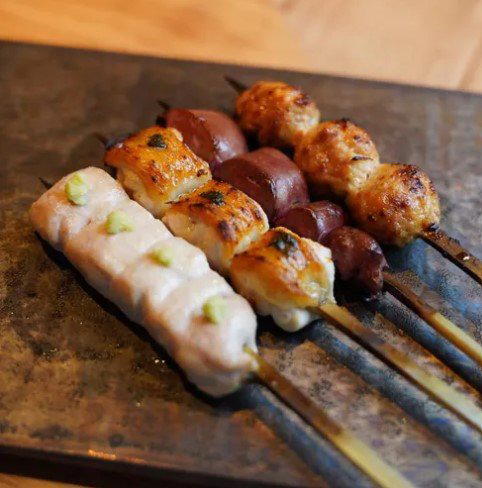
The menu
What to order
- Korean native chicken yakitori omakase
- Grilled hagfish
Yakitori in Busan: A Discipline That Rewards Attention
Suyeong-gu sits east of Busan's central density, a district where the restaurant scene runs closer to neighbourhood habit than destination tourism. In that context, finding a yakitori counter holding two consecutive Michelin Plates (2024 and 2025) is less surprising than it might seem elsewhere. Busan's Japanese food culture runs deep, a legacy of geography and trade across the Korea Strait, and the city has developed a credible tier of Japanese-style specialists that operate largely outside the international spotlight. Yakitori Haegong sits inside that tier, at an address on Millakbondong-ro 19 beon-gil that requires a deliberate journey rather than a casual detour.
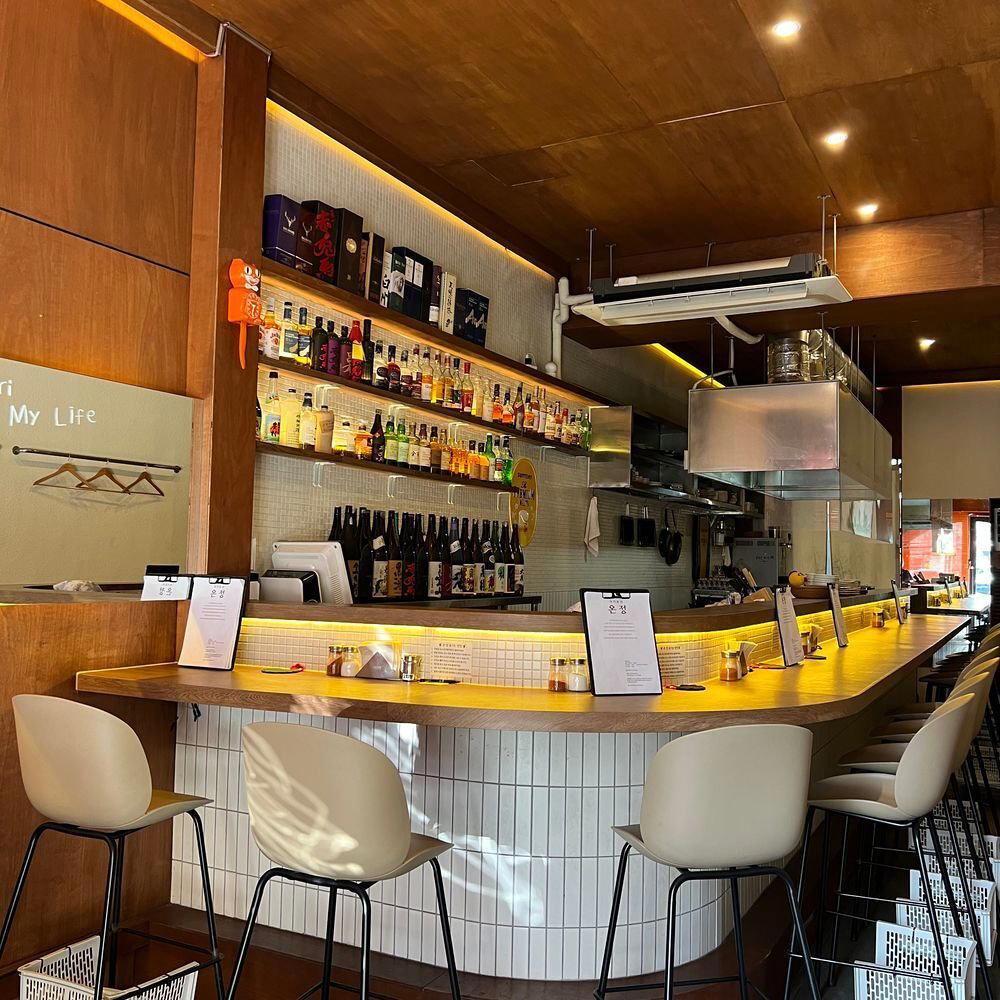
Approaching the space, the sensory register is immediately recognisable to anyone who has spent time around serious yakitori in Osaka or Kyoto: the particular smell of binchotan charcoal, the low percussion of skewers turning above a narrow grill, an interior calibrated for the counter rather than the table. This is the format that defines the category globally, whether at Ichimatsu in Osaka, Torisaki in Kyoto, or Torisho Ishii in Osaka. The counter arrangement is not aesthetic preference; it is a functional necessity for a cooking style in which timing is measured in seconds and direct communication between grill and guest determines quality.
How the Menu Is Built, and What That Tells You
Yakitori menus follow a logic that differs substantially from tasting-menu formats or à la carte restaurants. The architecture is additive: guests typically begin with approachable cuts (breast, thigh, wing) before moving to offal and specialty parts that require either acquired taste or a kitchen confident enough to source and handle them correctly. The progression is not prescribed by a printed card so much as guided by what the kitchen has that evening and what the grill cook reads from the table.
This structure puts specific pressure on sourcing and repetition. A yakitori counter succeeds or fails on its chicken supplier, on the quality of the tare (the basting sauce built up over time), and on the cook's management of heat. A Michelin Plate is not a starred distinction, but in this category it functions as a signal that the fundamentals are being handled with care. The recognition in consecutive years, 2024 and 2025, suggests consistency rather than a single strong inspection performance.
Within Busan's yakitori scene, Haegong operates alongside Yakitori Onjung, the other locally recognised address in the category. Between them, they represent a distinct sub-niche inside Busan's wider Japanese restaurant offering, which skews toward sushi, ramen, and izakaya formats rather than the more specialised grill tradition. For a broader picture of where yakitori fits in the city's dining pattern, our full Busan restaurants guide maps the landscape in more detail.
Price Tier and Competitive Context
Haegong's ₩₩ pricing places it in the middle of Busan's restaurant market, well below the ₩₩₩₩ tier occupied by Born and Bred in the steakhouse category and below the ₩₩₩ range where Mori operates for Japanese cuisine more broadly. It sits at a similar price point to Palate, which works in the contemporary category. For ₩₩ pricing with two Michelin Plate recognitions, the value proposition is direct: this is specialist cooking at accessible prices rather than fine-dining approximation.
The comparison matters because yakitori as a category globally tends to bifurcate between casual street-level execution and highly controlled omakase-format counters that price against fine dining.
Suyeong-gu as a Setting
The neighbourhood context matters for expectation-setting. Suyeong-gu is a residential and commercial district without the concentrated dining density of Haeundae or the food-street character of Nampo-dong. Restaurants here function within a local ecosystem rather than a tourist circuit, which typically produces a different relationship between kitchen and regular customer.
For visitors making the trip from central Busan or from hotels in Haeundae, this is a deliberate evening commitment rather than a walkable addition to other plans. That distance filters for intent, which in turn shapes the dining room atmosphere. Guests arriving in Suyeong-gu for yakitori specifically tend to be people who have already decided what they want from the evening.
Korea's Broader Japanese Grill Tradition
Yakitori in Korea occupies a different cultural register than it does in Japan. In Japan, the category ranges from standing bars near train stations to Michelin-starred counters in Tokyo and Osaka. In Korea, Japanese grill cooking arrived through a combination of historical proximity and contemporary food culture influence, and the serious end of the category remains a specialist interest rather than a mainstream format. Busan, as the city geographically closest to Japan and with the most direct cultural exchange, is the natural home for this kind of restaurant in Korea.
The broader Korean dining scene has developed significant international recognition at the fine-dining level, Mingles in Seoul and Gaon in Seoul operate at the highest tiers of recognition, and Kwon Sook Soo in Gangnam-gu represents the refined hanshik direction. But at the neighbourhood specialist level, quality cooking across multiple cuisines, Korean, Japanese, and contemporary, is distributed widely across cities. Busan's own local specialists, from the ₩ price point of 100.1. Pyeongnaeng for naengmyeon to the regional traditions explored elsewhere, reflect a city that eats well across formats and prices.
Planning a Visit
The address, 30-5 Millakbondong-ro 19 beon-gil, Suyeong-gu, is specific enough to navigate by map app without difficulty. The ₩₩ price tier means an evening here will not require the kind of reservation lead times that apply at the city's high-end counters, but for a small-format yakitori counter popular enough to earn consecutive Michelin recognition, arriving without some prior confirmation carries risk.
For those extending their Busan trip, our full Busan hotels guide covers accommodation across the city's main districts, and our full Busan bars guide maps where to continue the evening. The Busan experiences guide and wineries guide round out the full picture for a longer stay. Beyond Busan, the wider Korean culinary scene extends from the temple food traditions documented at Baegyangsa Temple in Jangseong-gun to the pork-forward regional cooking of The Flying Hog in Seogwipo.
Frequently asked questions
Can I bring kids to Yakitori Haegong?
Nothing in the venue's profile rules children out, but the format is worth considering. Yakitori dining is counter-paced and skewer-sequential, which suits adults who can follow an additive menu structure. Families with younger children may find the format less accommodating than a conventional à la carte restaurant.
What's the overall feel of Yakitori Haegong?
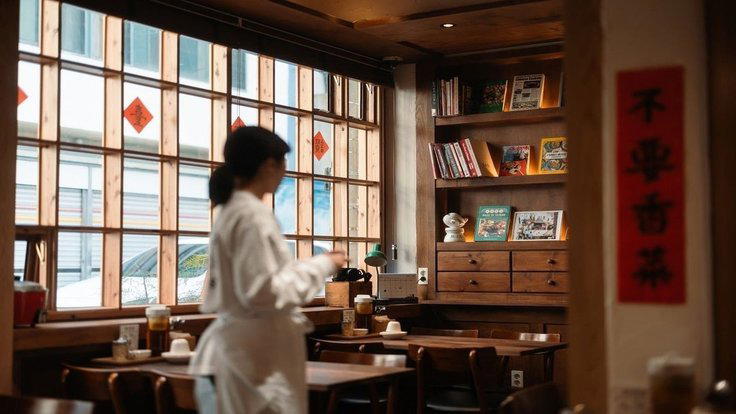
Haegong sits in Suyeong-gu, a residential district east of central Busan, which sets the tone: this is neighbourhood dining rather than destination theatre. The ₩₩ price tier and back-to-back Michelin Plate recognition in 2024 and 2025 suggest a kitchen operating with consistent precision inside a low-key setting.
What awards or recognition does Yakitori Haegong have?
Yakitori Haegong has received recognition including: Michelin Plate (2025); Michelin Plate (2024).
What's the best thing to order at Yakitori Haegong?
Yakitori menus are typically structured additively, guests build across skewer rounds, so following the kitchen's sequence rather than cherry-picking is generally the more reliable approach.
Is Yakitori Haegong focused on a specific cuisine style?
How much does it cost to eat at Yakitori Haegong?
Pricing at Yakitori Haegong is listed as ₩₩.
Where do I go for Yakitori Haegong?
Yakitori Haegong is located at 30-5 Millakbondong-ro 19 beon-gil, Suyoeng-gu, Busan, 48290, South Korea, Busan.
Category Peers
A quick peer reference to anchor this venue in its category.
| Venue | Cuisine | Price | Awards | Notes |
|---|---|---|---|---|
| Yakitori HaegongThis venue (the venue you are viewing) | Japanese Yakitori Omakase | $30–50 | Michelin Plate | Not listed |
| Palate | Contemporary French with Korean Fusion | $150–200 | 1 Michelin Star · La Liste Top Restaurants | Contemporary |
| Mori | Japanese Kaiseki | $200–300 | 1 Michelin Star | Japanese |
| Born and Bred | Modern Hanwoo Beef Omakase Steakhouse | $100–150 | Michelin Plate · World's 50 Best #51 | Steakhouse |
| 100.1. Pyeongnaeng | Pyongyang-style Naengmyeon | $10–20 | Michelin Bib Gourmand | Naengmyeon |
| Anmok | Modern Korean Dwaeji-Gukbap | $10–20 | Michelin Bib Gourmand | Dwaeji-gukbap |
Recognition history
Dated appearances from independent guides and award organizations, with the underlying list record or original source where available.
Michelin Plate
Michelin
Full recognition history (3 entries)
Michelin Plate
Michelin
Michelin Plate
Michelin