
Yakiniku Rin puts Tsukishima’s grill culture in a tighter, more local register than Ginza’s counter-driven dining rooms. Its repeated Tabelog 100 selections for yakiniku, including the Tokyo 2025 list, mark it as a serious beef address with a compact room and a practical bias toward small-group dinners rather than ceremony.
Pearl is the En Primeur Club membership app — saves, bookings, and concierge access live there. Same editors, same standards.
- Address
- 東京都中央区月島1-27-1 フロリスオーランティウム3 1F
- Phone
- +81335312985
- Website
- tabelog.com
 Saves & bookings on Pearl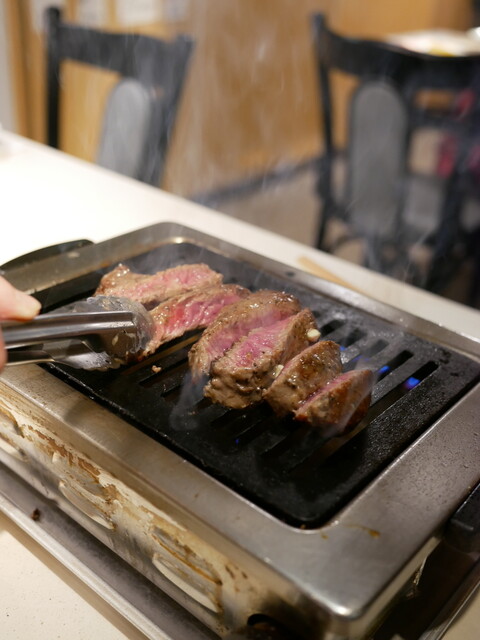
Tsukishima is not Ginza with softer lighting. It is lower, more residential and matter-of-fact, a district known more for griddles and side streets than chandelier dining. That context suits yakiniku: smoke, heat, conversation and timing sit at the centre, and the room’s scale keeps the experience closer to a neighbourhood grill than a polished hotel restaurant.
Tokyo’s premium beef dining often speaks two languages. One is the scripted counter, where a chef controls each bite. The other is the shared grill table, where sourcing, cut selection and group pacing express quality. Yakiniku Rin belongs to the second camp, a useful distinction for travellers who associate Tokyo luxury only with omakase. The pleasure is less surrendering control than understanding why yakiniku remains one of the city’s great social dining forms.
Tsukishima gives the grill a local rather than ceremonial frame
The neighbourhood changes the meal’s reading. Tsukishima’s food identity has long leaned casual and communal, with iron plates, narrow lanes and tables as gathering points. Yakiniku fits that grammar: diners share heat, timing and appetite. In a city where many acclaimed restaurants narrow the room to a hushed counter, this format keeps the table in play.
Recognition from Tabelog’s 100 selection for Tokyo yakiniku in 2025 places Yakiniku Rin inside a competitive local category, not a generic luxury bracket. That signal matters because Tokyo yakiniku is crowded, and its better rooms are judged by repeat local use as much as destination appeal. Earlier appearances on the same selection across multiple years point to consistency, not a single season of attention.
The price tier separates it from casual grill houses such as Sakazuki, Korean Dun, Sakana ya Ajisen and Kishida Ya, which sit in lower dinner bands among the comparison addresses. That does not make Rin formal. It means diners pay against more serious beef rooms, for cuts, pacing and confidence in the grill format rather than elaborate plating.
The wine question at a yakiniku table is about heat, fat and pace
A serious dining room is often judged by its cellar, but yakiniku tests drinks differently from French tasting menus or sushi counters. Beef fat, tare, salt, smoke and direct heat need drinks that reset the palate without bullying the meat. A deep list helps only if it understands that rhythm. Stronger programs in this category favour structure over ornament: acidity, tannin management, carbonation and temperature do more work than trophy labels.
No named sommelier or bottle list is publicly attached here, so the smarter editorial reading is category-based. At a yakiniku table, wine should be part of the grill sequence, not a separate performance. Leaner cuts can take lighter reds or high-acid whites; richer beef needs grip, chill or bitterness to keep the next bite clean. Beer, highballs and sake also suit the format because they move with the cooking rather than pause it. Serious diners should think less about prestige and more about how each glass behaves against smoke and rendered fat.
That is where Tokyo grill culture differs from Western steakhouse dining. The steakhouse often builds drama around one large cut and a red-wine cellar. Yakiniku moves through smaller portions and faster shifts in texture, seasoning and doneness. The drink program, whatever its scale, must follow that cadence. A status-heavy bottle can flatten the meal; a sharper, colder or more flexible pairing can make the table feel lighter and more precise.
Who this table makes sense for
This is a better choice for diners who want Tokyo beef culture without counter isolation. The strongest use case is a small group that enjoys managing the grill together and treats the meal as shared work rather than passive service. Tabelog’s occasion tagging leans toward friends, matching a format where conversation can survive in a way it often cannot at stricter chef-led counters.
The compact scale matters. The meal will not feel anonymous, and smoking permission changes the comfort calculus for some travellers. Private rooms are not part of the setup, so the experience is closer to an open dining room than a sealed business-dinner environment. Credit cards are accepted; electronic money and QR payments are not part of the payment mix.
For a wider Tokyo dining run, Rin pairs naturally with specialised addresses rather than broad all-day restaurants. The contrast with 124. KAGURAZAKA (Yakitori) is especially useful: both are fire-led Japanese formats, but yakitori narrows the focus to skewers and chef pacing, while yakiniku gives the table more control. Travellers building a casual Tokyo circuit might also compare it with 3 Chome no Curry Ya San, 12/10 Shinjuku ten, . 鮪と炭火焼き うお炭 秋葉原店 and 2D Cafe, not because the formats are similar, but because Tokyo rewards category-hopping.
Beyond Tokyo, beef-focused travellers can triangulate Rin against -Grilled beef Sukiyaki- KAMAKURA TANUKIAN 鎌倉 たぬき庵 in Kamakura, where sukiyaki’s sweetness and simmering structure create another reading of Japanese beef. For a broader Japan itinerary, EP Club’s restaurant notes also include [ki:] in Kyoto.cafe in Osaka.know in Kumamoto, (Shoku) Vietnam in Kawasaki and [Curry Senmon Ten] Maruyama Kyoju. in Sapporo. Outside Japan, Jōdo Saké Bar in Los Angeles and Onigiri Time in Pasadena show how Japanese drinking and casual-food formats translate abroad.
Rin’s value is not spectacle. It is the specificity of a Tokyo yakiniku room with repeated Tabelog 100 recognition, in a neighbourhood where communal cooking feels native rather than staged. For travellers mapping the city by dining format, it fills an important slot between casual grill culture and high-budget beef dining.
For broader planning, use Our full Tokyo restaurants guide alongside Our full Tokyo hotels guide, Our full Tokyo bars guide, Our full Tokyo wineries guide and Our full Tokyo experiences guide.
A Credentials Check
Comparable venues to place this listing in its category.
| Venue | Cuisine | Price | Notes |
|---|---|---|---|
| Yakiniku RinThis venue — the venue you are viewing | Yakiniku (Japanese BBQ) | $$$ | Not listed |
| Kuriya Otona Kurogi | Japanese Sweets and Shaved Ice Cafe | $$$ | Ueno |
| Chikuyotei (竹葉亭) | Traditional Edomae Unagi and Kaiseki | $$$ | Ginza |
| Teppanyaki Kurosawa | Teppanyaki Wagyu & Seafood | $$$ | Chūō |
| Nodoguro Senmon Ginza Nakamata | Nodoguro-focused Japanese set-course dining | $$$ | Chūō |
| 新ばし 笹田 | Traditional Kappo Japanese | $$$ | Minato |
Recognition history
Dated appearances from independent guides and award organizations, with the underlying list record or original source where available.
Tabelog 100 #66 · No. 66
Tabelog · Tabelog 100 - Yakiniku - TOKYO - 2025




At a Glance
- Cozy
- Intimate
- Group Dining
- Casual Hangout
- Special Occasion
- Date Night
- Standalone
- Sake Program
Compact and cozy, with a friendly, intimate feel rather than a spacious or formal dining room.