
Nagoya’s yakiniku scene is moving beyond broad beef luxury into tighter, more specialised rooms where horumon carries equal weight. Yakiniku Horumon Gensho fits that current direction: a compact Kita Ward address selected for Tabelog 100 Yakiniku EAST 2025, with black wagyu offal, female cattle and town-style grilling as its centre of gravity.
Pearl is the En Primeur Club membership app — saves, bookings, and concierge access live there. Same editors, same standards.
- Address
- Japan, 〒462-0032 Aichi, Nagoya, Kita Ward, Tsujicho, 2 Chome−33−3 サンシャイン辻町E 棟1F
- Phone
- +81 80-4385-2554
- Website
- instagram.com
 Saves & bookings on Pearl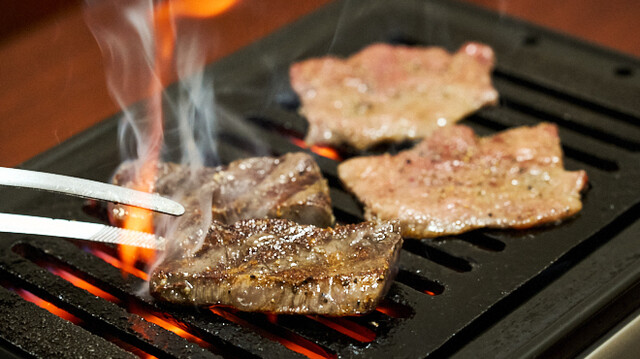
In Kita Ward, a serious yakiniku dinner feels different from the polished floors around Nagoya Station: more local, practical and town-style, with smoke management, small tables, counter seats, shochu and a room paced by beef hitting heat. Nagoya has ceremony-minded dining, from kaiseki rooms such as Onkaiseki Shiratama to precise noodle counters such as Tsukesoba Jinguji, but yakiniku follows another code: social, direct and unforgiving of weak sourcing.
Yakiniku Horumon Gensho opened in December 2023, and its selection for Tabelog 100 Yakiniku EAST 2025 is a fast signal of traction. The point is how Nagoya’s grill culture has narrowed into specialised formats: not only premium cuts or marbled beef as status, but horumon, tripe and lesser-used parts treated as the meal’s centre. That shift rewards discipline in portioning, turnover and stock, because offal-led yakiniku depends on freshness and confidence at the grill.
Horumon moves from side order to centre of the Nagoya grill
Japanese yakiniku has two parallel traditions. One is celebratory beef, judged by marbling, breed and cut hierarchy. The other is horumon culture, rooted in texture, offal handling and parts that demand attention from kitchen and diner. In Nagoya, where food identity already accepts strong flavours and practical formats, the second has room. Yakiniku Horumon Gensho sits in that lane, listed for yakiniku and tripe, with black wagyu offal and carefully selected female cattle as its stated focus.
That positioning gives the room a different competitive set from broad Japanese fine dining. Onkaiseki Shiratama operates in a higher price bracket and speaks in course structure; Cafe Tanaka Honten, Men Senmon Ten Ajiyoshi and Niboshi Chuka Soba Gyogyo show the city’s appetite for narrower specialisms at lower spend. Yakiniku lands between those poles: it asks for ingredient quality, but the diner stays active, with timing, heat, turning and pacing part of the value. Good beef alone cannot rescue a loose format.
The Tabelog 100 selection is a meaningful trust signal because it places the restaurant inside a recognised regional field, not just neighbourhood popularity. Tabelog’s Hyakumeiten lists tend to reward category depth, and yakiniku diners quickly distinguish premium branding from grill-room competence. A score of 3.65 adds another data point, especially in Japan, where high scores on major dining platforms move slowly and conservatively.
For readers mapping Nagoya dining more broadly, Our full Nagoya restaurants guide gives the citywide frame. Nearby editorial contrasts help, too: 1022, 451, Aaron, Alan. and All Day Dining Montmartre show how varied the city’s restaurant economy has become. Yakiniku here competes for the night when beef, fire and a compact room make more sense than a long formal progression.
A compact room built for pace, not ceremony
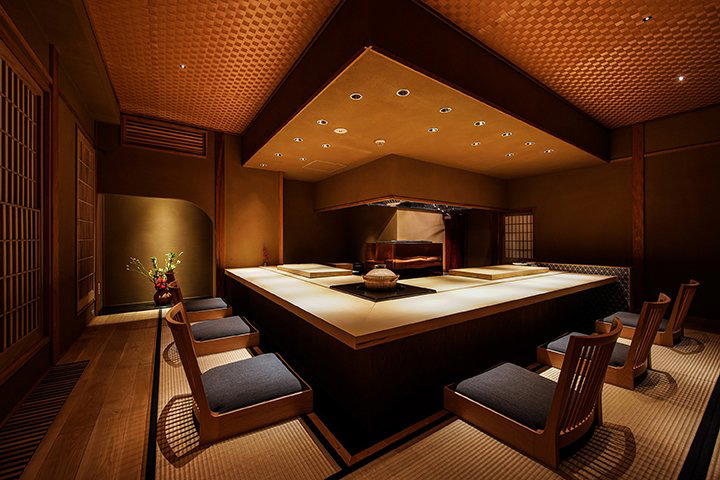
The format is part of the argument. Twenty-two seats, with counter seating and tatami room options, puts the restaurant in the small-room category where pacing matters. Additional seating can bring capacity to 24, but this is not a large beef hall. Private rooms for four or six and private use up to 20 explain why group composition changes the experience. Yakiniku is strongest when the table aligns on ordering style; a group chasing only lean cuts will read the meal differently from one interested in tripe and offal.
The rules underline that practical character. There is a one-drink minimum and small seating fee, and the restaurant notes that cooking smells may cling to clothing. That is not a drawback; it is a useful filter. Serious grill rooms are physical, not neutral. Smoke, heat and timing belong to the genre. Non-smoking seating with an outside smoking space keeps the room controlled, while shochu fits better than a forced wine narrative.
Premium casual dining in Japan increasingly favours small, reservation-led rooms with defined seating windows, cancellation rules, tighter inventory and less tolerance for vague arrivals. Yakiniku Horumon Gensho follows that pattern with three evening sessions and a same-day cancellation fee when numbers drop or a booking is cancelled. The policy is quality control: in an offal-focused restaurant, stock planning matters more than in a larger à la carte room.
Access also shapes the audience. This is not a station-front restaurant for impulse dining after a Shinkansen arrival. Kami Iida is the nearest station, with bus access via Tsujimoto-dori and coin parking next door for drivers. The location keeps the experience tied to a Nagoya neighbourhood rather than a visitor corridor. Travellers building a city itinerary can pair research with Our full Nagoya hotels guide, Our full Nagoya bars guide, Our full Nagoya wineries guide and Our full Nagoya experiences guide, but the dinner belongs to a local rhythm.
How to read the value of a newer yakiniku address
The useful way to judge a newer yakiniku room is not romance around origin stories. Chef biography is not the public story here, and that absence is fine. Stronger evidence sits in category selection, price positioning, capacity and speed of recognition. In a city where noodles can sit under JPY 1,000 and formal Japanese dining can run far higher, a dinner range around JPY 8,000 to JPY 9,999 places this restaurant in a middle-premium bracket: accessible enough for repeat local use, high enough that sourcing and handling must justify the spend.
That bracket is where Nagoya’s dining evolution becomes interesting. The city has long supported specialised everyday formats and now shows growing appetite for tighter, recognition-led rooms that do not mimic Tokyo luxury. Horumon-led yakiniku rewards knowledge without demanding solemnity. Diners who understand texture, fat, chew and grill timing will get more from the format than those seeking only familiar luxury cuts.
For broader Japan comparisons, useful links are category markers rather than direct peers: -Grilled beef Sukiyaki- KAMAKURA TANUKIAN 鎌倉 たぬき庵 in Kamakura shows another beef-led idiom; 鮪と炭火焼き うお炭 秋葉原店 in Tokyo points toward charcoal as a broader urban language;.cafe in Osaka.know in Kumamoto, (Shoku) Vietnam in Kawasaki and [Curry Senmon Ten] Maruyama Kyoju. in Sapporo show how tightly defined concepts travel across Japanese cities. Outside Japan, Jōdo Saké Bar in Los Angeles and Onigiri Time in Pasadena underline how Japanese formats often change when exported. In Nagoya, this room’s strength is that it needs no translation. It works inside the city’s appetite for specific, compact, ingredient-led dining.
The verdict is direct: choose this for a grill dinner where horumon is the point, not an add-on. The restaurant’s rapid move from 2023 opening to 2025 Tabelog 100 selection makes it a useful read on where Nagoya yakiniku is heading: smaller rooms, clearer specialisation, stricter planning and more respect for the beef parts that demand skill from both sides of the grill.
Side-by-Side Snapshot
Comparable venues at the same tier.
| Venue | Cuisine | Price | Notes |
|---|---|---|---|
| Yakiniku Horumon GenshoThis venue — the venue you are viewing | Traditional Wagyu Offal Yakiniku | $$ | Not listed |
| Torin Chi Nagoya shinsakae ten | Hakata-style grilled chicken izakaya | $$ | Naka |
| Shabushabu Creative Izakaya Butagin Sakae ten | Lettuce Shabu-Shabu & Pork Izakaya | $$ | Naka |
| Tonkatsu Tsuchimoto | Aged Premium Pork Tonkatsu | $$ | Chikusa |
| Ito | Traditional Tonkatsu | $$ | Nakamura |
| 料亭 香楽 | Nagoya Hitsumabushi Eel Restaurant | Not listed | Higashi |
Recognition history
Dated appearances from independent guides and award organizations, with the underlying list record or original source where available.
Tabelog 100 #38 · No. 38
Tabelog · Tabelog 100 - Yakiniku - EAST - 2025
Continue exploring
More in Nagoya
Restaurants in Nagoya
Browse all →
At a Glance
- Lively
- Cozy
- Energetic
- Group Dining
- Family
- Casual Hangout
- Date Night
- After Work
- Celebration
- Standalone
- Beer Program
- Sake Program
Current opening hours
- Monday
- 5–11 PM
- Tuesday
- 5–11 PM
- Wednesday
- 5–11 PM
- Thursday
- 5–11 PM
- Friday
- 5–11 PM
- Saturday
- 5–11 PM
- Sunday
- 5–11 PM
Hours can change for holidays and private events. Last verified .
Reviews and descriptions highlight a nostalgic, old-school "town yakiniku" atmosphere with a compact, likely smoke-filled space, casual vibe, and the bustle of families, couples, and office workers enjoying grilled wagyu offal in close quarters.