XeÔm Eatery on Karolinenstraße sits in Hamburg's Schanzenviertel, a neighbourhood where Vietnamese street food traditions meet the city's appetite for casual-but-serious eating. Against Hamburg's upper tier of tasting-menu dining, XeÔm occupies a different register: neighbourhood-scale, approachable in format, and grounded in the culinary logic of Vietnamese home cooking and its diaspora adaptations in Germany.
Pearl is the En Primeur Club membership app — saves, bookings, and concierge access live there. Same editors, same standards.
- Address
- Karolinenstraße 25, 20357 Hamburg, Germany
- Phone
- +49 40 18138263
- Website
- facebook.com
- Directions
- Get directions
 Saves & bookings on Pearl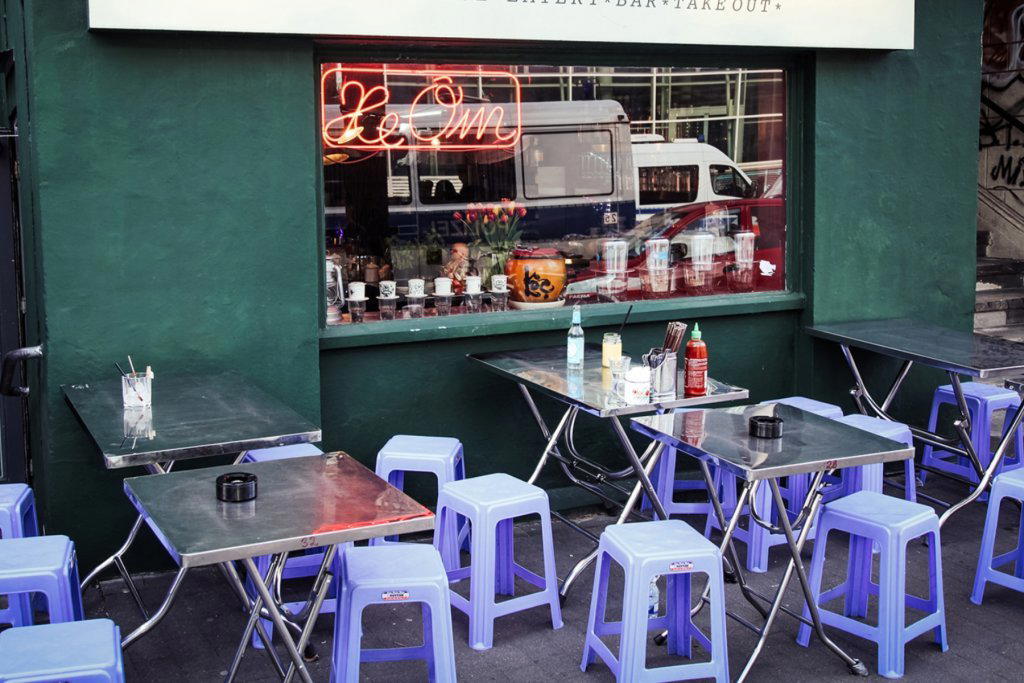
Karolinenstraße and the Schanzenviertel Dining Register
Hamburg's Schanzenviertel has long functioned as the city's counter-pressure valve against the formality of Eppendorf and HafenCity dining. Along Karolinenstraße, the buildings are narrow, the streetfronts low, and the dining culture tilts toward rooms that earn their reputation through consistency rather than ceremony. This is not the Hamburg of The Table Kevin Fehling or Restaurant Haerlin, where white-glove service and multi-course tasting menus define the evening. It is a neighbourhood where the physical container of a restaurant signals its intentions before a dish arrives.
XeÔm Eatery at Karolinenstraße 25 operates inside that neighbourhood logic. The name references the xe ôm, the Vietnamese motorbike taxi that became a symbol of informal urban transit and, by extension, the kind of unpretentious, direct service that Vietnamese street food culture prizes. That framing carries design weight: spaces named after mobility and informality tend to resist the upholstered stillness of fine dining rooms, and in Hamburg's Vietnamese dining segment, that distinction matters.
The Physical Container: Space as Editorial Statement
In German cities with substantial Vietnamese diaspora communities, the dining room has historically been an afterthought, secondary to the food itself. That pattern has shifted across Hamburg's Schanzenviertel over the past decade. Restaurants in this tier increasingly treat the room as part of the argument, a position that separates them from older Vietnamese canteen-style venues and aligns them with the broader European shift toward design-conscious casual dining.
XeÔm's address on Karolinenstraße places it in one of Hamburg's denser mixed-use corridors, where ground-floor retail and restaurant spaces carry the weight of foot traffic from the Schanzenviertel's evening crowd. The spatial character of this stretch tends toward compact interiors with street-facing windows, a format that collapses the boundary between inside and outside and gives even small rooms a sense of presence. This is the spatial logic that distinguishes the Schanzenviertel from the more withdrawn interiors of Hamburg's hotel-restaurant circuit, typified by properties closer to the Alster.
For Vietnamese restaurants operating at this level, the room's design also carries a cultural argument. The leading examples in this European diaspora tier, from Paris's 13th arrondissement to Berlin's Lichtenberg, use spatial choices to signal whether the kitchen is oriented toward Vietnamese home cooking, toward street-food fidelity, or toward a hybrid European interpretation. Hamburg's Schanzenviertel, with its educated and well-travelled dining public, rewards restaurants that make that argument clearly through space and plate together.
Vietnamese Dining in Hamburg: The Competitive Frame
Hamburg's Vietnamese restaurant population is one of the larger in northern Germany, shaped by waves of migration from the 1970s onward and later by the post-reunification movement of Vietnamese traders and families who had settled in East Germany. That history produced a dining scene with genuine depth, ranging from pho specialists in Wandsbek to modern Vietnamese kitchens in the inner districts. XeÔm sits within the latter category, operating in a part of the city where its neighbours include some of Hamburg's more internationally-oriented casual restaurants.
Against Hamburg's upper tier, the comparison set is deliberately different. bianc and Lakeside anchor the city's premium dining bracket at the €€€€ level, alongside 100/200 Kitchen, which has built a strong following for its creative format. XeÔm does not compete with that tier. Its competitive set is the growing group of Hamburg restaurants that have made a deliberate choice to operate at neighbourhood scale, with cooking that rewards return visits rather than single high-occasion dinners.
Across Germany's broader restaurant culture, this is a meaningful position. The country's Michelin-starred circuit, which includes destinations like Schwarzwaldstube in Baiersbronn, Aqua in Wolfsburg, and Vendôme in Bergisch Gladbach, operates in a separate register. The neighbourhood-scale dining that XeÔm represents is not a lesser version of that ambition; it is a different category with different success metrics, closer in spirit to the format discipline seen at places like Lazy Bear in San Francisco or the focused specificity of CODA Dessert Dining in Berlin, both of which have built strong reputations by committing fully to a defined format rather than trying to occupy multiple tiers simultaneously.
What the Karolinenstraße Address Implies for the Visit
Locating a restaurant on Karolinenstraße carries practical implications for the visitor. The Schanzenviertel is well-connected by U-Bahn (U3, Feldstraße station) and S-Bahn (S21/S31, Sternschanze station), placing XeÔm within easy reach from both the city centre and Hamburg's western residential districts. The neighbourhood's evening rhythm runs earlier than in some European capitals, with dinner services typically filling between 18:30 and 21:00, a pattern common to Hamburg's casual dining tier.
Weekend evenings in the Schanzenviertel attract significant foot traffic, and the neighbourhood's more popular small restaurants fill quickly.
For those building a Hamburg itinerary around a range of dining experiences, the Schanzenviertel makes a logical anchor for a casual evening that complements a higher-format dinner elsewhere in the city. Our full Hamburg restaurants guide maps the full range, from neighbourhood-scale kitchens to the city's leading tasting-menu counters.
Vietnamese Cooking in the European Diaspora Context
The broader pattern of Vietnamese cooking in European cities is worth understanding for any visitor approaching XeÔm. Vietnamese cuisine arrived in Germany in distinct waves, each bringing different regional cooking traditions and producing different restaurant cultures. The northern Vietnamese influence, strongest in pho and bánh mì, dominated early; later arrivals brought southern Vietnamese flavours, including the herb-heavy freshness of Ho Chi Minh City cooking and the complex broth traditions of central Vietnam.
Hamburg's Vietnamese restaurant scene reflects that layered history, and restaurants in the Schanzenviertel that take the food seriously tend to signal which part of that tradition they are drawing from. This is the same kind of regional specificity that distinguishes the leading Italian regional cooking in European cities, or the difference between Cantonese and Sichuan kitchens. For comparison, the precision with which a restaurant like JAN in Munich positions itself within its culinary reference set offers a useful model: clarity of intent, communicated through both the room and the plate.
Across Germany's broader Vietnamese dining population, the kitchens that have earned the strongest reputations are those that resist generalism, that commit to a specific regional register or a clearly defined format, and let the consistency of that commitment build the audience over time. That is the competitive logic operating in XeÔm's neighbourhood, and the frame through which the space at Karolinenstraße 25 is leading understood.
Continue exploring
More in Hamburg
Restaurants in Hamburg
Browse all →
Bars in Hamburg
Browse all →

Hotels in Hamburg
Browse all →
Wineries in Hamburg
Browse all →
At a Glance
- Industrial
- Trendy
- Cozy
- Lively
- Casual Hangout
- Open Kitchen
Current opening hours
- Monday
- 12–10 PM
- Tuesday
- 12–10 PM
- Wednesday
- 12–10 PM
- Thursday
- 12–10 PM
- Friday
- 12–10 PM
- Saturday
- 12–10 PM
- Sunday
- 12–10 PM
Hours can change for holidays and private events. Last verified .
Buzzy industrial-chic setting with street food vibe, folding tables, plastic chairs, and lively atmosphere.
Know Before You Go
- Getting there
- Karolinenstraße 25, 20357 Hamburg, Germany