Wok In Duane
Our verdict
Wok In Duane sits at 181 Duane Street in Tribeca, occupying a corner of one of Lower Manhattan's most concentrated blocks of serious dining. The address places it within walking distance of a neighbourhood that has steadily traded its warehouse past for culinary ambition. Precise cuisine details are sparse in public records, making direct verification the most reliable first step before visiting.

Pearl is the En Primeur Club membership app, where members save venues, book tables and use the concierge.

The menu
What to order
- Typhoon Lobster
- Flying Noodles
- Mongolian Beef
- Tom Yum Rice Noodles Soup
Tribeca's Dining Density and Where Wok In Duane Fits
Duane Street runs through one of Tribeca's quieter residential corridors, where cast-iron facades and cobblestones give way to ground-floor dining rooms that tend to attract regulars rather than tourists. The neighbourhood's dining character is less about spectacle and more about sustained quality: landlords here deal with long-operating tenants, and restaurants that survive more than a few years on these blocks tend to do so on the strength of their regulars rather than foot traffic or social media visibility. Wok In Duane, at 181 Duane St, sits inside that pattern. For broader context on how Tribeca compares to the city's other serious dining districts, see our full New York City restaurants guide.
The name signals a wok-forward kitchen, which in New York's current dining climate occupies an interesting position. The city's highest-profile Asian fine dining has moved decisively toward tasting-menu formats: Atomix and Jungsik New York both operate at the $$$$ tier with multicourse structures, while Masa represents the absolute ceiling of Japanese counter dining in the country. Wok-centric cooking, by contrast, is still largely understood as a different category: faster, hotter, often à la carte, and defined by the physical intensity of high-heat technique rather than by the slow narrative arc of a tasting progression. Whether Wok In Duane leans into that tradition or complicates it with a more composed format is something the available public record does not yet confirm.
The Wok as Culinary Instrument: Why Technique Matters Here
In Chinese and Chinese-American cooking, the wok is not just equipment, it is the primary variable that separates restaurant-quality results from what most home cooks can achieve. Wok hei, the slightly smoky, breath-of-the-wok flavour produced by extreme heat and rapid movement, requires flame outputs that domestic stoves cannot match. New York's Chinese dining scene has a deep history with this, from the canal street roast specialists to the more recent wave of regional Chinese cooking that brought Sichuan and Yunnan flavours into neighbourhoods beyond Chinatown. A restaurant that names itself after the wok is making an implicit claim about technical focus, one that positions the kitchen's execution at the centre of the experience rather than the décor, the narrative, or the sourcing story.
In that sense, the team dynamic at a wok-forward restaurant is structured differently from what you find at tasting-menu operations. At counters like Per Se or Le Bernardin, the front-of-house carries heavy interpretive weight: explaining the provenance of ingredients, guiding guests through the arc of a multicourse meal, pairing wine to each course. At a wok kitchen, the collaboration tends to be faster and more physical, cooks working in close formation around a bank of burners, a service team calibrated to the pace of dishes arriving at the pass in rapid succession rather than at fifteen-minute intervals. This is not a lesser form of collaboration; it is a different one, where the floor has to read the kitchen's rhythm and communicate it to guests without the scaffolding of a printed tasting menu.
Tribeca's Competitive Context for Mid-Register Dining
Tribeca's dining scene has historically supported a range of price points, but it is the mid-register that carries the neighbourhood's day-to-day identity. The high-end tasting rooms exist elsewhere in Manhattan with more concentration: the Upper West Side and Midtown carry operators like Per Se and Le Bernardin, while downtown's fine dining tends to cluster in the West Village and around the Flatiron. Tribeca's strength is in places that attract a regular neighbourhood clientele, dining two or three times a month rather than once a year for a special occasion.
Nationally, the most scrutinised versions of this kind of casual-serious dining appear at operations like Lazy Bear in San Francisco or Alinea in Chicago, both of which have pushed the boundaries of what collaborative kitchen-to-table service can look like. But those are high-concept, high-ticket formats. The Tribeca model that Wok In Duane's address suggests is more grounded: cooking that takes technique seriously without requiring guests to commit to a three-hour evening.
Other American restaurants worth measuring against, for their different approaches to ambitious everyday dining, include Blue Hill at Stone Barns in Tarrytown, Bacchanalia in Atlanta, and Providence in Los Angeles, each of which has built a loyal local following by making serious cooking feel like a natural habit rather than a destination event. At the international tier, 8 1/2 Otto e Mezzo Bombana in Hong Kong and Alain Ducasse Louis XV in Monte Carlo demonstrate what sustained front-of-house and kitchen collaboration produces at the uppermost tier. For farm-to-table precision closer to New York, Single Thread Farm in Healdsburg and The French Laundry in Napa offer the clearest benchmarks. In the South, Emeril's in New Orleans and Addison in San Diego round out the national picture, as does The Inn at Little Washington for its decades-long model of small-town fine dining built on team cohesion.
Planning Your Visit
Address: 181 Duane St, New York, NY 10013. Neighbourhood: Tribeca, Lower Manhattan, accessible via the Franklin St station on the 1/2 lines or Chambers St on the A/C/E. Reservations: Confirm availability and preferred contact method directly with the restaurant, as no booking platform or phone number is confirmed in public records. Budget: Price range is not confirmed; expect to clarify when booking. Dress: No dress code is documented; Tribeca's dining rooms at this address level typically run smart-casual.
Frequently asked questions
What is Wok In Duane known for?
Wok In Duane is a Tribeca restaurant at 181 Duane Street whose name foregrounds wok-based cooking, a technique-driven approach that positions the kitchen's heat and execution at the centre of the experience.
What's the signature dish at Wok In Duane?
No specific signature dishes are confirmed in public records for Wok In Duane at this time. The restaurant's name references wok cooking, which across Chinese and Chinese-American culinary traditions spans a wide range of preparations. For confirmed dish information, check with the restaurant directly or consult recent diner reviews from named publications.
How far ahead should I plan for Wok In Duane?
In Tribeca generally, mid-register restaurants at this address level tend to book one to two weeks ahead for weekend evenings and are often walkable mid-week.
How does Wok In Duane handle allergies?
If you have dietary restrictions, the most reliable step is to contact the restaurant before visiting, as no website or phone number is confirmed in available data. New York City restaurants are required by local health code to accommodate reasonable allergy-related requests, and wok kitchens in particular can often adjust preparations given the à la carte flexibility that format typically allows.
Is Wok In Duane suitable for a business dinner in Tribeca?
Tribeca's dining rooms have a long history as business-dinner venues, given the neighbourhood's concentration of finance and media offices. A wok-forward kitchen tends toward a livelier, faster-paced atmosphere than a tasting-menu room, which can work well for informal client dinners but may not suit extended, quiet conversation. Calling ahead to describe your group's needs is the most direct way to assess fit.
Where It Fits
Comparable venues nearby, for context on price, style, and recognition.
| Venue | Cuisine | Price | Notes |
|---|---|---|---|
| Wok In DuaneThis venue (the venue you are viewing) | Modern Pan-Asian Wok | $30–50 | Not listed |
| Lilli and Loo | Gluten-Free Chinese | $20–30 | Chelsea-Hudson Yards |
| Han Dynasty Upper West Side | Authentic Sichuan Chinese | $20–30 | Upper West Side (Central) |
| Szechuan Opera | Authentic Szechuan | $20–30 | Flushing-Willets Point |
| Yum Cha | Cantonese Dim Sum & Chinese | $20–30 | Greenwich Village |
| Deluxe Food Market | Cantonese Dim Sum and Hot Food | $10–20 | SoHo-Little Italy-Hudson Square |
Continue exploring
More in New York City
Restaurants in New York City
All restaurants in New York City →
Bars in New York City
All bars in New York City →






Details
- Modern
- Trendy
- Intimate
- Group Dining
- Casual Hangout
- After Work
- Open Kitchen
- Craft Cocktails
- A La Carte
- Small Plates
- Allergy Accommodating
Current opening hours
- Monday
- 11 AM–10 PM
- Tuesday
- 11 AM–10 PM
- Wednesday
- 11 AM–10 PM
- Thursday
- 11 AM–10 PM
- Friday
- 11 AM–11 PM
- Saturday
- 12–11 PM
- Sunday
- 12–10 PM
Hours can change for holidays and private events. Hours as of .
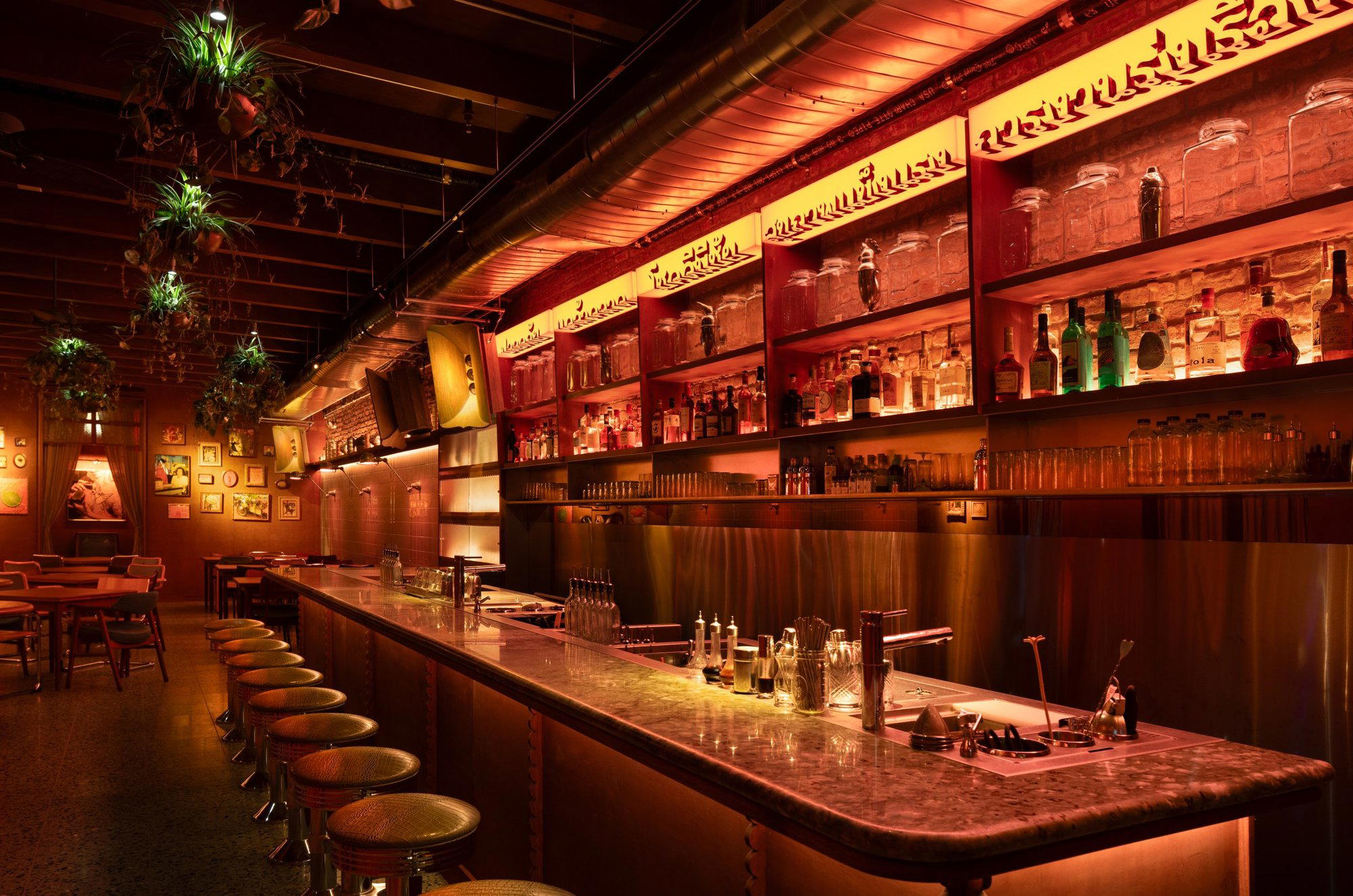
Moody lighting, exposed brick walls, and chic, refined intimate layout.