Wo Hop

Our verdict
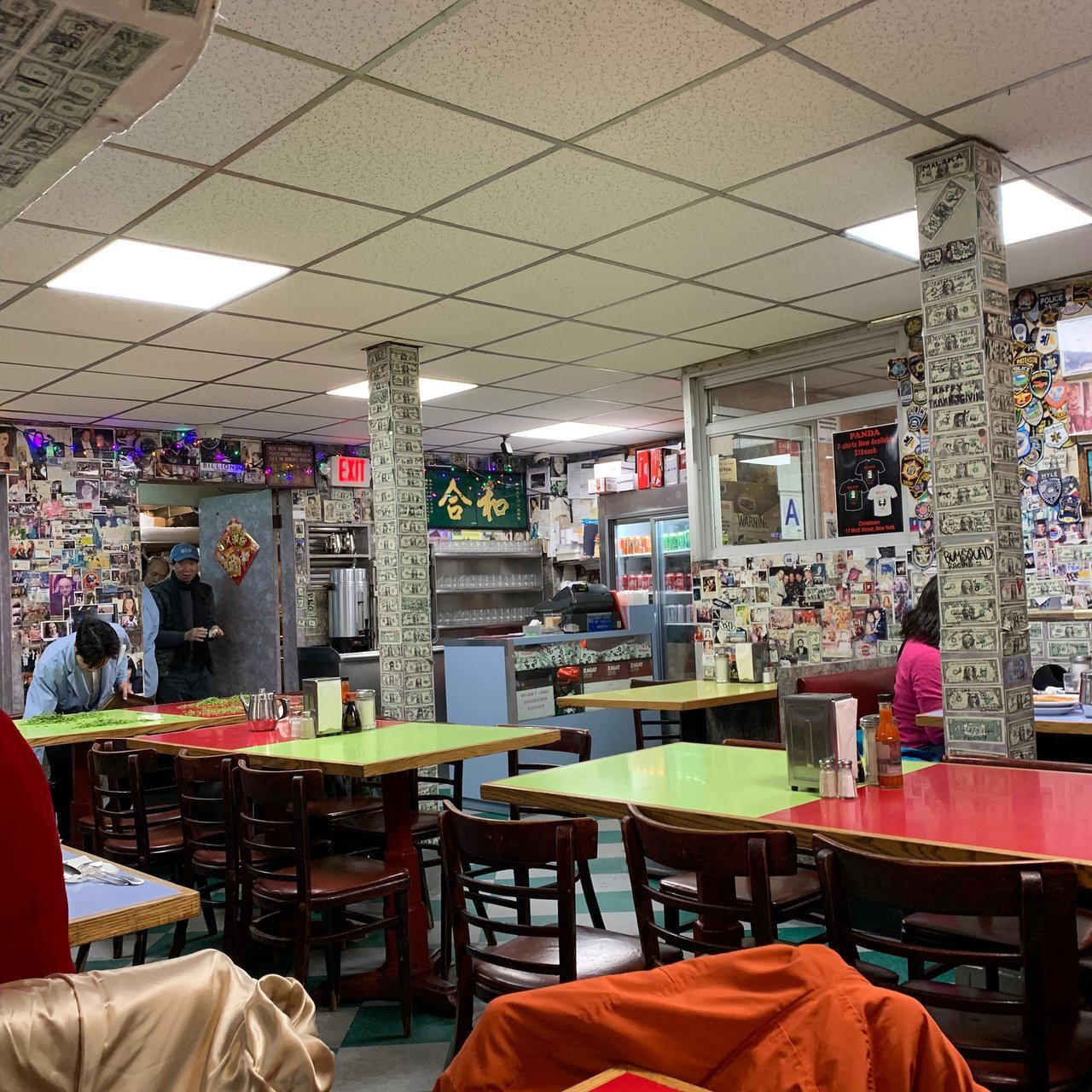
Open since the 1930s on Mott Street in Manhattan's Chinatown, Wo Hop is a Cantonese institution that has earned consecutive recognition on Opinionated About Dining's Cheap Eats in North America list, reaching #379 in 2025. The kitchen turns out straightforward Cantonese classics at a pace and price that few addresses in the neighbourhood can match, drawing a loyal cross-section of downtown New York regulars and visitors alike.

Pearl is the En Primeur Club membership app, where members save venues, book tables and use the concierge.
The menu
What to order
- Beef chow fun
- Egg foo young
- Hot and sour soup
- Fried dumplings
Mott Street's Long Game: Cantonese Staying Power in Lower Manhattan
Chinatown's restaurant turnover is relentless. Leases shift, chefs move on, and kitchens that drew crowds a decade ago quietly disappear behind new signage. Against that backdrop, Wo Hop's decades-long presence at 17 Mott Street reads less as nostalgia and more as evidence of something structurally sound. Operating since the 1930s, it occupies the same address it always has, in a neighbourhood that has absorbed wave after wave of demographic and economic pressure without losing its core identity as one of New York's most concentrated Cantonese food corridors.
The context matters here. Cantonese cuisine in New York does not operate as a single tier. At one end, tasting-menu restaurants with fine-dining pricing have reshaped expectations of what Chinese cooking can look like in a formal room. At the other, the neighbourhood's older institutions maintain a register that is defined by efficiency, volume, and price discipline. Wo Hop belongs firmly in the second category, and the Opinionated About Dining Cheap Eats in North America recognition, Recommended in 2023, #510 in 2024, and #379 in 2025, confirms that its position in that category is strengthening, not merely persisting.
What the OAD Ranking Actually Says
Opinionated About Dining runs one of the more credible independent restaurant surveys in North America, built on votes from a relatively small, self-selecting group of serious eaters rather than a broad public. Its Cheap Eats list is not a casual roundup; it reflects the kind of repeated, considered patronage that tends to reward consistency over novelty. Moving from Recommended to #510 to #379 across three consecutive years is a meaningful upward trajectory, suggesting that the kitchen has maintained or improved its output even as the list's competition has grown.
The comparison set for lower Manhattan dining more broadly includes Le Bernardin, Atomix, Eleven Madison Park, Masa, and Per Se, all operating at the $$$$ tier with tasting menus and reservation infrastructure to match. Wo Hop competes on none of those terms. Its distinction is the opposite: a short-order Cantonese kitchen that has held its ground for the better part of a century.
Cantonese in Context: What This Kitchen Represents
Cantonese cooking, in its classic form, is one of the most technique-dependent regional Chinese cuisines. Wok hei, the specific charred aroma produced by cooking over very high heat, depends on equipment, timing, and repetition. The soups require long, careful reduction. The roasted and barbecued proteins that define a Cantonese kitchen window are the result of methods refined over generations. None of this is casual, and the Chinatown kitchens that execute it reliably are more valuable than they often appear from the outside.
The broader Cantonese dining tradition in cities like Hong Kong, Guangzhou, and across the Chinese diaspora has always separated the utilitarian from the ceremonial. The everyday register, congee, noodles, stir-fries, roasted meats, functions as daily sustenance, not occasion dining. Wo Hop operates in that everyday register, and the consistency that the OAD list rewards is exactly the consistency that defines a well-run kitchen in this tradition: the same dish, executed the same way, day after day. For a parallel from a different geography, consider how the Cantonese tradition translates into high-ceremony formats at Chef Tam's Seasons in Macau or into the kind of refined Cantonese room that 102 House in Shanghai represents. Wo Hop occupies the other end of that spectrum, without apology.
The Sustainability Argument in a Long-Running Kitchen
Environmental consciousness in restaurants tends to get framed around sourcing declarations and zero-waste programs. But there is a quieter version of the same argument that applies to kitchens like this one. A restaurant that has operated in the same location for decades, serving a tightly defined menu without constant reinvention, generates a different kind of footprint than a venue that relaunches annually with new sourcing relationships, new staff training cycles, and new equipment. Supply chains stabilise. Supplier relationships mature. Waste ratios improve simply through the repetition of a consistent menu.
Cantonese cooking traditions also have structural efficiencies built in. Whole-animal utilisation, broths made from bones and trim, rice-based staples that carry lower carbon footprints than protein-heavy Western tasting menus, these are not marketing positions at a kitchen like Wo Hop. They are the default practice of a tradition that developed in conditions where waste was not an option. That this sits alongside growing recognition from a serious evaluator like OAD is not coincidental. Sustained relevance in the cheap-eats tier requires exactly the kind of operational discipline that produces a lighter resource footprint as a side effect.
This stands in instructive contrast to many of the destination kitchens that attract attention in the same city. Operations like Alinea in Chicago, The French Laundry in Napa, Single Thread Farm in Healdsburg, Lazy Bear in San Francisco, or Providence in Los Angeles invest considerable resources in explicit sustainability programs. The quiet version of that story, practiced by kitchens with decades of operational consistency, rarely gets the same narrative treatment.
Hours and Access
Wo Hop operates Monday through Saturday from 10:30 am to 10:00 pm, and Sunday from 10:30 am to 9:00 pm. The Mott Street address puts it at the centre of Manhattan's Chinatown, within walking distance of the Canal Street subway hub. No booking method is listed; the operation runs on walk-in traffic, consistent with its format and price position.
For broader New York City planning, see our full guides to New York City restaurants, New York City hotels, New York City bars, New York City wineries, and New York City experiences. For reference points at the opposite end of the price spectrum in other American cities, Emeril's in New Orleans offers a useful comparison in terms of institutional longevity in a different culinary register.
Quick reference: 17 Mott St, New York, NY 10013. Open daily from 10:30 am; closes 10 pm Mon–Sat, 9 pm Sun. Walk-in only. OAD Cheap Eats North America #379 (2025).
Frequently asked questions
What is the signature dish at Wo Hop?
What the OAD Cheap Eats recognition, Recommended in 2023, #510 in 2024, #379 in 2025, does confirm is that the kitchen's Cantonese output has been evaluated positively by a demanding, repeat-visitor survey pool across three consecutive years. The cuisine type is Cantonese, meaning the menu almost certainly covers the foundational registers of that tradition: roasted and barbecued meats, congee, stir-fries, and noodle dishes. The leading approach is to visit the kitchen directly, where the menu is the clearest guide.
What makes Wo Hop worth seeking out?
Two things carry the argument: longevity and trajectory. Wo Hop has operated on Mott Street since the 1930s, which in New York's restaurant environment represents a form of peer-reviewed endorsement that no award can fully replicate. On top of that, the OAD Cheap Eats ranking has moved upward for three straight years, reaching #379 in North America in 2025. That combination, decades of operational history plus a strengthening critical position, is relatively rare in any city, and particularly in a neighbourhood as competitive and fast-moving as Manhattan's Chinatown.
Reputation Context
| Venue | Cuisine | Price | Awards | Notes |
|---|---|---|---|---|
| Wo HopThis venue (the venue you are viewing) | Classic Cantonese-American Chinatown | $20–30 | Not listed | Not listed |
| Le Bernardin | French Seafood Fine Dining | $300–500 | 3 Michelin Stars · World's 50 Best #13 | French, Seafood |
| Atomix | Modern Korean Tasting Menu | $300–500 | 2 Michelin Stars · World's 50 Best #7 | Modern Korean, Korean |
| Masa | Seasonal Hokkaido Tempura Omakase | $150–200 | Tabelog 100 #34 | Sushi, Japanese |
| Per Se | French Fine Dining Tasting Menu | $300–500 | 3 Michelin Stars · World's 50 Best #40 | French, Contemporary |
| Eleven Madison Park | Contemporary Plant-Based Fine Dining | $300–500 | 3 Michelin Stars · World's 50 Best #4 | French, Vegan |
Recognition history
Dated appearances from independent guides and award organizations, with the underlying list record or original source where available.
Opinionated About Dining Cheap Eats in North America Recommended
Opinionated About Dining
Full recognition history (4 entries)
Opinionated About Dining Cheap Eats in North America Ranked #379
Opinionated About Dining
Opinionated About Dining Cheap Eats in North America Ranked #510
Opinionated About Dining
Opinionated About Dining Cheap Eats in North America in Recommended
Opinionated About Dining
Continue exploring
More in New York City
More from Chef Various
Browse all →
Restaurants in New York City
All restaurants in New York City →
Bars in New York City
All bars in New York City →









Details
- Well Known
- Cozy
- Energetic
- Casual Hangout
- Late Night
- Group Dining
- Historic Building
- A La Carte
Current opening hours
- Monday
- 10:30 AM–10 PM
- Tuesday
- 10:30 AM–10 PM
- Wednesday
- 10:30 AM–10 PM
- Thursday
- 10:30 AM–10 PM
- Friday
- 10:30 AM–10 PM
- Saturday
- 10:30 AM–10 PM
- Sunday
- 10:30 AM–9 PM
Hours can change for holidays and private events. Hours as of .
Cramped, quirky basement with sensory overload from bright blue-and-red tables, fast-paced service, and lively crowds.