Little Pepper

Little Pepper in College Point, Queens has been a reference point for Sichuan cooking in New York for years, drawing regulars from across the city for a menu that holds to the full register of the cuisine, numbing spice, fermented depth, and clean-heat precision. Ranked by Opinionated About Dining's Cheap Eats list three consecutive years through 2025, it occupies a tier of its own among the borough's Chinese restaurants.
Pearl is the En Primeur Club membership app — saves, bookings, and concierge access live there. Same editors, same standards.
- Address
- 18-24 College Point Blvd, College Point, NY 11356
- Phone
- (718) 939-7788
- Website
- facebook.com
- Directions
- Get directions
 Saves & bookings on Pearl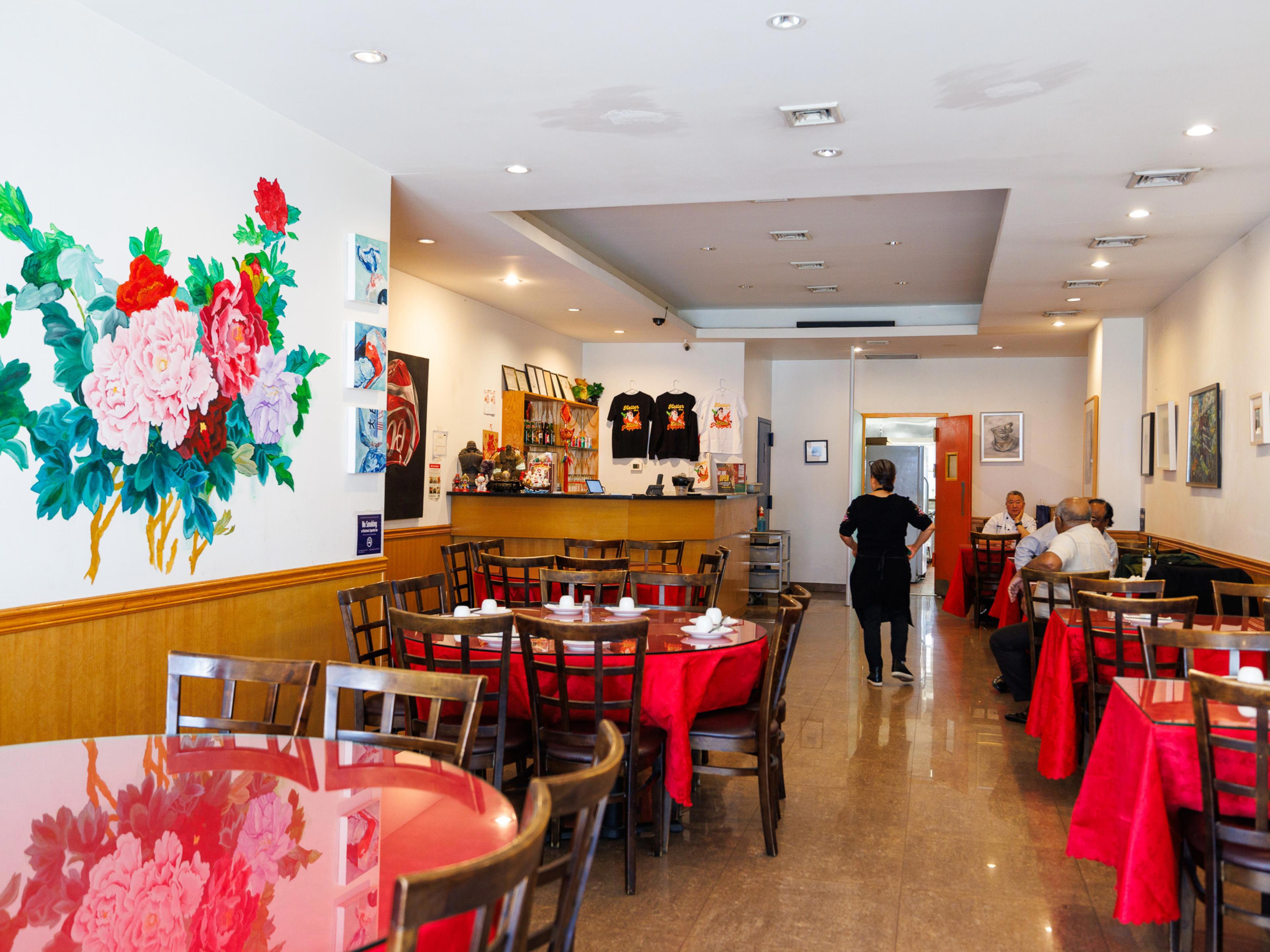
A Sichuan Menu Built on Range, Not Shortcuts
Little Pepper is a Sichuan Chinese restaurant in College Point, Queens, with a casual dress code and walk-in-friendly seating. For Sichuan cooking, that reason has long been Little Pepper, which has held a place on the New York City restaurant circuit well beyond its neighbourhood's usual reach. Opinionated About Dining placed it on its North American Cheap Eats list in 2023, ranked it 534th in 2024, and 567th in 2025. That consistency matters more than any single-year position.
The broader context for that recognition is worth stating plainly. New York's Sichuan scene has, over the past two decades, divided into two broad operating modes. The first is Americanized heat: dishes adjusted toward approachability, spice levels modulated, the more confrontational elements of the cuisine softened. The second is a more direct interpretation, anchored in the mala (numbing-spicy) balance that defines the tradition, with dried chilies, Sichuan peppercorns, and fermented pastes deployed in proportions closer to how the food functions in Sichuan province. Little Pepper belongs clearly to the second group, which is why it draws the kinds of diners who make cross-borough trips.
How the Menu Is Structured
What a Sichuan menu reveals, more than most Chinese regional menus, is the kitchen's commitment to the cuisine's internal logic. The tradition is not monolithic: it encompasses cold-dressed dishes built on chili oil and sesame paste, braises defined by doubanjiang (fermented broad bean paste), dry-fried preparations where moisture is cooked out to concentrate flavour, and hot-pot or water-boiled formats where the spiced broth carries the dish. A kitchen that handles all of these categories seriously is a different operation than one that focuses only on particularly recognizable hits.
At the restaurant, the menu spans these categories rather than retreating to a shorter, safer selection. Cold appetizers, including preparations like cold sesame noodles or chili-oil dressed proteins, anchor the front of a meal. The mid-menu moves through stir-fries, braises, and the restaurant's versions of signature Sichuan formats: dishes built around the numbing-heat combination that the cuisine is known for, executed in ways that respect the technique rather than approximating it. This architecture signals a kitchen that reads the cuisine whole, not in fragments.
Each occupies a different price position and neighbourhood context from the restaurant, and the comparison is instructive: the Queens-based restaurant operates with lower overhead, serves a more locally embedded clientele, and faces a different set of expectations from its regular customers. The result is a kitchen that tends to cook for people who know the food rather than people discovering it for the first time.
Chef Cheng Ying Wu and the Tradition Behind the Kitchen
Sichuan cooking is a craft tradition with a long professional pipeline in China, and kitchens that hold to its standards typically have a lead cook with deep grounding in the cuisine's techniques. At the restaurant, Chef Cheng Ying Wu heads the kitchen. What the menu reflects, more than any individual biography, is the kind of training that produces a cook comfortable across the full range of Sichuan preparations, from the controlled heat of dry-frying to the sustained depth of slow-braised dishes. That range is what gives the menu its structural coherence.
The price position reinforces the broader point about this category of cooking in the United States, where the restaurant lands around $25 per person. Sichuan cuisine at its most serious is not inherently expensive, in Sichuan province, many of its reference-point dishes are everyday food. The cheap-eats recognition from Opinionated About Dining places the restaurant in a tier where the quality signal comes not from price or tableside ceremony but from cooking fidelity. For context on the opposite end of New York's restaurant spectrum, Le Bernardin, Atomix, and Eleven Madison Park operate in the city's top tier on every dimension, including price. The restaurant makes a different argument: that serious cooking and accessible pricing are not in conflict.
Getting There and Planning Your Visit
The restaurant is open Tuesday through Wednesday and Friday through Sunday, running a lunch service from 11:30 am to 3 pm and dinner from 5 to 9 pm. Thursday is closed. The address, 18-24 College Point Boulevard in College Point, Queens, is not walking distance from the 7 train's Flushing terminus; a bus or car is the practical option from the subway.
The planning calculus for a visit is direct: this is a dinner-or-lunch destination rather than a drop-in spot, and the distance from central Manhattan means that most visitors are making a deliberate excursion. That excursion is the kind that serious diners across New York have been making for years, and the three-year Opinionated About Dining streak suggests the kitchen has held its standard through a period when many Queens Chinese restaurants have shifted toward the middle of the market.
Further afield, EP Club covers high-end American dining at Lazy Bear in San Francisco, Alinea in Chicago, The French Laundry in Napa, Single Thread Farm in Healdsburg, Providence in Los Angeles, and Emeril's in New Orleans.
Comparable Spots, Quickly
Comparable venues nearby, for context on price, style, and recognition.
| Venue | Cuisine | Price | Awards | Notes |
|---|---|---|---|---|
| Little PepperThis venue — the venue you are viewing | Sichuan Chinese | $$ | Not listed | Not listed |
| Rulin | Modern Chinese Hand-Pulled Noodles | $$ | Not listed | Union Square |
| Sifu Chio | Cantonese Wonton Noodles | $$ | Not listed | Flushing-Willets Point |
| Wonderful Asian Restaurant | Chinese Takeout | $$ | Not listed | Bedford-Stuyvesant (West) |
| Bao, The | Sichuan Chinese Dumplings | $$ | Not listed | East Village |
| Szechuan Gourmet | Authentic Szechuan | $$ | Michelin Plate | Midtown-Times Square |
Recognition history
Dated appearances from independent guides and award organizations, with the underlying list record or original source where available.
Opinionated About Dining Cheap Eats in North America Ranked #567
Opinionated About Dining
Opinionated About Dining Cheap Eats in North America Ranked #534
Opinionated About Dining
Opinionated About Dining Cheap Eats in North America in Recommended
Opinionated About Dining
Continue exploring
More in New York City
Restaurants in New York City
Browse all →
Bars in New York City
Browse all →




Hotels in New York City
Browse all →







At a Glance
- Lively
- Group Dining
- Casual Hangout
- Beer Program
Current opening hours
- Monday
- 11:30 AM–3 PM, 5–9 PM
- Tuesday
- 11:30 AM–3 PM, 5–9 PM
- Wednesday
- 11:30 AM–3 PM, 5–9 PM
- Thursday
- Closed
- Friday
- 11:30 AM–3 PM, 5–9 PM
- Saturday
- 11:30 AM–3 PM, 5–9 PM
- Sunday
- 11:30 AM–3 PM, 5–9 PM
Hours can change for holidays and private events. Last verified .
Casual, clean, and well-lit atmosphere typical of a neighborhood Chinese restaurant, often busy with groups enjoying spicy meals.