Located on Windscheidstraße in Berlin's Charlottenburg district, Windburger sits at an address that carries quiet weight in a neighbourhood more accustomed to white tablecloths than casual counters. The venue occupies a niche where Berlin's appetite for serious, considered food meets a more approachable format, worth tracking for anyone mapping the city's mid-market dining conversation.
Pearl is the En Primeur Club membership app — saves, bookings, and concierge access live there. Same editors, same standards.
- Address
- Windscheidstraße 26, 10627 Berlin, Germany
- Phone
- +493043727177
- Directions
- Get directions
 Saves & bookings on Pearl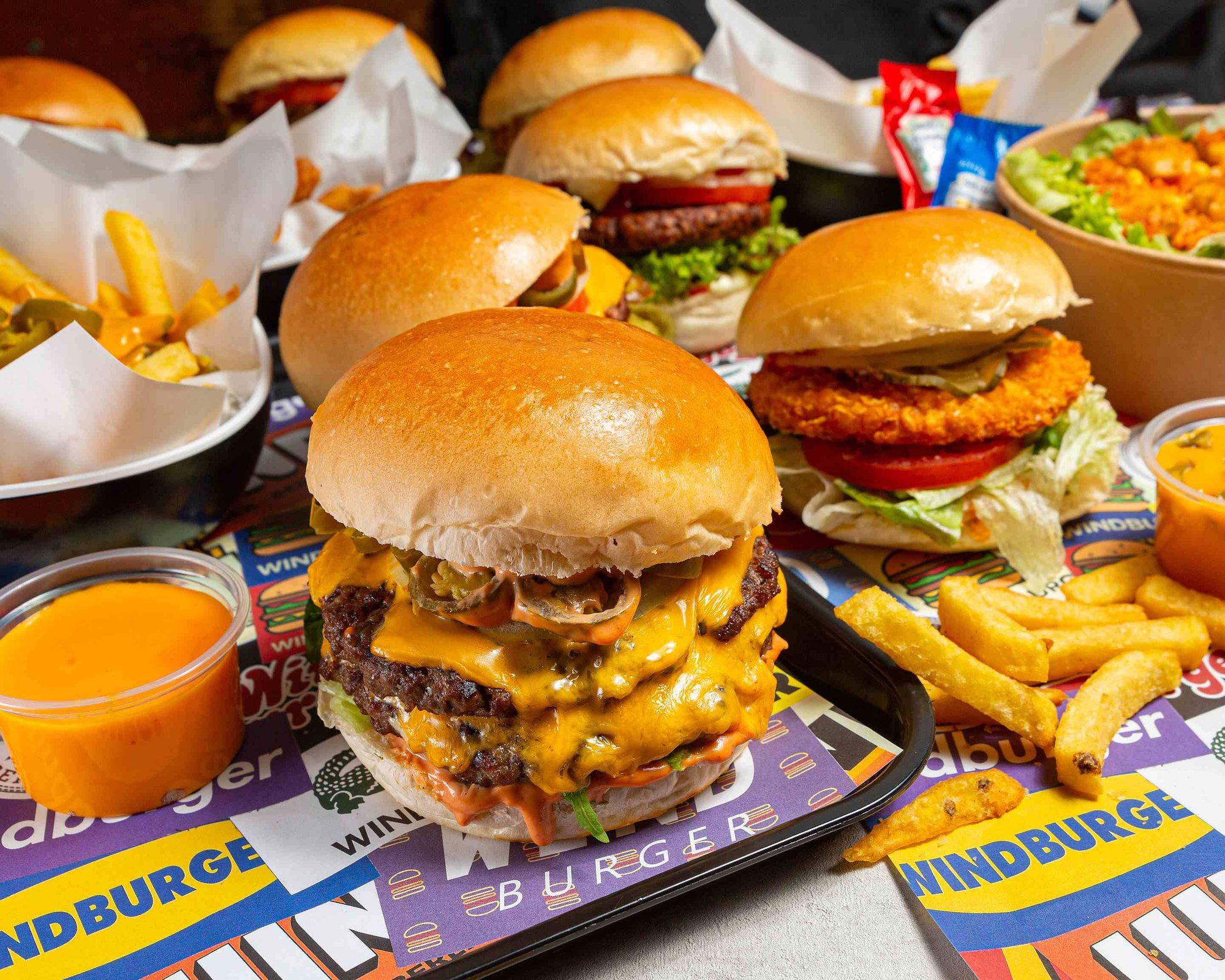
Charlottenburg's Quieter Register
Berlin's dining conversation tends to orbit Mitte, Prenzlauer Berg, and Kreuzberg, the neighbourhoods that generate press and fill the itineraries of visiting food writers. Charlottenburg operates at a different frequency. The district's Windscheidstraße address puts Windburger inside a residential corridor where the audience skews local rather than tourist, and where reputation travels by word rather than algorithm. That dynamic shapes what a venue can be and how it earns trust: slowly, through repeat visits and the kind of consistency that doesn't rely on a launch moment.
Charlottenburg has long sat adjacent to Berlin's fine-dining infrastructure without being fully absorbed by it. Venues like FACIL and Rutz anchor the city's higher-end European tradition further east, while the more ideologically driven kitchens, Nobelhart & Schmutzig with its radical regionalism, CODA Dessert Dining with its counter-format dessert programme, occupy a creative tier that Charlottenburg rarely claims. Windburger's position in this geography is less about competing with those rooms and more about serving a different need: the gap between serious eating and accessible format that Berlin's western districts have historically underserved.
The Format Argument
Across German cities, the mid-market dining tier has been under greater pressure to define what it actually stands for. At the leading end, the argument is legible: venues like Aqua in Wolfsburg or JAN in Munich operate within a set of codified signals, tasting menus, extended wine programmes, front-of-house formality, that tell a guest exactly what the transaction involves. At the casual end, the signals are equally clear. The interesting territory sits between those poles, where the format question remains open: how much service, how much ambition in the kitchen, how much of the experience is designed versus spontaneous.
A burger-focused operation in a residential Berlin neighbourhood makes a specific answer to that question. It says that the product itself carries enough weight to anchor the experience without supporting apparatus, no sommelier pairings, no amuse-bouche, no printed menu biography. That is a harder argument to sustain than it appears. Germany's burger scene, particularly in Berlin, has matured past the American import phase into something more self-aware, with operators competing on sourcing specificity, bun-to-patty ratio discipline, and the kind of process detail that would not look out of place in a fine-dining kitchen conversation. Whether Windburger engages that argument at the same level of rigour is the relevant question for anyone deciding whether the Windscheidstraße address warrants a detour.
Team Dynamics in a Compact Format
The editorial angle that tends to get applied to ambitious tasting-menu restaurants, the chef-sommelier-front-of-house triangle, each role pulling the experience in a complementary direction, does not translate directly to a compact, walk-in-friendly format. But the underlying principle does. In any room where the operation is tight and the margin for error is small, the distribution of responsibility across the team matters as much as individual skill. At places like Schwarzwaldstube in Baiersbronn or Vendôme in Bergisch Gladbach, that triangle is formalised and extensively resourced. In a smaller neighbourhood operation, the same dynamic plays out with fewer people doing more, which tends to make the seams either invisible or visible depending on execution.
For Windburger, the relevant version of that dynamic is the relationship between kitchen discipline and counter hospitality, whether the two sides of the operation feel calibrated to each other or whether one is running ahead of the other. Berlin's more interesting casual venues have learned from the city's fine-dining rooms that consistency is a team output, not a kitchen output alone. The front of house sets the pace for how a guest reads the kitchen's work, and in a compact format on a residential street, that pacing is often the difference between a neighbourhood favourite and a venue that simply exists at that address.
Berlin's Broader Casual Tier
Berlin has produced some of Germany's most discussed restaurant openings in the last decade, and the critical attention has concentrated almost entirely on the creative and fine-dining end. Restaurant Tim Raue built an international profile on a cuisine identity that drew from Asian influence while remaining anchored in Berlin's directness. The city's Michelin-recognised rooms have multiplied. But the casual tier, the venues that most Berliners actually visit most often, has received comparatively little critical infrastructure. There are no widely trusted rating systems calibrated to that format, and editorial coverage tends to arrive in waves around openings rather than tracking long-term quality.
That gap is where a venue on Windscheidstraße operates most honestly. Without the scaffolding of awards or extended critical attention, the reputation is built from the ground up, visit by visit. German dining culture, particularly outside the major metropolitan centres, consider Waldhotel Sonnora in Dreis or Bagatelle in Trier, has long demonstrated that geographic distance from the critical establishment can coexist with serious quality. The same principle applies within a city: distance from the centre is not distance from ambition.
For visitors building a Berlin itinerary around the city's dining range, the full picture runs from the structured tasting formats in Mitte and Kreuzberg through to the residential operations in Charlottenburg and beyond. Internationally, the comparison that holds most cleanly for format-led casual operations with serious kitchen intent is something closer to what Le Bernardin in New York City represents at the other end of the formality scale, not in cuisine or price, but in the idea that format clarity and kitchen discipline can reinforce each other rather than pulling apart. Atomix in New York City makes a similar argument about how a tight, considered team dynamic can carry an entire experience regardless of format scale.
Planning Your Visit
Windburger is located at Windscheidstraße 26, 10627 Berlin, in Charlottenburg, Reservations: Windburger is walk-in friendly. Dress: Casual. Budget: About $10 per person. Timing: Mon-Sat 12-10 PM; Sun 1-9 PM.
Accolades, Compared
Comparable venues nearby, for context on price, style, and recognition.
| Venue | Cuisine | Price | Notes |
|---|---|---|---|
| WindburgerThis venue — the venue you are viewing | American Burgers | $ | Not listed |
| Birds in the Kitchen | Polished Fried Chicken Sandwiches | $ | Mitte |
| BBI | Gourmet American Burgers | $$ | Neukolln |
| Slice Society | New York-Style Pizza | $$ | Mitte |
| BURGERAMT | American Burgers with Vegan Options | $$ | Friedrichshain |
| Play Off Marzahn im Le Prom | American Diner | $$ | Marzahn |
Continue exploring
More in Berlin
Restaurants in Berlin
Browse all →
Bars in Berlin
Browse all →
Hotels in Berlin
Browse all →

At a Glance
- Lively
- Trendy
- Casual Hangout
Current opening hours
- Monday
- 12–10 PM
- Tuesday
- 12–10 PM
- Wednesday
- 12–10 PM
- Thursday
- 12–10 PM
- Friday
- 12–10 PM
- Saturday
- 12–10 PM
- Sunday
- 1–9 PM
Hours can change for holidays and private events. Last verified .
Casual fast-food atmosphere with a retro American diner vibe.