Slice Society operates from Torstraße 173 in Berlin's Mitte district, where the city's casual dining scene increasingly prizes sourcing transparency and product quality over format spectacle. The address places it within walking distance of several of Berlin's better-known independent food venues, positioning it as part of a broader shift in how the city eats informally.
Pearl is the En Primeur Club membership app — saves, bookings, and concierge access live there. Same editors, same standards.
- Address
- Torstraße 173, 10115 Berlin, Germany
- Website
- slicesociety.de
- Directions
- Get directions
 Saves & bookings on Pearl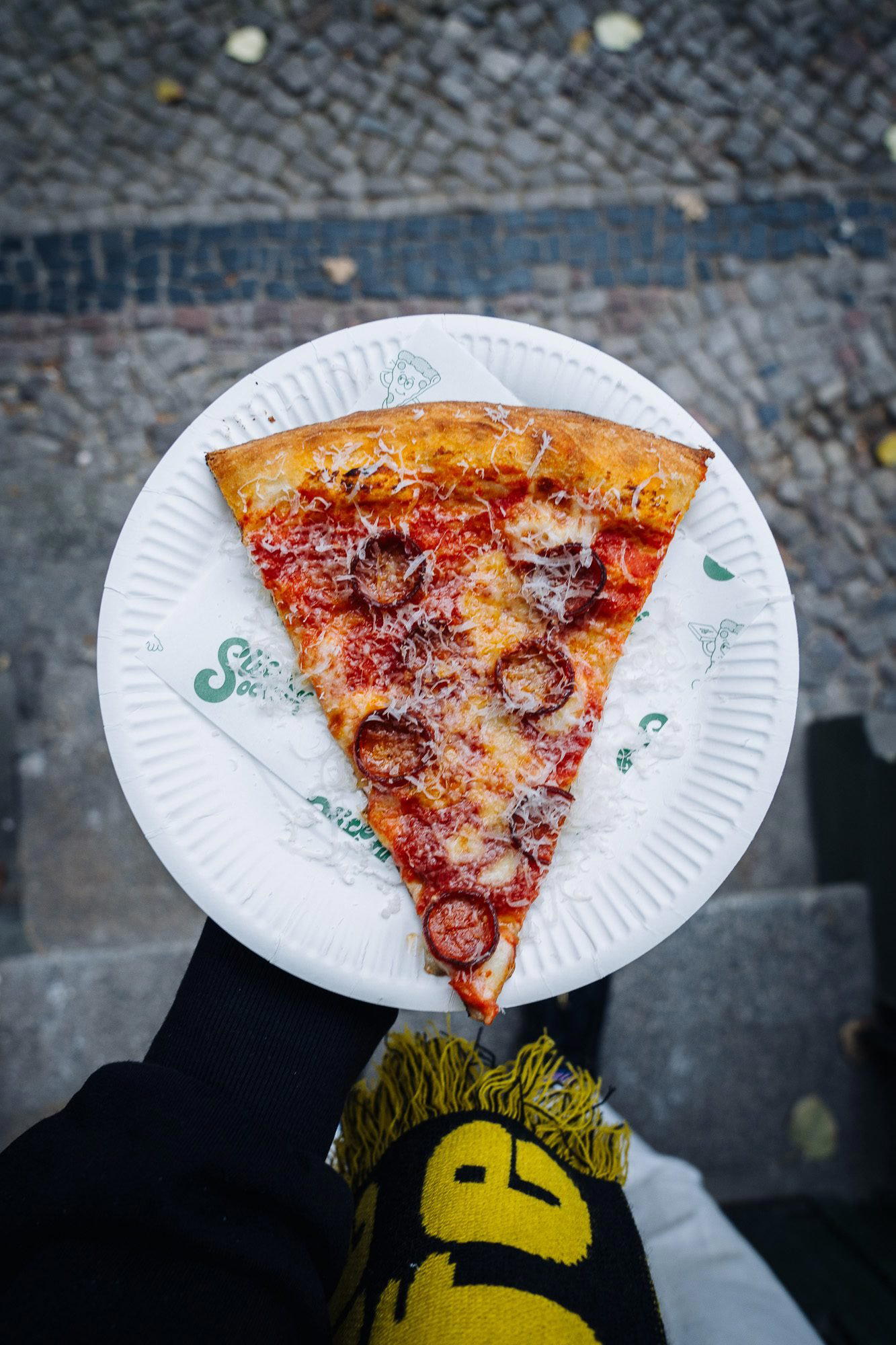
Where Berlin's Casual Eating Has Arrived
Torstraße runs through the middle of Berlin's eating culture as much as it runs through Mitte. The street has accumulated a density of independent food operations over the past decade that reflects something genuine about how the city approaches informal dining: less concerned with theatrical format, more focused on what's actually on the plate and where it came from. Slice Society, at number 173, sits inside that current. The address places it in a neighbourhood where regulars notice the difference between sourced product and bought-in commodity, and where word-of-mouth travels fast.
Berlin's casual dining tier has matured considerably. The city that once competed on price and atmosphere now has a cohort of operators who frame quality through ingredient provenance, where the grain was milled, which region the dairy came from, whether the produce follows seasonal availability or a laminated menu that ignores the calendar. That framing has migrated from fine dining into everyday formats, and pizza, of all things, has become one of the clearest arenas for this shift. The craft pizza conversation in Berlin mirrors what happened in London and Copenhagen a few years prior: a format that was once shorthand for convenience has been reframed around fermentation time, flour specification, and the quality of what goes on top.
Sourcing as the Actual Subject
The ingredient sourcing argument in pizza is not decorative. Long-fermented doughs made from heritage or single-origin flours behave differently from commercial equivalents, with more complex flavour and a more open crumb structure. Toppings sourced from named producers rather than cash-and-carry suppliers carry traceable provenance that affects both flavour and the broader food system. Operators who make these choices are committing to a cost structure that a lower price point cannot support, which is why venues operating in this register tend to cluster in neighbourhoods where customers will pay the differential.
Torstraße 173 is that kind of address. The Mitte stretch where Slice Society operates draws a customer base that skews towards food-literate regulars. That context matters because it shapes what the venue has to deliver to sustain a reputation. In this part of Berlin, the bar for what counts as serious sourcing is set by neighbours and near-competitors who have made provenance a public-facing commitment.
Across Germany, the sourcing conversation in fine dining is anchored by venues like Nobelhart & Schmutzig, which built its entire identity around a strictly regional, named-producer supply chain, an approach that influenced how Berlin restaurants at every price point think about their ingredients. That influence has filtered down. When a fine dining operation at the Rutz or FACIL level makes sourcing a structural commitment rather than a talking point, it shifts the baseline expectation for the whole city's dining culture, including its casual tier.
The Berlin Pizza Context
Pizza in Berlin is no longer a single category. There is the volume end, fast, cheap, reliable, and there is a smaller tier of operators treating the format with the same ingredient discipline applied to more formally positioned restaurants. This second tier is where Slice Society operates. The distinction matters to a reader deciding how to spend an evening: the casual format does not mean casual standards, and the price point will reflect that. Visitors expecting Roman al taglio pricing or a quick €10 slice should not expect that here. What the format offers instead is the texture and flavour payoff that follows from proper fermentation, quality dairy, and toppings chosen for taste rather than cost efficiency.
For context on how that price-quality equation plays out at the other end of Berlin's restaurant spectrum, the city's Michelin-recognised addresses, including Restaurant Tim Raue and CODA Dessert Dining, demonstrate the ceiling of what ingredient sourcing and technical discipline produce at the fine dining tier. The restaurant operates far below that price bracket, but within a tradition that takes the same underlying questions seriously: what is this made from, and does that matter?
Mitte and What the Address Signals
The Mitte district around Torstraße has gone through several identities since reunification, and its current character is that of a neighbourhood where creative and food businesses coexist at street level with a density unusual even for Berlin. The stretch between Rosenthaler Platz and Rosa-Luxemburg-Platz functions as an informal food corridor, with enough competing independent operators to make quality a basic requirement for survival. Venues that last in this environment do so because regulars choose them repeatedly, not because foot traffic from tourists sustains them through off-seasons.
That competitive context is useful information. A pizza operation that holds its ground on Torstraße, in a neighbourhood with the attention span and options this one has, is doing something right at the product level. The sourcing argument, if consistently delivered, is what converts a one-time visitor into a local regular, and Berlin's Mitte has enough food-literate regulars to make that conversion the difference between a venue that persists and one that does not.
For readers comparing Germany's dining scene, the sourcing and quality conversation extends well beyond Berlin. Aqua in Wolfsburg, Schwarzwaldstube in Baiersbronn, and Victor's Fine Dining by Christian Bau in Perl each represent the formal end of Germany's ingredient-led cooking tradition. JAN in Munich, Vendôme in Bergisch Gladbach, and ES:SENZ in Grassau fill out that picture further. For the Hamburg angle, Restaurant Haerlin and regional addresses like Schanz in Piesport, Bagatelle in Trier, and Waldhotel Sonnora in Dreis cover the broader German restaurant circuit. International comparisons for product-focused casual formats are also worth drawing: Le Bernardin and Atomix in New York represent the fine dining expression of the same underlying discipline.
A Pricing-First Comparison
Comparable venues nearby, for context on price, style, and recognition.
| Venue | Cuisine | Price | Notes |
|---|---|---|---|
| Slice SocietyThis venue — the venue you are viewing | Mitte, New York-Style Pizza | $$ | Not listed |
| Magic John's | Not listed | $$ | Mitte, New York-Style Pizza & Detroit Deep Dish |
| House of Burgerz | Mitte, Casual Burgers & Sides | $$ | Not listed |
| EXITROOM Burger | Mitte, Gourmet Burgers | $$ | Not listed |
| BURGERAMT | Not listed | $$ | Friedrichshain, American Burgers with Vegan Options |
| STADTSALAT | Mitte, Premium Organic Bowls & Salads | $$ | Not listed |
Continue exploring
More in Berlin
Restaurants in Berlin
Browse all →
Bars in Berlin
Browse all →
Hotels in Berlin
Browse all →



At a Glance
- Minimalist
- Trendy
- Casual Hangout
Current opening hours
- Monday
- Closed
- Tuesday
- 12–10 PM
- Wednesday
- 12–10 PM
- Thursday
- 12–10 PM
- Friday
- 12–11 PM
- Saturday
- 12–11 PM
- Sunday
- 12–10 PM
Hours can change for holidays and private events. Last verified .
Minimalist space with a casual, no-frills pizza joint atmosphere.