Wildalpgatterl
A mountain hut address at Almen 57 in Fieberbrunn, Wildalpgatterl sits within the agricultural alm tradition of the Kitzbühel Alps, where proximity to summer pastures and local herding culture shapes what reaches the kitchen. For visitors exploring the Pillersee valley's dining options, it represents the more rustic, terrain-connected end of Tyrolean eating, distinct from the polished resort restaurants found elsewhere in the region.
Pearl is the En Primeur Club membership app — saves, bookings, and concierge access live there. Same editors, same standards.
- Address
- Almen 57, 6391 Fieberbrunn, Austria
- Phone
- +43535452655
- Website
- wildalpgatterl.at
- Directions
- Get directions
 Saves & bookings on Pearl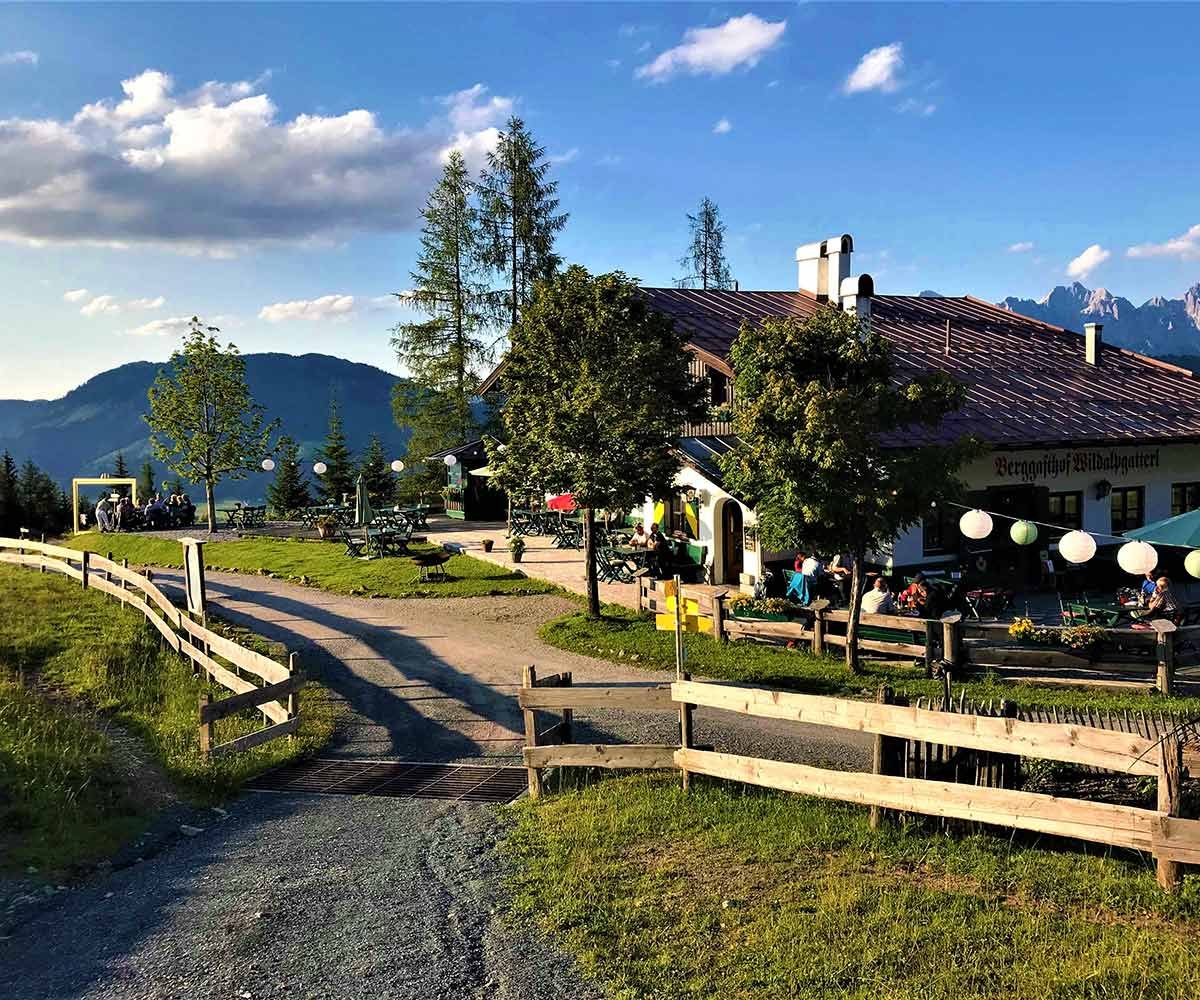
Alm Dining in the Kitzbühel Alps: What the Terrain Dictates
The alm huts of the Tyrolean Alps operate on a logic that urban restaurants cannot replicate. Sited above the valley floor, often accessible only by foot or mountain transport, they are defined less by chef ambition than by geographic constraint. What grows or grazes nearby, what can be carried up or preserved through winter, determines the menu. Wildalpgatterl, addressed at Almen 57 on the slopes above Fieberbrunn, is a restaurant in Fieberbrunn serving Traditional Tyrolean Mountain Cuisine. The "Almen" in its address is not incidental, it places the kitchen inside the summer pasture economy that has structured mountain food in this part of Austria for centuries.
Fieberbrunn itself occupies a quieter position within the wider Kitzbühel Alps circuit. It draws a different visitor than the heavily marketed resort towns to the west, and its dining reflects that. The options here skew toward honest alpine cooking rather than the destination-restaurant format found at properties like Griggeler Stuba in Lech or Stüva in Ischgl, where tasting menus and international wine programs sit alongside mountain views. In Fieberbrunn, the more relevant comparison is with Wildseeloderhaus, another address in the area that serves a walker and hiker clientele from a high-altitude position. Both belong to a category of eating defined by access as much as menu.
The Ingredient Logic of the High Pasture
Austrian alpine cooking at this elevation has always been ingredient-driven by necessity rather than philosophy. The alm economy, seasonal cattle and sheep grazing on high pastures from late spring through early autumn, produces dairy goods, cured meats, and game that form the backbone of traditional Tyrolean mountain menus. Butter churned from alm milk, aged hard cheeses produced in small quantities, dried and smoked meats carried up at the start of the season: these are the building blocks. The kitchen does not import a philosophy from below; the terrain supplies one.
This contrasts sharply with how ingredient sourcing works at Austria's more formally recognized restaurants. At Steirereck im Stadtpark in Vienna, sourcing is a deliberate program, a documented network of producers curated over years. At Döllerer in Golling an der Salzach, the alpine larder is reinterpreted through a contemporary lens, with techniques applied to raw materials the kitchen actively selects. The alm hut kitchen operates from a narrower, more immediate supply. Proximity is the selection criterion. What the pasture and the surrounding forest offer in a given week shapes what appears on the table. It is a form of hyper-locality that predates the term.
Game is a consistent thread in mountain Tyrolean cooking at this altitude. The forests around Fieberbrunn support red deer and chamois, and the autumn hunting season historically marks a shift in what high-altitude kitchens serve. Mushrooms gathered from surrounding woodland, alpine herbs used in Tyrolean cuisine for generations, and dairy from nearby farms complete the sourcing picture. None of this is unusual for the region, but the degree of geographic constraint at an alm address makes it more pronounced than at a valley-floor restaurant with transport access.
Where Wildalpgatterl Sits in the Austrian Mountain Dining Spectrum
Austria's serious mountain dining tends to cluster at two poles. One is the formally ambitious end: restaurants like Gourmetrestaurant Tannenhof in Sankt Anton am Arlberg or Kräuterreich by Vitus Winkler in Sankt Veit im Pongau, which combine mountain settings with structured tasting programs and recognized culinary credentials. The other is the traditional hut end, where the emphasis falls on sustenance, setting, and regional authenticity over technique or presentation. Wildalpgatterl belongs to the latter category. It is not competing in the same register as Ikarus in Salzburg or Obauer in Werfen, both of which operate within formally structured kitchen programs with international reference points.
The relevant comparable set is instead the working alm hut, an eating format that serves walkers, hikers, and those arriving by the area's lifts during winter operation. In this tier, the evaluation criteria shift. Consistency of sourcing, the quality of basic preparations, a Brettljause, a Tiroler Gröstl, a bowl of Gerstensuppe, and the relationship between the setting and what is served matter more than the presence of a named chef or a documented award trail. Austria has a long tradition of taking this category seriously; the country's broader respect for regional food culture means that even a basic alm kitchen is held to a standard of authenticity.
For context on how Austria's formal dining network functions at the higher end, properties like Landhaus Bacher in Mautern an der Donau, Taubenkobel in Schützen am Gebirge, and Ois in Neufelden illustrate the range of approaches that have earned formal recognition across the country. International comparison points like Le Bernardin in New York City or Atomix in New York City reflect a different register entirely, one built on urban infrastructure, documented culinary lineage, and the kind of press ecosystem that doesn't extend to mountain hut kitchens. The alm format exists largely outside that credentialing system, and is valued differently as a result.
Planning a Visit
Wildalpgatterl is located at Almen 57, 6391 Fieberbrunn, Austria, an address that signals a working alm setting rather than a village restaurant. Access will depend on the season: the ski area above Fieberbrunn connects to the wider SkiWelt and PillerseeTal circuit in winter, while summer access is typically on foot via the hiking trails that cross the alm terrain. Visitors planning a meal here should factor in the walk or lift access in their timing, and be aware that alm kitchens in this region often operate on seasonal schedules that do not align with year-round urban restaurant hours. Checking current opening periods before visiting is practical rather than optional. Those interested in the formal end of Tyrolean alpine dining might also consider Schwarzer Adler in Hall in Tirol or Restaurant 141 by Joachim Jaud in Mieming as comparison points in the broader Tyrolean region, and Artis in Graz for a contrast with Austria's urban dining register.
In Context: Similar Options
Comparable venues nearby, for context on price, style, and recognition.
| Venue | Cuisine | Price | Notes |
|---|---|---|---|
| WildalpgatterlThis venue — the venue you are viewing | Traditional Tyrolean Mountain Cuisine | $$ | Not listed |
| Wildseeloderhaus | Modern Tirolean | $$ | Fieberbrunn |
| Huberalm | Traditional Austrian Alpine | $$ | Kirchdorf in Tirol |
| Latschenwirt | Austrian Gastropub | $$ | Grossgmain |
| Kühberg Alm | Traditional Austrian | $$ | Wagrain |
| Bacheralm | Traditional Tyrolean Alpine Hut | $$ | Kirchdorf in Tirol |
Continue exploring
More in Fieberbrunn
Restaurants in Fieberbrunn
Browse all →
Bars in Fieberbrunn
Browse all →


At a Glance
- Rustic
- Cozy
- Scenic
- Casual Hangout
- Family
- Terrace
- Open Kitchen
- Local Sourcing
- Mountain
Current opening hours
- Monday
- 9 AM–5 PM
- Tuesday
- 9 AM–5 PM
- Wednesday
- 9 AM–5 PM
- Thursday
- 9 AM–5 PM
- Friday
- 9 AM–5 PM
- Saturday
- 9 AM–5 PM
- Sunday
- 9 AM–5 PM
Hours can change for holidays and private events. Last verified .
Cozy, typically alpine ski hut atmosphere with warm hospitality, vintage decor, and a spacious sun terrace.