


A six-seat Italian auberge on the Noto Peninsula, Villa della Pace holds a Tabelog Bronze Award (4.10, 2026) and consecutive Tabelog Italian WEST Top 100 selections. The kitchen works from a vegetable-first premise, drawing on Noto's coastline and the surrounding Ishikawa farmland, with fish and meat available as secondary elements. Dinner runs Tuesday evenings, by reservation only, at JPY 30,000–39,999 per person.
Pearl is the En Primeur Club membership app — saves, bookings, and concierge access live there. Same editors, same standards.
- Address
- Japan, 〒929-2234 Ishikawa, Nanao, Nakajimamachi Shiotsu, 乙は部26-1
- Phone
- +81 767-88-9017
- Website
- villadellapace-nanao.com
- Directions
- Get directions
 Saves & bookings on Pearl
Italian cooking at the edge of the Noto Peninsula
The Noto Peninsula occupies a particular position in Japan's food conversation. Ishikawa Prefecture has long attracted serious attention for its proximity to some of the country's most productive coastal and agricultural land — the Sea of Japan provides crab, yellowtail, and shellfish in quantities and quality that draw chefs from Osaka, Tokyo, and beyond. Yet the peninsula's interior, beyond Nanao City, remains largely removed from the circuits that define Japan's fine dining geography. It is in this stretch of Ishikawa, in the small coastal settlement of Nakajima-machi Shiotsu, that Villa della Pace operates from a converted house with six seats, a wine-focused service, and a kitchen philosophy that places vegetables at the centre of an Italian framework.
That framing — Italian technique, applied to Noto ingredients, in a format that owes more to the European auberge tradition than to the urban tasting-menu circuit, represents a specific and considered position. Japan has a well-documented history of Italian cooking, going back to the early 1980s when a generation of chefs trained in northern and central Italy and returned to open small, rigorous kitchens in Tokyo and Osaka. That first wave prioritised authenticity of technique; subsequent generations have increasingly asked what happens when Italian culinary logic is applied to Japanese terroir. Villa della Pace sits inside that second conversation, but outside the cities where it typically takes place. For comparisons in tone, consult restaurants like akordu in Nara or affetto akita in Akita, both operate Italian or European kitchens in non-metropolitan Japanese settings with strong regional ingredient commitments.
A vegetable-first kitchen in a fish-rich region
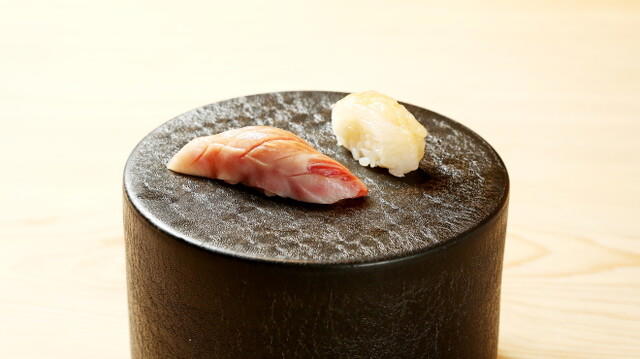
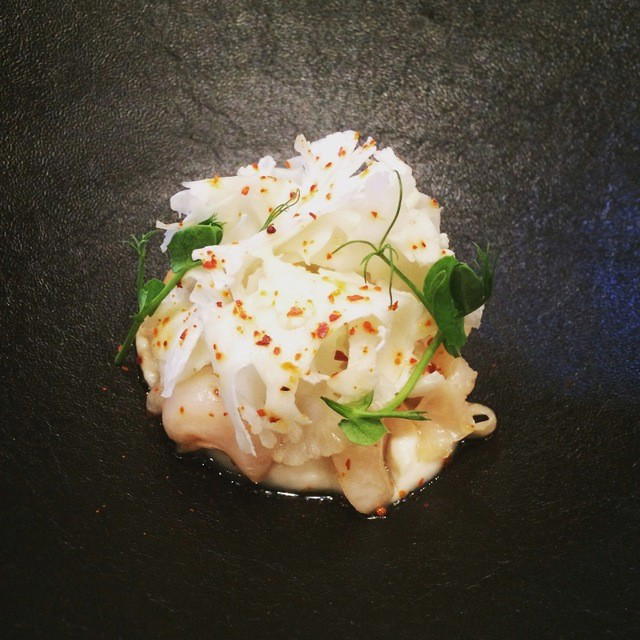
What defines the cooking here is a vegetable-first premise that runs against expectations in a region celebrated for its seafood. Noto produces exceptional root vegetables and mountain herbs alongside its coastal catches, and Villa della Pace treats this agricultural output as the primary material rather than the supporting element. Fish appears, and meat is available, but neither occupies the structural centre of the menu. This is a more demanding editorial decision than it might appear: in a restaurant this small, with no safety net of a broader menu, every dish has to justify its presence, and a kitchen that leads with vegetables in a coastal prefecture is making a statement about what it finds most interesting.
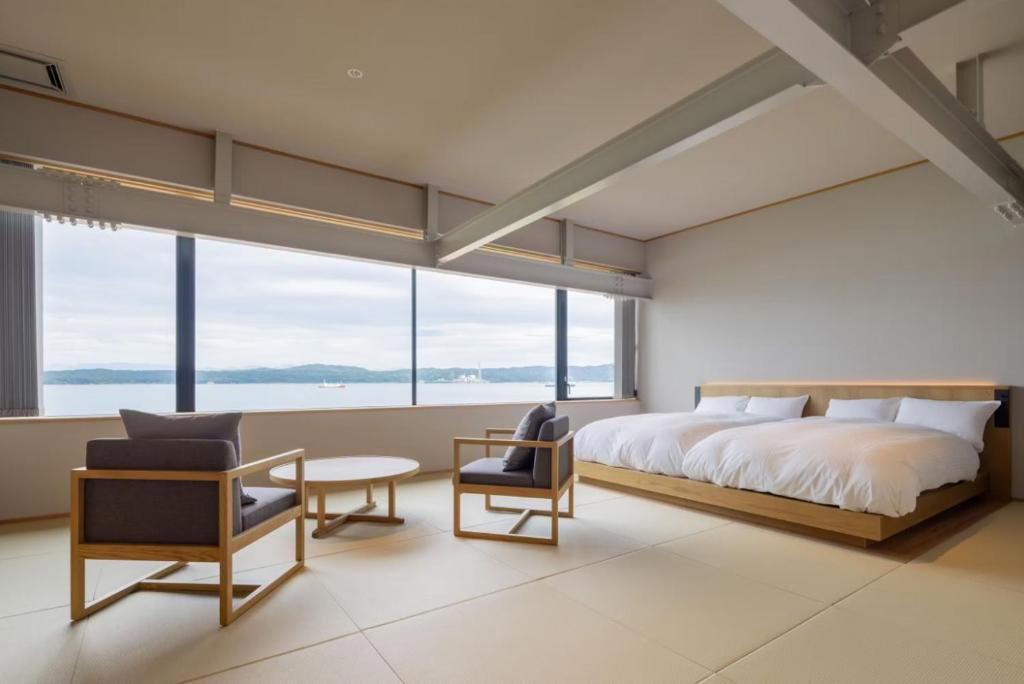
The Italian auberge format reinforces this. The auberge model, overnight accommodation attached to or associated with a dedicated kitchen, has a specific logic in European hospitality: guests arrive, settle, eat, sleep, and leave having spent meaningful time in a place. In Japan, the format has been adapted into smaller, often non-residential interpretations, where the spirit of the auberge (intimacy, commitment to place, a meal that unfolds at length) survives without the lodging component. Villa della Pace operates as a house restaurant with the auberge designation, signalling that the experience is intended as an arrival rather than a stop. The six-seat capacity, the ocean-view setting, and the single-service Tuesday evening format all reinforce that reading. For a sense of how Japanese kitchens operating within European frameworks have performed nationally, HAJIME in Osaka and Goh in Fukuoka show the range of that conversation at the highest level.
The awards record and what it signals
Villa della Pace holds a Tabelog score of 4.10 and won the Tabelog Bronze Award in both 2025 and 2026. It has also been selected for the Tabelog Italian WEST Top 100 in both 2023 and 2025. These recognitions carry specific weight in the Japanese dining context: Tabelog's peer review system, drawing on a large reviewer base, is the primary public-facing signal of sustained quality for restaurants that sit outside the Michelin guide's geographic coverage. Noto-area restaurants are largely absent from Michelin's Japan listings, which concentrate on the major cities. For a restaurant of this format and location, Tabelog recognition at this level is the operative credential.
The score of 4.10 places it above the threshold typically associated with serious destination dining in the Tabelog system, for context, scores above 4.0 represent a small fraction of all listed restaurants, and scores at this level in non-urban prefectures are rarer still. The consecutive Bronze awards indicate consistency rather than a single strong year. For a restaurant that opened in November 2020 and operates on a single service per week (Tuesday evenings, 18:00–21:00), building and maintaining that record over multiple award cycles reflects a focused operation. Chef-owner Meiju Hirata carries significant respect from peers in Japan's food community, a currency that circulates through the country's small but tightly connected network of serious kitchens. Compare the award density of venues like Gion Sasaki in Kyoto or Harutaka in Tokyo to understand the tier of recognition these Tabelog awards represent within Japan's broader fine dining hierarchy.
Noto's ingredient geography as culinary argument
Understanding Villa della Pace requires understanding what Ishikawa's Noto Peninsula offers as a larder. The peninsula extends north into the Sea of Japan, giving it access to cold-water fish, buri (yellowtail), kani (crab), and the region's celebrated noto beef, alongside inland vegetables cultivated in a climate that differs meaningfully from the Pacific coast. The peninsula's relative isolation has preserved farming practices and ingredient varieties that have disappeared elsewhere in Japan. Chefs who commit to Noto's seasonal cycle are committing to a highly specific and genuinely local set of materials, not a generic Japanese terroir narrative.
That specificity matters when considering why Italian culinary grammar fits. Italian cooking, at its most coherent, is itself a regional practice: it prizes the primary ingredient, resists unnecessary layering, and allows the seasonal material to set the menu's rhythm. Applied to Noto's vegetable and coastal produce, that logic produces something that is neither a Japanese dish in Italian dress nor an Italian dish reconstructed with Japanese ingredients, but a third thing, a kitchen that uses Italian technique as a lens through which to examine a specific place. This is a different project from, say, Le Bernardin in New York City, where French technique and Atlantic seafood converge at scale, or Atomix in New York City, where Korean culinary thinking meets a fine dining format. Each represents a distinct resolution of the same underlying question: what happens when a culinary tradition meets a place it did not originate from.
Planning a visit
Villa della Pace operates on a reservation-only basis, with dinner service running Tuesday evenings from 18:00 to 21:00. Lunch hours (12:00–15:00) are also listed, though the Tuesday evening slot is the primary format. From February 2026, the restaurant moved to irregular holidays, so confirming availability via Instagram, email, or phone (+81-767-88-9017) before planning travel is necessary. The restaurant is a 20-minute drive from JR Nanao Station and a 15-minute walk from Kasashiho Station on the Noto Railway Nanao Line. Parking is available on site.
Dinner runs JPY 30,000–39,999 per person; credit cards are accepted (VISA, Mastercard, JCB, AMEX, Diners). The six-seat capacity means availability is tight and advance booking is strongly advisable. The reservation policy asks guests to arrive on time: the kitchen prepares meals according to reservation timings, and late arrivals without prior notice may affect service. Children are welcome if they can eat from the same menu as adults; infants are not accommodated. For other Nanao dining options, see Kawashima and our full Nanao restaurants guide. For accommodation, bars, and broader planning, our Nanao hotels guide, bars guide, wineries guide, and experiences guide cover the surrounding area. For broader Italian fine dining in western Japan, 1000 in Yokohama, 6 in Okinawa, and Aji Arai in Oita offer reference points across different formats and regions.
What to order at Villa della Pace
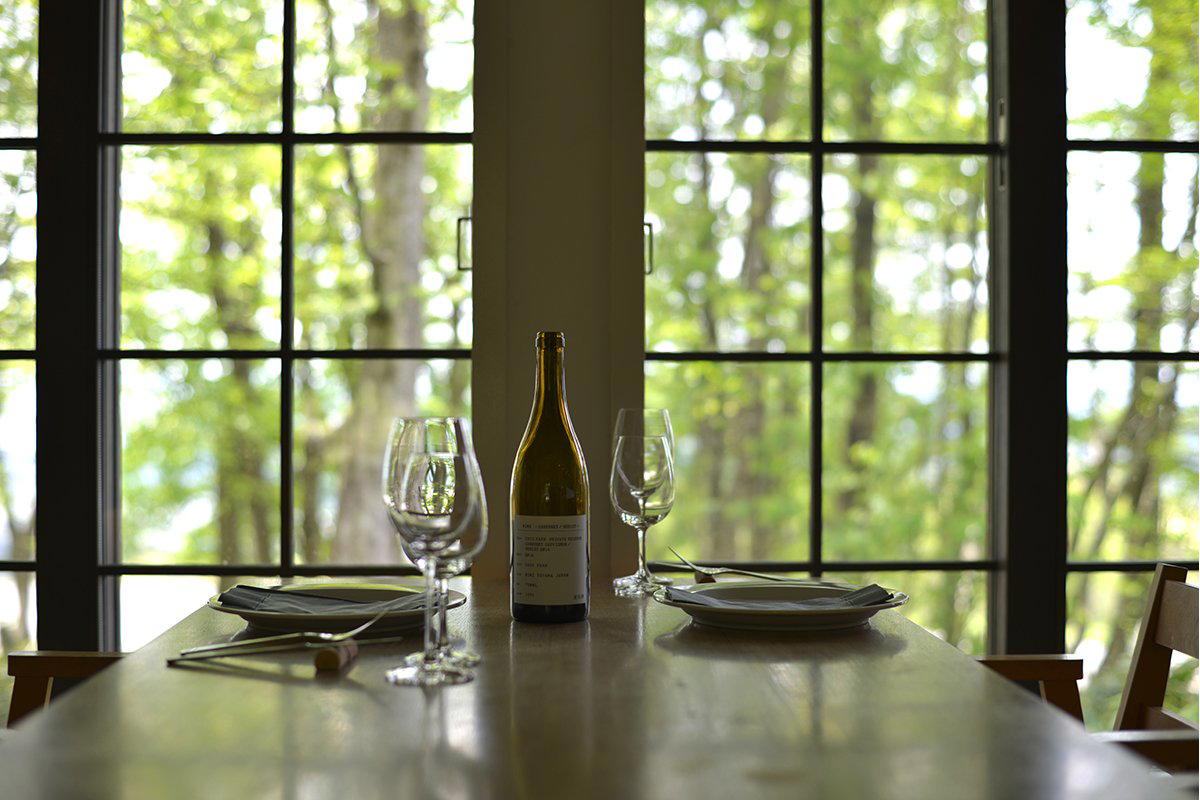
Villa della Pace does not publish a fixed menu, and specific dishes change with the season and local availability. Given the kitchen's declared focus on vegetables and its designation as being particular about fish, the logical approach is to eat what is put in front of you, the set format leaves little room for à la carte decision-making at this price point. The wine program is handled by a sommelier and described as a particular focus; the restaurant holds a dedicated wine list, and pairing is the sensible choice given the format. Tabelog reviewers have scored the kitchen at 4.10, with the awards record across 2023, 2025, and 2026 confirming that the cooking has sustained that standard through multiple seasonal cycles. In a six-seat kitchen committed to Noto's seasonal output, the leading approach is to book well ahead, trust the menu, and let the fish-and-vegetable led Italian cooking make its own case.
Pricing, Compared
Comparable venues nearby, for context on price, style, and recognition.
| Venue | Cuisine | Price | Notes |
|---|---|---|---|
| Villa della PaceThis venue — the venue you are viewing | Not listed | $$$ | Not listed |
| Kawashima | Not listed | $$$$ | Ipponsugi, Kansai-style Kaiseki with Noto Ingredients |
| 幸寿し 本店 | 相生町, Traditional Noto Sushi Omakase | $$ | Not listed |
| 幸寿し本店 | Nanao, Traditional Noto Sushi | $$ | Not listed |
| 一本杉 川嶋 | Nanao, japanese | Not listed | Not listed |
| ヴィラ デラ パーチェ | Nanao, Innovative Noto Italian | $$$$ | Not listed |
Recognition history
Dated appearances from independent guides and award organizations, with the underlying list record or original source where available.
Opinionated About Dining Top Restaurants in Japan Recommended
Opinionated About Dining
Tabelog Bronze #507
Tabelog
Tabelog 100 #76 · No. 76
Tabelog · Tabelog 100 - Italian - WEST - 2025
We're Smart World 4 Radishes
We're Smart World

At a Glance
- Romantic
- Elegant
- Intimate
- Scenic
- Date Night
- Special Occasion
- Celebration
- Standalone
- Waterfront
- Extensive Wine List
- Sommelier Led
- Farm To Table
- Local Sourcing
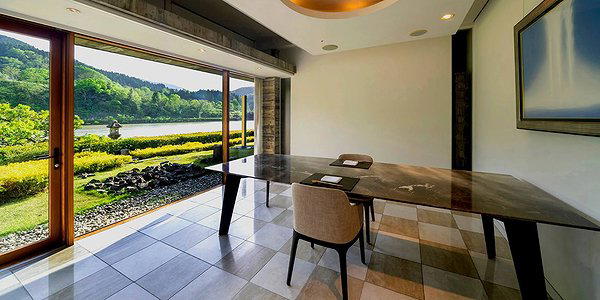
Stylish, relaxing space with spacious seating and ocean views; intimate auberge atmosphere with cozy sofa seating.
Know Before You Go
- Getting there
- Japan, 〒929-2234 Ishikawa, Nanao, Nakajimamachi Shiotsu, 乙は部26-1