

Michelin Plate · Macarfi 7.9 Food Rating
Our verdict
Set on the piano nobile of Casa Fontcuberta, a 19th-century aristocratic townhouse in central Vic, VIA serves traditional Catalan cooking in one of the most architecturally striking dining rooms in inland Catalonia. The à la carte leans on rice dishes and daily fish, alongside a set menu option. A Michelin Plate holder in both 2024 and 2025, it sits at the considered, mid-range tier of Vic's restaurant scene.

Pearl is the En Primeur Club membership app — saves, bookings, and concierge access live there. Same editors, same standards.
- Address
- Carrer de la Riera, 25, Primera planta, planta noble, 08500 Vic, Barcelona, Spain
- Phone
- +34 616 47 44 41
- Hours
- Mon–Tue ClosedWed–Thu 1–4 PMFri–Sat 1–4 PM, 8:30–11 PMSun 1–4 PM
- Website
- viarestaurant.cat
- Directions
- Get directions
- Booking
- Book on TheFork
The menu
What to order
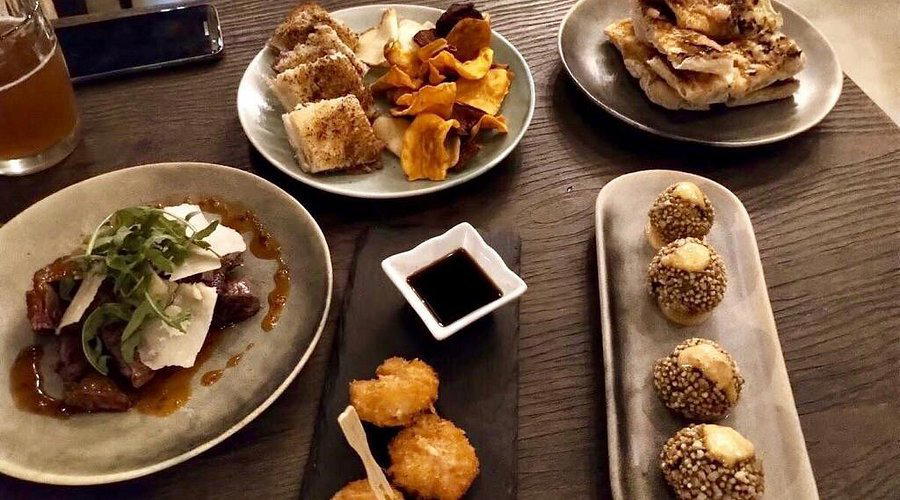
- Steak tartar de wagyu
- Vieira amb eriçó caviar i cremós de gamba vermella
- Truffled artichokes with foie gras
Dining Inside a Painted House
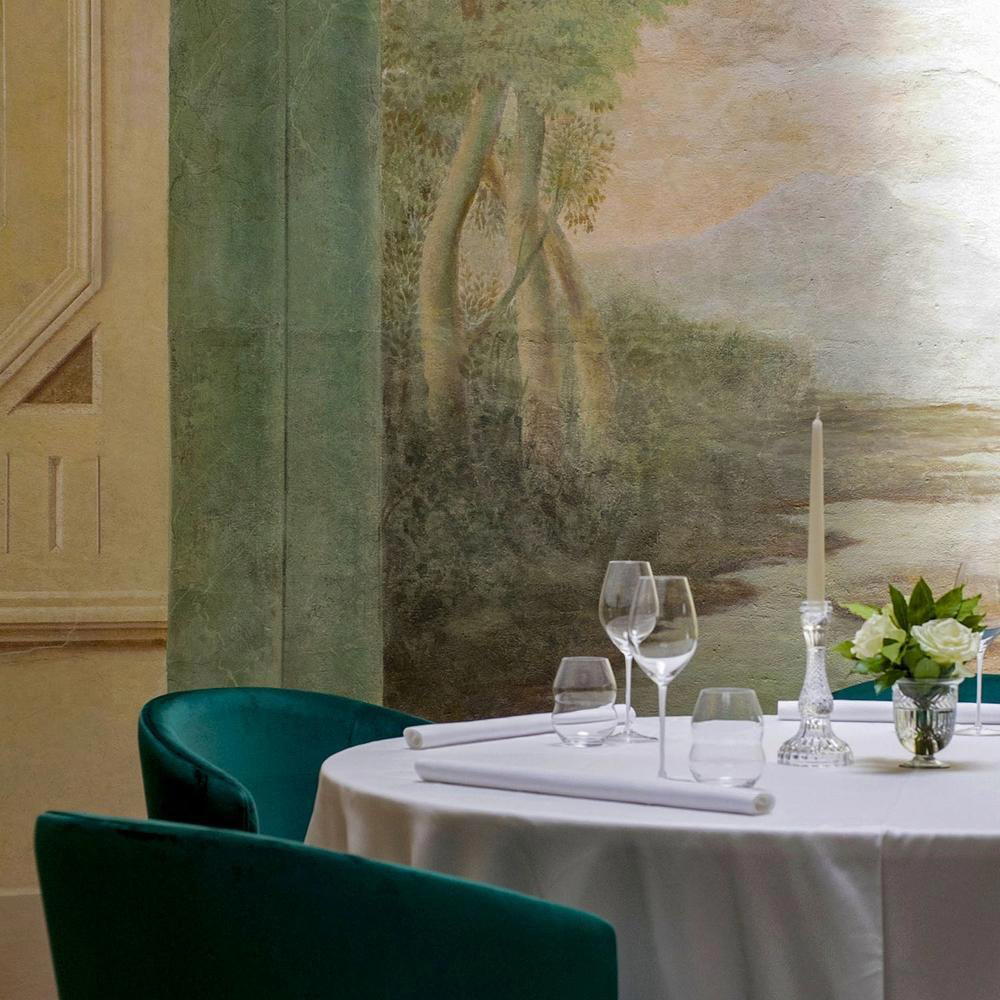
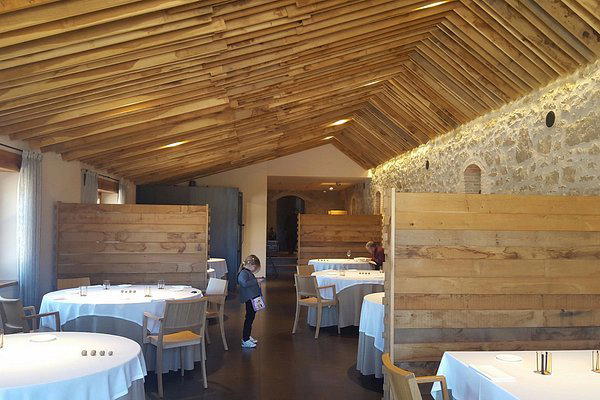
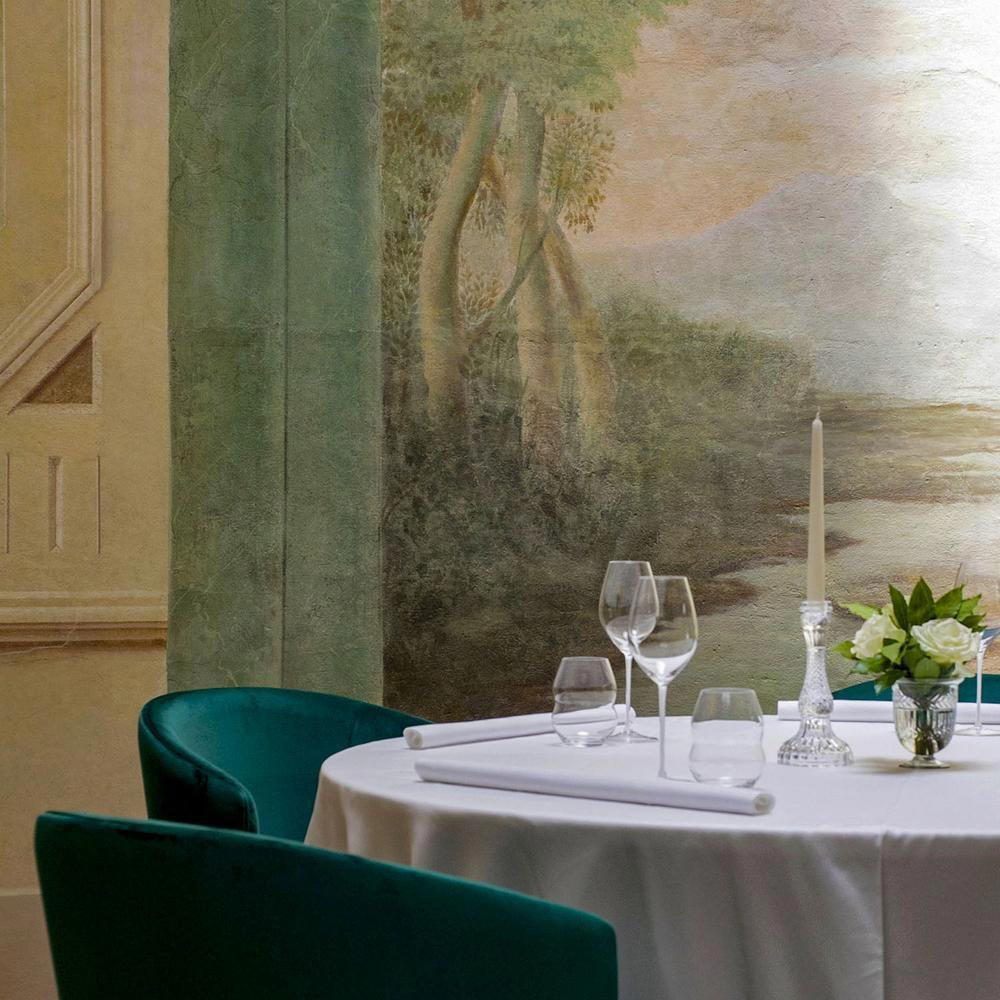
The first thing to register at VIA is not the menu but the room. The restaurant occupies the piano nobile of Casa Fontcuberta, the principal floor of an aristocratic residence on Carrer de la Riera in central Vic that dates to the 19th century. The walls carry frescoes depicting scenes of local life and custom, the kind of painted documentation of place that wealthy Catalan families commissioned as a statement of civic identity. Eating here means sitting inside that statement, with the history of the Vic comarca arranged around you in pigment and plaster.
This matters beyond aesthetics. In Spain's most-discussed dining cities, the setting for serious cooking tends toward minimalism: raw concrete, clean oak, the architecture of restraint. Provincial Catalonia operates differently. Venues like VIA treat inherited architecture as the frame for the meal rather than something to strip out. The formality of the space sets a particular pace before a plate arrives.
The Catalan Table and How It Moves
The rhythm of a meal at VIA follows the broader logic of traditional Catalan dining, which differs from the tasting-menu tempo that now dominates the region's headline restaurants. Catalonia's classic table runs on a small number of well-executed dishes, ordered from a card rather than surrendered to a pre-set sequence. At VIA, the à la carte format preserves that structure: the diner chooses, the kitchen executes, and the pace is negotiated between the two rather than choreographed from the pass.
Rice dishes anchor the menu in the way they do across much of Catalan inland cooking. This is not the paella tradition of the coast but the arròs culture of towns that sourced their grain from the Ebro delta and their flavour from the forest and the farm. Several rice preparations appear with enough regularity to qualify as the kitchen's signature register, and the daily fish options signal a supply relationship with the coast that the menu treats as a live variable rather than a fixed commitment. What appears depends on what arrived.
The set menu runs alongside the à la carte as an alternative entry point, useful for those who want the kitchen to set the pace, or who are arriving from outside Vic without a firm sense of what to order. Both routes operate within the same kitchen and the same dining room.
Where VIA Sits in Vic's Dining Order
Vic is not a city that appears regularly in conversations about Spanish gastronomy at the level of El Celler de Can Roca in Girona, Disfrutar in Barcelona, or the Basque constellation that includes Arzak in San Sebastián, Azurmendi in Larrabetzu, Martin Berasategui in Lasarte-Oria, and Mugaritz in Errenteria. The city is primarily known for its market, its medieval old town, and its charcuterie tradition rather than for any particular restaurant scene. That context shapes what VIA represents locally.
A Michelin Plate in both 2024 and 2025 places VIA in Michelin's acknowledged tier below star level: cooking that meets a standard of quality the guide considers worth noting, in a category where most provincial Catalan restaurants do not appear at all. Within Vic itself, this recognition positions VIA at the considered end of a mid-range dining market priced at €€, a bracket that reflects the economics of a market town rather than a tourist destination.
For comparison within Vic, Barmutet represents the traditional cuisine strand, while Boccatti covers the seafood side of the local offer. VIA's particular position, traditional Catalan cooking in a formally designated heritage interior, gives it a different character from both. The architecture is doing specific work here that a standard dining room cannot replicate.
Spain's creative vanguard, from DiverXO in Madrid to Quique Dacosta in Dénia and Aponiente in El Puerto de Santa María, operates at a different price tier and a different conceptual register from what VIA is doing. VIA is not in conversation with that tier.
The Practical Side of the Meal
VIA is on the first floor of Casa Fontcuberta at Carrer de la Riera, 25, in central Vic. The address is walkable from the main plaça and the Saturday market, which is the reason most visitors find themselves in the city in the first place. The €€ price range puts it within reach of a considered lunch rather than a commitment-level dinner, which is how most tables here are likely used.
The Saturday market draws visitors from across the comarca and beyond; tables fill on that basis. Contacting the restaurant directly ahead of any market-day visit is the practical approach. For those building a wider picture of what Vic offers, the full Vic restaurants guide covers the broader options, with hotels, bars, wineries, and experiences guides available for planning around the meal.
Frequently asked questions
What's VIA's location?
VIA is located at Carrer de la Riera, 25, Primera planta, planta noble, 08500 Vic, Barcelona, Spain, Vic.
Is VIA Michelin-listed?
VIA has received recognition including: This restaurant occupies the “piano nobile” of the Casa Fontcuberta, an aristocratic property in the centre of town with a striking 19C decor and scenes of local life and customs depicted on frescoes on its walls. Its à la carte, featuring ….
What dish is VIA famous for?
VIA's à la carte places particular weight on rice dishes and daily fish options, both of which the Michelin Plate listing singles out as among the more impressive offerings. The menu follows traditional Catalan logic rather than modernist tasting-menu formats, so expect dishes rooted in regional technique and seasonal availability.
Is VIA more mid-range or high-end?
Pricing at VIA is listed as €€.
Do I need a reservation for VIA?
The restaurant occupies a single floor of Casa Fontcuberta at Carrer de la Riera, 25, which limits covers and makes advance booking advisable, particularly on Saturdays when Vic's market draws visitors to the central plaça. No booking phone or website is currently listed publicly, so contacting the venue directly through local channels is the practical approach.
What's the signature at VIA?
The room itself is a defining part of the offer: the piano nobile of a 19th-century aristocratic townhouse, with frescoes depicting scenes of local Catalan life covering the walls. On the plate, the rice dishes and daily fish anchors are what distinguish VIA from the broader Vic dining scene, backed by a Michelin Plate recognition in both 2024 and 2025.
Cuisine and Awards Snapshot
| Venue | Cuisine | Price | Awards |
|---|---|---|---|
| VIAThis venue — the venue you are viewing | Modern Catalan Mediterranean | $50–100 | Michelin Plate · Macarfi 7.9 Food Rating |
| Aponiente | Progressive - Seafood, Creative | Not listed | Michelin 3 Star |
| Arzak | Modern Basque, Creative | Not listed | Michelin 3 Star |
| DiverXO | Progressive - Asian, Creative | Not listed | Michelin 3 Star |
| El Celler de Can Roca | Progressive Spanish, Creative | Not listed | Michelin 3 Star |
| Quique Dacosta | Creative | Not listed | Michelin 3 Star |
Recognition history
Dated appearances from independent guides and award organizations, with the underlying list record or original source where available.
Michelin Plate
Michelin
Macarfi 7.9 Food Rating
Macarfi
Full recognition history (4 entries)
Michelin Plate
Michelin
Michelin Plate
Michelin

Details
- Romantic
- Elegant
- Intimate
- Sophisticated
- Historic
- Cozy
- Date Night
- Special Occasion
- Family
- Historic Building
- Private Dining
- Extensive Wine List
- Local Sourcing
- A La Carte
- Tasting Menu
- Set Menu
- Gluten Free Options
Current opening hours
- Monday
- Closed
- Tuesday
- Closed
- Wednesday
- 1–4 PM
- Thursday
- 1–4 PM
- Friday
- 1–4 PM, 8:30–11 PM
- Saturday
- 1–4 PM, 8:30–11 PM
- Sunday
- 1–4 PM
Hours can change for holidays and private events. Last verified .
Elegant and intimate historic palace setting with mural paintings, warm lighting, and a nostalgic yet modern bistro charm.