La Plaça
La Plaça occupies the main square of Folgueroles, a small Catalan town in the Osona comarca just outside Vic. The bar sits inside a corner of everyday village life where locals gather across generations, making it a working example of how Catalonia's plaza bar culture sustains itself away from tourist circuits. Drinks are served with the straightforward confidence of a place that answers to its neighbourhood, not to trend cycles.

Pearl is the En Primeur Club membership app — saves, bookings, and concierge access live there. Same editors, same standards.
- Address
- Plaça Major, 30, 08500 Vic, Barcelona, Spain
- Phone
- +34 938 86 12 00
- Directions
- Get directions
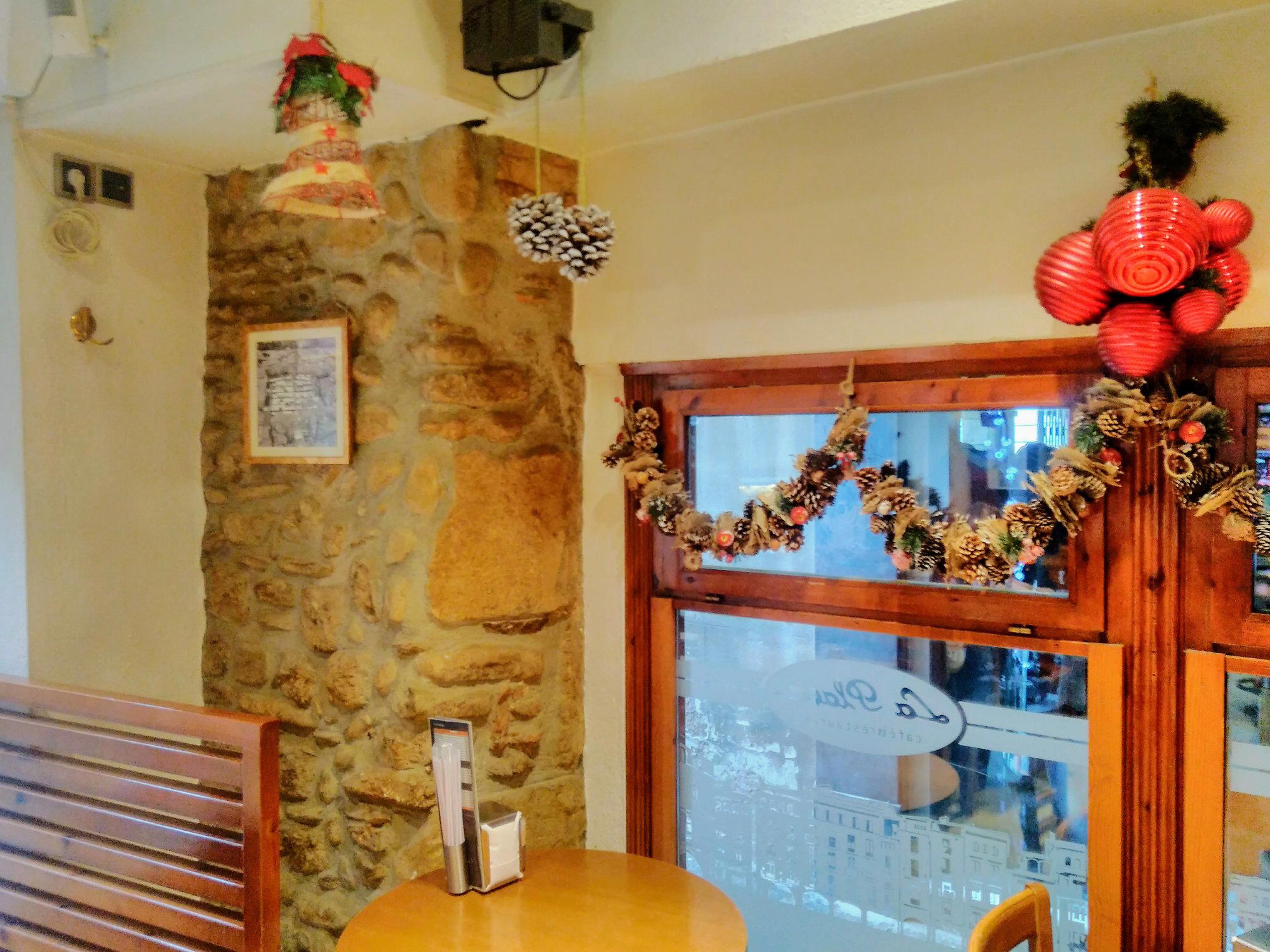
Where the Square Does the Talking
In Catalonia's interior, the plaça major is not a scenic backdrop. It is the operational centre of town life: market day anchor, post-church gathering point, the place where information travels between neighbours. Folgueroles is a small municipality in the Osona comarca, historically overshadowed by the larger market town of Vic a few kilometres to the south, yet possessing its own quiet civic rhythm. La Plaça, addressed directly at Plaça Major 30, occupies exactly the position the name suggests: the bar at the centre of that rhythm.
Approaching the square on any weekday morning, the sound arrives before the view. Chairs scraping on stone, coffee cups returned to saucers, fragments of Catalan conversation. This is the register in which La Plaça operates. It does not perform atmosphere; it generates one through the accumulated habits of the people who use it. For a visitor arriving from Barcelona, roughly 70 kilometres to the south, or from Vic itself, the shift in pace is immediate and deliberate.
The Catalan Bar as Social Architecture
Spain's bar culture is frequently discussed in terms of its most visible urban expressions: the vermouth bars of Barcelona's Eixample, the pintxos counters of San Sebastián, the terrace-forward venues of Palma. What receives less attention is the interior Catalan tradition of the plaça bar, a format that combines café, aperitif counter, and community hall functions under one roof. These are not simply smaller versions of city bars. They operate on different temporal logic, with morning coffee, midday vermouth, and late afternoon caña occupying distinct social windows throughout the day.
La Plaça fits this tradition in terms of location and community function. Osona as a comarca has a strong agricultural and artisanal identity, and the food and drink culture of the region reflects that. Locally produced embotits (cured meats), direct house wines, and the kind of simple aperitif drinking that preceded the premium cocktail wave all remain part of how these interior Catalan bars are used. For context on how Spain's more formalised cocktail culture has developed, it is worth following venues like Angelita in Madrid or Boadas in Barcelona, which have built reputations on technical programmes and historical continuity. La Plaça sits in a different register: less curated, more anchored to daily use.
Drinks in Context: The Village Aperitif
The cocktail tradition in small Catalan towns is not built around tasting menus or clarified spirits. It is built around the copa de cava before Sunday lunch, the vermut amb olives on a Saturday morning, and the occasional house gin-tonic that arrived in the Spanish interior a decade after it conquered Barcelona. This is the drinks culture in which La Plaça operates, and understanding that context prevents misreading the venue as a bar that has failed to modernise. It is a bar that answers a different brief.
Across Spain, the premium bar scene has fragmented into increasingly technical sub-categories. The Balearic coast produces its own variation, visible at venues like Garito Cafe in Palma de Mallorca and Garden Bar in Calvia. Andalucía has developed its own distinct aperitif identity, documented through places like Bar Sal Gorda in Seville and Bar Gallardo in Granada. In the north, the Basque Country and Cantabria sustain a parallel tradition, exemplified by Bar Stick in Errenteria and Bar Guillermina in Cabrales. What these regional variations share is a local specificity that resists wholesale importation. La Plaça is the Osona comarca's version of that specificity: unexhibited, place-tied, and legible only through regular use.
The Menorcan bar tradition, represented in venues like La Margarete in Ciutadella, offers a useful parallel. Island communities and inland agricultural towns have maintained drinks cultures that the premium urban bar market has largely bypassed, not out of ignorance but out of disinterest in formats that do not reward technical posturing. The parallels extend even further geographically: Casa Lin in Aviles in Asturias and Bar Leather Apron in Honolulu each represent local bar ecosystems that function on terms set by their immediate communities rather than international bar culture movements.
Folgueroles and the Osona Setting
Folgueroles sits at roughly 600 metres above sea level in the Guilleries foothills, a range of beech forest, farmland, and small settlements that has changed slowly over decades. The town is known regionally as the birthplace of the nineteenth-century Catalan poet Jacint Verdaguer, which gives it a modest literary identity in Catalan cultural memory. That association has not translated into significant tourist infrastructure. Folgueroles remains a functioning village rather than a heritage destination, which means its bars and squares operate without the distortions that visitor economies introduce.
For anyone combining a visit to La Plaça with broader Osona exploration, Vic functions as the natural base. The city has a Saturday market that draws producers from across the comarca, and its medieval centre contains several bars and restaurants operating at a more elaborate register than Folgueroles can sustain. Our full Folgueroles restaurants guide covers the broader eating and drinking options in the area, including where to find Vic's most considered wine lists and the leading access points to Osona's cured meat producers.
Planning a Visit
La Plaça is a neighbourhood bar on a village square, which means it operates on the logic of its community rather than a hospitality industry calendar. Visitors arriving mid-morning for coffee or early afternoon for aperitifs will find it in its natural working state. Weekend mornings, when the square carries more foot traffic, tend to produce the fullest version of the venue's social character. There is no published reservation system for a bar of this type, and walk-in use is the expected format.
Fast Comparison
Comparable venues nearby, for context on price, style, and recognition.
| Venue | Cuisine | Price | Awards | Notes |
|---|---|---|---|---|
| La PlaçaThis venue — the venue you are viewing | pub | $10–20 | Not listed | Not listed |
| Can Paixano | champagne_bar | $10–20 | Macarfi 6.5 Food Rating | Sant Pere, Santa Caterina i la Ribera |
| Right Side Coffee Bar | Bar | $1–10 | Not listed | Barri Gotic |
| Balius Bar | cocktail_bar | $10–20 | Not listed | el Poblenou |
| Mariposa Negra | cocktail_bar | $20–30 | Not listed | El Born |
| BierCaB | beer_bar | $20–30 | Not listed | l'Antiga Esquerra de l'Eixample |
Continue exploring
More in Folgueroles
Bars in Folgueroles
Browse all →
Restaurants in Folgueroles
Browse all →
Hotels in Folgueroles
Browse all →

Details
- Rustic
- Casual Hangout
- Outdoor Terrace
- Craft Beer
- Street Scene
Casual and friendly neighborhood spot with nice staff.