Valia Calda
Valia Calda sits in Kalambaka, the gateway town to the Meteora monasteries, where the surrounding Thessalian terrain shapes what ends up on the plate. The kitchen draws on the agricultural and pastoral traditions of the Pindus foothills, placing it within a regional cooking culture that has very little in common with the coastal Greek dining scene most international visitors expect.
 Discover on Pearl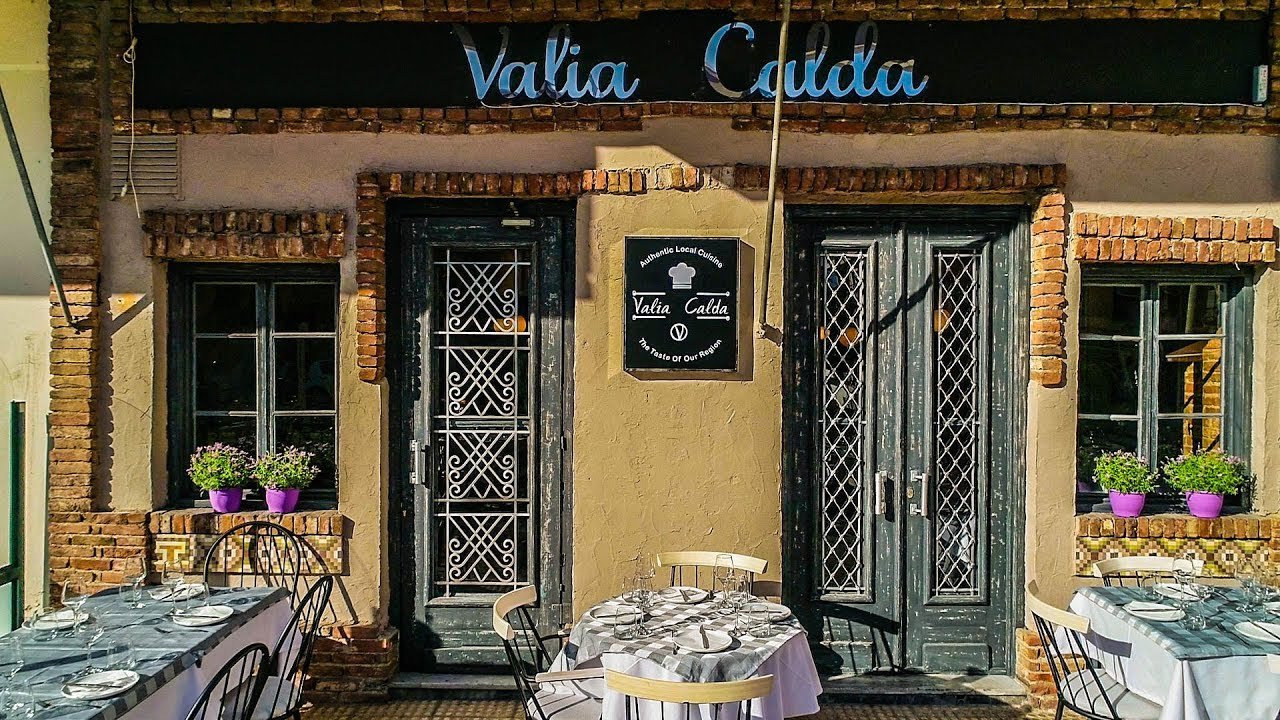
Where the Pindus Foothills Meet the Plate
Kalambaka occupies an unusual position in Greek travel: it is visited by hundreds of thousands of people each year, almost all of them en route to or from the Meteora rock formations, and almost none of them thinking primarily about dinner. The town sits at the base of those extraordinary sandstone pillars in the Thessaly region, and the surrounding terrain — the Pindus mountain range to the west, the Thessalian plain stretching east — defines a food culture that is emphatically inland. No octopus drying in the sun, no freshly landed sea bream. What the area produces instead is lamb from high-altitude pastures, wild greens foraged from rocky slopes, cheeses from small herds, and grains grown in the wide flat basin that rolls toward Trikala and Larissa. Valia Calda sits in this context, and understanding that context is the first step to understanding what the kitchen is likely to be doing.
The name itself is a signal. Valia Calda is the name of a national park in the Pindus mountains, a protected wilderness of beech and fir forest, brown bears, wolves, and glacial lakes that sits roughly 70 kilometres northwest of Kalambaka. It is one of the least visited protected areas in Greece, which is partly a function of access and partly a function of how Greek tourism has historically concentrated on the islands. Naming a restaurant after that park places it firmly in a tradition of inland, mountain-facing Greek cooking , a tradition that operates on different ingredients, different seasons, and different techniques than the coastal taverna model that most visitors carry as a mental image of Greek food.
The shortlist, unlocked.
Hard-to-book tables, cellar releases, and concierge-planned trips.
Get Exclusive Access →The Ingredient Logic of Inland Thessaly
The editorial angle that matters most for Valia Calda is sourcing, because the sourcing patterns of mountain Thessaly are genuinely distinct from the rest of the country. Domestic lamb in this part of Greece tends to come from breeds that graze at altitude, producing meat with a more pronounced flavour than lowland equivalents. The cheeses of the broader Thessaly and Epirus region include some of Greece's most serious PDO products: Graviera, Feta from local flocks, and lesser-known aged varieties that rarely make it onto island menus. Wild herbs , mountain tea (Sideritis), oregano, thyme , grow at densities that make them a genuine ingredient rather than a garnish.
This is a pattern seen across the mountain cooking traditions of northern and central Greece, from the villages of Zagori in Epirus to the towns of Macedonia. The kitchen prioritises what is available in the surrounding elevation rather than importing coastal produce, and the seasonal calendar reflects that: spring brings wild greens and young lamb, summer shifts to garden vegetables and dried legumes, autumn introduces game and preserved foods, winter leans on slow-cooked cuts and root vegetables. Any kitchen in Kalambaka that takes its sourcing seriously will be working within this framework, whether it applies a traditional taverna approach or something more contemporary.
For travellers comparing the Greek dining scene more broadly, it helps to place this within a national picture. Athens has developed a cohort of contemporary Greek restaurants , places like Delta in Athens and Cash in Kifisia , that are self-consciously reworking the country's regional traditions through a modern lens. Santorini and the Cyclades have their own seafood-forward luxury register, with venues like Lure Restaurant in Oia, Aktaion in Firostefani, and Bony Fish Santorini in Imerovigli representing that coastal premium tier. Crete brings its own distinct sourcing identity, as seen at venues like Knossos Greek Taverna Gouves in Gouves and Kastella Seafood Restaurant in Heraklion. Kalambaka sits outside all of those registers. It is a mainland mountain town, and its restaurants draw from a larder that those coastal venues simply do not access. For context on how the broader Greek seafood tradition plays out elsewhere, see also Jimy's Fish in Piraeus, Lake Vouliagmeni in Vouliagmeni, and Alykes in Palaio Faliro.
The Meteora Effect on Dining in Kalambaka
Kalambaka's dining scene faces a structural challenge that is common to towns built around a single major attraction: the visitor flow is enormous relative to the size of the town, the stay is short (most visitors are day-trippers or one-night stopovers), and the incentive to eat at whatever is nearest and fastest is high. This tends to flatten the quality of town-centre dining and push the more serious kitchens slightly off the main tourist circuit. Restaurants that survive on repeat local custom and word-of-mouth referrals from returning visitors tend to be more consistent than those positioned purely for footfall capture.
Valia Calda's address in Kalambaka places it in this competitive environment. The question for any visitor deciding where to eat is whether a given kitchen is working the local larder seriously or operating a generic taverna format aimed at high-turnover tourist traffic. The name's reference to the national park suggests an intentional positioning toward the former , a commitment to the inland, mountain-facing ingredient culture that distinguishes Thessalian cooking from the island-dominated image of Greek cuisine. For a broader overview of where Kalambaka dining fits in the regional picture, see our full Καλαμπάκας restaurants guide.
For comparison points further afield within Greece, venues like Beauvoir in Katakolo, Feredini in Σαντορίνη, Avli tou Thodori in Μύκονος, and Cacio e Pepe in Thira Municipality illustrate how the island premium dining tier prices and presents itself. The contrast with a mainland mountain town like Kalambaka is instructive: lower price points, heavier reliance on pastoralism, and a cuisine where preserved and slow-cooked preparations carry more weight than raw or minimally cooked presentations. Also worth consulting for high-level reference points in fine Greek dining are Kritikos Gallery and Restaurants in Panorama and, for a sense of what contemporary technique looks like applied to Greek ingredients at the highest level internationally, Le Bernardin in New York City and Atomix in New York City.
Planning a Visit
Kalambaka is most directly reached by train from Athens (roughly four hours on InterCity services via Larissa) or by road from Thessaloniki (approximately two and a half hours south on the E75). Most visitors structure their Meteora visit around early morning monastery access, when the sites are quietest and the light is clearest, which means dinner in town follows a long day of walking and climbing. A restaurant that serves late and handles the pace of post-Meteora diners is a practical consideration alongside any culinary one. Seasonally, spring and early autumn are the periods when the surrounding landscape is at its most productive and when the weather for outdoor dining in the town's squares is most cooperative.
Frequently Asked Questions
- Is Valia Calda good for families?
- Kalambaka is a family-friendly destination by nature, and at the price level typical of mainland Greek town dining, Valia Calda is unlikely to present significant barriers , though specific family facilities are not confirmed in available data.
- What's the overall feel of Valia Calda?
- Kalambaka's restaurant culture sits well below the price register of island premium dining and has no formal award recognition on record; the feel is grounded in regional Thessalian tradition rather than contemporary fine-dining theatre, placing it in the category of ingredient-serious town restaurants rather than destination dining.
- What should I order at Valia Calda?
- No confirmed menu data is available, but the cuisine tradition of inland Thessaly points strongly toward lamb preparations, local cheese dishes, and wild-green pites (savoury pies) as the categories where the regional kitchen historically performs at its most characteristic , the ingredient sourcing of the Pindus foothills is where that cuisine's authority lies.
- How hard is it to get a table at Valia Calda?
- No booking data is confirmed; in a town with Kalambaka's visitor volume, arriving early in the evening or booking directly through the venue if contact details are available is the practical approach, particularly during the high-season months of July and August when Meteora visitor numbers peak.
- Does Valia Calda reflect the cooking traditions of the Valia Calda national park area?
- The name links the restaurant explicitly to the Pindus wilderness region northwest of Kalambaka, a terrain associated with some of Greece's most distinct pastoral and foraging traditions. While no menu data is confirmed, a kitchen operating under that name in this location would logically be drawing on mountain-grazed meats, highland cheeses, and foraged herbs characteristic of that broader Pindus corridor , the same ingredient culture that defines the cooking of Zagori and Epirus to the west.
Side-by-Side Snapshot
These are the closest comparables we have in our database for quick context.
| Venue | Cuisine | Price | Awards | Notes |
|---|---|---|---|---|
| Valia Calda | This venue | |||
| Botrini's | Contemporary Greek, Mediterranean Cuisine | €€€€ | Michelin 1 Star | Contemporary Greek, Mediterranean Cuisine, €€€€ |
| Hytra | Modern Greek, Modern Cuisine | €€€ | Michelin 1 Star | Modern Greek, Modern Cuisine, €€€ |
| Spondi | Contemporary Greek, French | €€€€ | Michelin 1 Star | Contemporary Greek, French, €€€€ |
| Tudor Hall | Contemporary | €€€€ | Michelin 1 Star | Contemporary, €€€€ |
| Aleria | Greek | €€€ | Greek, €€€ |
Need a table?
Our members enjoy priority alerts and concierge-led booking support for the world's most difficult tables.
Get Exclusive AccessThe shortlist, unlocked.
Hard-to-book tables, cellar releases, and concierge-planned trips.
Get Exclusive Access →