Urban
Our verdict
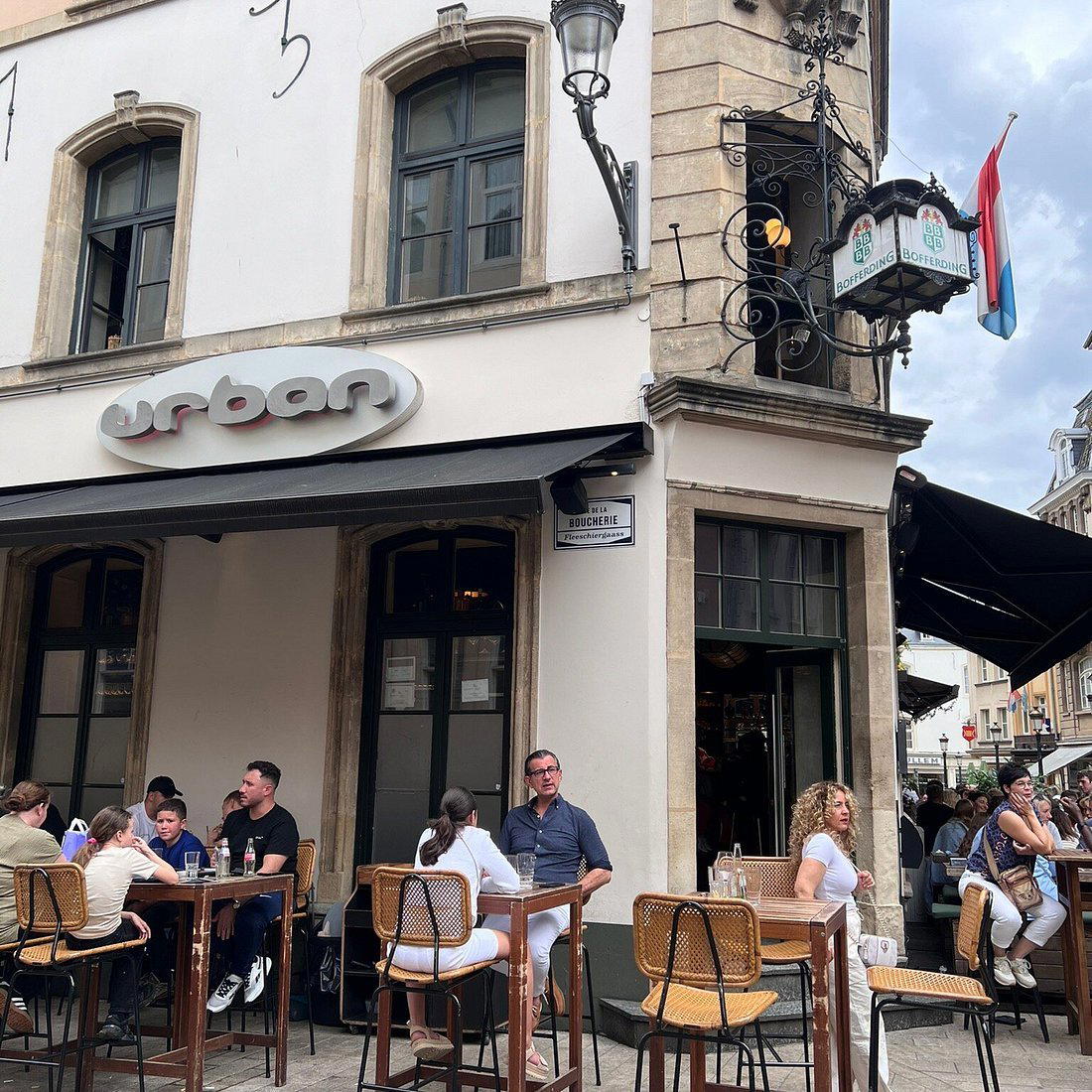
Urban occupies a corner of Ville-Haute, Luxembourg's refined old city quarter, where cobbled lanes and medieval stonework set the tone before you reach the door. Sitting on Rue de la Boucherie, the restaurant places itself in a neighbourhood that rewards deliberate visitors over casual foot traffic. For a city with a notably concentrated fine-dining scene, Urban represents a useful reference point on the mid-to-upper spectrum.

Pearl is the En Primeur Club membership app — saves, bookings, and concierge access live there. Same editors, same standards.
- Address
- 2 Rue de la Boucherie, 1247 Ville-Haute Luxembourg
- Phone
- +35226478578
- Hours
- Mon–Thu 10:30 AM–1 AMFri–Sat 10:30 AM–3 AMSun 10:30 AM–1 AM
- Website
- urban.lu
- Directions
- Get directions
The menu
What to order
- Mediterranean platter
- Falafel wrap
- Cajun burger
- Homemade pasta
Approaching Ville-Haute: What the Address Tells You
Rue de la Boucherie sits inside Ville-Haute, Luxembourg's upper old town, where the streets narrow, the stone facades date back centuries, and the surrounding institutions carry real institutional weight. Arriving here is a specific act: the quarter doesn't reward hurried passersby, and the restaurants that have established themselves in it have done so partly on the strength of that selectivity. Urban, at number 2, occupies a position that makes the address itself a signal. In a city where restaurant geography matters — where the distinction between Kirchberg's corporate dining corridor and the historic core's more intimate rooms is a genuine editorial point — being rooted in Ville-Haute places Urban in a particular conversation.
Luxembourg's fine-dining circuit is compact by the standards of Paris or Brussels, but it is unusually dense for its population size. A city of around 130,000 residents sustains multiple Michelin-recognised addresses, and the competition for table time among informed visitors and local regulars is real. Ma Langue Sourit (Contemporary French, Modern Cuisine) operates at the €€€€ ceiling of the local market, as does Léa Linster (Modern French). Understanding where Urban sits relative to those addresses, in format, price register, and ambition, requires spending time in the room, but the neighbourhood context already narrows the field.
The Booking Question: Planning Around a Small City's Demand Curve
In small, high-income cities, the booking dynamic at credible restaurant addresses can be tighter than visitors expect. Luxembourg's resident base skews towards finance, EU institutions, and associated professional services, a demographic that books ahead, eats out frequently, and fills the city's better rooms mid-week as well as on weekends. The practical consequence is that addresses like Urban, operating in a coveted old-town location, are not leading approached as walk-in propositions, particularly across Thursday to Saturday evenings.
The guidance here is to plan a week or more in advance for dinner, and to hold flexibility around lunch if your schedule allows. Luxembourg's city-centre restaurants often have more give at midday, even addresses that compress considerably in the evenings. The city's compact footprint means that building an itinerary around two or three serious meal stops, supplemented by the kind of exploratory neighbourhood walking that Ville-Haute rewards, is a more reliable approach than attempting to improvise table access on arrival.
For context on the wider booking environment across the Grand Duchy, the regional picture includes addresses spread across smaller communes: Beim Bertchen in Wahlhausen, Côté cour in Bourglinster, and Les Roses in Mondorf Les Bains each operate outside the capital but draw visitors willing to travel for the meal. Urban's city-centre location makes it the more natural anchor for a Luxembourg City stay, where the surrounding neighbourhood context adds genuine value to the dining occasion.
Positioning Inside Luxembourg City's Restaurant Spectrum
Luxembourg City's restaurant scene has matured considerably over the past decade. The city now sustains a recognisable tier structure: the Michelin-starred addresses at the apex, a mid-upper band of serious independent rooms, and a broader casual layer. Apdikt (Creative) operates at €€€ and represents the creative-independent segment. Archibald De Prince (Organic) and Fani (Italian) each hold the €€€€ bracket with distinct identity propositions, organic sourcing and Italian specificity respectively.
Urban's address and the character of the Ville-Haute quarter suggest an alignment with that upper band. The old city is not where Luxembourg City parks its casual dining; it is where the rooms with considered wine lists, deliberate service, and a degree of formality tend to concentrate. That framing shapes what a visitor should expect before arriving, and it shapes how to read the experience relative to, say, the more contemporary rooms operating in the Clausen or Grund districts.
For travellers building a multi-day Luxembourg itinerary, the contrast between Urban's old-town setting and addresses in surrounding communes, Beefbar Smets in Strassen, Kore in Steinfort, or B13 in Bertrange, is worth mapping deliberately. Each represents a different register of the broader Luxembourg dining conversation, and the itinerary that distributes meals across those registers will give a more complete picture than one that stays fixed in the capital.
The Broader Reference Frame: European City Dining at This Scale
Luxembourg sits in an interesting comparative position among European capitals. It is smaller than any of the other EU institutional cities, yet it sustains a dining culture that punches well above that scale, driven by high disposable income, a cosmopolitan resident base, and significant business travel. The comparison set for Urban's Ville-Haute location is less Brussels or Paris and more the kind of address you find in Geneva's old town or Copenhagen's historic core: a room where the surroundings carry heritage weight and the clientele skews towards people who eat seriously.
At the other end of the international reference frame, the technical ambition visible at addresses like Le Bernardin in New York City or the precision-driven tasting format of Atomix in New York City represents a different category entirely, but they point to the direction that ambitious restaurant programs have moved globally, and Luxembourg's better rooms are not entirely insulated from those influences. The question of how much of that international influence has penetrated Urban's kitchen is one that requires firsthand verification rather than inference from address alone.
Visitors seeking a fuller picture of what Luxembourg City and the surrounding region offer should consult our full Luxembourg restaurants guide, which maps the scene from the capital's historic core to outlying addresses including Der Napf in Wilwerdange, Bo Zai Fan in Letzebuerg, Domaine La Forêt in Remich, and Laotse in Moutfort.
Practical Planning: What to Know Before You Go
Urban is located at 2 Rue de la Boucherie, 1247 Luxembourg, in the Ville-Haute district. The address is walkable from the central train station in approximately 15 to 20 minutes on foot, or a short taxi ride. Parking in the old town is limited and leading avoided; public transport or a drop-off is the more practical approach for evening visits. Given the demand patterns outlined above, securing a table at least a week ahead for weekend dinner is the prudent baseline.
Frequently asked questions
What's Urban's location?
Urban is located at 2 Rue de la Boucherie, 1247 Ville-Haute Luxembourg, Luxembourg.
What is it like to walk to Urban from Luxembourg City's central train station?
Urban's address at 2 Rue de la Boucherie in Ville-Haute is reachable on foot from Luxembourg's central train station, with the route passing through the city's historic upper town and its stone-fronted streets. The walk takes roughly 15-20 minutes depending on pace, with the climb into the upper city being the notable physical feature of the approach. No taxi or tram is required for most visitors arriving by rail.
What do people recommend at Urban?
EP Club does not hold verified menu data for Urban, so naming specific dishes would risk inaccuracy. What the Rue de la Boucherie address signals is a kitchen operating in Ville-Haute's upper dining tier, where menus typically reflect both seasonal sourcing and the high expectations of Luxembourg City's resident clientele. Checking the restaurant directly is the most reliable way to get current recommendations.
Do I need a reservation for Urban?
In Luxembourg City, Thursday-to-Saturday evenings at well-regarded Ville-Haute addresses fill quickly. The city's compact size and high-income resident base mean demand at credible restaurants concentrates sharply, and walk-in access on peak nights is not a reliable strategy. Booking ahead, particularly for dinner, is the practical approach.
What's the defining dish or idea at Urban?
The Rue de la Boucherie location within Ville-Haute places it among Luxembourg City's more considered restaurant addresses, but the specifics of the kitchen's identity require confirmation from the venue directly.
What if I have allergies at Urban?
EP Club does not currently hold contact details or allergen policy information for Urban. The most reliable course is to contact the restaurant before arrival; in Luxembourg City's upper dining tier, kitchens at Ville-Haute addresses are generally accustomed to handling dietary requirements, but confirmation in advance is always the safer position.
Is Urban good value for money?
Luxembourg City's Ville-Haute restaurants generally sit at the higher end of the city's price spectrum, reflecting both the address and the income profile of the local market. Cross-referencing with current menu prices before booking will give you the clearest picture.
Fast Comparison
Comparable venues nearby, for context on price, style, and recognition.
| Venue | Cuisine | Price | Notes |
|---|---|---|---|
| UrbanThis venue — the venue you are viewing | Mediterranean & International Casual | $20–30 | Not listed |
| Chocolate House | Chocolate Cafe | $10–20 | Ville Haute |
| Le Quai Steffen | French-European Brasserie and Rotisserie | $20–30 | Gare |
| Manzoku | Authentic Japanese Ramen Bar | $20–30 | Belair |
| Bao 8 | Modern French-Asian Fusion Bao House | $20–30 | Gare |
| Madame Jeanette | Latin American | Not listed | Gare |
Continue exploring
More in Luxembourg
Restaurants in Luxembourg
Browse all →
Bars in Luxembourg
Browse all →

Hotels in Luxembourg
Browse all →
Details
- Lively
- Modern
- Trendy
- Casual Hangout
- After Work
- Group Dining
- Late Night
- Live Music
- Terrace
- Beer Program
- Craft Cocktails
- A La Carte
- Craft Cocktails
- Beer
- Wine
- Vegetarian Friendly
- Vegan Options
Current opening hours
- Monday
- 10:30 AM–1 AM
- Tuesday
- 10:30 AM–1 AM
- Wednesday
- 10:30 AM–1 AM
- Thursday
- 10:30 AM–1 AM
- Friday
- 10:30 AM–3 AM
- Saturday
- 10:30 AM–3 AM
- Sunday
- 10:30 AM–1 AM
Hours can change for holidays and private events. Last verified .