
Ura Musashi Ya Nishichiba honten puts Chiba’s ramen culture into a compact, station-side format: counter seating, table space upstairs, ticket-first ordering, and a price band that keeps it in everyday dining territory. Its selection for Tabelog 100 - Ramen - EAST - 2025 gives the shop a clear credential in a city where serious eating ranges from student-area noodles to high-priced sushi counters.
Pearl is the En Primeur Club membership app — saves, bookings, and concierge access live there. Same editors, same standards.
- Address
- 千葉県千葉市中央区春日2-19-9
- Phone
- +81432386544
- Website
- uramusashiya-12.com
 Saves & bookings on Pearl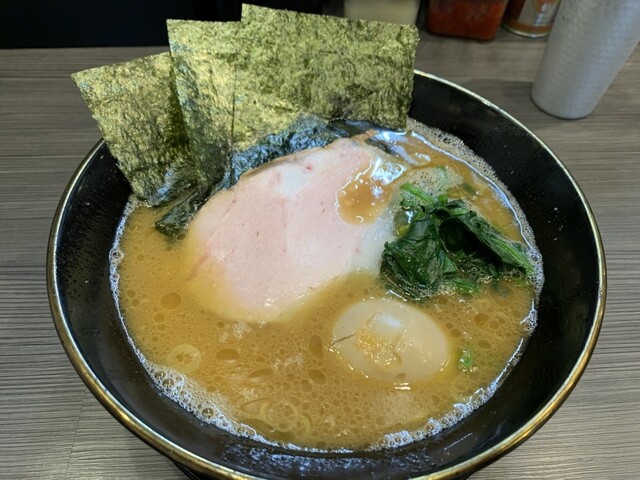
A serious ramen shop in a Japanese station district is about rhythm: ticket machine, queue discipline, counter turnover, steam, and a room for people who know what they came for. Nishi-Chiba has that rhythm in concentrated form: a JR Sobu Line neighbourhood of students, commuters, and local regulars moving through compact streets, not a destination-dining quarter built on long reservations. Here, Ura Musashi Ya Nishichiba honten fits a category Japan knows well: the specialist ramen shop that asks for attention without formality.
Chiba’s dining culture is often read through its proximity to Tokyo, but the city eats differently. Tokyo’s high-end counters and tasting menus reward planning; Chiba’s everyday grammar is narrower, faster, and more local. Ramen, tonkatsu, curry, sweets shops, and neighbourhood sushi form a practical city map. Within it, a Tabelog 100 - Ramen - EAST - 2025 selection matters because it places a modestly priced ramen room in a broader eastern Japan conversation, not only a local lunch circuit.
Nishi-Chiba ramen, read through craft rather than theatre
Ramen’s cultural weight in Japan comes from repetition as much as invention. The form is familiar, but distinction lives in decisions many casual diners notice only after several bowls: noodle supplier, soy-sauce base, fat structure, serving tempo, and how a shop controls the line before the first customer sits down. Here, the signals are technical, not decorative. Since June 2022, the shop has used custom-made noodles from Sakai Seimen and Sugi-jirushi, soy sauce from a Yamagata brewery, and a golden chicken oil component. These are not luxury gestures; they are the grammar of a ramen house treating a quick meal as a calibrated format.
That calibration fits the wider eastern Japan ramen tradition, where shoyu-led bowls, chicken oil, and noodle texture can carry as much identity as a chef’s name in a tasting-menu restaurant. The point is consistency under pressure: a ticket system, a managed line, and a room where the counter is part of the experience rather than a design flourish. In Chiba, that makes the shop more revealing than many higher-spend addresses, showing how technical seriousness survives inside everyday price architecture.
The Tabelog score of 3.72 and 2025 Hyakumeiten recognition sharpen the picture. Japan’s ramen field is crowded, and the EAST list groups shops across a large competitive zone rather than one city. For travellers, the selection is less trophy than sorting mechanism, identifying a bowl worth considering where an eating itinerary might otherwise skew toward Tokyo overflow or Narita-adjacent convenience.
The Chiba comparison: everyday ramen versus occasion dining
Chiba’s range becomes clearer beside its local peers. Bengal Tiger sits at a much higher spend level, while Takaoka represents the opposite decision: sushi at a JPY 30,000 to JPY 39,999 bracket. Tonkatsu Okura occupies a more everyday zone, and Kanmi Dokoro Kaede points to the city’s casual sweets culture. The useful comparison is not superiority, but what kind of Chiba meal each represents. Ramen compresses craft, speed, and local habit into a short sitting; sushi and destination dining stretch the meal into ceremony and commitment.
That is why a station-side ramen stop can sit comfortably in an EP Club itinerary without pretending to be a grand dining event. It gives the city’s food culture another register. A traveller can read Chiba through polished counters and higher budgets, but the local pulse is easier to catch where school-age children are welcome, solo dining makes sense, and upstairs tables extend the format beyond the lone counter regular. Ura Musashi Ya Nishichiba honten is not imitating Tokyo luxury. Its strength is making ramen specific to place: Chiba, Nishi-Chiba, the commute, the student district, the line.
The shop’s practical culture tells the same story. Meal tickets come first, joining a party later is not part of the system, and customers are asked to line up only once everyone has arrived. Procedural, yes, but exactly how high-demand ramen stays civil. The first nine customers from the morning opening receive a gold bowl, a small ritual belonging to the shop’s own operating language rather than fine-dining theatre. Non-alcoholic drinks may be brought in, reinforcing the ramen-house mood: brisk, specific, and built around the bowl, not the trappings.
How to fold it into a Chiba food day
For a food-focused Chiba day, this is an anchor, not a filler stop. Pair it with the city’s wider dining range rather than treating it as a one-off noodle detour. The full spread of local options is mapped in Our full Chiba restaurants guide, with nearby contrasts including Bengal Tiger, BAMBOU, Boushu En, Chinese Komugiko Ryori Senmonten Keisen, and Cinq au Pied. For broader stays, the city rails are also covered through Our full Chiba hotels guide, Our full Chiba bars guide, Our full Chiba wineries guide, and Our full Chiba experiences guide.
Seen against Japan more broadly, the shop belongs to a national habit of serious casual eating, where low spend does not mean low scrutiny. The same logic links addresses from -Grilled beef Sukiyaki- KAMAKURA TANUKIAN 鎌倉 たぬき庵 in Kamakura and. 鮪と炭火焼き うお炭 秋葉原店 in Tokyo to.cafe in Osaka.know in Kumamoto, (Shoku) Vietnam in Kawasaki, and [Curry Senmon Ten] Maruyama Kyoju. in Sapporo. Even overseas Japanese formats such as Jōdo Saké Bar in Los Angeles and Onigiri Time in Pasadena show how tightly defined formats travel when the core idea is clear.
The editorial case is simple: this is Chiba ramen with enough structure, recognition, and local texture to justify planning around it. It suits travellers who value Japanese food culture below the fine-dining tier, where craft is expressed through sourcing choices, queue order, counter pace, and a bowl that belongs to its neighbourhood.
Price and Recognition
Comparable venues by cuisine and price in the same metro.
| Venue | Cuisine | Price | Notes |
|---|---|---|---|
| Ura Musashi Ya Nishichiba hontenThis venue — the venue you are viewing | Nishi-Chiba, Iekei Ramen Shop | $ | Not listed |
| Kikuzono | Not listed | $ | Wakaba Ward, Traditional Japanese Wagashi & Confectionery |
| Ramen Sugita Ya Chiba yuukou ten | Not listed | $ | Chuo Ward, Traditional Yokohama Iekei Ramen |
| Hiroshima Ya | Not listed | $$ | Minami Nagareyama, Hiroshima-style Okonomiyaki |
| BAMBOU | Moto Yawata, Traditional Tonkatsu | $$ | Not listed |
| Kanmi Dokoro Kaede | Not listed | $ | Nishi Chiba, Japanese sweets cafe (wagashi & kakigori) |
Recognition history
Dated appearances from independent guides and award organizations, with the underlying list record or original source where available.
Tabelog 100 #29 · No. 29
Tabelog · Tabelog 100 - Ramen - EAST - 2025







At a Glance
- Lively
- Cozy
- Solo
- Casual Hangout
- Late Night
- Standalone
A compact, ramen-focused shop with counter seating, fast turnover, and a bustling, casual atmosphere typical of popular Iekei ramen-ya.