
Ramen Sugita Ya Chiba yuukou ten belongs to Chiba’s practical ramen culture rather than its special-occasion dining tier: low spend, counter-and-table seating, no reservations, and a rhythm built around arrival, ordering, eating, and leaving cleanly. Its repeated Tabelog Ramen EAST 100 selections from 2017 through 2025 give it a stronger signal than price alone suggests.
Pearl is the En Primeur Club membership app — saves, bookings, and concierge access live there. Same editors, same standards.
- Address
- 千葉県千葉市中央区祐光4-17-7
- Phone
- +81434418008
- Website
- sugitaya.com
 Saves & bookings on Pearl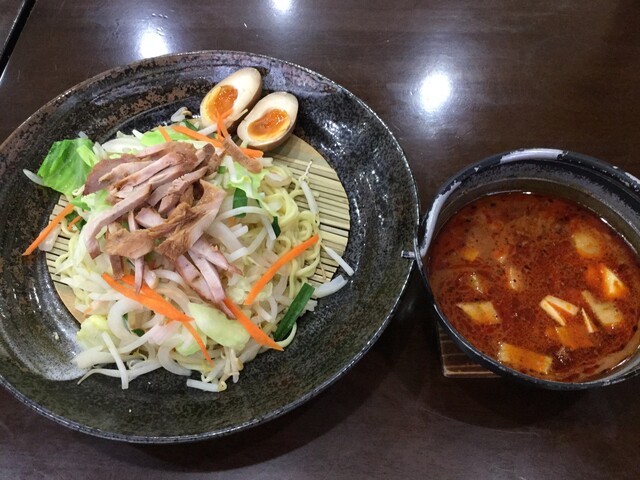
The approach to a serious suburban ramen shop in Chiba is less theatre than routine: car park, queue discipline, ticket-machine logic, steam, turnover. That ritual matters. Ramen is one of Japan’s great democratic dining formats because status is compressed into a bowl, not into table linen, wine pairings, or a long reservation window. At Ramen Sugita Ya Chiba yuukou ten, the point is not lingering. The meal works on speed, appetite, and the tacit understanding that the next diner is waiting.
Chiba’s dining map has several registers. There are higher-spend rooms such as Boushu En and Seikou En, mid-market city restaurants, and casual specialist counters where repetition is the value. For travellers comparing the city’s range, BAMBOU, Bengal Tiger, Chinese Komugiko Ryori Senmonten Keisen, and Cinq au Pied sit in different lanes. Ramen Sugita Ya Chiba yuukou ten is useful because it shows another Chiba pattern: a recognised specialist shop operating at everyday pricing, with the discipline of a commuter meal rather than the pacing of a destination dinner.
Chiba ramen as a ritual of speed, not ceremony
Japan’s ramen culture rewards clarity. Diners read the room quickly, commit to an order, eat while the noodles are at their intended texture, and leave the seat for the next person. That etiquette can feel abrupt to travellers used to restaurant pacing, but it is part of the pleasure. A 40-seat arrangement split between counter and tables gives this shop more capacity than the tiny Tokyo counter stereotype, yet the grammar remains the same: ramen, tsukemen, and gyoza, with take-out available and private rooms absent. The format is social enough for friends and families, but it is still governed by noodle-shop tempo.
The recognition signal is unusually strong for the price tier. The shop was selected for Tabelog Ramen EAST 100 in 2025, with selections also listed back through 2017. A Tabelog score of 3.81 places it above the anonymous local-utility category without pushing it into luxury territory. That is the useful distinction: this is not a splurge table competing with Chiba’s higher-budget dining rooms; it is a ramen stop whose standing comes from specialist consistency and repeat public recognition.
The price band sharpens the point. Ramen Jiro Chiba ten appears in a similar sub-¥1,000 bracket, while Koimen Kurage sits higher in the ¥1,000 to ¥1,999 range. That spread tells a traveller how ramen in Chiba can function both as a low-cost staple and as a slightly more curated noodle outing. Ramen Sugita Ya Chiba yuukou ten belongs to the lower-spend side of that comparison, which makes the award history more meaningful: the attention is not being bought through elaborate service or expensive ingredients signalled on a tasting menu.
How to read the room before ordering
Practical intelligence is simple but consequential. Reservations are unavailable, so the meal begins with timing rather than booking. Payment is cash-only across cards, electronic money, and QR systems, so arriving prepared avoids slowing the line. The shop opens early and runs late on operating days, with Monday as the regular closure, a schedule that makes it unusually flexible for breakfast ramen, late lunch, or a post-work bowl. Parking is part of the setup, with spaces on site and in a second lot, which matters in a city where not every worthwhile meal is built around rail access.
Children are explicitly accommodated, including school-age children and a chair for kids, so the room is not reserved for solo counter purists. That changes the ritual slightly. Counter seats preserve the quick ramen cadence; table seating makes the shop easier for families or small groups. Non-smoking status also matters for travellers reading the difference between old-school ramen atmosphere and present-day comfort. None of this turns the shop into a leisurely restaurant. It simply makes the format easier to use.
For a wider Chiba plan, treat this as the ramen anchor rather than the whole itinerary. Our full Chiba restaurants guide gives the broader dining spread, while Our full Chiba hotels guide, Our full Chiba bars guide, Our full Chiba wineries guide, and Our full Chiba experiences guide help frame the rest of the trip. Travellers building a Japan food route beyond Chiba can also compare how casual formats travel across cities, from -Grilled beef Sukiyaki- KAMAKURA TANUKIAN 鎌倉 たぬき庵 in Kamakura and. 鮪と炭火焼き うお炭 秋葉原店 in Tokyo to.cafe in Osaka.know in Kumamoto, (Shoku) Vietnam in Kawasaki, and [Curry Senmon Ten] Maruyama Kyoju. in Sapporo. The comparison even extends abroad, where Japanese casual forms are reframed at places such as Jōdo Saké Bar in Los Angeles and Onigiri Time in Pasadena.
Why the recognition matters at this price
Awards in ramen should be read differently from awards in fine dining. They do not necessarily imply luxury, ceremony, or a chef-led narrative. They point instead to repeatability, local demand, and a bowl that can hold attention in a crowded field. The restaurant’s long run of Tabelog Ramen EAST 100 selections makes it a strong case study in that category: inexpensive, operationally direct, and recognised within an eastern Japan ramen list where consistency carries weight.
The editorial verdict is therefore practical rather than romantic. Come for a Chiba ramen ritual with credible recognition, low financial friction, and a room designed for turnover. Do not approach it as a long-form tasting experience. The reward is understanding how a serious ramen shop can be both everyday infrastructure and a destination for people who track the category closely.
Cuisine Lens
Side-by-side context: comparable cuisine and price.
| Venue | Cuisine | Price | Notes |
|---|---|---|---|
| Ramen Sugita Ya Chiba yuukou tenThis venue — the venue you are viewing | Traditional Yokohama Iekei Ramen | $ | Not listed |
| Kanmi Dokoro Kaede | Japanese sweets cafe (wagashi & kakigori) | $ | Nishi Chiba |
| Seikou En | Traditional Yakiniku (Japanese BBQ) | $$$ | Chuo-ku |
| Tonkatsu Okura | Tonkatsu specialty restaurant | $$ | Mihama-ku |
| Hiroshima Ya | Hiroshima-style Okonomiyaki | $$ | Minami Nagareyama |
| Private room Yakiniku GYU CHIBA | Private-room premium Yakiniku | $$$ | Chuo Ward |
Recognition history
Dated appearances from independent guides and award organizations, with the underlying list record or original source where available.
Tabelog 100 #72 · No. 72
Tabelog · Tabelog 100 - Ramen - EAST - 2025









At a Glance
- Lively
- Classic
- Well Known
- Solo
- Casual Hangout
- Late Night
- Family
- Group Dining
- After Work
- Standalone
Busy, no-frills Iekei ramen shop with counter and table seating, fluorescent-bright lighting, and a functional atmosphere focused on quick, satisfying bowls rather than decor.