
Hiroshima Ya places Hiroshima-style okonomiyaki inside Chiba’s broader everyday dining culture, where regional cooking often matters more than luxury signaling. Its 2025 Tabelog 100 selection for okonomiyaki and 3.65 score put it in a serious specialist bracket, while the format remains grounded in the griddle, cabbage, noodles, and sauce tradition that made the style travel far beyond Hiroshima.
Pearl is the En Primeur Club membership app — saves, bookings, and concierge access live there. Same editors, same standards.
- Address
- 951-4 Hiregasaki, Nagareyama, Chiba 270-0161, Japan
- Phone
- +81 4-7150-0398
- Website
- tabelog.com
 Saves & bookings on Pearl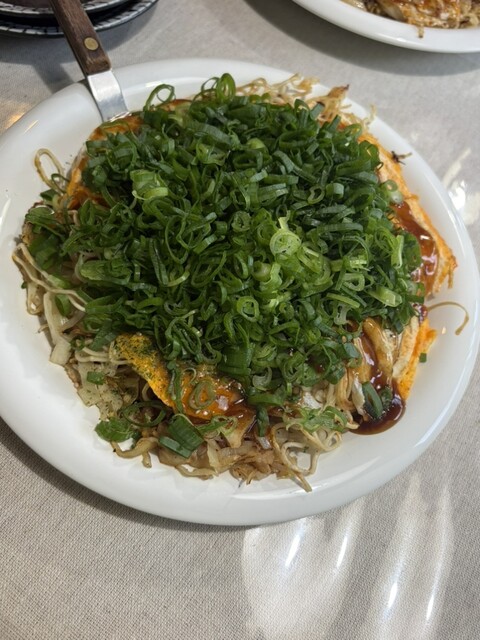
The first cue is the griddle. Okonomiyaki houses run on heat, timing, and proximity: the cook’s rhythm, batter setting, cabbage, noodles, and egg compressed into something less like a pancake than a layered street-food argument. In Chiba, the format carries a different charge than in Hiroshima or Osaka. This is not regional tourism staged for visitors, but suburban proof that Japan’s comfort-food canon moves through commuter towns, station districts, and small rooms where regulars value execution over ceremony.
Hiroshima Ya belongs to the practical, specialist end of the category. Its recognition in the 2025 Tabelog 100 list for okonomiyaki is a clear trust signal, not because awards make griddle cooking grand, but because this genre is judged by repeatability. A serious okonomiyaki counter must manage texture, heat, portioning, and pacing across a narrow ingredient range. There is little camouflage: if cabbage steams too far, noodles lose bite, or sauce dominates, the dish flattens.
That is the cultural point of Hiroshima-style okonomiyaki: it is layered, not mixed into a batter-heavy mass. Shorthand calls both Osaka and Hiroshima versions “Japanese savory pancake,” but the distinction matters. Osaka-style folds ingredients into batter before grilling; Hiroshima-style builds upward, usually with cabbage and noodles as defining elements. The pleasure is architectural: the griddle holds separate textures together long enough for the final bite to read as one thing.
Hiroshima-style okonomiyaki, read through a Chiba suburb
Chiba’s restaurant scene is often misread through proximity to Tokyo, as if every serious table must behave like a capital-city reservation. The better reading is local: specialist shops, narrow genres, and station-linked routines shape much of the region’s dining identity. Hiroshima Ya sits in Nagareyama rather than a hotel district or tourist corridor, so the relevant comparison is not luxury omakase or kaiseki, but Japan’s habit of treating humble forms with technical seriousness.
Within that frame, okonomiyaki is not casual because it is simple. It is casual because the room, pacing, and price category stay accessible while the cooking remains demanding. The 2025 Tabelog 100 selection places Hiroshima Ya among okonomiyaki specialists judged against peers in the same genre, not broader fine-dining conventions. For travelers, the award signals category credibility, not white-tablecloth ambition.
Chiba has a wider spread than many visitors allow. Dining itineraries often move between regional Japanese cooking, Chinese noodle traditions, Indian restaurants, bakeries, and French-leaning rooms, so a focused okonomiyaki stop reads as part of a larger map, not a novelty detour. Nearby editorial paths include BAMBOU, Bengal Tiger, Boushu En, Chinese Komugiko Ryori Senmonten Keisen, and Cinq au Pied, each pointing to a different strand of prefectural table culture. For the wider city edit, use Our full Chiba restaurants guide.
The griddle format rewards restraint, not spectacle
The strongest okonomiyaki experiences are often least theatrical. The drama is sequence: batter as base, cabbage as volume, noodles as structure, egg as binder, sauce as punctuation. Hiroshima-style cooking has long been tied to postwar thrift and abundance at once, making inexpensive ingredients feel complete through layering and heat. Today, that history matters because it resists the premium-dining habit of turning every meal into a performance of rarity.
The restaurant’s category also explains its usefulness for travelers who have already spent time in Tokyo’s higher-friction dining circuit. A 3.65 Tabelog score in a genre with strong local loyalty is not decorative; it suggests enough consistency to draw repeat attention. The trade-off is that okonomiyaki does not reward over-scheduling. It works better as the anchor of a relaxed evening or weekend lunch than as a rushed stop between formal reservations.
The comparison set outside the metro reinforces this. Yokobori Gyoza, Chuka Soba Yanagi, LES TEMPS PLUS Honten, backerei sakatuji, and Backstube Zopf occupy lower or similarly everyday price bands across dumplings, ramen, pastry, and bread. The restaurant’s dinner spend sits higher than several of those casual specialists, which fits a griddle-centered meal built around cooked-to-order portions rather than a quick bowl or bakery run. The value question is not whether it is cheap, but whether the format justifies a dedicated stop for a regionally recognized style.
Chiba planning should stay category-aware. A food-led day might place this meal alongside broader local coverage rather than force it into a single-theme itinerary. The city’s non-restaurant planning rails help: Our full Chiba hotels guide, Our full Chiba bars guide, Our full Chiba wineries guide, and Our full Chiba experiences guide separate an okonomiyaki meal from the day’s logistics.
Who should make the detour
This address suits diners interested in regional Japanese food beyond sushi, ramen, and tempura. Hiroshima-style okonomiyaki teaches a specific lesson about how Japan codifies comfort: local identity, working food, and technical repetition become inseparable. Its appeal is not ingredient luxury, but the way modest components gain coherence through layering, griddle management, and sauce discipline.
For visitors comparing food traditions across Japan, the stop pairs conceptually with other focused, single-idea venues. The same editorial logic applies beyond Chiba: -Grilled beef Sukiyaki- KAMAKURA TANUKIAN 鎌倉 たぬき庵 in Kamakura centers a classic beef format, 鮪と炭火焼き うお炭 秋葉原店 in Tokyo points toward tuna and charcoal cooking.cafe in Osaka sits in a different casual register.know in Kumamoto broadens the regional lens, (Shoku) Vietnam in Kawasaki shows how imported cuisines settle into Japanese cities, and [Curry Senmon Ten] Maruyama Kyoju. in Sapporo keeps the specialist-shop thread intact. Even overseas, Jōdo Saké Bar in Los Angeles and Onigiri Time in Pasadena show how tightly defined Japanese formats can travel without fine-dining framing.
The editorial verdict is simple: the restaurant is for diners who want okonomiyaki treated as a serious regional form, not a snack between bigger meals. The Tabelog 100 recognition supplies external validation; the cultural case comes from Hiroshima-style cooking itself, where structure, heat, and repetition carry the weight.
Price and Recognition
Comparable venues by cuisine and price in the same metro.
| Venue | Cuisine | Price | Notes |
|---|---|---|---|
| Hiroshima YaThis venue — the venue you are viewing | Not listed | $$ | Not listed |
| Hanamigawa Ootomi | Not listed | $$$ | Makuharihongo, Yakitori using Hinai-jidori chicken |
| Seikou En | Not listed | $$$ | Chuo-ku, Traditional Yakiniku (Japanese BBQ) |
| Kikuzono | Not listed | $ | Wakaba Ward, Traditional Japanese Wagashi & Confectionery |
| Cinq au Pied | Makuhari Hongo, French Fine Dining | $$ | Not listed |
| Tonkatsu Okura | Mihama-ku, Tonkatsu specialty restaurant | $$ | Not listed |
Recognition history
Dated appearances from independent guides and award organizations, with the underlying list record or original source where available.
Tabelog 100 #23 · No. 23
Tabelog · Tabelog 100 - Okonomiyaki - 2025








At a Glance
- Lively
- Cozy
- Casual Hangout
- Group Dining
- After Work
- Solo
- Standalone
Current opening hours
- Monday
- Closed
- Tuesday
- 5–11 PM
- Wednesday
- 5–11 PM
- Thursday
- 5–11 PM
- Friday
- 5–11 PM
- Saturday
- 12–2 PM, 5–11 PM
- Sunday
- 12–2 PM, 5–11 PM
Hours can change for holidays and private events. Last verified .
Casual, lively local okonomiyaki shop with a cozy interior, non-smoking environment, and a relaxed atmosphere suited to friends sharing hearty savory pancakes.