
Tabelog 100 #18
Our verdict
Unagiya belongs to the old-school eel tradition where sourcing, holding, cooking time, and restraint matter more than menu sprawl. Its Tabelog 100 Unagi selections in 2018, 2019, 2022, and 2024 put it in a serious national conversation, while the format remains grounded: eel cooked to order, sake and shochu alongside, and a room built for diners who understand patience.

Pearl is the En Primeur Club membership app, where members save venues, book tables and use the concierge.
The menu
What to order
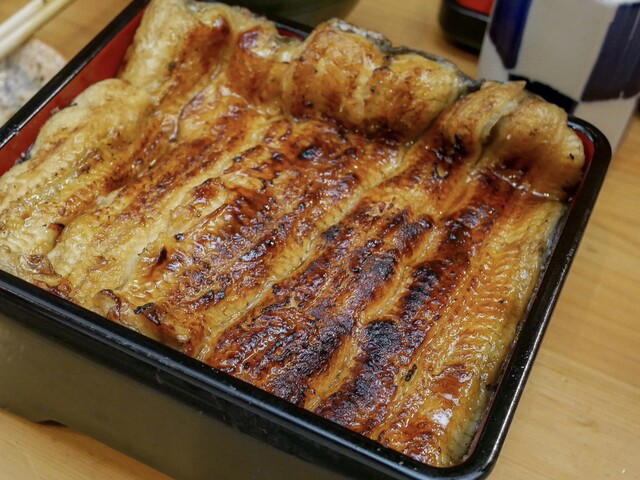
- Unagi-don (grilled eel over rice)
- Kabayaki eel
- Unajū (eel over rice in lacquered box)
Approach a specialist unagi house and the first cue is tempo, not luxury. The room runs on a slower clock than many urban restaurants: a focused menu, a deliberate pace, and the understanding that eel is not fast food when handled as a craft. At Unagiya in Nagasaki, that rhythm defines the experience. The appeal is less about spectacle than about giving a narrow category the attention it requires.
That sense of patience is not inconvenience; it is the point. In Japanese eel cooking, quality depends on careful preparation, heat control, saucing, and timing. Unagi is unforgiving, and the difference between a casual rice-bowl shortcut and a dedicated eel restaurant often comes down to repetition and restraint. Unagiya’s value is best read through that lens: a specialist venue where the meal is built around one demanding ingredient rather than a broad restaurant concept.
Unagi culture, measured by patience rather than polish
Unagi sits apart from sushi, tempura, or kaiseki. It is narrower in mood and less concerned with theatrical progression. The diner chooses a craft tradition, not a long tasting format. Serious eel restaurants can look modest beside flashier rooms, yet the technical burden is high: the eel must be prepared cleanly, cooked with care, and finished so the sauce supports rather than overwhelms the main ingredient.
Unagiya’s recognition in Tabelog 100 Unagi 2024 places it within a selective category rather than a general restaurant ranking. That matters. Tabelog’s eel list compares specialists with specialists, so the signal is not broad popularity but relevance inside a narrow craft. A 3.77 Tabelog score reinforces the picture: not a trend-led dining room, but a venue with enough specialist gravity to remain visible where regulars and repeat diners help shape reputation.
The category focus is the strongest reason to take the place seriously. Eel restaurants need systems casual grills do not, because the ingredient’s condition and handling affect texture, aroma, and how it takes heat. A shop can matter without a chef celebrity attached. The craft is embedded in routine, equipment, timing, and repetition.
What the format says about the meal
The experience is best understood as a focused unagi meal rather than a broad night out. That suits several dining modes: a solo meal, a small group, or a more settled lunch or dinner where the main decision is to commit to eel as the center of the table. The format keeps attention on one category, with the pleasure coming from preparation and pacing rather than a long sequence of unrelated dishes.
Because Unagiya is a specialist, the practical move is to plan with a little patience. Diners who treat unagi casually can misread the format. The kitchen’s work is more exacting than the room may suggest, and the meal is better approached without a rush. That is not fussiness; it is how a single-specialty restaurant protects the main event.
Compared with broader casual dining in Japan, pricing sits in a more deliberate lunch and dinner bracket, reflecting ingredient cost and labor rather than room theatrics. Among the comparison set supplied here, entries such as L'AUTOMNE Nakano ten, Chonan Hosono Takashi, and Golden time may serve different everyday or casual purposes, while green glass represents another kind of dining experience. Unagiya occupies a specialist middle: more expensive than an everyday stop, less like a luxury tasting counter, and defined by a single ingredient with real procurement and preparation pressure.
That positioning helps travelers planning beyond obvious restaurant categories. Readers building a wider Kyushu or Japan itinerary can compare the rhythm here with other Nagasaki dining rooms and with the broader spread of restaurants, hotels, bars, wineries, and experiences across the city. For broader planning, keep the focus on what Unagiya does specifically: a Nagasaki unagi specialist with Tabelog 100 Unagi 2024 recognition, a listed score of 3.77, and lunch and dinner budgets in the JPY 6,000 - JPY 7,999 range.
The editorial read: a specialist for diners who respect timing
The strongest case for Unagiya is not novelty. It is category focus, a clear unagi identity, and recognition within Tabelog’s eel category. Selected for Tabelog 100 Unagi 2024 and organized around a specialist eel format, it belongs to the Japanese restaurant tradition where repetition is the argument. Choose it when eel is the meal, not a side note, and when the schedule lets the kitchen work at its intended pace.
The trade-off is clear. This is not for diners chasing a long menu, constant novelty, or a quick unscheduled stop. It rewards advance planning, punctuality, and interest in a single craft. In return, the appeal is direct: a Nagasaki unagi house, a defined specialist focus, and a reputation built within Japan’s eel category rather than general dining spectacle.
Frequently asked questions
Is Unagiya child-friendly?
Those details are not published. The listed lunch and dinner budget is JPY 6,000 - JPY 7,999. Check the venue's official channels for the latest details.
What's the vibe at Unagiya?
Unagiya is a specialist unagi venue in Nagasaki, so the mood is practical and focused rather than showy. Tabelog 100 Unagi 2024 recognition and a 3.77 Tabelog score point to a restaurant best approached by diners who specifically want eel.
What does dinner at Unagiya typically cost?
Pricing at Unagiya is listed as JPY 6,000 - JPY 7,999 JPY 6,000 - JPY 7,999 View spending breakdown.
When can I go to Unagiya?
Current opening hours are not provided here. Check the venue's official channels before visiting.
Side-by-Side Snapshot
Comparable venues by cuisine and price in the same metro.
| Venue | Cuisine | Price | Awards | Notes |
|---|---|---|---|---|
| UnagiyaThis venue (the venue you are viewing) | Traditional Unagi (eel) Restaurant | $30–50 | Tabelog 100 #18 | Not listed |
| 竹彩 | 鉄板焼き | Not listed | Not listed | 秋月町 |
| ペッパーランチ | Japanese Pepper Steak Rice | Not listed | Not listed | 茂里町 |
| Coffee Fujio | Retro Japanese Cafe Sandwiches | Not listed | Not listed | Kajiyamachi |
| BEARD | Modern Vegetable-Focused Japanese | $50–100 | We're Smart World 4 Radishes | Obama Onsen |
| Osaka Ya Hamachou ten | Premium Kyushu Wagyu Yakiniku | $50–100 | Tabelog 100 #92 | Shianbashi / Hamanomachi |
Recognition history
Dated appearances from independent guides and award organizations, with the underlying list record or original source where available.
Tabelog 100 #18 · No. 18
Tabelog · Tabelog 100 - Unagi - 2024
Continue exploring
More in Tokyo
Restaurants in Tokyo
All restaurants in Tokyo →


Bars in Tokyo
All bars in Tokyo →




Details
- Classic
- Cozy
- Intimate
- Solo
- Family
- Casual Hangout
- After Work
- Group Dining
- Standalone
- Historic Building
- Local Sourcing
- A La Carte
- Beer
- Sake
- Pescatarian Friendly
Current opening hours
- Monday
- 11:30 AM–2:30 PM, 5–8:30 PM
- Tuesday
- 11:30 AM–2:30 PM, 5–8:30 PM
- Wednesday
- 11:30 AM–2:30 PM, 5–8:30 PM
- Thursday
- Closed
- Friday
- Closed
- Saturday
- 11:30 AM–2:30 PM, 5–8:30 PM
- Sunday
- 11:30 AM–2:30 PM, 5–8:30 PM
Hours can change for holidays and private events. Last verified .
A small, classic neighborhood eel restaurant with a calm, understated interior; guests describe an unpretentious, retro feel where you sit and wait while the chef grills each order to order, creating a warm, slightly smoky, quietly conversational atmosphere rather than a loud or flashy one.