
Tabelog 100 #21
Our verdict
Unagi Senmonten Aikawa sits in Takadanobaba’s specialist-eating lane, where Tokyo’s single-subject restaurants reward diners who care about format as much as polish. Its Tabelog 100 Unagi selections in 2018, 2019, 2022, and 2024 place it among the city’s more closely watched eel counters, with a compact room and a clear focus on unagi rather than broad izakaya range.

Pearl is the En Primeur Club membership app, where members save venues, book tables and use the concierge.
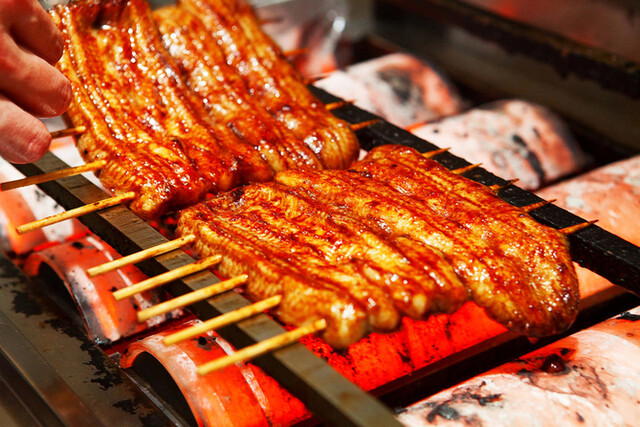
The menu
What to order
- Unajū (grilled eel over rice) Kanto style
- Unajū (grilled eel over rice) Kansai style
- Kabayaki
- Shirayaki
Tokyo is not only polished destination dining. The city also works at street level: commuters, small restaurants, and specialist counters inside ordinary blocks rather than grand rooms. That matters for eel. Tokyo unagi culture has long relied on restrained places that invest in sourcing, timing, and grilling over design. Unagi Senmonten Aikawa belongs to that Tokyo logic, even as recent recognition shows the category has entered a more competitive, list-driven dining culture.
The shift around Tokyo unagi is partly generational. Once treated by many visitors as a traditional lunch category, it now sits nearer sushi, tempura, tonkatsu, and yakitori in the city’s specialist-restaurant hierarchy: narrow menus, disciplined repetition, and guests comparing technique across houses. Selection for Tabelog Hyakumeiten in 2024 gives Aikawa a measurable place in that conversation without turning it into a luxury-counter performance. Its appeal is narrower and more useful: an eel-focused restaurant in Tokyo, in a category where consistency is the point.
Tokyo eel dining has moved from habit to specialist scrutiny
Unagi is one of Japanese dining’s clearest single-subject disciplines. The restaurant is not trying to cover every kind of Japanese cuisine, even though seafood and Japanese cooking surround the category. Eel is the centre of gravity, giving the meal a rhythm unlike a tasting menu or omakase counter. Diners pay not for a long sequence of surprises, but to see how a narrow craft is handled in a city with unusual tolerance for repetition, comparison, and incremental difference.
The Tabelog Hyakumeiten recognition separates eel specialists from general Japanese restaurants that happen to serve the dish. Aikawa’s 2024 selection puts it in a smaller conversation around unagi, not a general Tokyo ranking. That matters for travellers planning by category depth. Sushi and eel may both feel traditional, but the decision logic differs: sushi often turns on counter intimacy, chef progression, and sourcing narrative; unagi turns on patience, heat management, rice, sauce balance, and the house’s chosen expression.
Tokyo also changes expectations. The city’s practical eating culture is shaped by transport links, everyday specialists, and mid-priced rooms as much as famous luxury counters. On the same broad city map, a traveller might choose other Tokyo dining rooms for different meals, or compare Aikawa with allowed specialist peers such as Ethiopia Curry Kitchen Takadanobaba ten, Pneuma Curry, Tonkatsu Hinata, Alayashiki, and L'AMITIE. Aikawa’s lane is more specific: eel as the organising principle, not one item among many.
A focused format and a category with real constraints
Focused restaurants force decisions into the open. Aikawa reads closer to a specialist than a broad Japanese restaurant, with the meal organised around a narrow eel format rather than a wide-ranging menu. That scale of ambition explains the discipline around planning, ordering, and pacing. Eel is not a fast-turn, endlessly elastic product; serious houses manage quantities, timing, and guest flow more tightly than casual diners may expect.
The price band sits in a middle-premium Tokyo zone for a specialist meal: lunch is JPY 5,000 to JPY 5,999, dinner JPY 6,000 to JPY 7,999. That is above everyday casual spending, but far below the capital’s high-end sushi and kaiseki counters. Nearby-style curry culture, represented by Ethiopia Curry Kitchen Takadanobaba ten and Pneuma Curry, runs on speed, spice, and casual repeat use; Tonkatsu Hinata points to another single-dish Tokyo tradition at a different price tier. Aikawa asks for a slower, more deliberate meal without entering the city’s rarefied tasting-menu economy.
The restaurant’s current standing is visible in its 2024 Tabelog Hyakumeiten recognition, listed with a score of 3.71 and a budget of Dinner: JPY 6,000 - JPY 7,999; Lunch: JPY 5,000 - JPY 5,999. That pricing is also part of current Japanese specialist dining. Eel houses face ingredient pressure, labour intensity, and customers who still expect precision. The contemporary version of this tradition is less about nostalgia than operating discipline.
That differs from the grand Tokyo dining fantasy many visitors carry into the city. Aikawa is not built around named-chef mythology or a long narrative arc. Its credibility comes from category focus, Tabelog Hyakumeiten recognition, and the constraints of a narrow specialist format. That is often how Tokyo’s more useful discoveries work: the evidence is structural rather than theatrical.
How to place it in a Tokyo itinerary
For travellers building meals across Tokyo, Aikawa works well as a category anchor: the eel slot, not the catch-all Japanese dinner. Pairing it with yakitori, sushi, soba, or tonkatsu gives a clearer reading of the city than stacking only high-price tasting menus. The best Tokyo itineraries are often built by cuisine type, because the city’s depth comes from specialists doing fewer things with more repetition.
That avoids a common planning mistake: treating every recognised restaurant as the same occasion. An unagi house has different timing and appetite demands from French dining at L'AMITIE, a curry stop, or a tonkatsu specialist. It is more formal than a quick lunch, less ceremonial than a counter tasting menu, and better suited to advance planning than an improvised casual stop. Visitors who understand that middle category read the experience correctly.
The broader Tokyo planning map can be widened from here. EP Club’s full Tokyo restaurants guide is the natural next step for meals across the city, while the Tokyo hotels guide, Tokyo bars guide, Tokyo wineries guide, and Tokyo experiences guide help place dinner inside a wider trip rather than treating it as an isolated booking.
For readers comparing specialist food culture beyond this venue, the same logic appears in different forms across Tokyo and Japan: curry counters, tonkatsu rooms, category-led cafes, regional specialists, and Japanese formats abroad all make more sense against Japan’s habit of turning one category into a full restaurant identity. Aikawa is best read within that tradition, as a Tokyo unagi specialist whose narrowness is the point rather than a limitation.
Cuisine Lens
Comparable venues in the metro at similar price points.
| Venue | Cuisine | Price | Awards | Notes |
|---|---|---|---|---|
| Unagi Senmonten AikawaThis venue (the venue you are viewing) | Traditional Unagi (eel) specialty restaurant | $50–100 | Tabelog 100 #21 | Not listed |
| Akasaka Tan-tei | Okinawan Kaiseki | $100–150 | Not listed | Akasaka |
| Torafugutei | Premium Tiger Pufferfish (Fugu) Specialist | $50–100 | Not listed | Shinjuku |
| 麺尊RAGE | Modern Shamo Shoyu Ramen | $20–30 | Not listed | Suginami |
| Akasaka Misuji | Modern Yakiniku (Japanese BBQ) by Yoroniku | $50–100 | Tabelog 100 #15 | Minato |
| Niou | Yoshoku (Japanese-style Western Cuisine) | Not listed | Tabelog 100 #76 | Chiyoda |
Recognition history
Dated appearances from independent guides and award organizations, with the underlying list record or original source where available.
Tabelog 100 #21 · No. 21
Tabelog · Tabelog 100 - Unagi - 2024
Continue exploring
More in Tokyo
Restaurants in Tokyo
All restaurants in Tokyo →



Bars in Tokyo
All bars in Tokyo →


Details
- Cozy
- Classic
- Intimate
- Solo
- Family
- Group Dining
- Casual Hangout
- Special Occasion
- Standalone
- Local Sourcing
- A La Carte
- Set Menu
- Pescatarian Friendly
A small, traditional neighborhood unagi shop with only a few tables and sunken kotatsu seating, a calm and conversational atmosphere, and the feel of a classic family-run spot focused on the grill rather than design spectacle.