
UMA Roma sits in the Ostiense district, a part of Rome where creative cooking and accessible pricing coexist more comfortably than in the centro storico. The kitchen operates an open format visible from most tables, and a dedicated vegetarian menu with paired wines signals a deliberate programme rather than an afterthought. Among Rome's mid-range creative addresses, UMA occupies a clear value-forward position.
Pearl is the En Primeur Club membership app — saves, bookings, and concierge access live there. Same editors, same standards.
- Address
- Via Girolamo Benzoni, 34, 00154 Roma RM, Italy
- Phone
- +39 334 385 5945
- Website
- umaroma.com
- Directions
- Get directions
 Saves & bookings on Pearl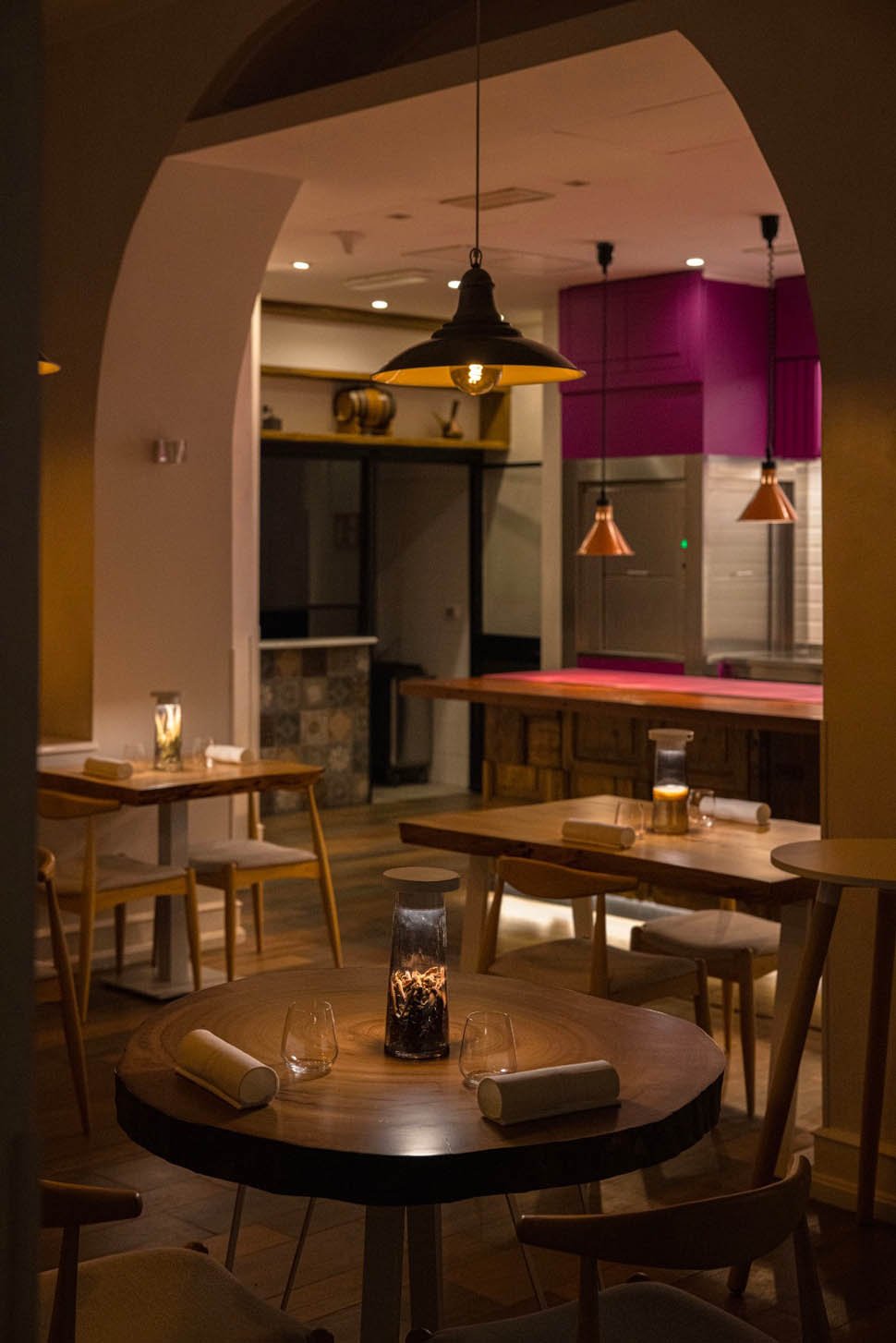
Where Ostiense's Creative Scene Meets the Open Kitchen
UMA Roma is a restaurant in Rome's Ostiense district, serving modern Italian ingredient-focused tasting menus at about $70 per person. Rome's dining geography has shifted considerably over the past decade. The centro storico still holds the formal flagships, La Pergola, Il Pagliaccio, and Enoteca La Torre among them, while the neighbourhoods south of the river, Ostiense and Testaccio in particular, have quietly become the working address for a different kind of restaurant: lower ceremony, higher kitchen transparency, and pricing that does not assume the diner is on an expense account. UMA Roma, on Via Girolamo Benzoni in Ostiense, belongs squarely to that second category.
Approaching the restaurant, the area itself sets the frame. Ostiense is one of Rome's former industrial quarters, repurposed over two decades into a district of creative studios, independent food operations, and a nightlife circuit centred around the old Gasometer. It is not the Rome of travel-poster fountains, which is precisely the point. Diners arriving here are not looking for the city's ceremonial face; they are looking for the part of Roman food culture that operates without tourist-trail pressure.
The Room and What the Open Kitchen Signals
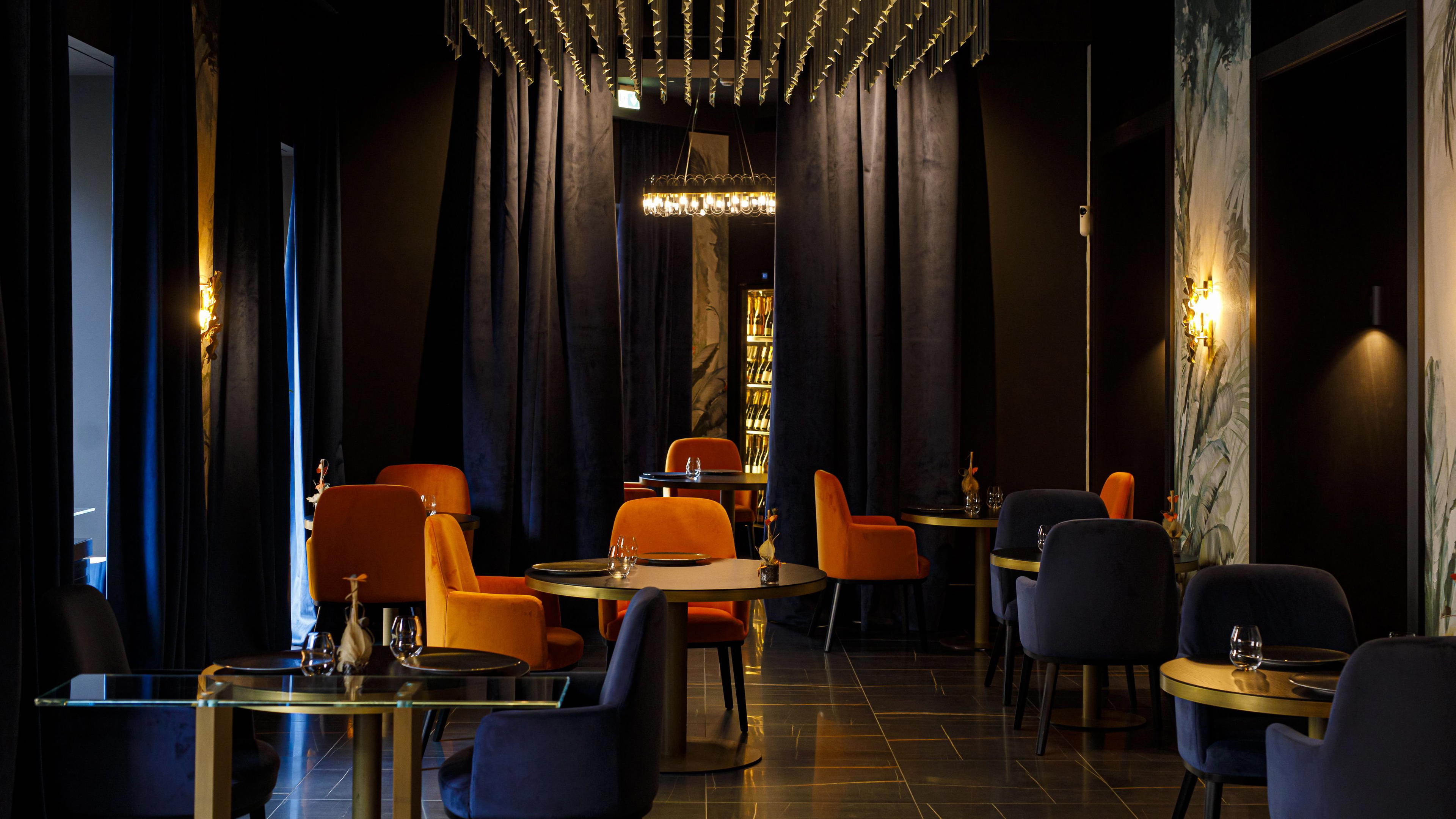
Inside UMA Roma, the design reads as minimalist in a considered rather than spartan way. The space is well-maintained, with clean lines and an absence of the decorative clutter that tends to accumulate in older Roman trattorie. The more notable architectural choice is the open kitchen, which most tables face directly. In cities where kitchen transparency has become a premium signal, think of how Tokyo's omakase counters or the tasting-menu rooms at Osteria Francescana in Modena use direct sight lines as part of the dining contract, an open format at a mid-range address still carries meaning. It implies a kitchen confident enough to be watched, and a dining room that rewards attention rather than distraction.
That transparency also shapes the pace of a meal here. Watching a kitchen work in real time tends to synchronise the diner's attention with the rhythm of the food, which suits a creative menu more than a traditional one. At the level occupied by Rome's reference houses, such as Acquolina or Achilli al Parlamento, the kitchen is often a backstage element. At UMA, it is part of the show, which changes the social contract slightly in the diner's favour.
Lunch Versus Dinner: How the Two Services Differ
In Rome, the lunch-dinner divide at creative mid-range restaurants tends to be more pronounced than at either the trattoria end or the Michelin end of the spectrum. Trattorias often run a similar cadence across both services; starred rooms are built around evening tasting menus that would be logistically awkward at noon. The creative middle tier, which is where UMA Roma operates, is where the distinction matters most as a practical and editorial point.
Lunch at a restaurant in this category typically offers a faster pace, a shorter format, and often stronger value per course. The open kitchen dynamic reads differently at midday too: the light is harder, the room is quieter, and the kitchen's movements are more visible. For a diner who wants to assess the cooking with full attention and without the ambient pressure of a full evening service, a weekday lunch is the more calibrated choice. It also tends to surface the kitchen's fundamentals more directly than a dinner service optimised for atmosphere and sequencing.
Evening service at the restaurant shifts the equation toward the full programme. The minimalist room, which can read as spare in midday light, comes into its own under controlled evening lighting. The availability of a vegetarian menu with paired wines makes dinner the more structured option for groups with mixed dietary requirements, since the wine pairing component is easier to run coherently over a longer meal than a compressed lunch. Across Italian cities, compare the evening programmes at Enrico Bartolini in Milan or the daytime pace at Enoteca Pinchiorri in Florence, the creative segment consistently performs better as an evening destination when wine pairing is part of the proposition.
The Vegetarian Programme as a Structural Signal
A dedicated vegetarian menu with matched wines is not a standard feature at this level of the Roman market. Most creative restaurants in Rome offer vegetarian adaptations on request, which is a different thing: an adaptation is reactive, built around what can be removed or swapped. A dedicated menu implies forward planning, sourcing with plant-based cooking in mind, and a kitchen that treats the vegetarian programme as a parallel track rather than a fallback. In Italian cooking, where the protein tradition is deeply embedded, this is a substantive choice.
It also positions the restaurant in a small peer group within the city. At the formal end, some of Rome's reference addresses have vegetable-forward tasting options, but they operate at a price point several tiers above. The combination of innovative cooking, value pricing, and a structured vegetarian menu with wine pairing at UMA's market position is relatively uncommon in Rome's mid-range creative segment. For context on how the broader Italian scene handles this, the approach at Atelier Moessmer Norbert Niederkofler in Brunico or the seafood-focused precision at Quattro Passi in Marina del Cantone shows how Italian kitchens at the higher tier integrate dietary programming as a genuine creative line.
Where UMA Roma Sits in the Rome Creative Tier
Rome's formal creative restaurants, Il Pagliaccio, Enoteca La Torre, and the city's Michelin-starred addresses, price and format well above what the restaurant represents. The comparison set for UMA is not that tier. It is the group of creative, accessible restaurants operating in Rome's outer and southern neighbourhoods, where the trade-off is lower formality for more consistent value and more direct kitchen contact. Against the formal tier, UMA is not competing. Against the mid-range creative segment, its combination of open-kitchen transparency, structured vegetarian programming, attentive service, and Ostiense positioning makes it a coherent and clearly differentiated option.
For visitors building a Rome dining programme that already includes one of the city's formal flagships, the restaurant serves a useful structural role: it is the meal where the room does not demand performance from the diner, the kitchen is visible and approachable, and the pricing does not require justification.
Planning a Visit: How UMA Roma Compares on Key Logistics
| Factor | The restaurant | Il Pagliaccio | La Pergola |
|---|---|---|---|
| Price tier | Mid-range / value-forward | €€€€ | €€€€ |
| Neighbourhood | Ostiense (outer south) | Centro storico | Monte Mario |
| Kitchen format | Open kitchen | Closed kitchen | Closed kitchen |
| Vegetarian menu | Dedicated, with wine pairing | On request | On request |
| Formality level | Low to moderate | High | high |
| Booking lead time | Not published | Weeks in advance | Months in advance |
A Minimal comparable set
Comparable venues nearby, for context on price, style, and recognition.
| Venue | Cuisine | Price | Notes |
|---|---|---|---|
| UMA RomaThis venue — the venue you are viewing | Not listed | $$$ | Not listed |
| Luciano Cucina Italiana | Parione, Modern Roman Italian | $$$ | Not listed |
| Marzapane | Collatino, Modern Italian Fine Dining | $$$ | Not listed |
| Pizzarium | Not listed | $$$ | Monte Mario, Modern Roman Pizza al Taglio |
| ConTatto | Frascati, Modern Lazio Regional | $$$ | Not listed |
| Romeo Chef & Baker | Ripa, Modern Italian Bakery & Bistro | $$$ | Not listed |
Recognition history
Dated appearances from independent guides and award organizations, with the underlying list record or original source where available.
Michelin Plate
Michelin
Continue exploring
More in Rome
Restaurants in Rome
Browse all →
Bars in Rome
Browse all →
Hotels in Rome
Browse all →
Wineries in Rome
Browse all →
At a Glance
- Modern
- Elegant
- Trendy
- Sophisticated
- Minimalist
- Quiet
- Date Night
- Special Occasion
- Celebration
- Group Dining
- Open Kitchen
- Design Destination
- Natural Wine
- Sommelier Led
- Local Sourcing
- Organic
Current opening hours
- Monday
- Closed
- Tuesday
- 7:30–9:30 PM
- Wednesday
- 7:30–9:30 PM
- Thursday
- 7:30–9:30 PM
- Friday
- 7:30–9:30 PM
- Saturday
- 7:30–9:30 PM
- Sunday
- 12–2:30 PM
Hours can change for holidays and private events. Last verified .
Minimalist Nordic design with handmade wooden tables, open kitchen views, soft lighting, and well-spaced tables creating a calm, sophisticated atmosphere.