Uchkuduk
Uchkuduk serves Uzbek & Middle Eastern food at Ulitsa Oktyabr'skaya, 12 in Magnitogorsk, with conversational pacing and a smart casual setting.
Pearl is the En Primeur Club membership app — saves, bookings, and concierge access live there. Same editors, same standards.
- Address
- Ulitsa Oktyabr'skaya, 12, Magnitogorsk, Chelyabinsk Oblast, Russia, 455023
- Phone
- +79507335411
- Website
- uchkuduk-mgn.ru
- Directions
- Get directions
 Saves & bookings on Pearl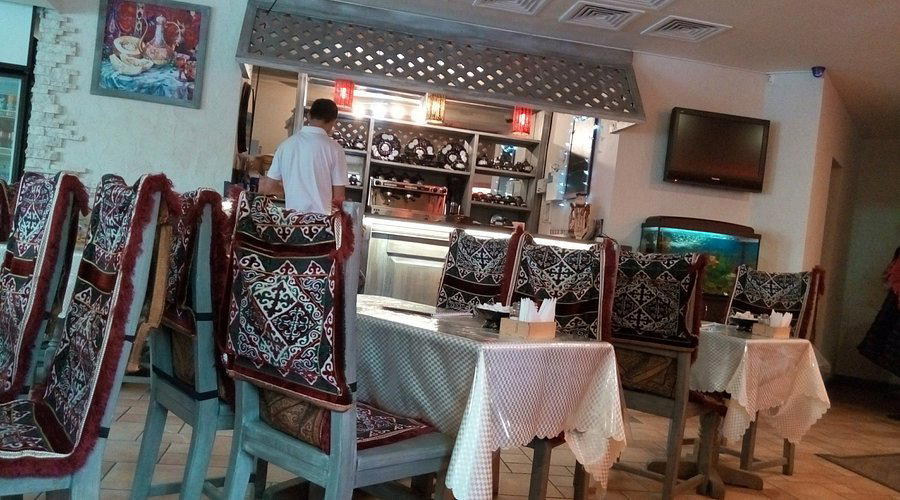
Central Asian Cooking in a Steel City
Magnitogorsk is not a city that trades on its restaurants. Built around one of the Soviet Union's largest steel complexes, it draws visitors for industrial heritage and the surrounding Ural landscapes far more than for dining. That context matters when you sit down at Uchkuduk on Ulitsa Oktyabr'skaya, a street that carries the municipal gravity its name implies. The restaurant occupies a position in a city where Central Asian and Ural-inflected cooking coexist with post-Soviet canteen culture, and Uchkuduk addresses the Central Asian side of that equation. In a dining environment where most Magnitogorsk residents eat close to home and expect recognizable regional cooking, a restaurant drawing on Uzbek culinary traditions is already making a specific editorial argument about what belongs on the table.
Uchkuduk takes its name from a city in Uzbekistan's Navoi Region, a detail that signals its culinary orientation before you read the menu. Central Asian cooking in the Urals has a longer history than most outsiders expect: the migration of workers from Uzbekistan, Kazakhstan, and Tajikistan into industrial Russia's labor economy brought food traditions that have quietly embedded themselves in cities like Magnitogorsk.
The Ingredient Logic of Uzbek Cooking
Central Asian cuisine, particularly the Uzbek branch of it, is built around a sourcing philosophy that Russian fine dining has only recently started to examine seriously. Establishments like Twins Garden in Moscow have made provenance and direct-farm relationships a central editorial statement. Uzbek cooking achieves something related through tradition rather than ideology: the cooking demands specific fats, specific grain varieties, specific spice routes, and specific livestock breeds. Lamb sourced from semi-arid steppe grazing produces a flavor profile that grain-fed alternatives do not replicate. Cottonseed oil, fermented dairy, and dried fruits from Central Asian agriculture carry distinct regional markers that define dishes like plov, shurpa, and lagman at a sourcing level.
For Uchkuduk, operating in Magnitogorsk, that sourcing geography becomes interesting. The city sits roughly 450 kilometers east of Yekaterinburg and within practical freight range of both Ural agricultural producers and, through established trade routes, Central Asian suppliers in Chelyabinsk Oblast's commercial network. Whether the restaurant sources lamb locally from Ural farms or through Central Asian supply chains is a question its cuisine implicitly raises. In Russian cities where Uzbek restaurants have proliferated, the distinction between kitchens cooking with authentic ingredient sourcing versus adapted local substitutes is often the primary quality differentiator. That distinction is worth holding in mind when evaluating any Uzbek restaurant outside the core Central Asian geography, including this one.
For comparison, Georgian cooking in Russia, which shares some of the same spice-and-livestock logic, has found strong expression in places like Khmeli Suneli in Yekaterinburg and Alanskaya Kukhnya in Krasnodar. The Caucasian and Central Asian cuisines travel differently through Russia's provincial restaurant economy, and Uchkuduk's Uzbek focus places it in a smaller, more specific cohort.
Magnitogorsk's Dining Tier and Where This Fits
To understand Uchkuduk's position, it helps to map Magnitogorsk's restaurant tiers briefly. The city's dining scene divides broadly between Soviet-era canteen formats, post-2000 cafe culture, and a smaller number of restaurants with more deliberate culinary identities. In this context, a restaurant named for an Uzbek city and committed to Central Asian cooking sits closer to the deliberate-identity end of that spectrum. Within Magnitogorsk's own competitive set, venues like Zhi-Shi and Zhishi Sushi represent the city's appetite for non-Russian culinary formats. Uchkuduk serves a different appetite: the demand for Central Asian cooking that is both familiar to a substantial portion of Magnitogorsk's working population and specific enough in tradition to distinguish itself from generic pan-Asian or pan-post-Soviet menus.
Russian provincial cities with industrial histories, including Magnitogorsk, Omsk (see Grisha in Omsk), and Novosibirsk (see Burger Records in Novosibirsk), have developed restaurant scenes that respond to specific local demographic and cultural pressures rather than following metropolitan food trends wholesale. Uchkuduk reads as a product of Magnitogorsk's particular demographic composition rather than a trend import from Moscow or St. Petersburg, and that local rootedness is more durable than trend-chasing formats.
Uchkuduk operates in a different register entirely, serving a city of approximately 400,000 people where restaurant spending and expectations align with provincial rather than metropolitan norms.
Planning a Visit
Uchkuduk is located at Ulitsa Oktyabr'skaya, 12, in central Magnitogorsk, Chelyabinsk Oblast. Uchkuduk is open daily from 12 PM to 12 AM. Reservations are recommended. Smart casual attire fits the room. If you are traveling Russia more widely and want a sense of the range, Kukhterin in Tomsk, Dzhani Restorani in Nizhny Novgorod, and Made in China in St. Petersburg illustrate how provincial and metropolitan Russian cities each handle non-Russian culinary formats at varying price and ambition levels.
Comparable Spots, Quickly
Comparable venues nearby, for context on price, style, and recognition.
| Venue | Cuisine | Price | Notes |
|---|---|---|---|
| UchkudukThis venue — the venue you are viewing | Uzbek & Middle Eastern | $$$ | Not listed |
| Zhishi Sushi | Japanese Sushi | $$ | Center |
| Zhi-Shi | Japanese Sushi | $$ | Center |
| Cococo | Modern Russian Fine Dining | $$$ | Admiralteysky |
| Pyshechnaya | Russian Pyshechnaya (Donut Cafe) | $ | Nevskiy |
| Korean BBQ гриль | Korean Table-Top BBQ Grill | $$ | Northwestern District |
Continue exploring
More in Magnitogorsk
Restaurants in Magnitogorsk
Browse all →
At a Glance
- Cozy
- Late Night
Current opening hours
- Monday
- 12 PM–12 AM
- Tuesday
- 12 PM–12 AM
- Wednesday
- 12 PM–12 AM
- Thursday
- 12 PM–12 AM
- Friday
- 12 PM–12 AM
- Saturday
- 12 PM–12 AM
- Sunday
- 12 PM–12 AM
Hours can change for holidays and private events. Last verified .
Warm atmosphere with colors of oriental life.