Our verdict
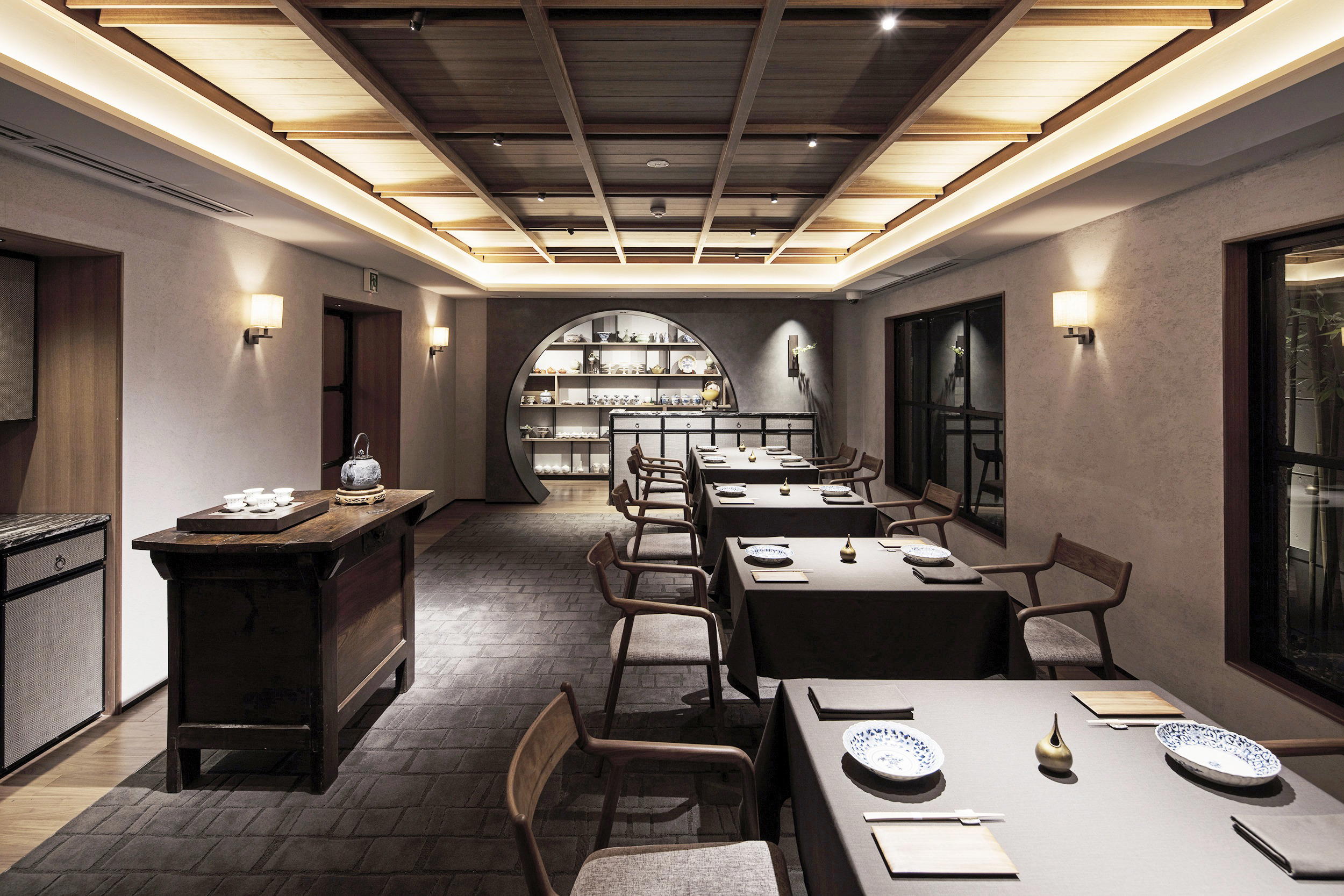
TWO ROOMS occupies the fifth floor of a Kita-Aoyama building, positioning itself within Tokyo's Western-style dining tier where wine programming carries as much weight as the kitchen. The address places it in one of the city's most deliberately curated neighbourhoods, where the competition for a serious cellar is real and the room tends to attract a crowd that notices the difference.

Pearl is the En Primeur Club membership app — saves, bookings, and concierge access live there. Same editors, same standards.
- Address
- Japan, 〒107-0061 Tokyo, Minato City, Kita-Aoyama, 3 Chome−11−7 5 階
- Phone
- +81 3 3498 0002
- Hours
- Mon–Thu 11:30 AM–2 AMFri–Sat 11:30 AM–3 AMSun 11:30 AM–2 AM
- Website
- tworooms.jp
- Directions
- Get directions
- Booking
- Book on TableCheck
Aoyama at Altitude: The Room and Its Context
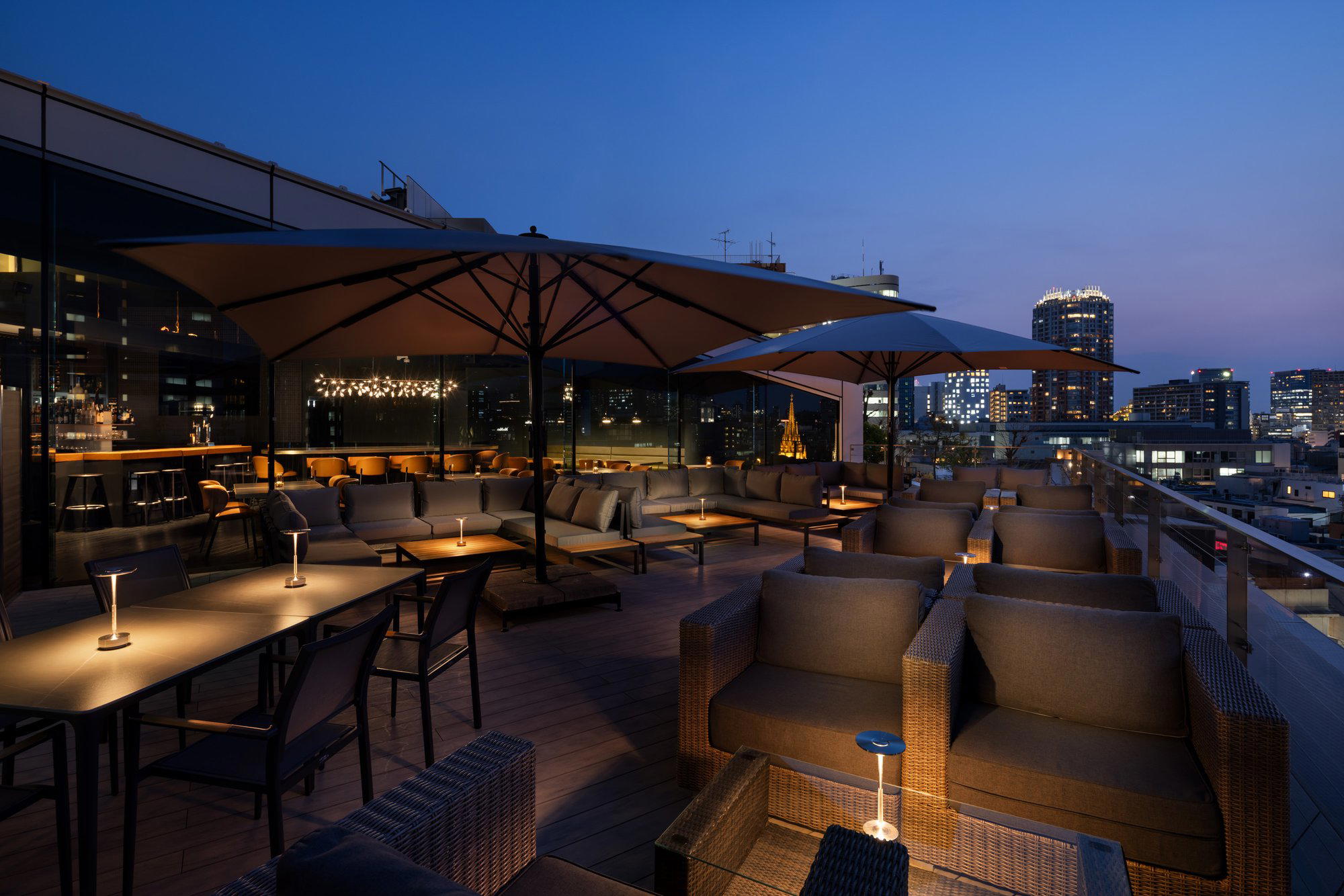
The fifth floor of a building in Kita-Aoyama is a particular kind of Tokyo address. The neighbourhood runs along a corridor where fashion houses, architecture studios, and a handful of serious restaurants have spent decades establishing a tone that is self-consciously cosmopolitan without being garish about it. TWO ROOMS sits inside that register. The approach, via elevator rather than street-level entrance, is a standard move in Tokyo's vertical dining culture, but in Aoyama it carries a specific charge: you arrive at the room already at a remove from the street, which tends to produce a particular quality of attention in the people already seated when you enter. The crowd here is not the Ginza omakase crowd. It skews international, or internationally-minded, and it tends to arrive having thought about what it wants to drink.
The Wine Frame: Why the Cellar Is the Editorial Story
Tokyo's Western-format restaurants divide, broadly, into two categories when it comes to wine. The first treats the list as a prestige signal, heavy on Burgundy Grand Cru and Bordeaux first-growths that function more as status objects than as living parts of the meal. The second treats wine as a genuine programmatic commitment, where the list is curated to work with the food, and the person presenting it knows why each bottle is on the page. TWO ROOMS operates in the second category, or at least that is the positioning implied by the address and the format. Aoyama's dining culture has long rewarded this approach: the neighbourhood's concentration of design and media professionals means the room fills with guests who can read a list and ask real questions.
In a city where L'Effervescence and Sézanne have set a high bar for what wine service looks like at the French fine-dining tier, and where Harutaka demonstrates how sake integration can carry the same intellectual weight as a European cellar, the pressure on any serious Western-format room to have a considered wine program is genuine. A list that does not answer that pressure will be noticed, and not favourably, by the people who matter most to a room like this one.
The Western Format in a Japanese Context
The grill-and-bar format that TWO ROOMS occupies is a specific tier within Tokyo dining. It sits above the casual Western imports and below the starred French houses, in a band where the cooking ambition is real but the formality is deliberately relaxed. This is not the kaiseki register of RyuGin, and it is not the Japanese-inflected innovation of Crony. It is something closer to what a confident European brasserie aspires to be when it lands in Asia: a room where the instinct is to eat and drink well rather than to be ceremonially fed.
That format has a real constituency in Tokyo. The city's expatriate professional community, and the Japanese professionals who have spent time working or studying abroad, tend to be comfortable in it and demanding of it in ways that direct tourist traffic is not. They know what a properly rested piece of meat should taste like, and they know what a glass of something genuinely interesting should cost relative to its quality. TWO ROOMS addresses that constituency from its Aoyama position.
Placing It in the Broader Japan Picture
Tokyo earns its reputation as one of the world's most densely serious dining cities partly through the sheer range of registers it can sustain simultaneously. At the top of the French tier, Sézanne and L'Effervescence operate with a level of technical and wine ambition that compares with anything in Paris or New York. Beyond Tokyo, the picture extends to HAJIME in Osaka, Gion Sasaki in Kyoto, and akordu in Nara, each operating in its own regional key. Domestically, the contrast is sharpest between the Michelin-dense capital and places like Goh in Fukuoka, Abon in Ashiya, and affetto akita in Akita, where the density is lower but the ambition per kitchen is often just as high.
TWO ROOMS does not compete in the same register as those starred destinations. It competes in the register of rooms where you go when you want to drink something considered with a meal that does not ask you to be ceremonially attentive for three hours. That is a real and valuable category, and Aoyama is one of the better locations in the city from which to run it. For comparison points outside Japan, the closest analogue in format ambition is probably somewhere between Lazy Bear in San Francisco and a serious New York brasserie like Le Bernardin, though the register and price point differ considerably.
Seasonal Timing and Practical Orientation
Aoyama functions well year-round, but the shoulder seasons, spring and autumn, are when the neighbourhood is at its most pleasant as a destination in its own right. The Omotesando zelkova trees in late March and early April draw crowds to the broader area, and the relative calm of October and November makes the walk from Omotesando station to Kita-Aoyama's quieter blocks one of the more agreeable approaches to a dinner reservation in Tokyo. The fifth-floor position at TWO ROOMS insulates the room from street-level noise, which matters more on warmer evenings when the neighbourhood's bars and terraces draw volume. For visitors orienting around Tokyo's wider dining geography, the full context is available in our complete Tokyo restaurants guide. Further afield in the city's orbit, Aji Arai in Oita, Ajidocoro in Yubari District, and Akakichi in Imabari represent the kind of regional depth that serious visitors to Japan tend to discover only after they have exhausted the obvious capital options. Aki Nagao in Sapporo adds another data point for the northern prefecture.
Planning Your Visit
TWO ROOMS is located at 3 Chome-11-7 Kita-Aoyama, Minato City, Tokyo, on the fifth floor. The nearest station is Omotesando on the Ginza, Chiyoda, and Hanzomon lines, a short walk through one of the city's more architecturally considered blocks. Booking in advance is advisable for a room at this address and in this format; walk-in availability depends heavily on the day and time, and Aoyama's midweek dinner traffic is more consistent than it sometimes appears from the outside. Given the wine orientation of the program, arriving with some clarity about what you want to drink, at least in terms of region and style, will serve the experience better than arriving without a view.
Frequently asked questions
What part of town is TWO ROOMS in?
TWO ROOMS is located at Japan, 〒107-0061 Tokyo, Minato City, Kita-Aoyama, 3 Chome−11−7 5 階, Tokyo.
Is TWO ROOMS a good choice for a business dinner in Tokyo's Aoyama district?
TWO ROOMS at 3 Chome-11-7 Kita-Aoyama offers the kind of Western grill-and-bar format that reads neutrally across international business contexts — a deliberate choice in a neighbourhood that houses global fashion and design offices. The fifth-floor setting provides separation from street-level noise, and a wine-focused list gives the table a structured way to engage across a meal. It sits in the tier of Tokyo Western dining that prioritises considered execution over spectacle.
What dish is TWO ROOMS famous for?
TWO ROOMS is positioned as a grill-format Western restaurant in Kita-Aoyama, and the kitchen's focus on grilled proteins sits at the centre of the menu identity.
Can I walk in to TWO ROOMS?
TWO ROOMS occupies the fifth floor of a building at 3 Chome-11-7 Kita-Aoyama, Minato City — a destination address rather than a street-level drop-in. Walk-in availability is not confirmed; for a neighbourhood where demand tracks the fashion and design calendar, contacting the venue ahead of your visit is the practical approach.
What makes TWO ROOMS worth seeking out?
The wine list is the editorial argument the room makes most clearly, framing TWO ROOMS as a destination for those who approach the cellar as the point rather than a supporting note.
City Peers
Comparable venues nearby, for context on price, style, and recognition.
| Venue | Cuisine | Price | Awards | Notes |
|---|---|---|---|---|
| TWO ROOMSThis venue — the venue you are viewing | Modern Grill Fusion | $100–150 | Not listed | Not listed |
| The Tokyo EDITION, Toranomon | Modern British-Japanese Fusion | $200–300 | Not listed | Minato |
| SECRETO | Innovative Molecular Fusion | $150–200 | Tabelog Bronze #390 | Shinjuku |
| Aca 1° | Spanish-Japanese Omakase Tasting Menu | $300–500 | Not listed | Nihonbashi |
| the lounge by aman | International all-day lounge with Japanese influences | $50–100 | Tabelog 100 #83 | Chiyoda |
| Dining & Bar Lavarock (ラヴァロック) | Modern Grilled Bistro | $50–100 | Not listed | Kyobashi |