R. Alm. Alexandrino, 660 - Santa Teresa
A colonial-era address on Rua Almirante Alexandrino in Santa Teresa, one of Rio de Janeiro's most architecturally layered hillside neighbourhoods. The street has long served as the spine of the bairro's bohemian and historical identity, placing visitors within walking distance of the Santa Teresa tram line, the Museu Chácara do Céu, and a concentration of art studios and small restaurants that define the neighbourhood's character.
Pearl is the En Primeur Club membership app — saves, bookings, and concierge access live there. Same editors, same standards.
- Address
- R. Alm. Alexandrino, 660 - Santa Teresa, Rio de Janeiro - RJ, 20241-260, Brazil
- Directions
- Get directions
 Saves & bookings on Pearl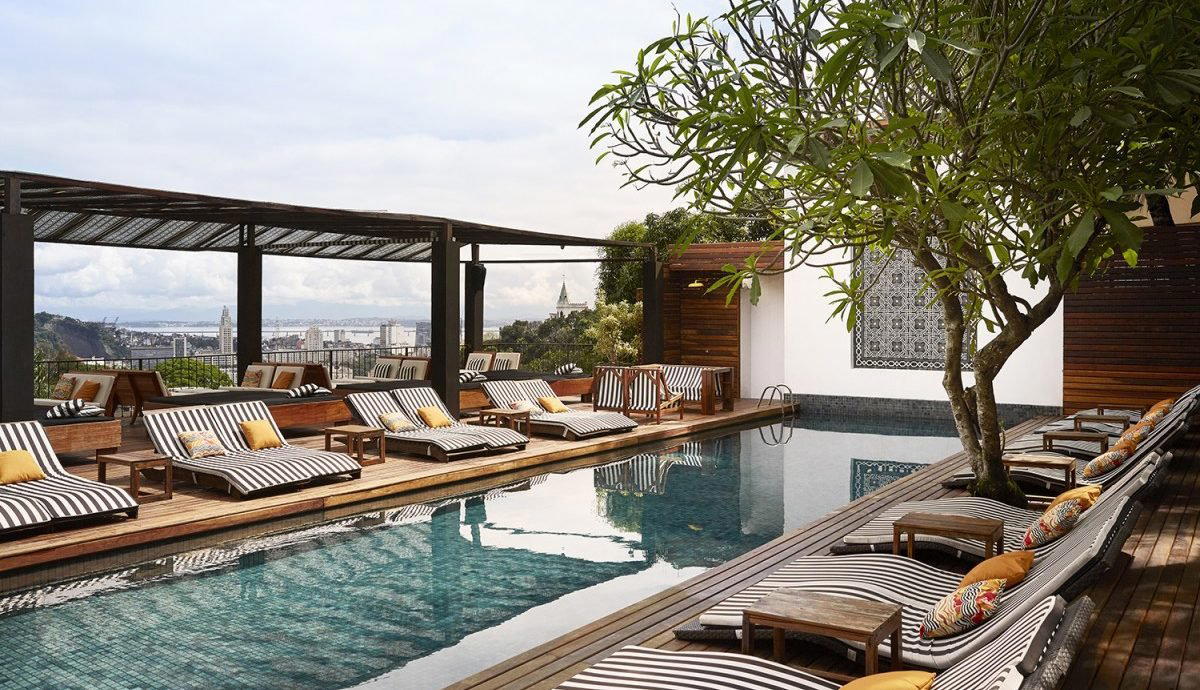
Santa Teresa's Principal Street and What It Signals About the Neighbourhood
Rua Almirante Alexandrino is the main artery threading through Santa Teresa, the hilltop bairro that sits above Centro and has spent the better part of two centuries accumulating architectural memory. At number 660, you are positioned at the operational heart of a neighbourhood that developed differently from Rio's beachside zones: no high-rises, no resort infrastructure, just a dense weave of nineteenth-century sobrados, walled gardens, and the occasional modernist intrusion. The street climbs steeply from the city below, and arriving here has long shaped the character of the neighbourhood.
Santa Teresa developed as a retreat for Rio's elite in the 1800s, when the hilltop's cooler air made it preferable to the humid baixada. That original residential ambition left an unusually intact stock of period architecture, which later attracted artists, intellectuals, and eventually a hospitality layer that leans toward the intimate rather than the monumental. The bairro now positions itself between Rio's large beachside hotel corridor, anchored by properties like the Copacabana Palace, A Belmond Hotel, Rio de Janeiro and the Fairmont Rio de Janeiro Copacabana, and a smaller-scale neighbourhood alternative that trades convenience for atmosphere and historical texture.
The Architecture of Arrival
Approaching 660 from the lower end of Rua Almirante Alexandrino, the street's gradient makes itself felt immediately. The bonde tracks of the historic Santa Teresa tram, one of the few remaining urban cable tram systems in Brazil, with a route history dating to the 1870s, run along this corridor, and the sound of the tram on its approach is as much a part of the sensory register here as any interior detail. The facades along this stretch of the street are a compressed record of the bairro's layered history: colonial plaster alongside Eclectic-period ornamentation alongside twentieth-century tile work. Number 660 sits within that context rather than apart from it.
In Santa Teresa, the building envelope frequently carries more historical information than the interior. The neighbourhood was declared an Area of Environmental Protection in the 1980s, which created preservation constraints that have kept the streetscape coherent even as individual properties changed hands and function. Any address along this stretch of Almirante Alexandrino operates within that preservation framework.
How Santa Teresa Compares to Rio's Other Accommodation Tiers
Rio's premium hotel market splits roughly into three registers. At the highest end, the established beachside addresses, Belmond, Hotel Fasano Rio de Janeiro, and Emiliano Rio, compete on sea views, pool access, and international service infrastructure. A middle tier covers branded properties with Zona Sul proximity. Santa Teresa represents a third register: neighbourhood-scaled, architecturally specific, and oriented toward the bairro rather than the beach.
Within Santa Teresa itself, the accommodation options cluster around a handful of streets, with Almirante Alexandrino as the primary axis. Properties like Casa Cool Beans, Casa Marques Santa Teresa, and Casa Mosquito each occupy converted residential structures and share a general orientation toward design-conscious, smaller-scale hospitality. What distinguishes them from each other tends to come down to which part of the street they occupy and how their architectural envelope has been adapted. For a broader orientation to accommodation across the city, the full Rio de Janeiro guide maps the neighbourhood tiers against each other.
The Historical Layer That Shapes Any Stay in the Bairro
Santa Teresa's reputation as Rio's arts quarter is not recent. The neighbourhood attracted painters, sculptors, and musicians across the mid-twentieth century, a period that produced institutions like the Museu Chácara do Céu, which holds a collection including works by Matisse, Picasso, and Portinari within a 1950s modernist house a short walk from Almirante Alexandrino. The presence of that kind of institutional weight gives the neighbourhood a different quality of cultural context than, for example, Ipanema or Leblon, where the primary reference points are beach culture and restaurant concentration.
The bairro's recovery since the early 2010s has been gradual but sustained, and the current concentration of small hotels, galleries, and restaurants along Almirante Alexandrino reflects that recovery. The street now functions as a reliable axis for the neighbourhood's daytime and evening economy, with enough critical mass that visitors staying in the area rarely need to descend to the city for food or cultural programming.
Planning a Visit: Logistics and Timing
Santa Teresa is most accessible by taxi or rideshare from the city centre, a journey that typically takes fifteen to twenty-five minutes depending on traffic. The historic bonde tram, operating between the centre and Curvelo via Dois Irmãos, offers a slower and more atmospheric approach when running.
The neighbourhood rewards visits during Rio's shoulder season, roughly April through June and August through October, when humidity drops and the bairro's outdoor spaces become more comfortable. Carnival concentrates activity across the whole city in February and March, and Santa Teresa runs its own blocos that draw significant crowds to Almirante Alexandrino and the surrounding streets, creating a different energy but also considerably more congestion.
The Hotel das Cataratas, A Belmond Hotel, Iguassu Falls connects to Rio via direct flight from Santos Dumont or Galeão. Design-led properties elsewhere in the country, including Botanique Hotel Experience in Campos do Jordão and Rosewood São Paulo, offer comparable architectural ambition in different regional contexts. For coastal contrast after the city, Casas Brancas Boutique Hotel and Spa in Armação de Búzios is roughly two and a half hours by road.
Across Rio's wider hotel spectrum, the Grand Hyatt Rio de Janeiro represents the large-format beach corridor option for those who want full resort infrastructure.
Same-City Peers
Comparable venues nearby, for context on price, style, and recognition.
| Venue | Cuisine | Price | Notes |
|---|---|---|---|
| R. Alm. Alexandrino, 660 - Santa TeresaThis venue — the venue you are viewing | Luxury boutique hotel housed in a restored colonial mansion with contemporary design elements and Brazilian heritage influences. | $$$$ | Not listed |
| Chez Georges | Private modernist villa with Brutalist architecture and tropical design elements. | $$$$ | Lapa |
| Yoo2 Rio de Janeiro | Modern design hotel blending tropical Brazilian elements with contemporary urban style. | $$$$ | Flamengo |
| Emiliano Rio | Modernist luxury beachfront retreat | $$$$ | Copacabana |
| Windsor Barra Hotel | Beachfront conference hotel with modern amenities | $$$ | Itanhangá |
| JANEIRO Hotel | Contemporary luxury boutique hotel emphasizing simple elegance and carioca lifestyle curation with minimalist design principles. | $$$$ | Leblon |
Continue exploring
More in Rio de Janeiro
Hotels in Rio de Janeiro
Browse all →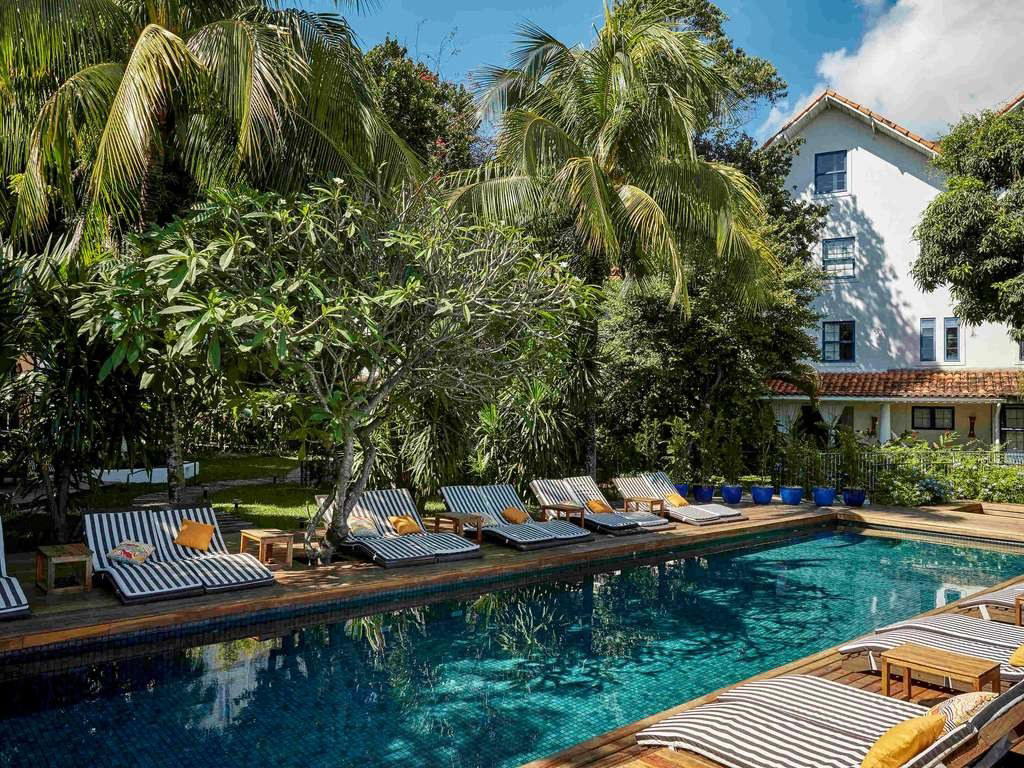
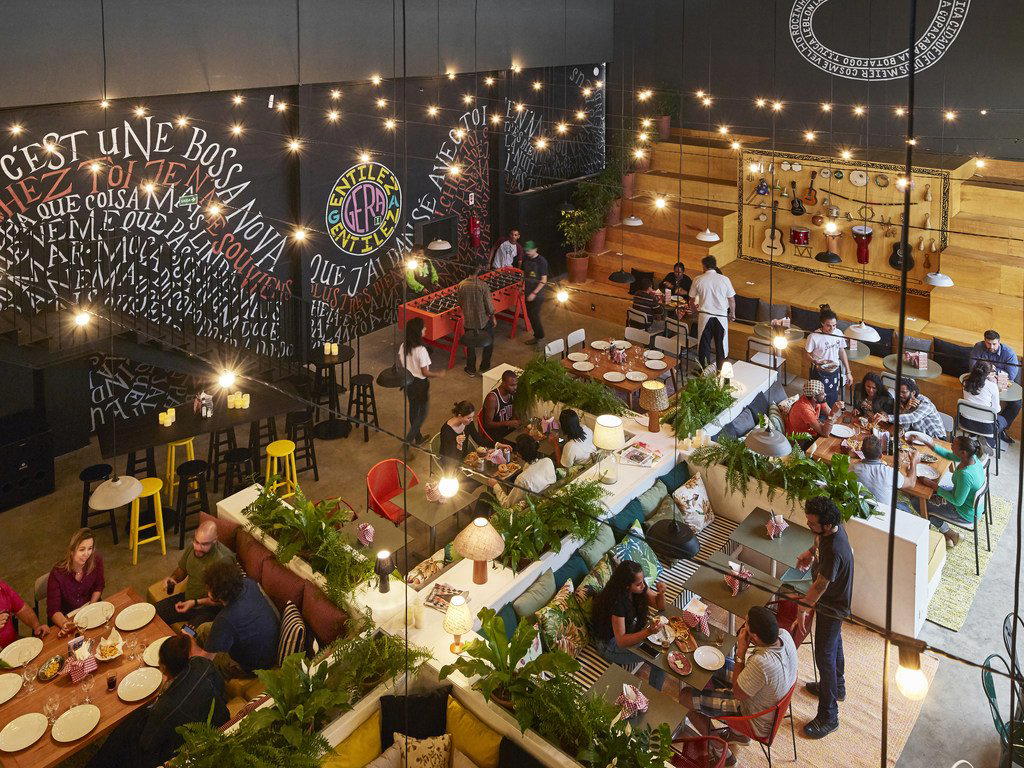
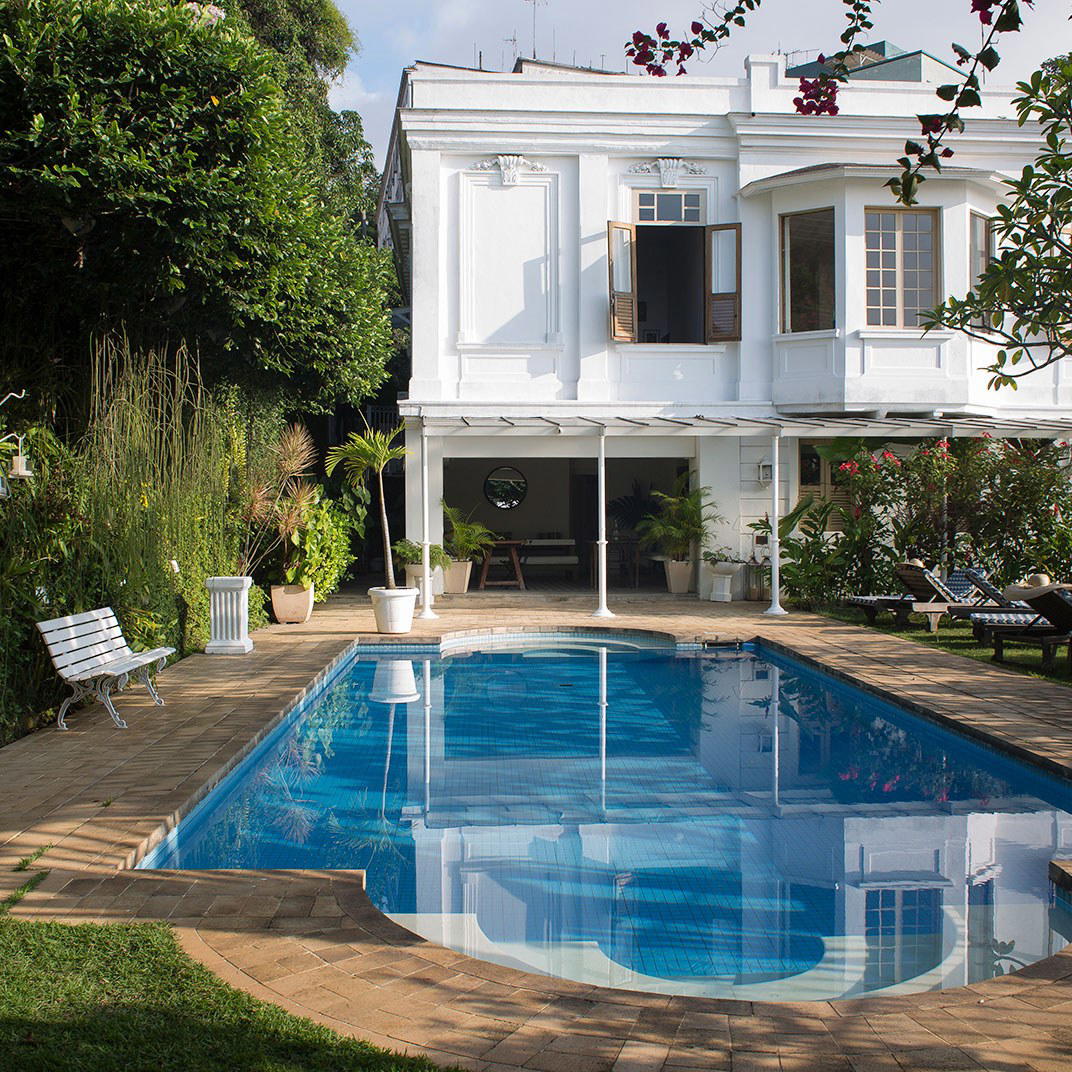
Bars in Rio de Janeiro
Browse all →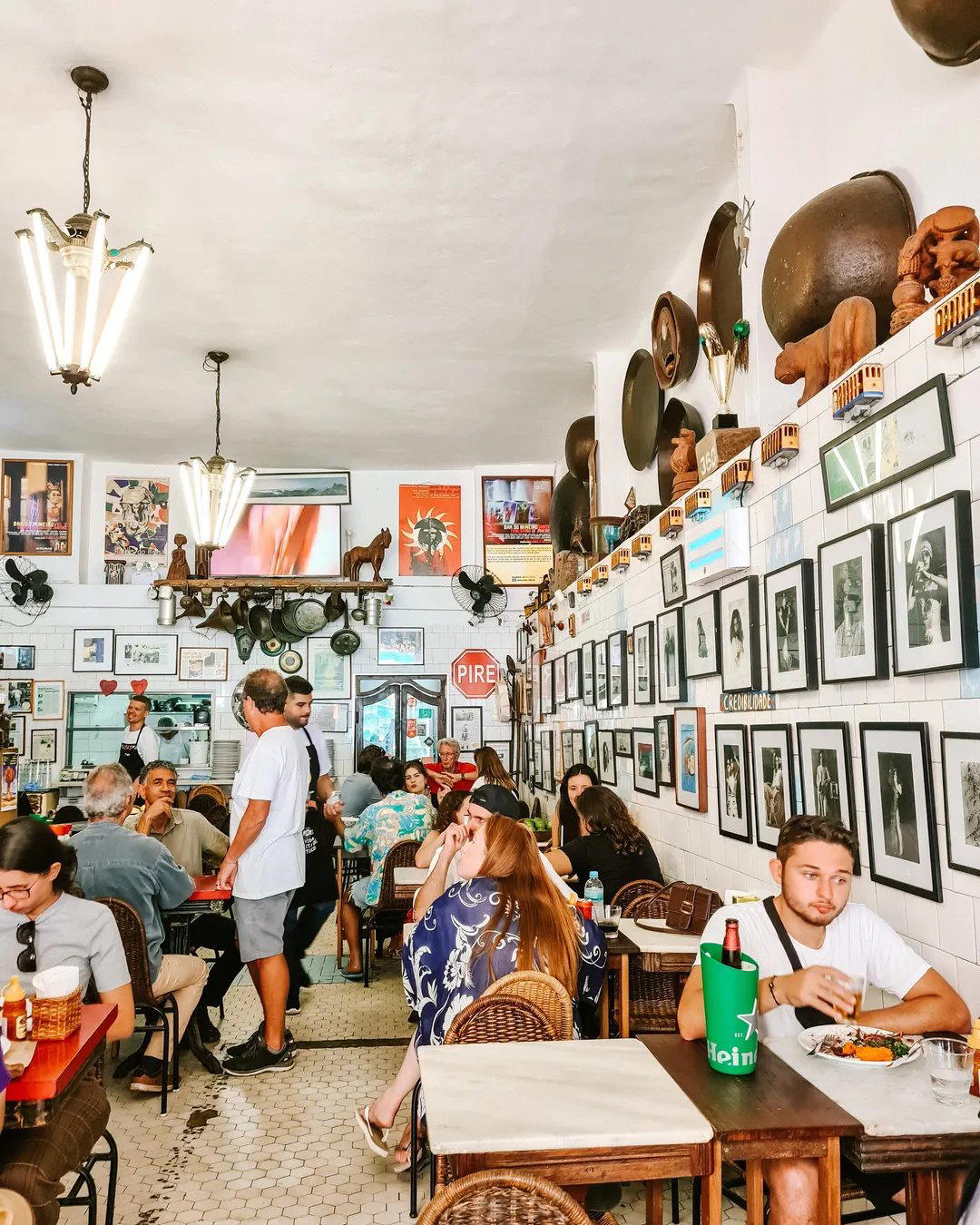
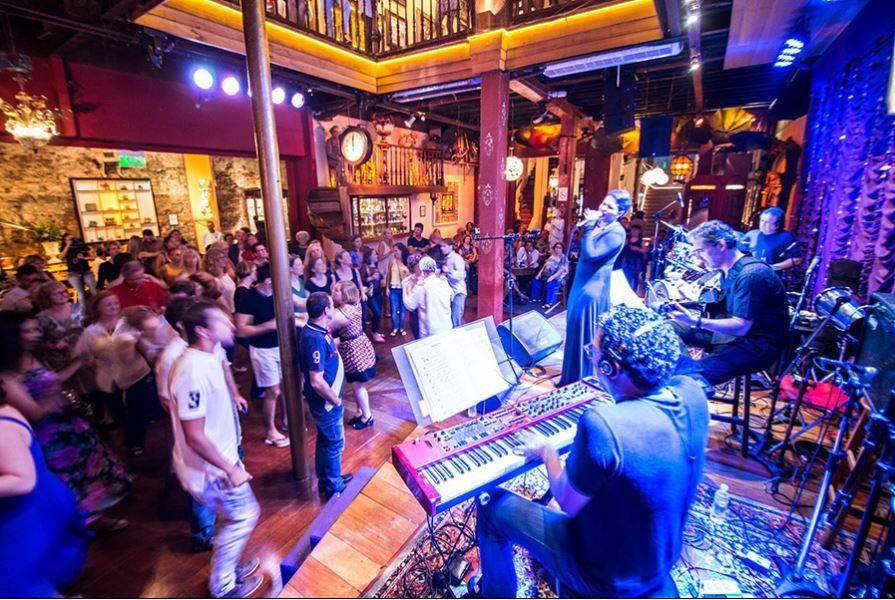

Restaurants in Rio de Janeiro
Browse all →
At a Glance
- Romantic
- Elegant
- Sophisticated
- Scenic
- Quiet
- Romantic Getaway
- Honeymoon
- Anniversary
- Weekend Escape
- Historic Building
- Garden
- Terrace
- Panoramic View
- Destination Spa
- Private Dining
- Wi Fi
- Pool
- Spa
- Fitness Center
- Room Service
- Restaurant
- Bar
- Concierge
- Business Center
- Waterfront
- Skyline
- Garden
- Wi Fi
- Pool
- Spa
- Fitness Center
- Room Service
- Restaurant
- Bar
- Concierge
- Business Center
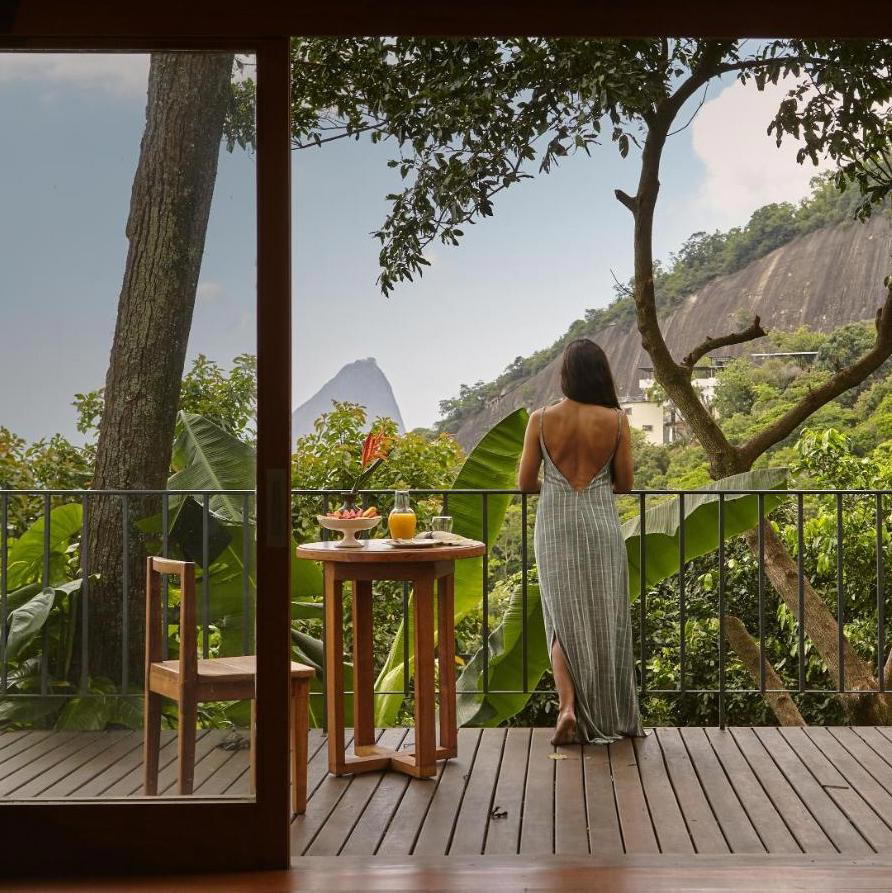
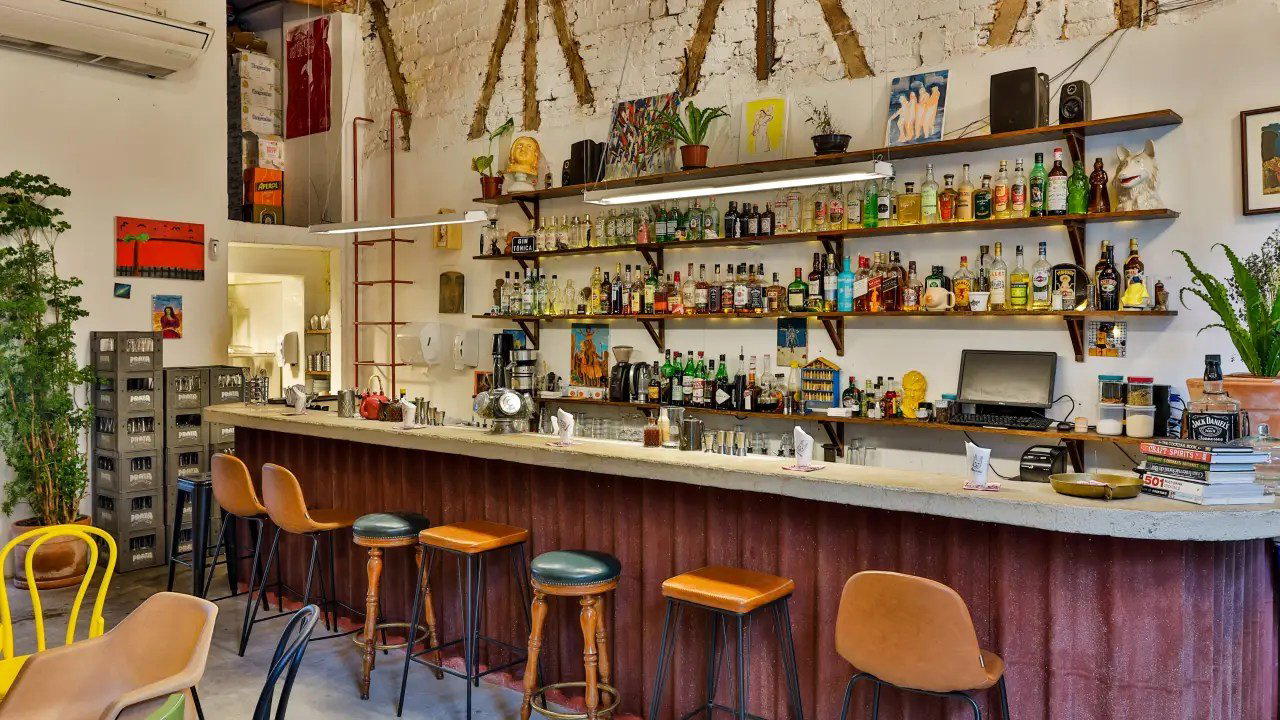
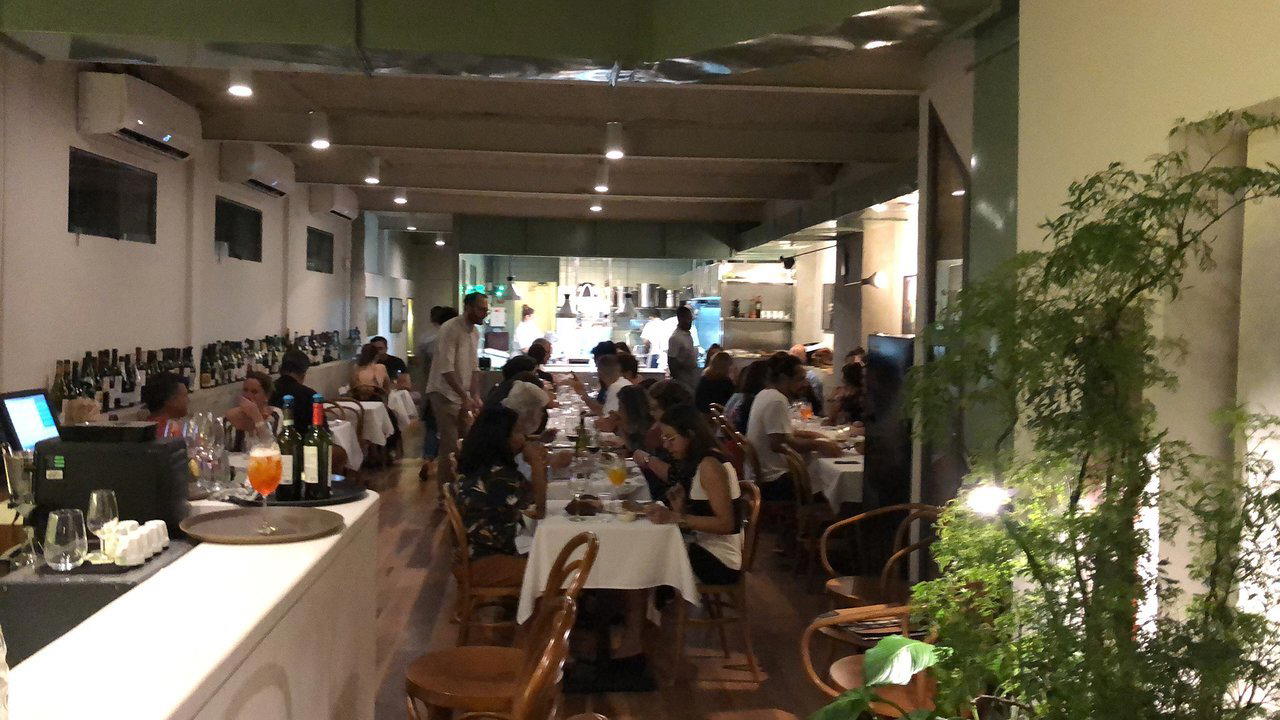
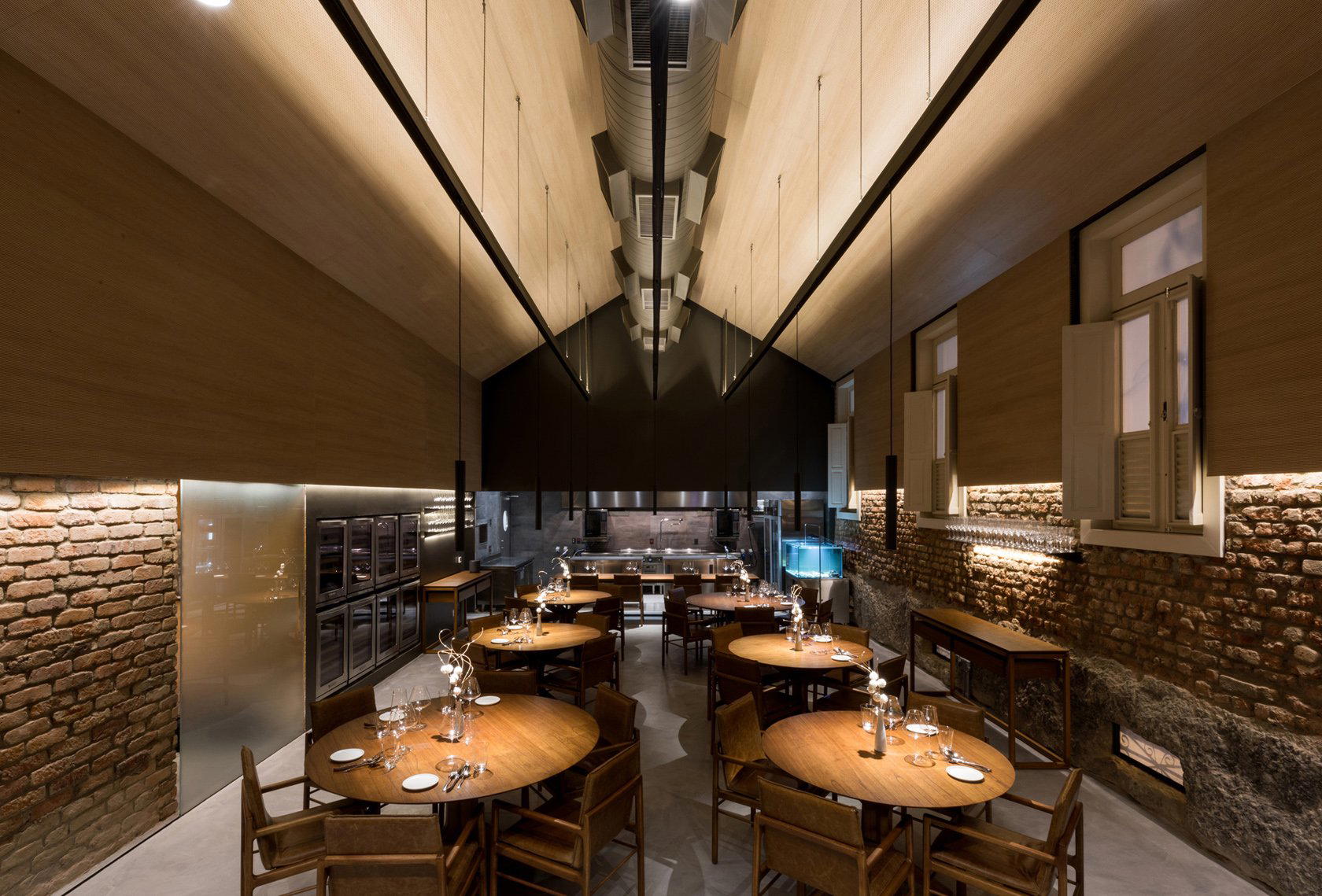
Refined rustic-chic atmosphere with warm lighting, dark wood accents, local art, and lush greenery creating an intimate, peaceful retreat above the city.