

Tori Ryori Seto belongs to Kyoto’s quieter chicken-cuisine tradition rather than the city’s temple-district kaiseki circuit. In Ichihara, north of the central dining corridors, its tatami-room, house-restaurant format and recognition from Tabelog’s 2025 Chicken Cuisine 100 and OAD’s 2026 Japan Recommended list place it in a more local, specialist tier.
Pearl is the En Primeur Club membership app — saves, bookings, and concierge access live there. Same editors, same standards.
- Address
- 京都府京都市左京区静市市原町336
- Phone
- +81757412667
- Website
- tabelog.com
 Saves & bookings on Pearl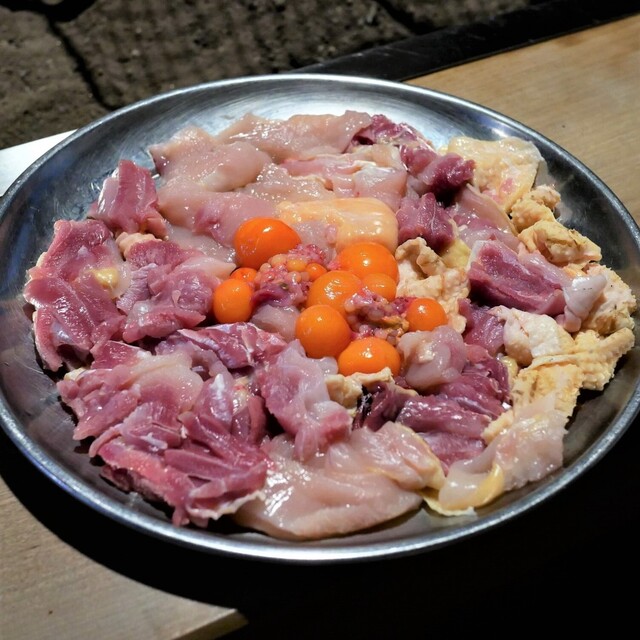
The approach to Ichihara changes the rhythm of a Kyoto meal before the first course appears. Central Kyoto’s restaurant grid is compact, polished, and often built around counter seats; this part of Sakyo-ku feels more residential, with the city thinning toward the northern hills. That shift matters. Chicken cookery in Japan can be urban and fast, especially in yakitori bars, but Kyoto also has a slower domestic register: hotpot, sukiyaki-style preparation, tatami rooms, and meals that suit small groups rather than solo counter dining.
Tori Ryori Seto sits inside that second register. Its public classification is not a single-genre yakitori label but chicken dishes, sukiyaki, and nabe, a combination that points toward a fuller meal built around poultry rather than a skewer-by-skewer drinking session. The recognition is also telling: selection for Tabelog’s 2025 Chicken Cuisine 100, a 3.77 Tabelog score, and inclusion as Recommended on Opinionated About Dining’s 2026 Japan list. Those signals place it within Japan’s specialist chicken-cuisine conversation, not merely among Kyoto’s general Japanese restaurants.
Kyoto chicken cookery away from the central circuit
Kyoto dining is often flattened into kaiseki shorthand, but the city’s stronger food map is more plural. There is the ceremonial dining around Gion and Higashiyama, the market-adjacent cooking around the centre, university-side casual rooms to the north-east, and a set of destination meals that require leaving the obvious tourist axis. Ichihara belongs to the last group. The reward is not theatrical isolation; it is a different social tempo, where the room, group size, and cooking format carry as much weight as the plate-by-plate progression.
That context separates this meal from Kyoto’s rural-luxury comparison points. Miyama Sou sits in the mountain-inn lineage, while Kamigamo Akiyama occupies a Japanese dining tier closer to formal seasonal cooking. Tori Ryori Seto is narrower and more domestic in focus: poultry, hotpot formats, and private-room utility rather than a broad kaiseki vocabulary. That narrower scope is the point. Japan’s serious chicken restaurants often work through repetition and ingredient focus, asking diners to care about cut, broth, grilling, and simmering rather than novelty.
The format also makes sense in a city where distance can be a filter. Restaurants near major stations absorb mixed traffic; places farther out tend to reward diners who plan around a single meal. For travellers mapping Kyoto by food rather than monuments, this is the same planning logic that might include Aburi Mochi Honke Nemoto Kazariya for a highly specific local tradition or 3TOKU6MI Shijo karasuma ten for a more central stop. The city becomes easier to read when meals are grouped by neighbourhood purpose, not just cuisine category.
A house-restaurant mood built for groups
The room type matters here. A house-restaurant setting with tatami space and private rooms changes how chicken cuisine is experienced: conversation stretches, dishes can arrive in shared formats, and the meal feels closer to a hosted occasion than a high-turnover counter. The publicly listed capacity is 22 seats, with private rooms for two, four, and six, which explains why families and small groups appear as natural users of the space. Non-smoking status and parking availability add to that practical, local-dining profile.
Drinks picture is similarly pragmatic. Sake is part of the listed drinks context, and BYO drinks are noted as a service feature. That is not a minor detail in Kyoto, where many small restaurants define themselves as much by meal structure as by beverage program. Here the emphasis remain on the poultry-led meal, with drink decisions supporting the table rather than driving the experience.
For travellers building a broader Kyoto itinerary, the choice comes down to what kind of day surrounds the booking. A central shopping-and-dining day might pair better with 551蓬莱, [ki:], or Abbesses. A northern Kyoto day has a different cadence: fewer transfers, fewer impulse stops, and more attention paid to the meal as the anchor. For wider planning, keep Our full Kyoto restaurants guide, Our full Kyoto hotels guide, Our full Kyoto bars guide, Our full Kyoto wineries guide, and Our full Kyoto experiences guide close at hand rather than treating dinner as a standalone decision.
Who should make the trip north
This is a strong fit for diners who already understand that Kyoto’s food culture is not confined to the centre. The appeal is not maximal luxury signaling; it is specificity. A meal built around chicken dishes, sukiyaki, and nabe asks for a different appetite than a tasting menu built to show range. It suits repeat visitors, small groups, and families comfortable with a meal that is planned rather than improvised.
The price tier also sharpens the decision. Kyoto has sub-¥1,000 snack institutions such as Jinba Do and lower-cost out-of-centre stops such as Aoiya Yakimochi Sohonpo, while everyday specialist rooms like Radio Bagel operate in a separate casual bracket. Tori Ryori Seto belongs to a higher, meal-anchored category, where the commitment is not only budget but time and location. That trade-off is sensible when the purpose is a focused chicken-cuisine meal rather than a quick Kyoto tick between temples.
For readers comparing across Japan and abroad, the useful analogy is category discipline. A focused sukiyaki specialist such as -Grilled beef Sukiyaki- KAMAKURA TANUKIAN 鎌倉 たぬき庵 in Kamakura is not competing with a casual Tokyo grill like. 鮪と炭火焼き うお炭 秋葉原店 in Tokyo; each makes sense through format. The same applies when cross-checking lighter stops such as.cafe in Osaka.know in Kumamoto, (Shoku) Vietnam in Kawasaki, [Curry Senmon Ten] Maruyama Kyoju. in Sapporo, Jōdo Saké Bar in Los Angeles, or Onigiri Time in Pasadena. The sharper question is not which venue is higher status, but whether the meal’s format matches the day being planned.
The editorial verdict is clear: this is Kyoto for diners willing to leave the centre for a specific local grammar of chicken cookery. The awards provide credible external validation, but the larger reason to care is place. In Ichihara, the meal is shaped by distance, room style, and a poultry-led tradition that resists the city’s more familiar fine-dining shorthand.
The Essentials
Comparable venues side-by-side for orientation.
| Venue | Cuisine | Price | Notes |
|---|---|---|---|
| Tori Ryori SetoThis venue — the venue you are viewing | Not listed | $$$ | Not listed |
| Wabiya Korekidou (侘家古暦堂 祇園花見小路本店) | Not listed | $$$ | Gion, Traditional Japanese Yakitori & Chicken Specialties |
| 竹邑庵太郎敦盛 | Kamigyō, Traditional Kaiseki Omakase | $$$ | Not listed |
| Sukiyaki Iroha Kita ten | Nakagyō, Traditional Kyoto sukiyaki | $$$ | Not listed |
| 悠々 | Not listed | $$$ | 北大路 (Kitaoji), Michelin 1-Star Kyoto Kappo |
| Warajiya | Not listed | $$$ | Higashiyama, Traditional Kyoto eel hotpot & porridge (unagi kaiseki-style) |
Recognition history
Dated appearances from independent guides and award organizations, with the underlying list record or original source where available.
Opinionated About Dining Top Restaurants in Japan Recommended
Opinionated About Dining
Tabelog 100 #44 · No. 44
Tabelog · Tabelog 100 - Chicken cuisine - 2025
Continue exploring
More in Kyoto
Restaurants in Kyoto
Browse all →
Bars in Kyoto
Browse all →

Hotels in Kyoto
Browse all →
Wineries in Kyoto
Browse all →
At a Glance
- Cozy
- Rustic
- Intimate
- Quiet
- Family
- Special Occasion
- Private Event
- Standalone
- Sake Program
- Byob
- Garden
- Mountain
A traditional, hidden-house atmosphere with a relaxing tatami-room feel that guests describe as warm, personal, and exclusive.