

Tori-Key brings yakitori-focused Japanese cooking to Chamberí, placing grilled chicken skewers at the centre of the menu rather than the cold counter. Chef Hiroshi Kobayashi holds a Michelin Plate for 2024 and 2025, and offers both à la carte and omakase formats in a mid-price bracket unusual for the format in Madrid.
Pearl is the En Primeur Club membership app — saves, bookings, and concierge access live there. Same editors, same standards.
- Address
- Pl. del Descubridor Diego de Ordás, 2, Chamberí, 28003 Madrid, Spain
- Phone
- +34 914 38 86 70
- Website
- torikey.com
- Directions
- Get directions
 Saves & bookings on Pearl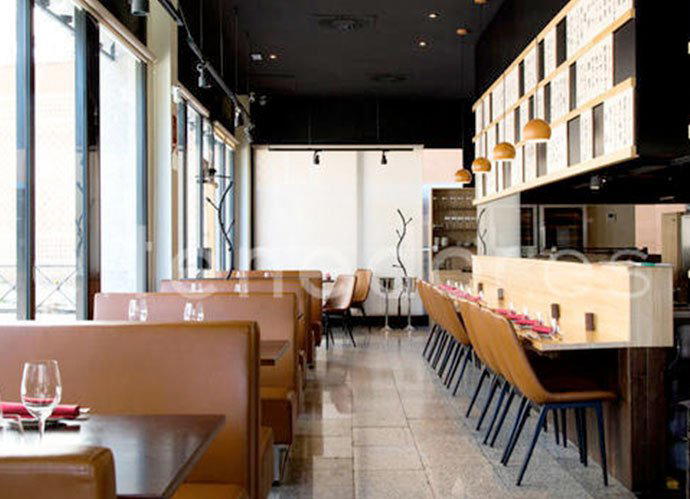
The Physical Frame: Counter Culture in Chamberí
Madrid's Japanese restaurant scene has long been dominated by sushi-led formats: cold counters, raw fish, and the theatre of the knife. The cooking here is fire-centred, which means the space is organised around heat rather than refrigeration, around smoke and char rather than pristine silence. In yakitori restaurants across Tokyo and Osaka, the counter is a performance stage where the grill sits in full view, skewers rotating under precise attention. Madrid's version of that format continues to develop, and Tori-Key is part of that conversation.
Chamberí has accumulated a cluster of serious restaurants over the past decade, drawing a local clientele that is less interested in spectacle and more interested in food on the plate.
The Grill as Argument
Yakitori, in its Japanese context, is a discipline built on specificity: different cuts of the bird, different marinades, different levels of char, the interplay between tare sauce and salt. The tradition runs from street-level yakitori-ya to refined counter restaurants like Ichimatsu in Osaka and Torisaki in Kyoto, where the format carries the same seriousness as sushi omakase.
Tori-Key makes the same argument in Madrid: that grilled chicken, treated with the same attention typically reserved for fish, justifies a full tasting format. The menu extends beyond the core skewer programme to include chicken wings, scallops, and Ávila beef tongue, the last of these a deliberate nod to the Spanish provenance of the protein, since Ávila's beef carries a strong regional reputation in the Castilian tradition. That kind of cross-reference, Japanese technique applied to Spanish ingredients, is a pattern that has become common in Madrid's more considered Japanese restaurants, though few have applied it as specifically to the grill as this one.
Chef Hiroshi Kobayashi runs the kitchen with close attention to the room, maintaining direct contact with guests through service. That attentiveness is structural at this scale: the format depends on a degree of communication between kitchen and table that larger restaurants cannot replicate.
Menu Architecture: À La Carte and Omakase
The menu operates across two modes. À la carte offers a choice of five or ten dishes, giving guests a degree of autonomy over the pace and composition of the meal. The omakase format, available in short and long options, removes that choice and hands control to the kitchen. In the context of yakitori, omakase is particularly coherent: the grill sequence benefits from a kitchen-determined order, moving across cuts and preparations in a progression that builds rather than simply accumulates.
The price point, at €€€, sits well below the omakase counters that dominate Madrid's Japanese premium tier. For comparison: DiverXO and Deessa both operate at €€€€, as do Coque, DSTAgE, and Paco Roncero in Madrid's creative fine dining tier. Tori-Key's positioning is different in category and intent, offering a tasting-format Japanese experience at a mid-market price bracket that has few direct equivalents in the city.
Recognition and comparable set
Michelin recognition in 2024 and 2025 signals that the guide's inspectors found the cooking consistent and the format coherent. In a city where Michelin coverage extends across multiple cuisines, the Plate for a yakitori specialist carries a specific message: this is a format the guide takes seriously, not a novelty.
Google's aggregate score of 4.7 across 1,696 reviews provides a different kind of signal. At that volume and score, the consistency argument is reasonably secure. High-volume review scores in Madrid's competitive restaurant market are not easily sustained at 4.7 without a degree of genuine operational reliability.
Spain's broader restaurant culture, which has produced destinations like El Celler de Can Roca in Girona, Arzak in San Sebastián, Disfrutar in Barcelona, Quique Dacosta in Dénia, Azurmendi in Larrabetzu, and Aponiente in El Puerto de Santa María, has increasingly absorbed Japanese precision into its more experimental registers. The restaurant sits outside that high-end experimental category but draws on the same underlying interest in technique-forward cooking.
Planning Your Visit
The restaurant is located at Plaza del Descubridor Diego de Ordás, 2, in Chamberí, Madrid 28003. The mid-price bracket means the omakase format is accessible at a cost that would represent a fraction of equivalent tasting menus at starred addresses in the city.
| Venue | Format | Price Tier | Michelin Recognition |
|---|---|---|---|
| The restaurant | Yakitori, à la carte + omakase | €€ | Plate (2024, 2025) |
| DiverXO | Progressive tasting menu | €€€€ | 3 Stars |
| DSTAgE | Modern Spanish, creative | €€€€ | 2 Stars |
| Coque | Spanish creative | €€€€ | 2 Stars |
- yakitori (grilled chicken skewers)
- omakase set
- unagi don (river eel rice)
- scallops
- Avila beef tongue
- wayu beef skewers
Cuisine and Awards Snapshot
Comparable venues nearby, for context on price, style, and recognition.
| Venue | Cuisine | Price | Awards | Notes |
|---|---|---|---|---|
| Tori-KeyThis venue — the venue you are viewing | Authentic Japanese Yakitori | $$$ | Michelin Plate | Not listed |
| Izariya | Traditional Japanese Kaiseki | $$$ | Michelin Plate | Almagro |
| Ebisu by Kobos | Edo-style Omakase Sushi | $$$$ | Michelin Plate | La Latina |
| Playing Solo | Modern Kaiseki with Japanese essence | $$$$ | Michelin Plate | Malasana |
| Amparito Roca | Traditional Spanish with Modern Twists | $$$ | Michelin Plate | Castellana |
| Poncio WM | Modern Andalusian Tapas | $$$ | Michelin Plate | Nino Jesus |
Recognition history
Dated appearances from independent guides and award organizations, with the underlying list record or original source where available.
Michelin Plate
Michelin
Opinionated About Dining Casual in Europe Recommended
Opinionated About Dining
Michelin Plate
Michelin
Michelin Plate
Michelin
Continue exploring
More in Madrid
Restaurants in Madrid
Browse all →
Bars in Madrid
Browse all →
Hotels in Madrid
Browse all →




At a Glance
- Modern
- Intimate
- Elegant
- Date Night
- Group Dining
- Special Occasion
- Celebration
- Open Kitchen
- Standalone
- Local Sourcing
Current opening hours
- Monday
- Closed
- Tuesday
- 1:30–3:30 PM, 8–10:30 PM
- Wednesday
- 1:30–3:30 PM, 8–10:30 PM
- Thursday
- 1:30–3:30 PM, 8–10:30 PM
- Friday
- 1:30–3:30 PM, 8–11 PM
- Saturday
- 1:30–3:30 PM, 8–11 PM
- Sunday
- 1:30–3:30 PM
Hours can change for holidays and private events. Last verified .
Sleek, warm, and inviting with the aroma of grilled yakitori; modest but pleasant interior with comfortable spacing between tables and modern design elements.