
Kukuku occupies a second-floor space in Roppongi's Minato district, pairing the disciplines of confectionery and matcha tea ceremony in a format that draws from wabi-cha tradition. The name references Sen no Rikyu, 'sen' means one thousand, so '999' (ku-ku-ku) sits one short, and the experience moves through Japanese sweets, charcoal ice cream, sesame rice cake, and a main cake before finishing with hand-drawn matcha.
Pearl is the En Primeur Club membership app — saves, bookings, and concierge access live there. Same editors, same standards.
- Address
- Japan, 〒106-0032 Tokyo, Minato City, Roppongi, 7 Chome−5−11 カサグランデミワ 2F
- Phone
- +81 3-6447-0333
- Website
- tablecheck.com
- Directions
- Get directions
 Saves & bookings on Pearl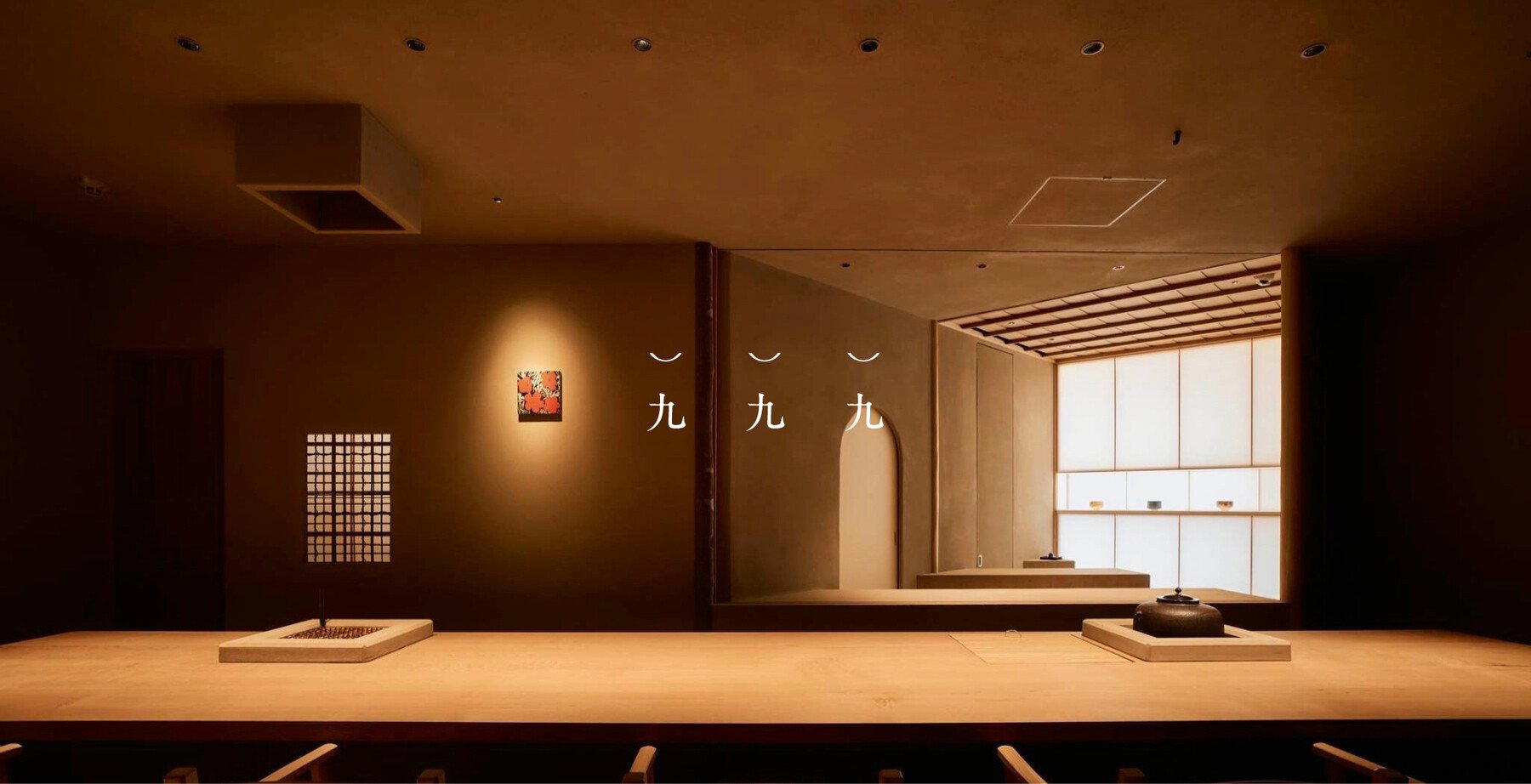
Where Confectionery Meets Ceremony
Roppongi carries a reputation shaped by galleries, late-night bars, and the dense commercial energy of Minato City. On the second floor of a building at 7-5-11, a quieter counter practice runs against that grain. Kukuku operates at the intersection of two Japanese disciplines that have historically informed each other but rarely shared a stage in contemporary Tokyo: wagashi confectionery and the formal tea ceremony. The format here is not fusion or novelty, it is a deliberate re-staging of the relationship between sweet and tea that defined wabi-cha, the austere tea aesthetic associated with Sen no Rikyu in the sixteenth century.
That reference is embedded in the name. 'Sen' in Japanese means one thousand. By calling the space '999' (read aloud as 'kukuku'), the patisserie positions itself one short of the master, a gesture of deference that is also a quiet wink, since 'ku-ku-ku' is the Japanese onomatopoeia for a stifled giggle. The dual meaning is characteristic of how the whole experience works: seriously rooted in tradition, but not solemn about it.
The Sequence and Its Logic
Tokyo's premium wagashi and tea experiences generally split into two modes. The first is the museum-adjacent format: a practitioner demonstrates technique behind glass while guests observe. The second, rarer mode places the guest inside the sequence itself, with each sweet and each cup timed and made for one another. Kukuku belongs to the second category. The confectioner works in front of guests while the tea master prepares each cup individually to accompany each item, a structure that demands timing coordination between two disciplines and removes the buffer of pre-prepared components.
The sequence begins with Hyoro, a charcoal ice cream whose preparation signals the pace of what follows: deliberate, technically specific, not hurried. Then comes Rikyumochi, a sesame rice cake with a documented historical anchor, this was the sweet favoured by Sen no Rikyu himself, and its placement here is an explicit reference rather than a decorative touch. A main cake follows before the sequence closes with matcha, drawn one cup at a time. At each stage, the tea is made after the sweet is presented, not in advance. The cup is calibrated to the item.
In a city where the ¥¥¥ tier of creative Japanese experiences ranges from experimental kaiseki to standing sushi bars, this format occupies a position with few direct peers. Places like RyuGin and L'Effervescence operate at ¥¥¥¥ and address savory progression over multiple courses. Harutaka works within sushi's counter tradition. Kukuku's competitive set is narrower: it is essentially a ceremony-format experience that has absorbed the discipline of patisserie without becoming either a tea house or a dessert restaurant.
What Keeps the Regulars Returning
For guests who come back to Kukuku, the appeal is rarely about a single item. The charcoal ice cream and the sesame rice cake are anchors, but the experience's pull is structural. Each visit involves the same sequence built around the same historical framework, yet the hand-drawing of tea and the live preparation of sweets mean no two sessions are identical in execution. The pace, the temperature of the matcha, the texture of the mochi on a given afternoon, these shift with the practitioner's judgment that day.
This is the logic that most premium tea ceremony formats in Japan understand and that most casual wagashi shops do not replicate. When the cup is made for the sweet rather than alongside it, the diner's role changes. You are not consuming items in order; you are participating in a timed pairing. Regulars at this kind of format tend to develop an attention to that calibration, noticing when the tea's bitterness is adjusted against a particularly sweet main cake, or when the astringency of the matcha provides deliberate contrast to the richness of the rice cake. That attentiveness is what the format trains.
Tokyo offers many destinations that fold historical reference into a contemporary dining frame. Sézanne works with French technique and local ingredient sourcing; Crony moves between French and Japanese frameworks with Michelin recognition. Both operate as full restaurants within the ¥¥¥¥ tier. What Kukuku does is narrower in scope but specific in intent: it asks whether a single historical relationship between sweet and tea can sustain an entire experience format at a premium price point. The answer, for guests who return, is yes.
Roppongi and the Experience Tier
Roppongi's experience offer has broadened significantly over the past decade. The district holds major contemporary art institutions and a cluster of international-standard restaurants, but its specialist, low-capacity formats tend to cluster away from the main pedestrian corridors. A second-floor address on a quieter block is not incidental for this kind of format, the physical separation from street-level traffic is part of the transition the experience requires.
For visitors building a Tokyo itinerary around premium experiences rather than conventional restaurants, the full Tokyo experiences guide maps the broader field. Those moving between cities in Japan will find comparable depth of tradition in different registers at Gion Sasaki in Kyoto and akordu in Nara. For premium dining in other Japanese cities, HAJIME in Osaka and Goh in Fukuoka represent different points on the creative-Japanese spectrum. The 1000 in Yokohama and 6 in Okinawa extend the picture regionally.
For international reference points where ceremony-format dining has developed along different lines, Atomix in New York City and Le Bernardin in New York City illustrate how precision-format experiences operate within Western fine dining traditions.
Planning Your Visit
Kukuku sits at the ¥¥¥ price tier, positioning it below the upper-tier ¥¥¥¥ restaurants but above casual wagashi cafes. The Roppongi address is 7-5-11 Roppongi, Minato City, second floor of the Casa Grande Miwa building. Advance booking is essential.
A Minimal comparable set
Comparable venues nearby, for context on price, style, and recognition.
| Venue | Cuisine | Price | Notes |
|---|---|---|---|
| KukukuThis venue — the venue you are viewing | Creative, Japanese | $$$ | Not listed |
| Ichita いち太 | Not listed | $$$ | Minato, Seasonal Japanese Kaiseki with House-made Soba |
| Hakozakicho Sumito | Chūō, Edomae Sushi | $$$ | Not listed |
| Tempura Aratamikawa | Minato, Edomae Tempura Omakase | $$$ | Not listed |
| Sanchokuya Taka | Not listed | $$$ | Shibuya, Seafood Izakaya with Sake Pairing |
| Tonkatsu Sugita | Taitō, Tonkatsu | $$$ | Not listed |
Recognition history
Dated appearances from independent guides and award organizations, with the underlying list record or original source where available.
Michelin Plate
Michelin












At a Glance
- Elegant
- Intimate
- Quiet
- Sophisticated
- Special Occasion
- Date Night
- Solo
- Chefs Counter
- Open Kitchen
- Design Destination
- Sake Program
Current opening hours
- Monday
- Closed
- Tuesday
- Closed
- Wednesday
- 3–6 PM
- Thursday
- 3–6 PM
- Friday
- 12–2 PM, 3–7 PM
- Saturday
- 3–6 PM
- Sunday
- 3–6 PM
Hours can change for holidays and private events. Last verified .
Elegant, minimalist counter-style tea house with stylish and relaxing atmosphere; intimate 8-seat space focused on craftsmanship and sensory experience.