

Osaka’s tonkatsu culture is usually read through appetite and value, but Tonkatsu Fujii belongs to a tighter counter-led tier where frying is treated with the sequence and restraint of a seasonal meal. Its seven-seat format, Tabelog Award 2026 Bronze status, Tabelog Tonkatsu 100 selection, and Michelin Bib Gourmand recognition in 2024 and 2025 make it a serious small-room address rather than a casual pork-cutlet stop.
Pearl is the En Primeur Club membership app — saves, bookings, and concierge access live there. Same editors, same standards.
- Address
- 1 Chome-11-5 Senbayashi, Asahi-ku, Osaka, 535-0012, Japan
- Phone
- +81 80-3773-2929
- Website
- instagram.com
- Directions
- Get directions
 Saves & bookings on Pearl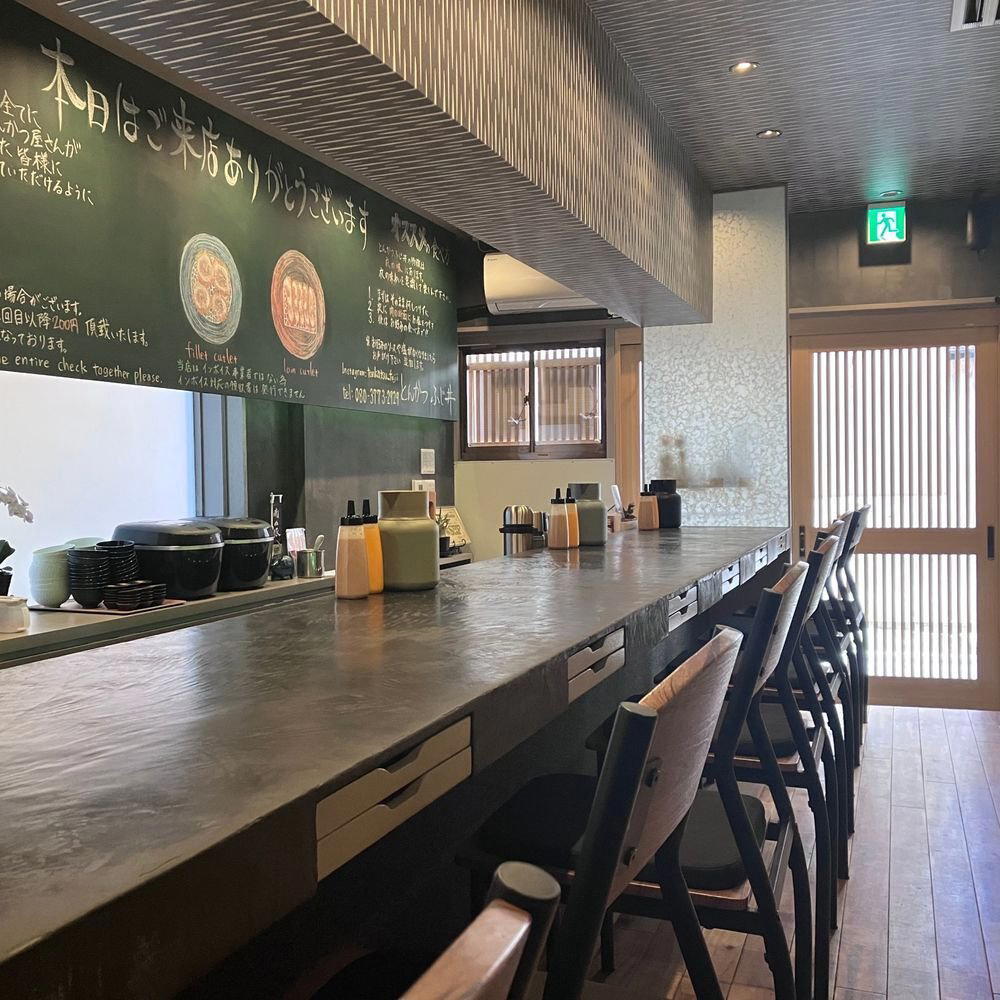
Senbayashi changes the tone before the meal begins. This is not central Osaka neon but a tighter neighbourhood rhythm: shopping-street practicality, small storefronts, and restaurants earning loyalty through repetition rather than spectacle. Here, tonkatsu reads differently. Often comfort food, at the serious end it becomes a composed Japanese meal built from timing, temperature, rice, cabbage, pickles, soup, and disciplined pauses. Tonkatsu Fujii sits in that small counter-led tier, where the fryer is not back-of-house equipment but the room’s centre of logic.
The distinction matters in Osaka, a city rich in fried food and casual pork cutlets. Kushikatsu, korokke, tempura counters, and department-store tonkatsu answer the same instinct: crisp coating, hot fat, clean finish. The higher-grade tonkatsu counter asks diners to notice sequence, cut, resting, and how accompaniments reset the palate. Kaiseki thinking helps, not because the meal imitates formal kaiseki, but because it borrows respect for progression and proportion. The cutlet anchors the meal; everything around it must behave with restraint.
A seven-seat counter turns tonkatsu into a paced meal
Small counters change expectations. At larger shops, speed and turnover can define the meal; at seven seats, silence, timing, and visibility matter. Frying becomes staged rather than hidden, placing diners close enough to see why specialist tonkatsu has joined the same mental category as omakase sushi or tempura counters for some travellers. The point is control, not luxury signalling. A narrow room gives the kitchen fewer places to hide inconsistency.
Tonkatsu Fujii has credentials beyond neighbourhood affection: The Tabelog Award 2026 Bronze, selection in Tabelog Tonkatsu 100 for 2026, earlier Tabelog Tonkatsu 100 recognition in 2024, and Michelin Bib Gourmand recognition in 2024 and 2025. In Japan, those signals differ. Michelin’s Bib Gourmand usually indicates price-conscious quality, while Tabelog’s category lists reflect a domestic restaurant culture exacting about genre specialists. Together, they place the counter in a serious national conversation about pork cutlets, not merely an Osaka local one.
The Osaka comparison is useful. Tonkatsu KATSU Hana represents another city route into the genre, and more than one serious tonkatsu address shows how far the category has travelled from quick lunch. Tokyo has long had a deeper public vocabulary for specialist tonkatsu, with Butagumi, Tonkatsu in Tokyo and Fry-ya, Tonkatsu in Tokyo framing pork breed, cut selection, and frying style as connoisseurship. Osaka’s version is less museum-like and more direct, but serious counters now ask to be judged by the same standards: consistency, pacing, and the finish after the final bite.
The kaiseki lesson is balance, not ceremony
Kaiseki’s influence on contemporary Japanese dining is often mistaken for decoration or seasonality. Its deeper lesson is architecture: a meal needs contrast, relief, and controlled escalation. Tonkatsu can seem too blunt for that vocabulary, yet specialist counters prove otherwise. Pork, breading, oil, rice, cabbage, and condiments form a compact sequence in which excess shows quickly. Too much fat, too heavy a crust, or too assertive a garnish collapses the rhythm.
Serious tonkatsu is not only pork quality. Premium pork matters, but so do heat management and pacing. A counter format pushes that discipline forward. The cutlet is not an isolated main course; the full set is a conversation between richness and reset. Rice gives structure, cabbage and pickles clear space, and soup returns the meal to a Japanese register rather than leaving it at fried-food satisfaction.
Osaka’s broader dining culture gives that restraint a useful counterpoint. The city is fluent in casual pleasure, from pork buns at 551 Horai (551蓬莱) to bakeries such as 52CHO-ME BAKERY and small independent rooms like.cafe. This counter belongs to the same city, but slows appetite down, asking diners to notice sequence rather than abundance.
The chef detail matters as lens. Tonkatsu Fujii is publicly described as the work of a former French chef, which helps explain why diners frame the cooking through precision rather than nostalgia. That does not make the meal French-Japanese fusion, nor a personality story. The better reading is technical: French training can sharpen attention to heat, fat, and structure, while the tonkatsu format remains firmly Japanese. The result fits the current Japanese pattern of genre specialists applying fine-dining discipline to a familiar dish.
How to place it within an Osaka eating itinerary
For travellers building an Osaka dining schedule, this is a focused meal, not an all-purpose restaurant choice. It fits a day when the city’s casual appetite needs a disciplined counterpoint: lunch or dinner around one genre, one seat, and one pace. It also contrasts with more expansive formats such as Manger, whose identity sits in a different register. The choice is breadth versus concentration, not high versus low.
That concentration has practical implications. A seven-seat counter with award recognition is not a place to treat casually, and the meal rewards diners ready for a set rhythm rather than a flexible à la carte evening. Children of elementary-school age and above are accepted when included in the reservation, and the same adult menu applies. The policy may be family friendly, but the format suits diners who can sit through a quiet, closely paced service.
The wider Osaka map helps place the stop. For broader planning, use Our full Osaka restaurants guide alongside Our full Osaka hotels guide, Our full Osaka bars guide, Our full Osaka wineries guide, and Our full Osaka experiences guide. Travellers comparing how single-specialty Japanese dining translates across cities can also look beyond Osaka: -Grilled beef Sukiyaki- KAMAKURA TANUKIAN 鎌倉 たぬき庵 in Kamakura. 鮪と炭火焼き うお炭 秋葉原店 in Tokyo.know in Kumamoto, (Shoku) Vietnam in Kawasaki, [Curry Senmon Ten] Maruyama Kyoju. in Sapporo, and [ki:] in Kyoto show how tightly defined formats can become the point of travel themselves.
The editorial case is clear: Tonkatsu Fujii treats a democratic dish with counter-level seriousness without stripping away its direct appeal. The awards establish credibility, the scale enforces discipline, and the Senbayashi setting keeps the experience grounded in Osaka rather than detached from its neighbourhood. For diners who understand that tonkatsu can carry the logic of a seasonal Japanese meal, this is one of the city’s sharper arguments for giving pork cutlets a dedicated itinerary slot.
At-a-Glance Comparison
Side-by-side context: comparable cuisine and price.
| Venue | Cuisine | Price | Awards | Notes |
|---|---|---|---|---|
| Tonkatsu FujiiThis venue — the venue you are viewing | Modern Tonkatsu | $$ | Bib Gourmand | Not listed |
| Tempura Kozaki | Seasonal Tempura Omakase | $$ | Bib Gourmand | Abeno |
| Ayamedo | Traditional Soba Noodles | $$ | Bib Gourmand | Chūō |
| tanpopo | Modern Okonomiyaki Teppanyaki | $$ | Bib Gourmand | Kita |
| Hommachi Seimenjo Chukasobakobo | Authentic Japanese Ramen | $$ | Bib Gourmand | Chūō |
| Aozora blue | Stone-Ground Udon Specialist | $$ | Bib Gourmand | Chūō |
Recognition history
Dated appearances from independent guides and award organizations, with the underlying list record or original source where available.
Michelin Bib Gourmand
Michelin
Tabelog Bronze #72
Tabelog
Tabelog 100 #53 · No. 53
Tabelog · Tabelog 100 - Tonkatsu - 2026
Michelin Bib Gourmand
Michelin
Michelin Bib Gourmand
Michelin
Continue exploring
More in Osaka
Restaurants in Osaka
Browse all →



Bars in Osaka
Browse all →




Hotels in Osaka
Browse all →




Wineries in Osaka
Browse all →
At a Glance
- Intimate
- Cozy
- Minimalist
- Solo
- Special Occasion
- Chefs Counter
- Open Kitchen
- Sake Program
Current opening hours
- Monday
- 11 AM–1:45 PM, 5:30–7:45 PM
- Tuesday
- Closed
- Wednesday
- 11 AM–1:45 PM, 5:30–7:45 PM
- Thursday
- 11 AM–1:45 PM, 5:30–7:45 PM
- Friday
- Closed
- Saturday
- 11 AM–1:45 PM, 5:30–7:45 PM
- Sunday
- 11 AM–1:45 PM, 5:30–7:45 PM
Hours can change for holidays and private events. Last verified .
Minimalist counter kitchen with warm functional lighting focused on the cooking, creating a cozy bistro vibe with blackboard decor.