Tongue in Cheek
Our verdict
Tongue in Cheek on Payne Avenue brings a chef-driven approach to Saint Paul's East Side, where the neighborhood's working-class grain runs up against a kitchen with serious culinary ambition. The format threads between neighborhood accessibility and tasting-counter precision, making it one of the more considered dining rooms in a city that rewards those who look past downtown.

Pearl is the En Primeur Club membership app, where members save venues, book tables and use the concierge.

The menu
What to order
- Pork Belly
- East Fried Pride
- Chocolate Ode to the Dome
Payne Avenue and the Architecture of a Meal
Payne Avenue has never been Saint Paul's dining marquee. The corridor runs northeast from downtown through the East Side, a historically working-class stretch where Czech and Vietnamese storefronts share blocks with corner bars and small grocers. That context matters when you sit down at Tongue in Cheek, because the room reads as a deliberate counterpoint to its surroundings, a kitchen with serious technical intent planted in a neighborhood that didn't ask for it and, over time, came to appreciate it. The American Midwest has developed a pattern of this: ambitious restaurants taking root in under-regarded urban corridors rather than the predictable gallery-and-hotel districts, and finding that the friction itself becomes part of the identity.
What you notice first, approaching the building on the 989 block, is the scale, modest from the outside, with none of the theatrical signage that tends to announce restaurants with something to prove. Inside, the room settles into a register that sits closer to neighborhood anchor than special-occasion destination, which is either a deliberate choice or a productive accident. Either way, it shapes how the meal begins.
The Arc of the Table
Across American dining over the past decade, the tension between neighborhood-restaurant accessibility and multi-course precision has produced some of the more interesting rooms in mid-sized cities. Think of how Lazy Bear in San Francisco reframed communal tasting as performance, or how Atomix in New York City built a progression model around card-based narrative. In both cases, the physical format shapes how the meal moves, how one course anticipates the next, how tempo is managed, how a kitchen signals its priorities through sequencing rather than just through a single plate.
Tongue in Cheek operates in that same broader current. A kitchen that earns its reputation on the East Side of Saint Paul does so through consistency across an entire sitting, not through a single showpiece dish. The meal's logic, from whatever opens the table to whatever closes it, is where a restaurant like this makes its argument. The progression tells you whether the kitchen is thinking about the full experience or assembling good individual moments.
In this sense, Tongue in Cheek fits within a category of American restaurants that punch at a level above their address. The comparison set isn't Le Bernardin in New York City or The French Laundry in Napa, those rooms operate in a different tier of formality and price, but rather the cohort of serious chef-driven restaurants in mid-market American cities where ambition is constrained by neighborhood and audience rather than budget alone. Venues like Emeril's in New Orleans built their identity around a similar dynamic: a kitchen with high technical aspiration in a city where dining culture was already layered and demanding.
Saint Paul's Dining Room, East of Downtown
Saint Paul's restaurant scene has historically been read as Minneapolis's quieter sibling, a characterization that flattens the reality of specific neighborhoods doing specific things well. The East Side in particular has a dining character shaped by its demographics, a strong Southeast Asian community, long-established Eastern European heritage, and a growing appetite for restaurants that treat the neighborhood as a destination rather than a through-zone.
The contrast is instructive: Cossetta's model is volume and tradition; Tongue in Cheek's is restraint and intention. Bennett's Chop & Railhouse and Black Sea represent other nodes in the city's dining distribution, steakhouse tradition and Eastern Mediterranean cooking respectively, while Boca Chica has held down Mexican-American dining on Cesar Chavez Street for decades. These are restaurants serving different functions, and Tongue in Cheek occupies its own lane within that spread.
The broader national parallel worth drawing: the same shift that refined restaurants like Blue Hill at Stone Barns in Tarrytown or Single Thread Farm in Healdsburg, where place and sourcing become inseparable from the menu, has filtered into mid-market American cities. A restaurant on Payne Avenue making that argument does so with less institutional support than those venues, which makes the project more precarious and, when it works, more instructive.
Technical Ambition in Context
Restaurants at this tier in American cities, below the formal tasting-menu temples like Alinea in Chicago, Providence in Los Angeles, or Addison in San Diego, above the direct neighborhood bistro, tend to succeed or fail on whether the kitchen can sustain its ambition across a full service, night after night, without the scaffolding of a large brigade or a fine-dining price point. The Inn at Little Washington and 8 1/2 Otto e Mezzo Bombana in Hong Kong operate with resources that insulate them from those pressures. Tongue in Cheek does not.
That constraint is legible in the format: a room that doesn't overclaim, a menu that doesn't overextend, a service style that matches the neighborhood rather than performing against it. In Saint Paul's dining context, that calibration matters. The East Side doesn't reward restaurants that talk above their audience, and it tends to remember ones that get the register right.
Planning Your Visit
Tongue in Cheek is located at 989 Payne Ave in Saint Paul's East Side, a ten-to-fifteen-minute drive from downtown depending on traffic. The neighborhood is navigable by car with street parking typically available along Payne Avenue. For a broader look at how this restaurant fits within Saint Paul's dining geography, the EP Club Saint Paul restaurants guide maps the city's key tables across neighborhoods and cuisine categories. Booking details and current hours are best confirmed directly through the venue.
Frequently asked questions
What's the address for Tongue in Cheek?
Tongue in Cheek is located at î989 Payne Ave, St Paul, MN 55130, Saint Paul.
Is Tongue in Cheek worth the drive from Minneapolis to Saint Paul's East Side?
For diners whose reference points include serious chef-driven rooms in other American cities, the 989 Payne Ave address is the point rather than a compromise. Saint Paul's East Side has historically been overlooked in Twin Cities dining coverage, which means Tongue in Cheek operates without the foot traffic of a marquee corridor, and draws its room on reputation alone. That distinction matters.
What do people recommend at Tongue in Cheek?
Tongue in Cheek built its reputation on chef-driven cooking structured as a considered sequence of courses rather than a single anchor dish. Regulars tend to recommend committing to the full progression rather than ordering selectively, which is how the kitchen's logic reads most clearly. The East Side address on Payne Avenue draws diners from across the Twin Cities specifically for that format.
How hard is it to get a table at Tongue in Cheek?
Among Saint Paul's chef-driven rooms, Tongue in Cheek operates at a tier where weekend seats fill well in advance. Planning two to three weeks out is a reasonable baseline for Friday and Saturday; midweek tends to be more flexible. It sits in a different demand bracket than casual East Side neighborhood spots, so treating it like a walk-in is a risk.
Credentials Lens
Comparable venues nearby, for context on price, style, and recognition.
| Venue | Cuisine | Price | Awards | Notes |
|---|---|---|---|---|
| Tongue in CheekThis venue (the venue you are viewing) | Modern American Fusion | $30–50 | Not listed | Not listed |
| The St. Paul Grill | Classic American Steakhouse | $50–100 | Wine Spectator Award of Excellence | Downtown |
| Luci Ancora | Creative Italian Trattoria | $50–100 | Not listed | Highland |
| Meritage | Classic French Brasserie | $50–100 | Not listed | Downtown |
| Sakura | Authentic Japanese Sushi | $20–30 | Not listed | Downtown |
| Citizen Saint Paul | Modern American | $50–100 | Not listed | Downtown |
Continue exploring
More in Saint Paul
Restaurants in Saint Paul
All restaurants in Saint Paul →
Bars in Saint Paul
All bars in Saint Paul →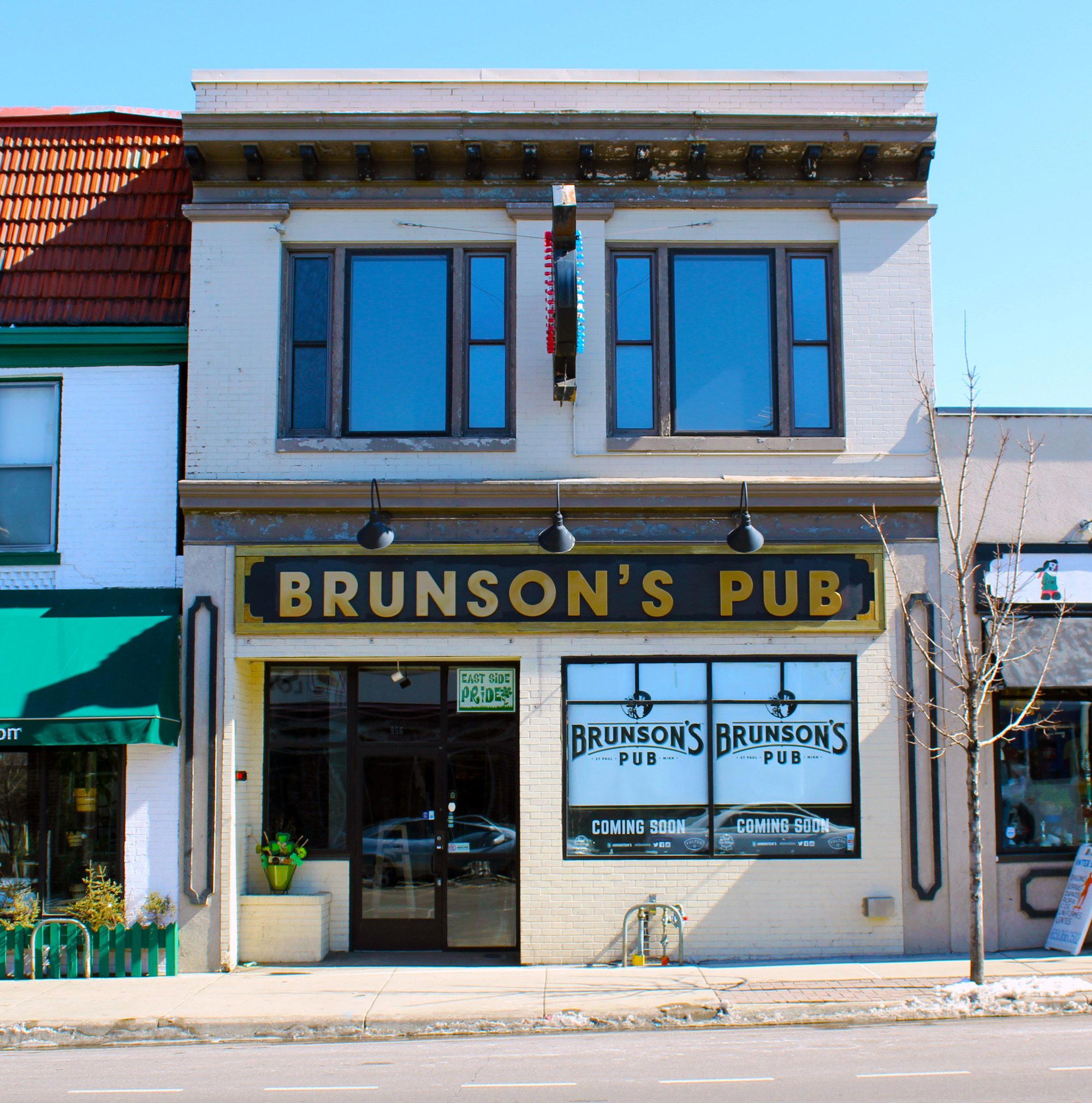
Details
- Trendy
- Cozy
- Whimsical
- Date Night
- Brunch
- Casual Hangout
- Open Kitchen
- Craft Cocktails
- Local Sourcing
- Small Plates
- A La Carte
- Tasting Menu
- Craft Cocktails
- Vegetarian Friendly
- Vegan Options
- Gluten Free Options
Current opening hours
- Monday
- Closed
- Tuesday
- Closed
- Wednesday
- 11 AM–9 PM
- Thursday
- 11 AM–9 PM
- Friday
- 11 AM–9 PM
- Saturday
- 11 AM–9 PM
- Sunday
- 11 AM–9 PM
Hours can change for holidays and private events. Hours as of .
Fun and approachable atmosphere in a vintage storefront setting with contemporary culinary focus.