The Saint Paul Hotel

The Saint Paul Hotel occupies a century-old address on Market Street in downtown St. Paul, where Beaux-Arts architecture and 254 rooms place it firmly in the tradition of grand Midwestern civic hotels. It sits at the quieter, more deliberate end of the Twin Cities hotel spectrum, a contrast to Minneapolis's newer hospitality stock, and a useful base for anyone engaging with the capital's arts and political institutions.
Pearl is the En Primeur Club membership app — saves, bookings, and concierge access live there. Same editors, same standards.
- Address
- 350 Market St, St Paul, MN 55102
- Phone
- +1 651-292-9292
- Website
- saintpaulhotel.com
- Directions
- Get directions
 Saves & bookings on Pearl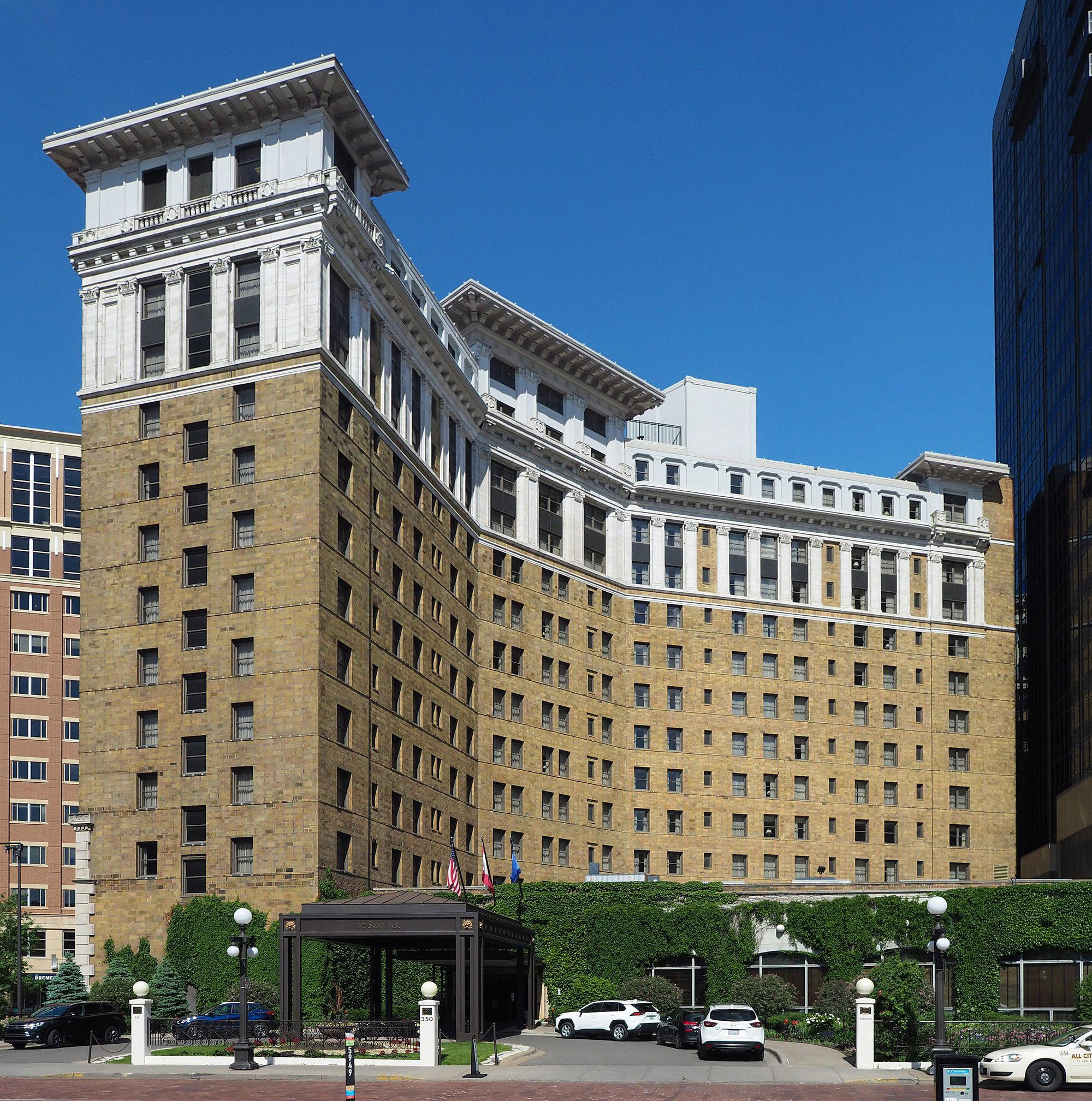
A Grand Civic Hotel in a City That Rewards Patience
The Saint Paul Hotel is a 4-star hotel in St. Paul, Minnesota, at 350 Market St, with 255 rooms. Where many American cities replaced their historic grand hotels with glass towers or converted them into condominiums, St. Paul held onto its civic anchor. The Saint Paul Hotel is the physical record of that decision: a Beaux-Arts structure whose exterior reads as confident institutional permanence rather than heritage theme park. Approaching it from Market Street, the building's masonry facade and formal proportions signal a period when hotels were understood as public architecture, not just commercial accommodation.
That context matters for understanding where this property fits in the broader American hotel taxonomy. The Saint Paul Hotel belongs to this category: a building whose age is its argument, whose corridors carry the accumulated weight of the city's political and cultural life, and whose 254 rooms spread across a footprint that predates the era of amenity maximalism.
Architecture as Institutional Memory
The hotel's design language is rooted in early twentieth-century civic confidence. Beaux-Arts hotels of this era were built to project stability, to signal that a city had arrived. The public spaces follow that logic: proportioned lobbies, formal finishes, the kind of architectural detail that reads as deliberate rather than decorative. This is a different register from the material-led design approaches you find at properties like Amangiri in Canyon Point or Ambiente in Sedona, where the building's relationship to its landscape is the primary architectural idea. Here, the building is in dialogue with the city block, the street grid, and the civic institutions surrounding it: the Landmark Center, Rice Park, and the broader Lowertown arts district a short walk east.
Interior preservation in hotels of this vintage always involves a negotiation between historical fabric and contemporary expectation. The hotel operates in that same tradition: a property where the architecture sets the tone and the guest experience is shaped by spatial logic that no new-build can replicate on an equivalent timeline.
St. Paul's Position in the Twin Cities Hotel Market
The Twin Cities split into two distinct hospitality markets that rarely overlap in feel. Minneapolis draws corporate travel, convention volume, and the design-forward boutique openings that tend to cluster around the North Loop and Uptown neighborhoods. St. Paul, as the state capital, attracts a different constituency: legislators, lobbyists, arts patrons, and travelers who have business with state institutions rather than corporate headquarters. The hotel occupies the center of that market by geography and by institutional association.
That positioning makes it a different proposition from the resort-destination hotels that define premium travel in other parts of the country. Properties like Blackberry Farm in Walland, Post Ranch Inn in Big Sur, or Little Palm Island in Little Torch Key are destinations in themselves; the surrounding landscape is the primary draw. The hotel works differently. It is a platform for engaging with a specific city, and its value compounds with access to Rice Park, the Ordway Center, the Fitzgerald Theater, and the Saint Paul Chamber Orchestra, all within walking distance.
The hotel sits firmly in the latter category.
The 254-Room Scale and What It Implies
At 254 rooms, the hotel occupies a scale that separates it from both boutique properties and large convention hotels. This is the size range where service consistency becomes a genuine operational challenge: large enough that staffing depth matters, small enough that institutional anonymity is not an excuse. Globally, hotels in this bracket at comparable historic addresses, whether Hotel Bel-Air in Los Angeles or Badrutt's Palace Hotel in St. Moritz, tend to define their identity through the quality of specific spaces rather than overall room count. The ratio of public space to guest rooms, and how that public space is programmed, often determines whether a historic property feels alive or merely preserved.
Travelers coming from smaller, design-intensive properties like Troutbeck in Amenia or SingleThread Farm Inn in Healdsburg will find a different register here: more formal, more urban, less curated in the contemporary boutique sense. That is not a deficiency; it is a different category of experience. The hotel is the kind of place where the building does the work that a design team does elsewhere.
Planning Your Stay
The hotel's address at 350 Market Street places it directly on Rice Park, the closest thing St. Paul has to a civic living room. The park fronts the Landmark Center and sits within a five-minute walk of the Ordway Center for the Performing Arts and Xcel Energy Center. For visitors arriving by air, Minneapolis-Saint Paul International Airport connects to downtown St. Paul via Metro Transit's Green Line, with the Central Station stop a short distance from the hotel, making car-free arrival a practical option. The 254-room inventory means availability is generally more accessible than at comparable properties in higher-demand cities, though the legislative session calendar and major cultural events at the Ordway can compress booking windows.
Quick Comparison
Comparable venues nearby, for context on price, style, and recognition.
| Venue | Cuisine | Price | Awards | Notes |
|---|---|---|---|---|
| The Saint Paul HotelThis venue — the venue you are viewing | Historic luxury with modern conveniences | $$$$ | 4-Star | Not listed |
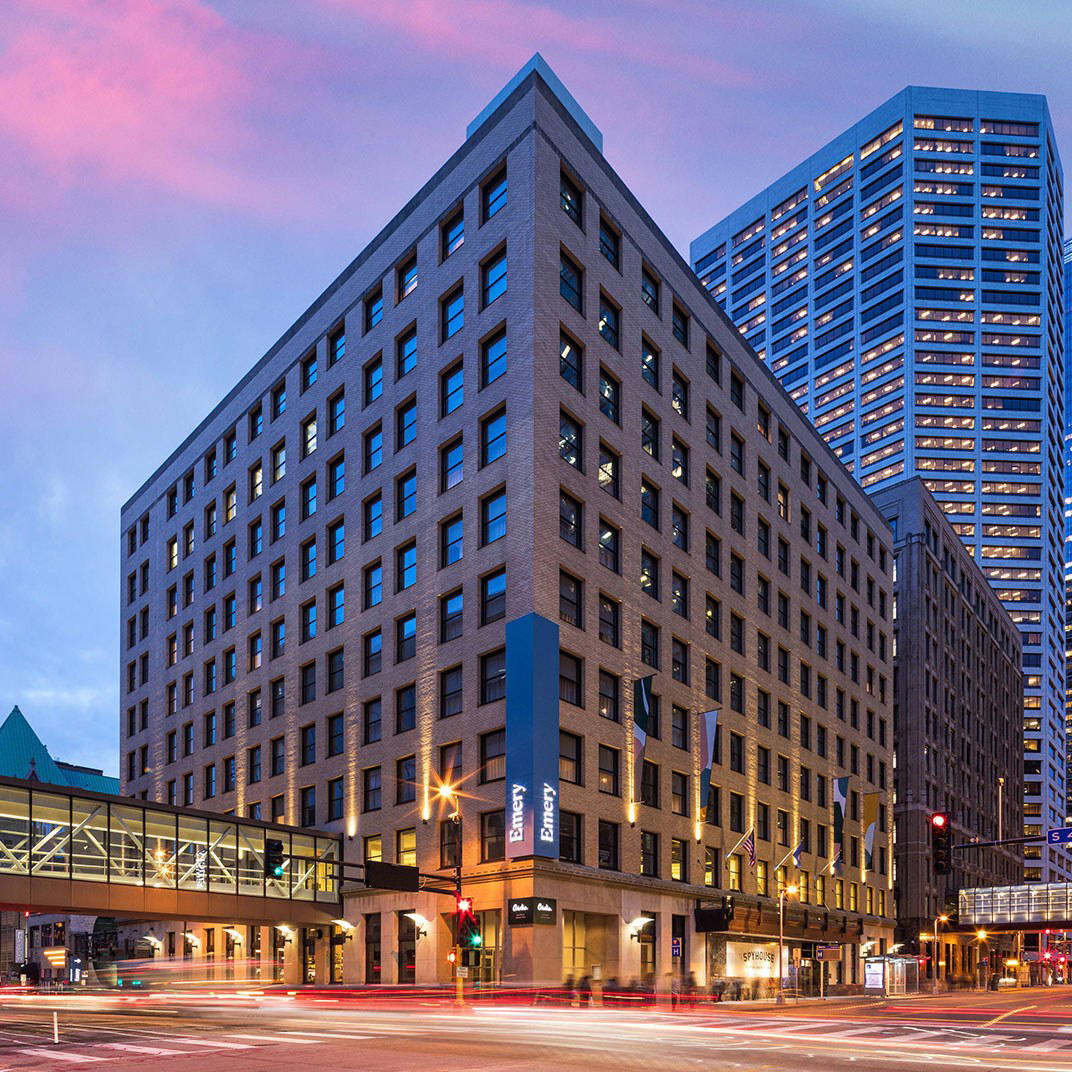
| Emery Hotel | Lifestyle luxury hotel in historic bank building | $$$$ | 4-Star | Downtown West |
| Hewing Hotel | rustic Minnesota history meets modern amenities in a historic warehouse | $$$$ | 4-Star | North Loop |
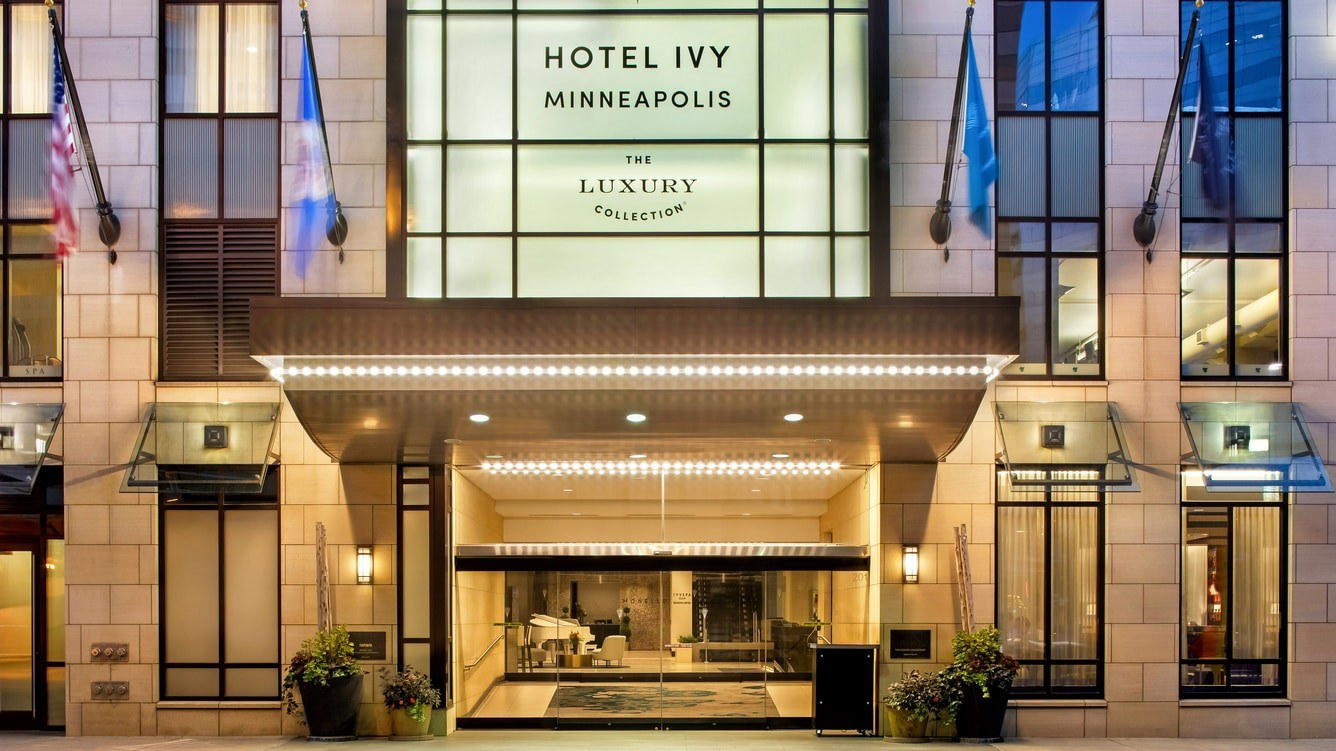
| Hotel Ivy, A Luxury Collection Hotel, Minneapolis | Historic Art Deco tower reimagined as a contemporary luxury boutique hotel with refined elegance and modern amenities. | $$$$ | 4-Star | Downtown West |
| W Minneapolis - The Foshay | Historic Art Deco tower with modern luxury renovations | $$$$ | 5-Star | WeDo |
| The Grand Hotel Minneapolis | Historic boutique with masculine luxury and Midwestern hospitality | $$$ | 4-Star | Downtown West |
Recognition history
Dated appearances from independent guides and award organizations, with the underlying list record or original source where available.
Preferred Hotels L.V.X. Collection
Preferred Hotels
At a Glance
- Classic
- Elegant
- Sophisticated
- Historic
- Romantic Getaway
- Business Trip
- Family Vacation
- Celebration
- Historic Building
- Terrace
- Wi Fi
- Fitness Center
- Room Service
- Concierge
- Business Center
- Valet Parking
- Skyline
- Street Scene
- Wi Fi
- Fitness Center
- Room Service
- Concierge
- Business Center
- Valet Parking
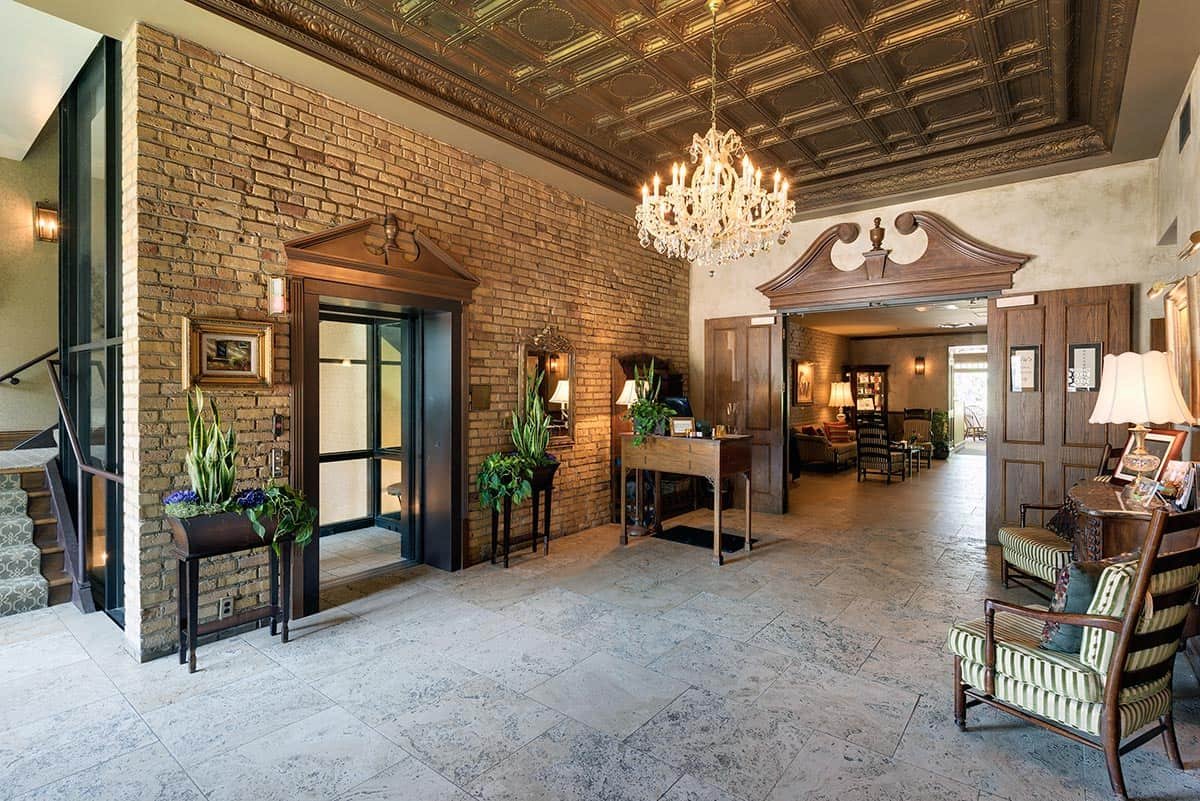
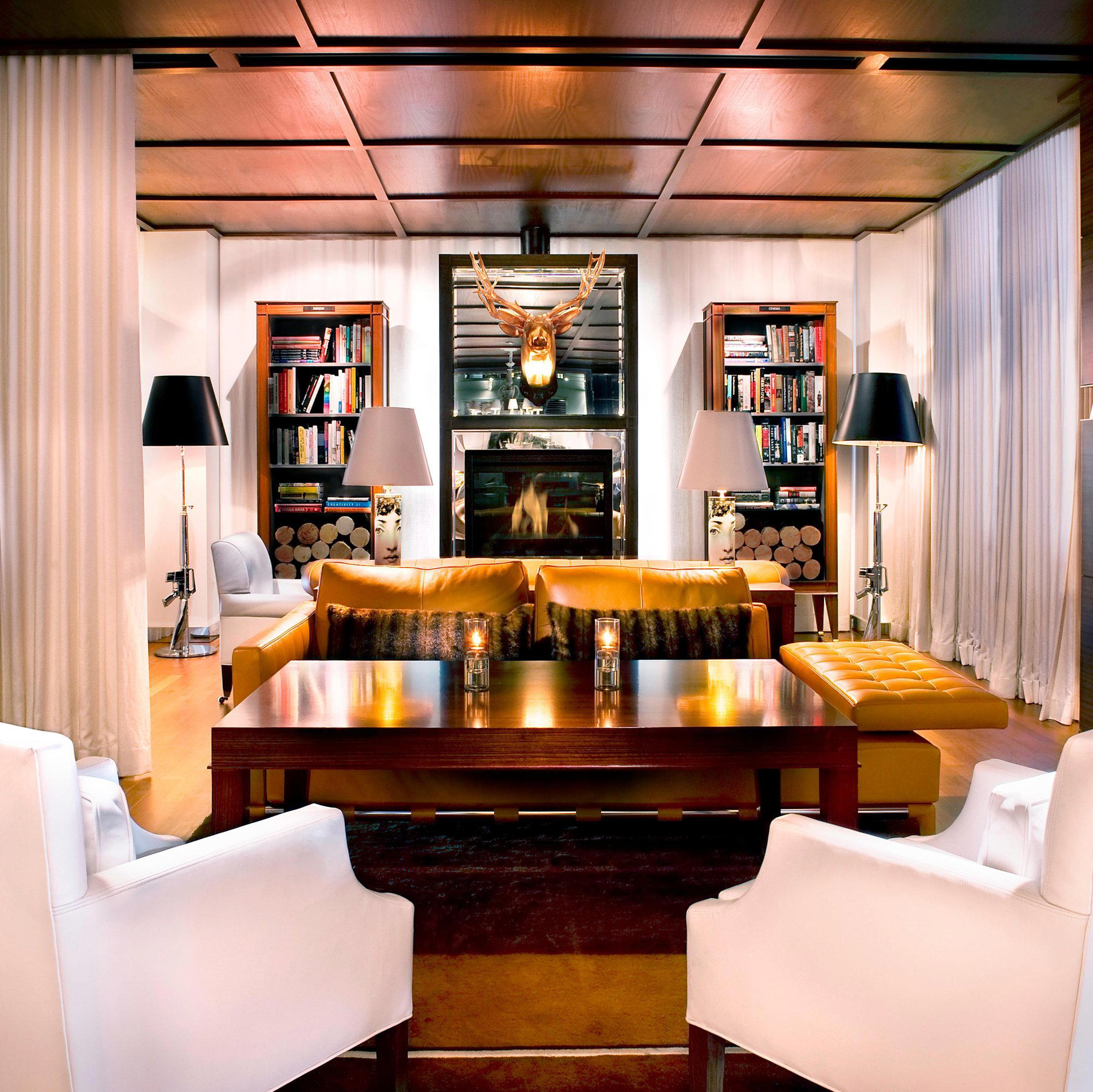
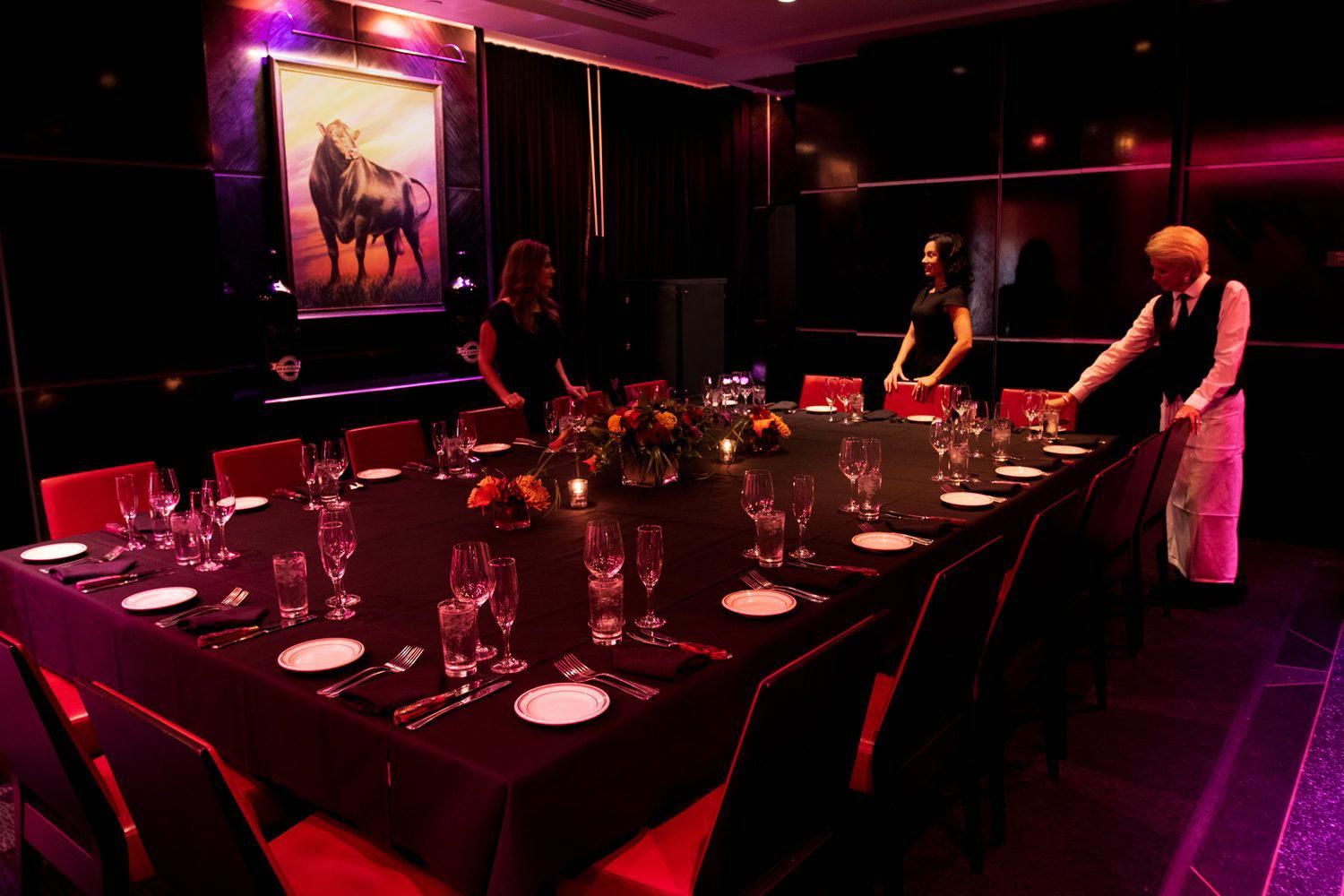
Timeless elegance blending historic charm with modern sophistication, featuring plush furnishings and refined lighting.