Tong Sam Gyup Goo Yi

A Michelin Bib Gourmand fixture in Flushing's Murray Hill, Tong Sam Gyup Goo Yi strips Korean barbecue back to its essentials: tabletop grills, soy-marinated beef short ribs, house kimchi aged in-house, and banchan that earns its place on the table. The room is bright and unfussy, the crowd consistent, and the.
Pearl is the En Primeur Club membership app — saves, bookings, and concierge access live there. Same editors, same standards.
- Address
- 162-23 Depot Rd, Flushing, NY 11358
- Phone
- (718) 359-4583
- Website
- tongsamgyupgooyi.com
- Directions
- Get directions
 Saves & bookings on Pearl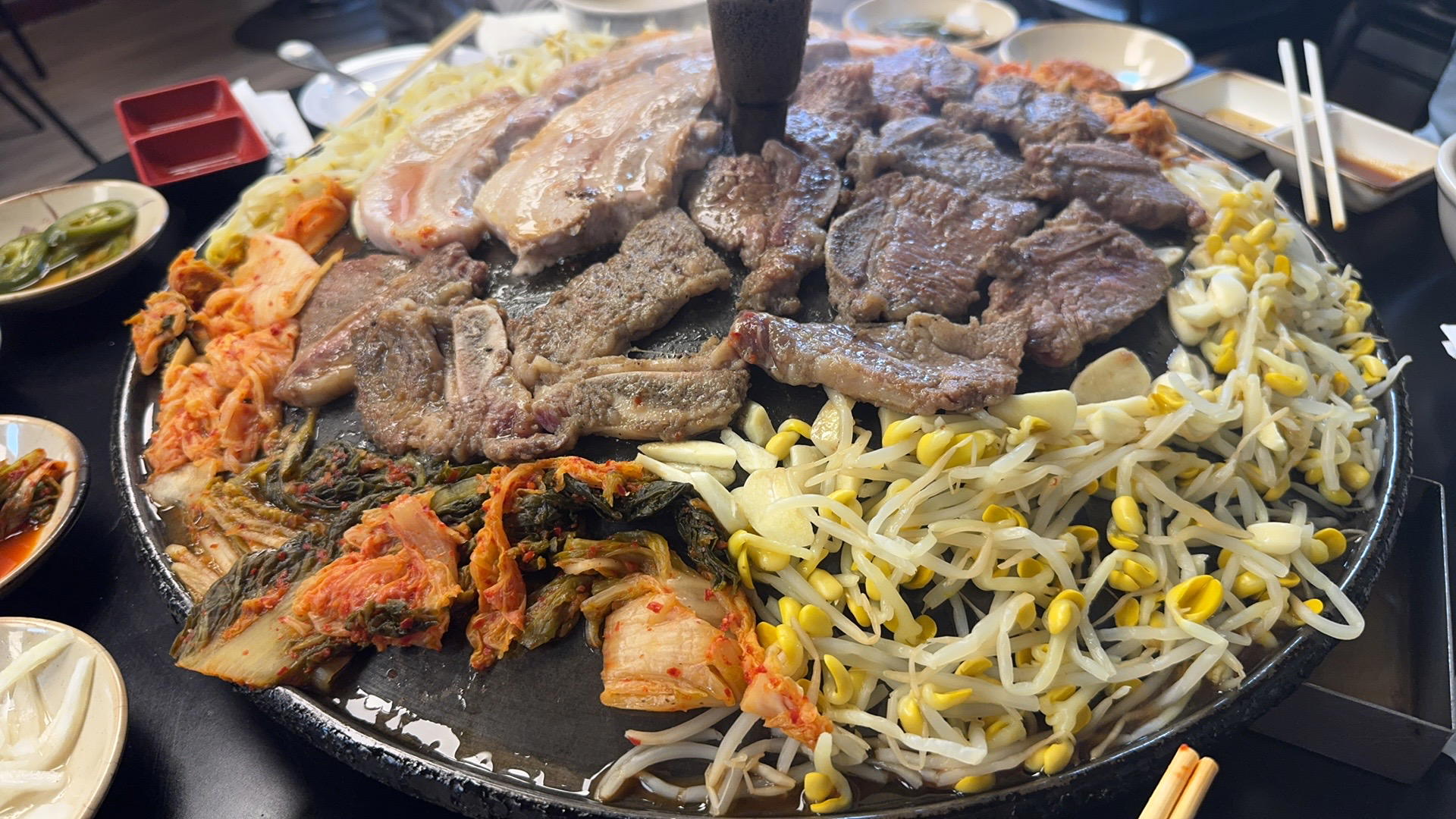
Flushing's Korean Barbecue Benchmark
Murray Hill in Flushing has long operated as among the more concentrated Korean dining corridors outside Seoul, and within that corridor a clear hierarchy has emerged. At the accessible end sit the sprawling all-you-can-eat chains; at the opposite pole, a smaller number of focused restaurants where the kitchen treats the tabletop grill as a deliberate format rather than a gimmick. Tong Sam Gyup Goo Yi belongs to the latter category, and the Michelin Bib Gourmand it received in 2024 confirms what regulars at 162-23 Depot Road have known for years: the cooking here is priced for the neighbourhood and executed with precision.
The Wider Korean Barbecue Tradition
Korean barbecue as a dining format carries an implicit contract: the kitchen provides the raw materials, the condiments, and the supporting dishes, and the table does the finishing work over live heat. What differentiates one restaurant from another within that format is almost entirely about sourcing quality, marinade depth, the calibre of banchan, and whether the grill itself is maintained with the attention it deserves. Tong Sam Gyup Goo Yi focuses on regional specialties within the barbecue tradition rather than attempting a broad pan-Korean menu, and that restraint is precisely what gives the kitchen focus.
The beef short ribs here are marinated in a traditional soy-based sauce, a preparation known as galbi that dates back centuries in Korean culinary tradition. The soy-based marinade, typically built from soy sauce, sesame oil, garlic, and sugar, tenderises the meat through enzymatic action while building a caramelised crust on the grill. Romaine lettuce arrives alongside for ssam wraps, a serving method that cuts the richness of the beef and introduces fresh texture into each bite. It is a format that rewards patience: rushing the cook produces uneven results; the grill at the right temperature produces short ribs with distinct char on the exterior and juice retained at the bone.
Banchan and the Logic of the Supporting Cast
In traditional Korean table culture, banchan is not an appetiser course but a simultaneous backdrop: small dishes of fermented, pickled, and seasoned vegetables that frame the main protein and evolve through the meal. The quality of a Korean restaurant's banchan is often one reliable indicator of the kitchen's overall discipline, because the fermentation and pickling processes require time, consistency, and genuine technique rather than last-minute preparation.
At Tong Sam Gyup Goo Yi, the banchan includes pickled turnips, fermented bean paste soup, and house kimchi that has been aged in-house, a distinction that separates it from operations using pre-made product. Kimchi fermented on-site develops a complexity that commercial versions rarely achieve, with the garlic and funk deepening over time into something closer to a condiment than a side dish. That level of kitchen investment in what most diners treat as table filler is a signal about how the rest of the meal is being approached.
The Fried Rice Technique and Why It Matters
Korean cooking often repurposes heat and residual fat to transform simple ingredients. Fried rice cooked on the tabletop grill at the end of a barbecue session picks up the rendered fat, the caramelised bits of marinade, and the smoke from the coals into the rice itself. The result is a version of the dish that bears almost no resemblance to what comes out of a wok in a separate kitchen. This technique, sometimes called bokkeum-bap in the Korean context, is less a discrete menu item than a use of the grill's accumulated seasoning to finish the meal.
The logic is structurally similar to what happens in Korean fried chicken culture more broadly, where double-frying creates a crust that can hold sauce without becoming saturated, and where the fat temperature management is as important as the sauce recipe. Both techniques reflect the same underlying principle: controlled heat applied in sequence produces textural and flavour results that a single-stage process cannot replicate. Its fried rice recommendation follows the same principle.
Placing Tong Sam Gyup Goo Yi in New York's Korean Dining Context
New York's Korean restaurant scene has split across several distinct tiers in recent years. At the fine-dining end, restaurants like Jua and bōm apply modern technique to Korean ingredients and tradition at price points that compete with Alinea in Chicago or Providence in Los Angeles for occasion-dining spend. At the opposite end, fast-casual Korean concepts have expanded across Manhattan and Brooklyn. The middle tier, represented by Bib Gourmand holders like Tong Sam Gyup Goo Yi, is where the dining traditions themselves are most legibly preserved: ingredients treated simply, formats respected, and the price-to-quality ratio maintained.
For context on what the Korean fine-dining tier looks like globally, Mingles in Seoul and Kwonsooksoo in Seoul represent the kind of tasting-menu ambition that New York's Meju and 8282 have begun to reference locally. The restaurant operates at none of those price points or ambitions, but the Bib Gourmand places it in credible company within its own category, which is a different and equally valid form of restaurant achievement. Michelin is the same guide that awards three stars to The French Laundry in Napa and Lazy Bear in San Francisco.
Planning Your Visit
The restaurant is located at 162-23 Depot Road in Flushing's Murray Hill, a neighbourhood that is most efficiently reached by the 7 train to Flushing-Main Street, followed by a short local bus or car ride to the Murray Hill section. The restaurant operates in the $$ price range, consistent with the Bib Gourmand value standard. It holds. The room runs busy most evenings, and arriving early or prepared to wait is advisable given the consistent demand. Reservations are recommended.
Quick reference: 162-23 Depot Rd, Flushing, NY 11358 | Google 4.3 (302 reviews) | $$ price range.
What Should I Eat at Tong Sam Gyup Goo Yi?
Start with the banchan before the grill heats up: the house kimchi, fermented in-house rather than sourced pre-made, and the pickled turnips are worth attention on their own terms. The beef short ribs in soy-based marinade are the central order, served with romaine for ssam wraps. End with fried rice prepared directly on the tabletop grill rather than ordered separately, which allows it to absorb the rendered fat and caramelised marinade from the short ribs. The fermented bean paste soup runs alongside and functions as a palate reset between grilled bites rather than a standalone course. This is not a menu that rewards improvisation: the kitchen's strengths are in the prepared and aged components, and ordering against the format rather than with it produces a noticeably different experience. For context on the wider Korean tasting-menu format, Jua and bōm represent what the same culinary tradition looks like at the other end of the price and formality spectrum. For American fine dining at flagship level, Emeril's in New Orleans and Single Thread Farm in Healdsburg offer useful points of contrast for how different cuisine traditions handle the transition from casual to formal formats.
A Pricing-First Comparison
Comparable venues nearby, for context on price, style, and recognition.
| Venue | Cuisine | Price | Awards | Notes |
|---|---|---|---|---|
| Tong Sam Gyup Goo YiThis venue — the venue you are viewing | Korean | $$ | Bib Gourmand | Not listed |
| Cho Dang Gol | Not listed | $$ | Bib Gourmand | Midtown-Times Square, Authentic Korean Tofu House |
| Phayul | Not listed | $$ | Bib Gourmand | Jackson Heights, Tibetan Momos and Dumplings |
| SaRanRom Thai | Elmhurst, Regional Thai | $$ | Bib Gourmand | Not listed |
| C as in Charlie | Not listed | $$ | Bib Gourmand | Greenwich Village, Korean-Southern Fusion Small Plates |
| Chavela’s | Not listed | $$ | Bib Gourmand | Crown Heights (North), Classic Mexican Taqueria |
Recognition history
Dated appearances from independent guides and award organizations, with the underlying list record or original source where available.
Michelin Bib Gourmand
Michelin
Michelin Bib Gourmand
Michelin
Continue exploring
More in New York City
Restaurants in New York City
Browse all →
Bars in New York City
Browse all →

Hotels in New York City
Browse all →






At a Glance
- Lively
- Cozy
- Group Dining
- Casual Hangout
- Open Kitchen
Current opening hours
- Monday
- 12–10:30 PM
- Tuesday
- 12–11 PM
- Wednesday
- 12–11 PM
- Thursday
- 12–11 PM
- Friday
- 12–11 PM
- Saturday
- 12–11 PM
- Sunday
- 12–10:30 PM
Hours can change for holidays and private events. Last verified .
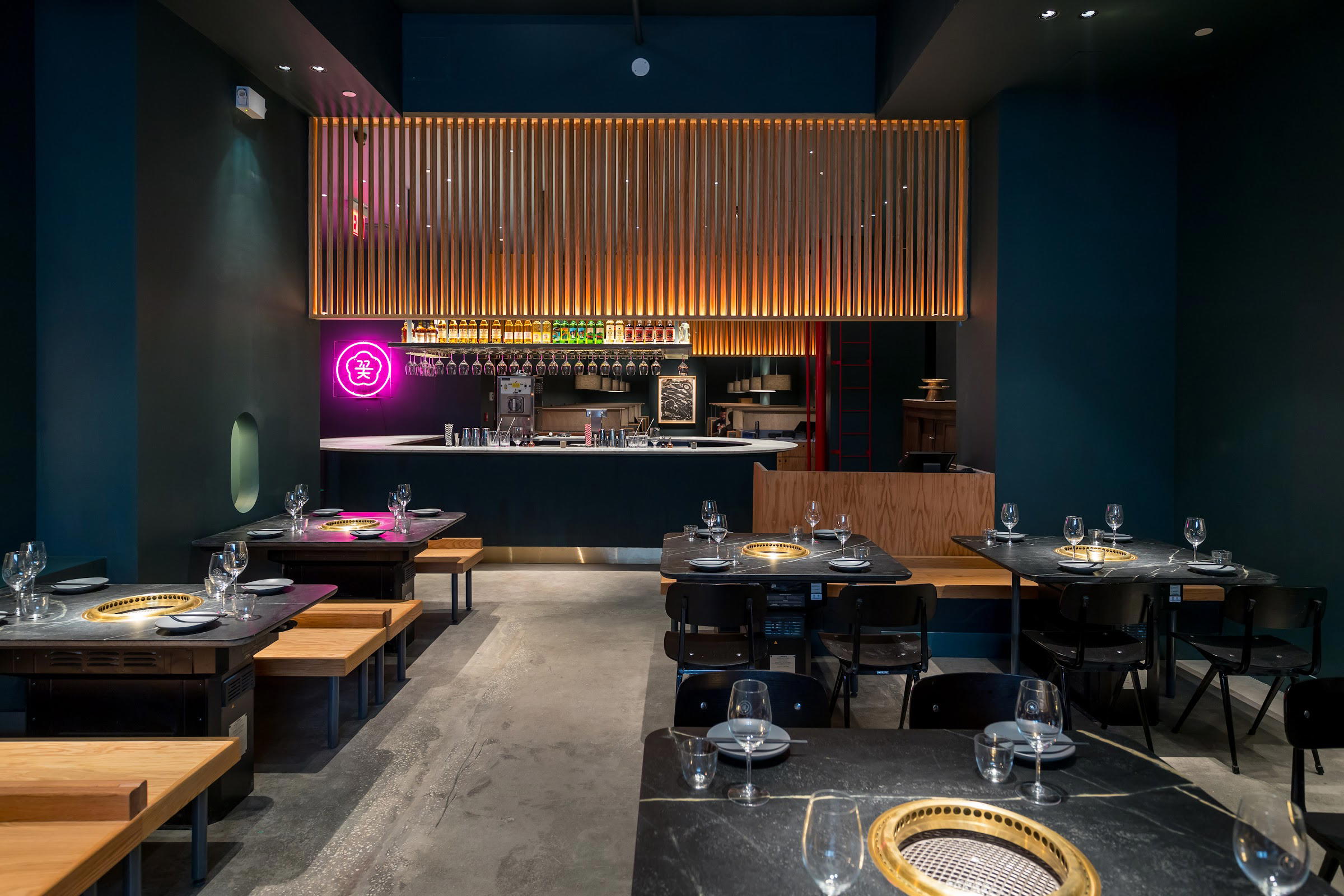
Lively and comfortable with warm charcoal grills, sizzling meats, cheerful conversation, modern simplicity blended with traditional Korean touches, and a bright, frill-free decor.