
Falstaff Restaurant - 92 Falstaff Points
Our verdict
Til Elise Fra Marius sits along Nesnaveien in the small Helgeland village of Utskarpen, where the surrounding fjord coast and inland terrain define what ends up on the plate. In a region where Norway's most ambitious rural dining has quietly matured alongside its urban counterparts, this address draws attention precisely because of where it is, not despite it.

Pearl is the En Primeur Club membership app, where members save venues, book tables and use the concierge.
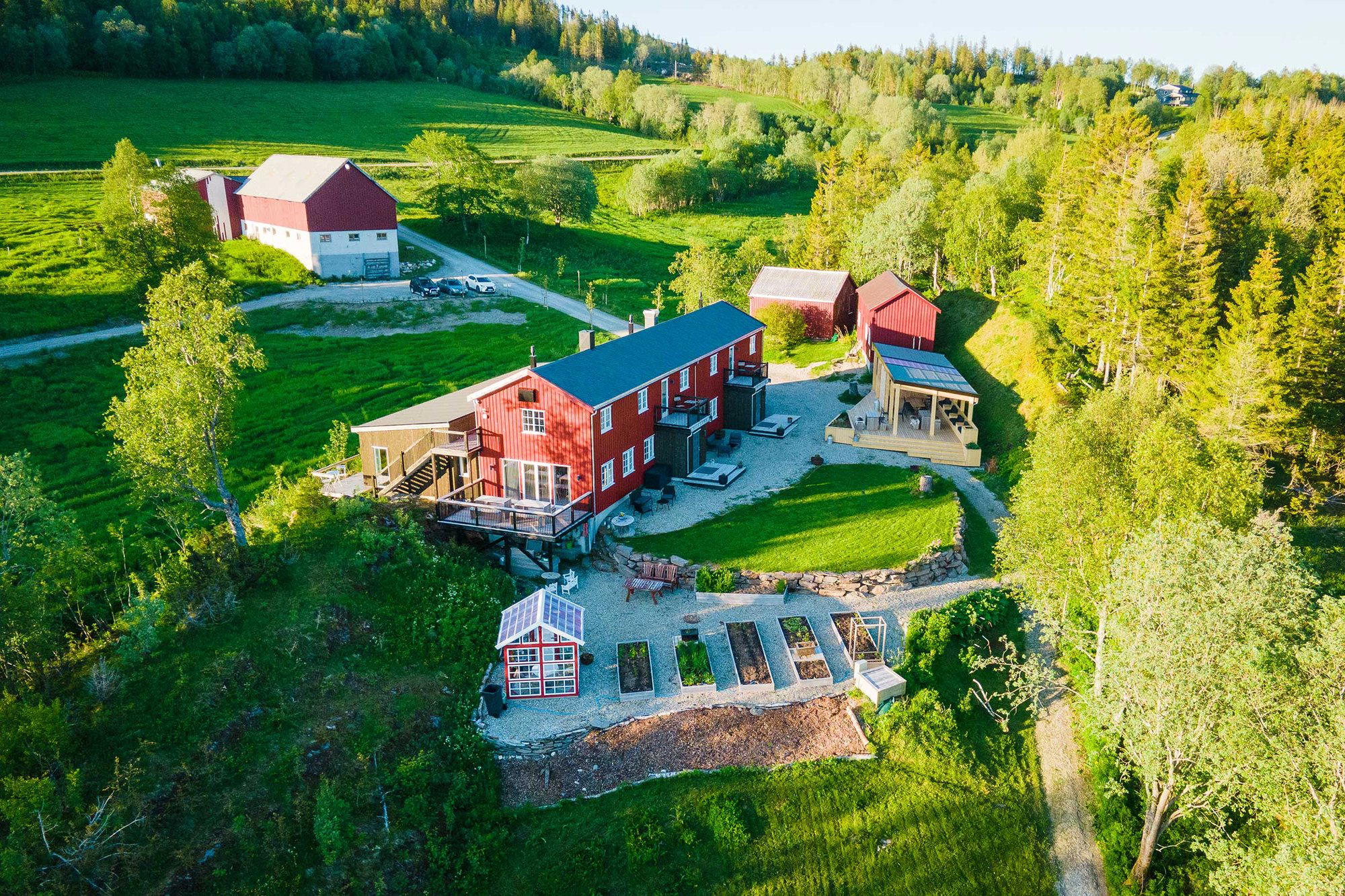
Drive north along the Helgeland coast and the landscape shifts in a way that recalibrates expectations about where serious food happens. The fjords deepen, the settlements thin, and the supply chain that urban restaurants pay a premium to simulate becomes simply the local condition. Utskarpen sits in this stretch of northern Norway, a village on the Nesna peninsula where the address on the door, Nesnaveien 1083, places you unambiguously in working coastal terrain rather than any kind of curated rural retreat. Til Elise Fra Marius belongs to that geography in a way that coastal restaurants in larger Norwegian cities can only approximate.
What the Location Demands
Northern Norway's dining conversation has expanded considerably over the past decade. The arc runs from Oslo's Maaemo in Oslo, which holds three Michelin stars and anchors the country's fine dining reputation, through RE-NAA in Stavanger and FAGN in Trondheim in the mid-tier of serious Nordic tasting menus, and out to coastal addresses that operate under entirely different constraints and possibilities. Venues like Anita's Sjomat in Lofoten and Under in Lindesnes have shown that proximity to the source, whether that means fish pulled from the water hours earlier or forage gathered from the immediate coastline, produces a fundamentally different ingredient quality than what any supply chain can deliver to a city kitchen.
That premise sits at the core of what makes a place like Utskarpen worth the journey. The Helgeland region sits between the Arctic Circle and the Lofoten archipelago, a stretch of Norwegian coast where cod, halibut, and shellfish move through exceptionally cold, clean water. The ingredient argument writes itself before a kitchen even opens for the evening. What varies is what a given kitchen does with that access.
Ingredient Sourcing as the Central Logic
The New Nordic movement, codified in the early 2000s and since absorbed into the broader international conversation about provenance-led cooking, made a specific claim: that northern European terrain, properly understood and applied, could produce food of genuine depth rather than mere novelty. What has happened in practice is a split. On one side sit the tasting-menu operations in Oslo, Stavanger, and Bergen that reference local sourcing while operating within sophisticated, technique-heavy frameworks. On the other sit smaller, more remote venues where the sourcing is not a philosophy but a practical reality, where the distance to any alternative supplier makes locality the default rather than the differentiator.
Utskarpen belongs firmly to the second category. The coastal waters of Helgeland supply some of Norway's most prized seafood, and the short growing season at this latitude concentrates flavour in root vegetables, berries, and foraged greens in ways that longer-season equivalents cannot replicate. The comparison point here is not Gaptrast in Bergen or the urban hotel dining that defines much of Norway's award circuit, but rather the handful of coastal addresses that have made geographic remove into a coherent culinary argument. Fiskekrogen in Henningsvaer, Underhuset Restaurant in Reine, and Børsen Spiseri in Svolvaer each operate in this register, where the primary credential is access rather than awards.
The Regional Context
Helgeland sits in Nordland county, the same administrative region as Lofoten, and shares many of its defining coastal characteristics without the international visitor traffic that has reshaped Lofoten's dining economy over the past fifteen years. That relative quietness is itself a data point. Restaurants in heavily visited areas calibrate to a mixed audience; restaurants in genuinely remote Norwegian villages serve a community that has its own relationship to the food being served, a relationship built on familiarity with the source rather than novelty-seeking. That distinction tends to produce different results at the table.
The broader northern Norwegian dining pattern, which includes addresses like Aurora Restobar in Kirkenes, Brasserie 8622 in Mo i Rana, and Umami Harstad in Harstad, reflects a region where the gap between ambitious city dining and locally-rooted coastal cooking is not always a quality gap. It is more accurately a format gap. The tasting menus and wine programs that define recognition-seeking restaurants in Oslo operate under a different logic than a well-run kitchen in Utskarpen, but the ingredient quality available at the latter address can be genuinely superior for certain categories of seafood and foraged produce.
For the international reader accustomed to measuring Norwegian fine dining against the standards set by Le Bernardin in New York City or Atomix in New York City, the more useful frame is what the northern Norwegian coast does that no urban kitchen in any country can fully replicate: compress the time between water and plate to a matter of hours rather than days, and ground the menu in a specific geography rather than a curated version of one.
Planning a Visit
Utskarpen is reached most practically via ferry connections and the E6 highway through Nordland, with Mo i Rana serving as the nearest significant transport hub to the south. The village sits on the Nesna peninsula, which requires either the Nesna ferry crossing or the longer road route depending on your starting point. Visitors making the journey from further afield would do well to treat the broader Helgeland coast as a multi-stop itinerary: Karoline Restaurant in Ramberg and Experience Restaurant in Steinkjer sit within a reasonable range for those moving along the Norwegian coast. Hardanger House in Jondal offers a comparable small-village coastal dining reference further south for those building a longer Norwegian itinerary. Specific booking details for Til Elise Fra Marius, including hours and reservation method, are best confirmed locally, as small venues in this region often operate on informal or seasonal schedules. Our full Utskarpen restaurants guide covers the broader local dining context for the area.
Frequently asked questions
Is Til Elise Fra Marius child-friendly?
No formal family policy is documented for Til Elise Fra Marius at Nesnaveien 1083, Utskarpen. Given the venue's remote Helgeland location, reachable primarily by ferry and the E6 highway, families visiting with children should check the venue's official channels before making the journey to confirm suitability and any practical arrangements.
What's the vibe at Til Elise Fra Marius?
Utskarpen sits in Nordland county along the Helgeland coast, well outside Norway's main tourist corridors, and that geography shapes what to expect here: a sense of deliberate remove rather than urban bustle. The setting at Nesnaveien 1083 positions this as a destination in the literal sense, you arrive with intent rather than by accident.
How far is Til Elise Fra Marius from Mo i Rana, and how do you get there?
Til Elise Fra Marius is addressed at Nesnaveien 1083 in Utskarpen, with Mo i Rana serving as the nearest significant transport hub in Nordland county. Practical access runs via the E6 highway and ferry connections through Helgeland, the same route used by travellers exploring the broader Lofoten-adjacent coastline. Confirming current ferry schedules before travel is advisable given seasonal variation in Northern Norway.
What's the best thing to order at Til Elise Fra Marius?
What is clear from the broader Helgeland context is that coastal Nordland venues at this latitude have access to cod, skrei, shellfish, and foraged ingredients that define the region's cooking, contacting the venue ahead of a visit is the reliable way to understand the current offering.
What's Til Elise Fra Marius's location?
Til Elise Fra Marius is located at Nesnaveien 1083, 8725 Utskarpen, Norway, Utskarpen.
Comparable Venues
Comparable venues nearby, for context on price, style, and recognition.
| Venue | Cuisine | Price | Awards | Notes |
|---|---|---|---|---|
| Til Elise Fra MariusThis venue (the venue you are viewing) | Modern Nordic Farm-to-Table | $150–200 | Falstaff Restaurant - 92 Falstaff Points | Not listed |
| Pjoltergeist | Asian-Nordic Fusion | Not listed | Not listed | Grünerløkka |
| Fiskeriet | Norwegian Seafood | $20–30 | Not listed | Gardermoen Airport |
| Kjerag Panoramic Restaurant | Norwegian Cafe Fare | Not listed | Not listed | Lysebotn |
| Kitchen & Table Fishery | Norwegian Seafood | Not listed | Not listed | Youngstorget |
| Krambua Restaurant | Scandinavian | $20–30 | Not listed | Trondheim |
Recognition history
Dated appearances from independent guides and award organizations, with the underlying list record or original source where available.
Falstaff Restaurant - 92 Falstaff Points
Falstaff
Continue exploring
More in Utskarpen
Bars in Utskarpen
Browse all →
Details
- Cozy
- Intimate
- Rustic
- Scenic
- Special Occasion
- Celebration
- Standalone
- Extensive Wine List
- Farm To Table
- Local Sourcing
- Waterfront
- Tasting Menu
- Vegetarian Friendly
Personal, grounded, and deeply connected to place, with a cozy countryside atmosphere overlooking fjords and farmland.