Our verdict
On Hohe Bleichen in Hamburg's commercial core, Tiki Poke Bowl arrives at a moment when the city's casual dining scene is sorting itself between fast-casual imports and concepts with genuine Hawaiian poke credentials. The format sits in a growing mid-market tier that Hamburg's lunch crowd has adopted quickly, positioned well below the €€€€ fine-dining bracket occupied by neighbours like The Table Kevin Fehling and bianc.

Pearl is the En Primeur Club membership app — saves, bookings, and concierge access live there. Same editors, same standards.
- Address
- Hohe Bleichen 12, 20354 Hamburg, Germany
- Phone
- +494055612385
- Hours
- Mon–Fri 11 AM–9 PMSat 12–9 PMSun Closed
- Website
- tikipoke.de
- Directions
- Get directions
Hamburg's Casual Bowl Counter in Context
Hamburg's inner-city dining map has, over the past decade, bifurcated sharply. At one end, the city now holds some of Germany's most decorated restaurant tables: Restaurant Haerlin and The Table Kevin Fehling anchor a fine-dining tier that competes nationally with rooms in Wolfsburg, Munich, and Baiersbronn. At the other end, a cluster of fast-casual formats has moved into the commercial corridors, targeting the lunch trade that spills out of the Neustadt offices and retail blocks. Tiki Poke Bowl, at Hohe Bleichen 12 in Hamburg's busy shopping and business district, occupies this second tier.
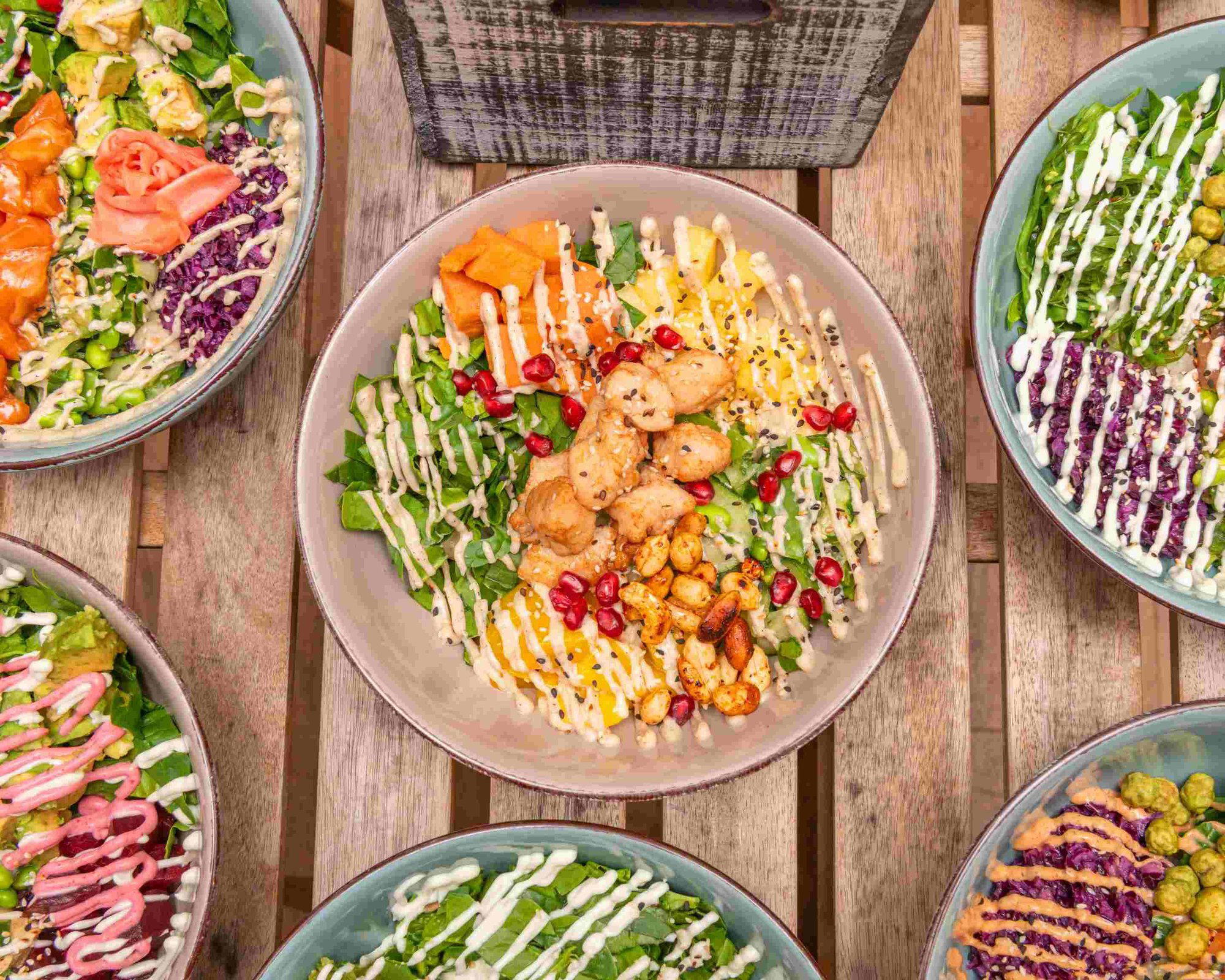
The poke bowl format itself arrived in European cities in earnest around 2016 and 2017, riding the same wave that brought acai bowls and grain-based builds to city-centre lunch counters from London to Berlin. Hamburg adopted the format with particular speed, partly because its port-facing food culture has historically been receptive to Pacific and East Asian produce logic, and partly because its white-collar workforce wanted lighter, customisable alternatives to the schnitzel and pasta that dominated the older lunch infrastructure. By 2024, the format is mature enough in Hamburg that differentiation now happens at the ingredient level — sourcing of fish, rice preparation, and sauce depth — rather than at the concept level.
The Bowl Format and What It Signals About the Scene
Poke, in its Hawaiian source form, is a marinated raw fish preparation with close technical relatives in Japanese sashimi and Korean hoe. The bowl format that European casual concepts use is a westernised expansion of that base, adding rice, greens, and built-up toppings in a manner closer to a grain bowl than to traditional poke. This distinction matters because it defines the quality ceiling: a well-executed Hawaiian-style poke counter prioritises the fish's texture and marinade balance above everything else, while a generic bowl concept can mask mediocre fish behind aggressive saucing and volume. The Hamburg market, like Berlin's, has seen both types, and the sharper operators have moved toward clearer fish sourcing as a differentiator.
For context on where the casual mid-market sits relative to Hamburg's higher tiers: 100/200 Kitchen and bianc represent the city's modern Mediterranean and creative registers at €€€€ price points, while Lakeside anchors the German lakeside category at a similar bracket. Tiki Poke Bowl operates several price tiers below all of these, in the segment where the decision is made quickly and the format carries most of the persuasion.
Hohe Bleichen: What the Address Says
Hohe Bleichen is one of Hamburg's commercial connectors, running between the Jungfernstieg and the Gänsemarkt area. The street is dense with retail, office towers, and the kind of mid-format dining that serves the lunch window rather than the evening reservation. A venue at this address is playing to volume and frequency rather than to occasion dining. That isn't a criticism, it's a structural observation about what the location demands. The Hamburg casual dining operators who perform well on streets like Hohe Bleichen tend to do so through speed of service, a customisable format that removes friction from the ordering decision, and a price point that sits below the threshold where diners feel they need to deliberate.
Germany's broader casual bowl market has consolidated around a handful of formats, with poke leading over acai and smoothie-heavy concepts in the lunch-hour segment. Hamburg's position as Germany's second-largest city, with a strong service-sector workforce and above-average disposable income, makes it one of the more competitive markets for this format. Concepts that perform here often translate to other German cities, and several Hamburg-originated casual formats have expanded to Berlin, Munich, and Frankfurt in recent years.
Considering the Drink Question
The editorial angle of cellar depth and wine curation, the framework that defines EP Club's coverage of serious dining rooms at venues like Aqua in Wolfsburg, JAN in Munich, or Schwarzwaldstube in Baiersbronn, does not translate directly to the fast-casual bowl format. In these rooms, and at destination-level venues such as Vendôme in Bergisch Gladbach or Victor's Fine Dining by Christian Bau in Perl, the wine program functions as a co-equal part of the experience, with sommelier curation shaping the evening's arc as much as the kitchen does. At a counter-service poke concept, the beverage question is simpler and more functional: cold-pressed juices, kombucha, and soft drinks dominate the category, sometimes supplemented by canned craft beer. Wine is essentially absent from this format, which is a logical outcome of the food's profile, the bright acidity and soy-forward marinades of poke bowls compress the wine pairing space considerably, and the grab-and-go tempo makes a wine list operationally redundant.
This contrast is not unique to Hamburg. Across Germany's casual dining segment, from CODA Dessert Dining in Berlin to the more approachable mid-tier, the drink program reflects the format's pace and the diner's intention. At ES:SENZ in Grassau or Waldhotel Sonnora in Dreis, the cellar is a statement of intent; at a lunch-hour bowl counter, the cold beverage alongside the bowl is simply a practical complement.
Hamburg in the Broader German and International Bowl Market
German cities have tracked global casual dining trends with a shorter lag than was typical a generation ago. The poke format that launched at counters in New York, Honolulu, and Sydney has found durable traction in Hamburg's lunch market, partly because the city's food media and its well-travelled professional demographic accelerated adoption. For readers who follow poke's trajectory from its source: venues like Le Bernardin in New York City represent the formal end of raw fish preparation, while Atomix in New York City shows how Korean raw fish traditions have been refined into a tasting menu context. Tiki Poke Bowl sits in a entirely different register, serving the demand for accessible raw fish builds at speed and at a price point that makes daily or weekly visits viable for the lunch market.
For anyone mapping Hamburg's full dining range, the EP Club full Hamburg restaurants guide covers the city from tasting-menu level through to the casual mid-market, including the credentials and booking intelligence needed to plan across price tiers. The contrast between Hamburg's Michelin-decorated rooms and its fast-casual segment is, in its own way, a useful portrait of how Germany's second city eats in 2024: seriously at the leading end, efficiently in the middle, and with an increasingly global pantry at both levels.
Planning Your Visit
| Venue | Format | Price Tier | Booking Required |
|---|---|---|---|
| Tiki Poke Bowl | Fast-casual bowl counter | €–€€ | No |
| The Table Kevin Fehling | Creative tasting menu | €€€€ | Weeks to months ahead |
| bianc | Modern Mediterranean | €€€€ | Advance booking advised |
| Lakeside | German lakeside dining | €€€€ | Advance booking advised |
Common Questions About Tiki Poke Bowl
- What's the must-try dish at Tiki Poke Bowl?
- As a general rule across Hamburg's poke bowl segment, the salmon-based builds with soy-sesame marinade are the format's anchor dish. Cross-reference the menu board on arrival for current options.
- How far ahead should I plan for Tiki Poke Bowl?
- The fast-casual counter format at Hohe Bleichen does not require advance booking. Walk-in access is standard for this price tier in Hamburg's casual mid-market, distinguishing it clearly from the city's fine-dining rooms where lead times of several weeks are common.
- What's the signature at Tiki Poke Bowl?
- Within the poke bowl category in Hamburg and across Germany, the defining signature of better-performing concepts tends to be the freshness and marinade depth of the raw fish base rather than any single build.
- Is Tiki Poke Bowl allergy-friendly?
- Poke bowl formats structurally offer some flexibility through customisable builds, but for specific allergy requirements in Hamburg, direct contact with the venue at Hohe Bleichen 12 is the appropriate step. No phone or website is confirmed in available data.
- Does Tiki Poke Bowl in Hamburg suit solo diners at the lunch counter?
- The fast-casual counter format at Hohe Bleichen 12 is structurally well-suited to solo dining, which is a consistent feature of the poke bowl category across Hamburg's commercial district. The walk-in, order-at-counter model removes the social friction that can make solo visits to table-service restaurants feel awkward, and the relatively compact portion format keeps the meal within a workday lunch window. For Hamburg solo dining at the fine-dining end of the spectrum, the city's counter-seat tasting menus at venues like Schanz in Piesport or Bagatelle in Trier offer a different register of the same solo-diner logic.
Frequently asked questions
Where is Tiki Poke Bowl located?
Tiki Poke Bowl is located at Hohe Bleichen 12, 20354 Hamburg, Germany, Hamburg.
Is Tiki Poke Bowl a good lunch option near Hamburg's Jungfernstieg shopping district?
Hohe Bleichen 12 sits in the commercial corridor connecting Jungfernstieg and Gänsemarkt, placing Tiki Poke Bowl squarely within walking distance of Hamburg's central retail and office concentration. The poke bowl format — fast assembly, portable, no table-service delay — fits the rhythm of a midday break in that part of the city.
What's the must-try dish at Tiki Poke Bowl?
Poke counters at this address format typically anchor their menu around marinated raw fish bases — a format with roots in Hawaiian preparation and close parallels to Japanese sashimi. Check current offerings directly at Hohe Bleichen 12 when you visit.
How far ahead should I plan for Tiki Poke Bowl?
Tiki Poke Bowl operates in the casual counter format typical of Hamburg's inner-city lunch trade around Hohe Bleichen, where walk-in service is the norm rather than advance reservation. Peak lunch hours near the Jungfernstieg commercial corridor tend to draw office crowds, so arriving slightly off-peak is a practical approach.
What's the signature at Tiki Poke Bowl?
The venue's name positions the Hawaiian poke bowl as its core format — a build-your-own or curated bowl centred on marinated raw fish, a preparation that sits at the intersection of Hawaiian, Japanese, and Korean traditions. Hamburg's casual dining scene absorbed this format as part of a broader European poke expansion in the 2010s.
Is Tiki Poke Bowl allergy-friendly?
No allergen or dietary accommodation data is recorded for Tiki Poke Bowl in Hamburg. Poke bowls structurally involve raw fish, soy-based marinades, and sesame — all common allergen triggers — so guests with specific requirements should contact the venue at Hohe Bleichen 12 directly before visiting.
Same-City Peers
Comparable venues nearby, for context on price, style, and recognition.
| Venue | Cuisine | Price | Awards | Notes |
|---|---|---|---|---|
| Tiki Poke BowlThis venue — the venue you are viewing | Hawaiian Poke Bowls | $10–20 | Not listed | Not listed |
| Bullerei | Modern German Grillhouse | $30–50 | Michelin Plate | Sternschanze |
| Kokomo Noodle Club | Authentic Japanese Ramen | $30–50 | Not listed | St. Pauli |
| Chingu St. Pauli | Korean Hotpot & Grill with Karaoke | $10–20 | Not listed | St. Pauli |
| Pizza Puro | Authentic Neapolitan Pizza | $20–30 | Not listed | Neu Lokstedt |
| Spaccaforno | Authentic Neapolitan Pizza | $20–30 | Not listed | Barmbek |