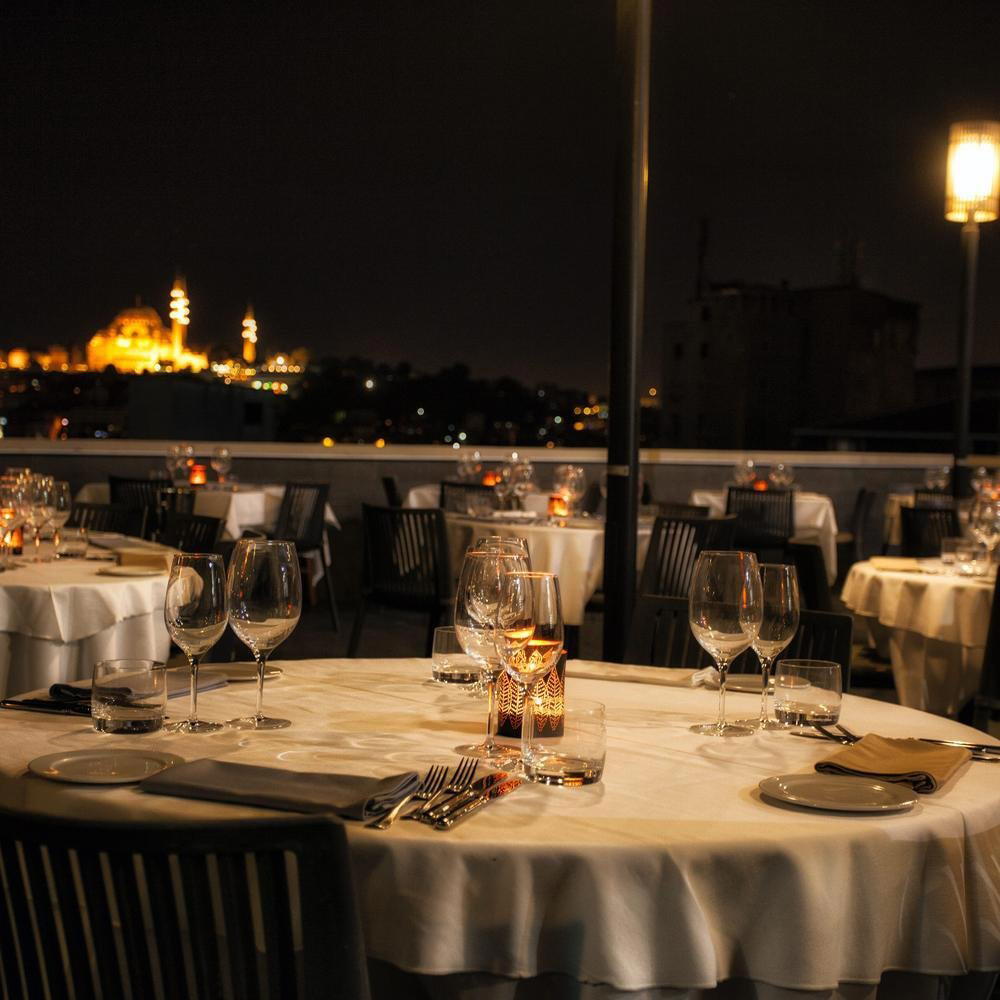
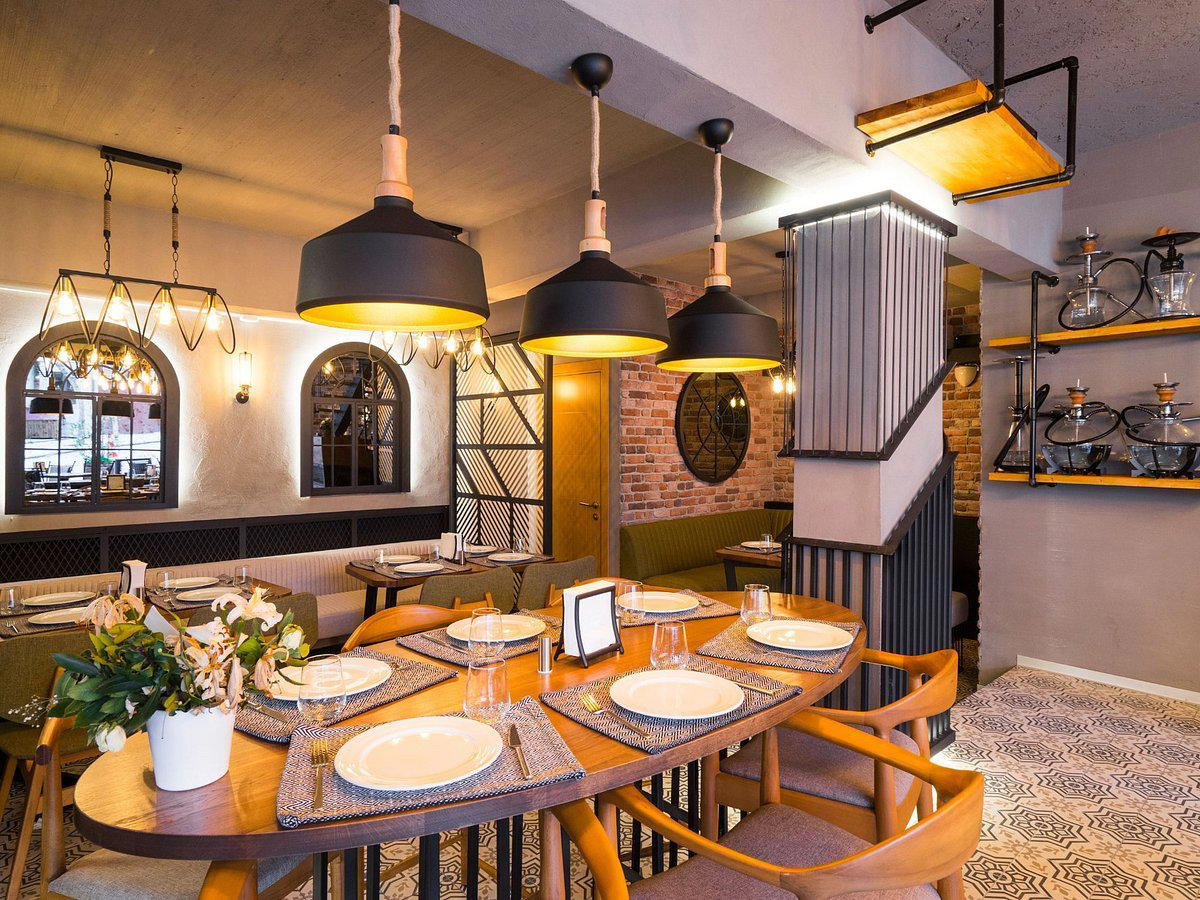
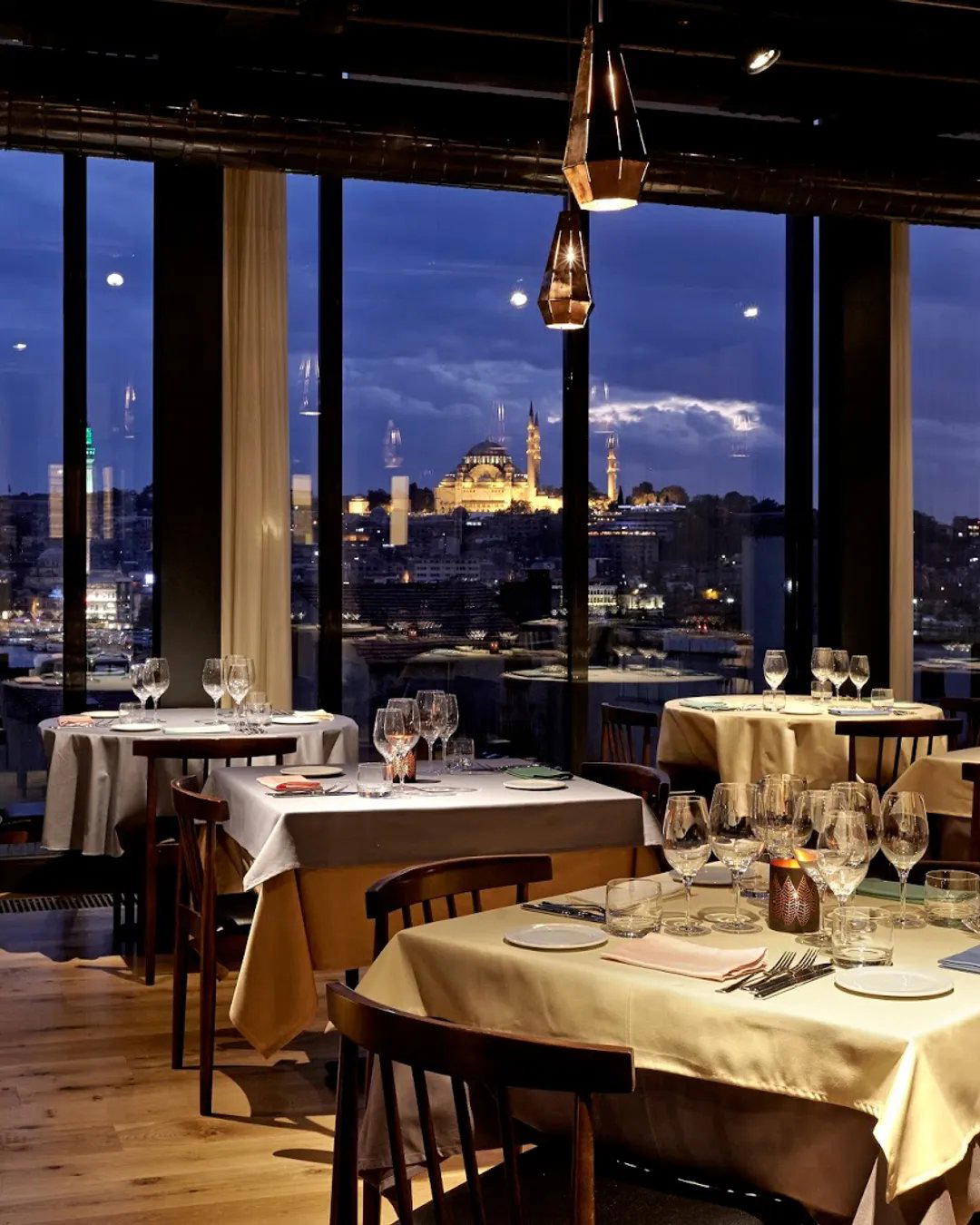
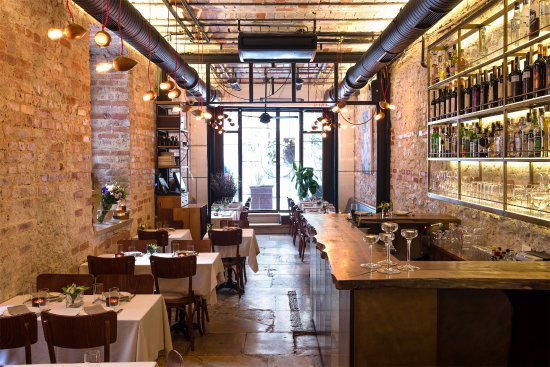
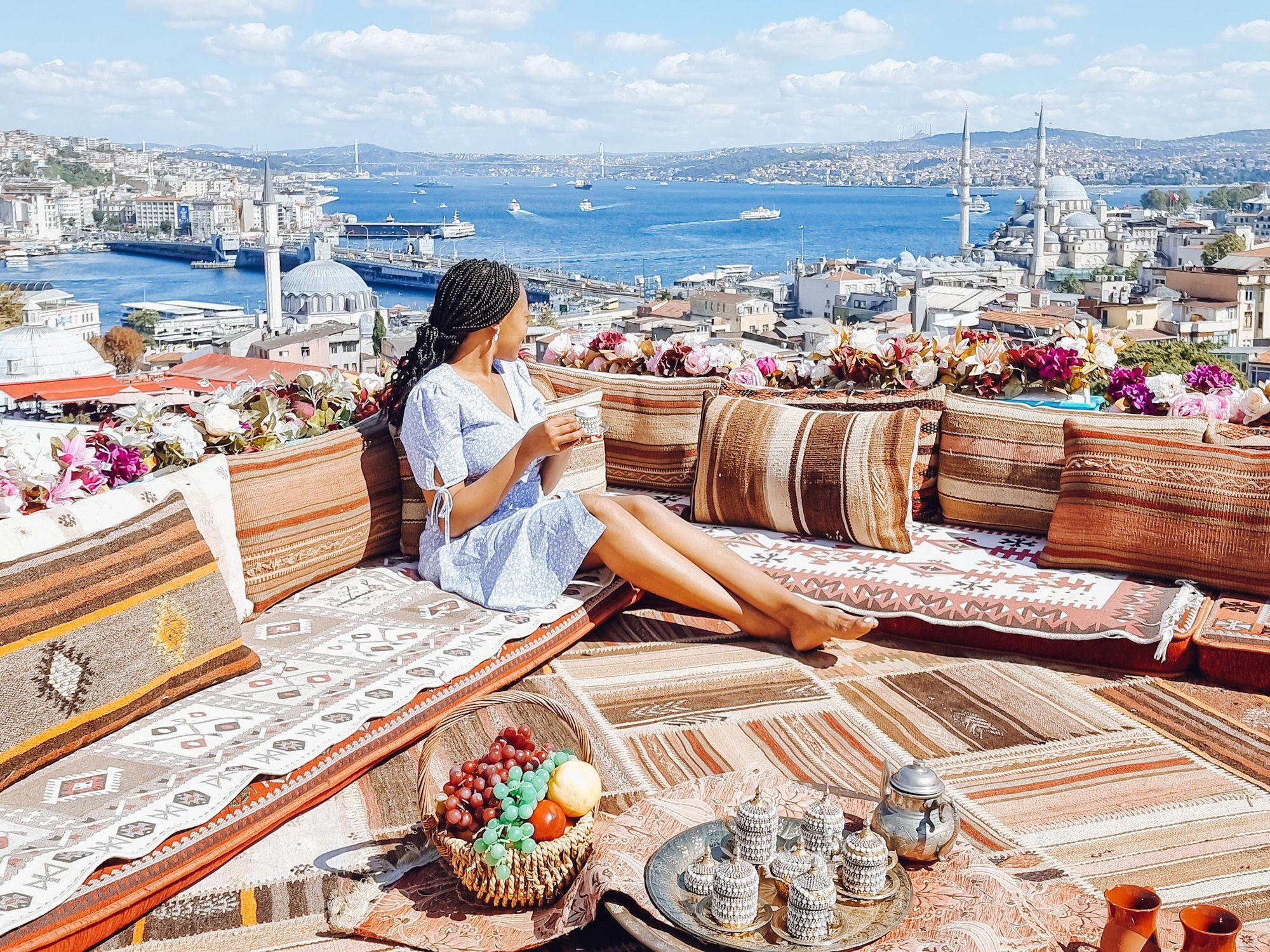
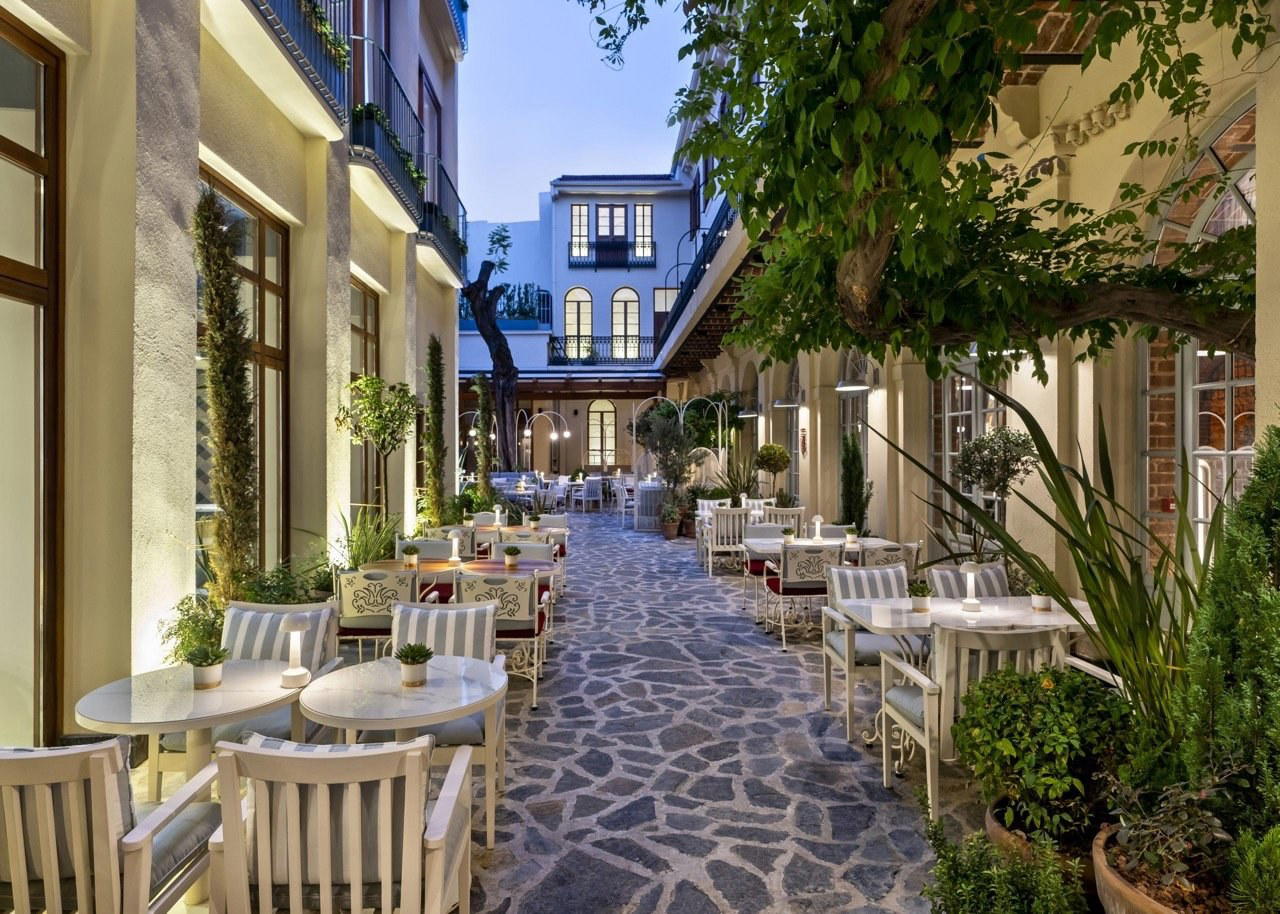
"Intimate Dining and Friendly Service Rumeli Cafe is an ideal location for dining while people-watching from the streetside terrace in the bustling Sultanahmet neighborhood. Summertime sees the opening of a rooftop dining area, where guests can gaze at the stars and glimpse at the minarets of the Blue Mosque. When the weather chills in winter, the allure of the restaurant moves inside, where the gentle crackling of open fireplaces invite guests to stay a while to appreciate a glass of mulled wine paired with a rich Ottoman dish. Set in a former Ottoman print house, the restaurant has become one of Sultanahmet’s most loved thanks to its friendly service and intimate dining areas with dark wood floors, wrought iron fixtures, and exposed red brick walls, an atmosphere reminiscent of dining in a foregone Byzantine palace. Personal favorites are the grilled marinated calamari, the Ottoman-style Marmara A’la Rosto (roast beef with rice and vegetables), and the seafood linguini. Also on the menu are regional specialities such as Ali Nazik (minced lamb and beef on a bed of pureed eggplant and yogurt); Byzantine dishes like Papaz Yahnisi (stewed lamb and vegetable served with cumin and garlic in a terracotta pot); fresh seafood including sea bass, sea bream, and jumbo shrimp; and vegetarian options."
Pearl is the En Primeur Club membership app — saves, bookings, and concierge access live there. Same editors, same standards.
- Address
- Alemdar, Ticarethane Sk. No:8, 34110 Fatih/İstanbul, Türkiye
- Directions
- Get directions
 Saves & bookings on Pearl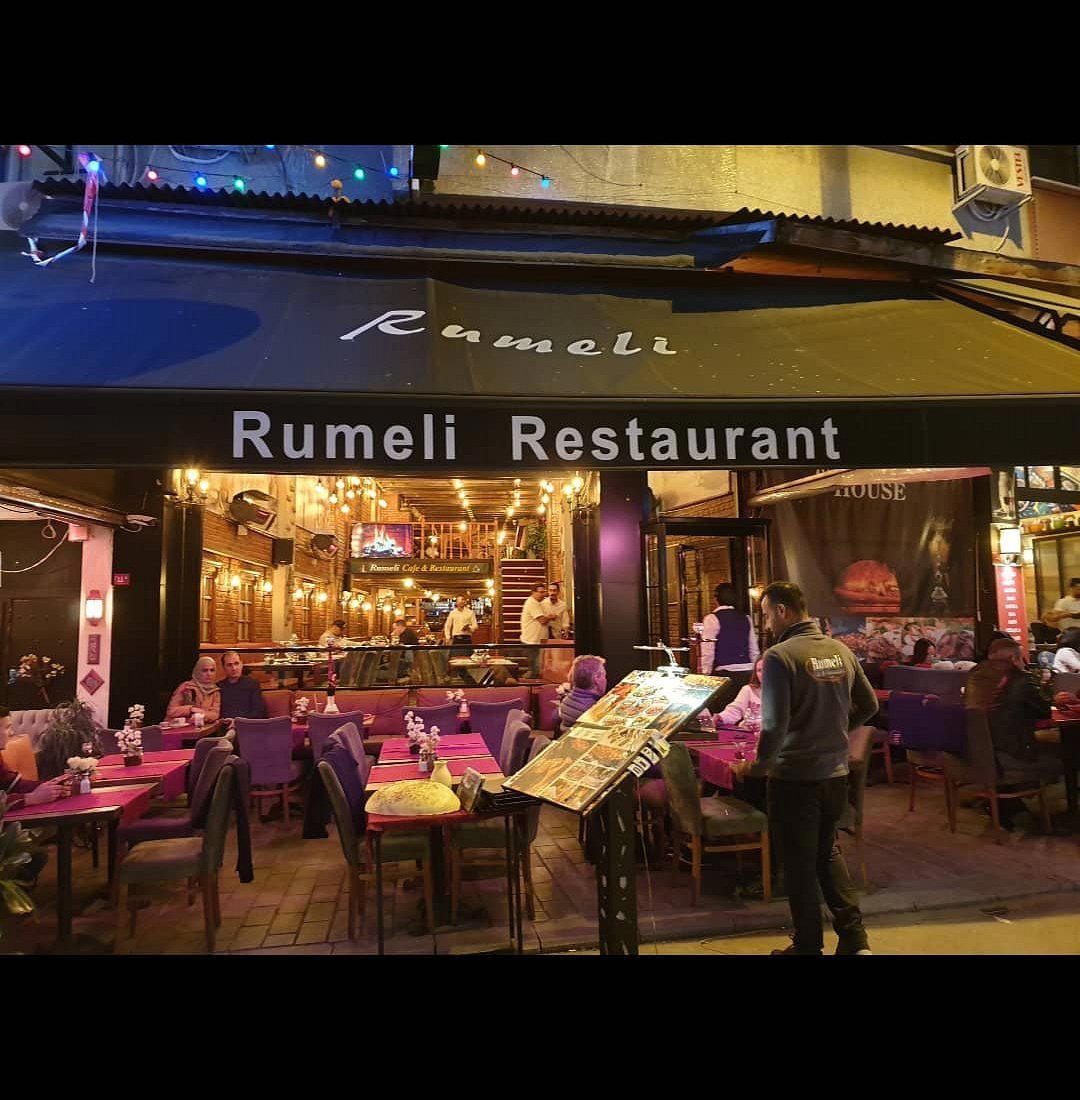
A Street Address in the Heart of Fatih
Ticarethane Sokak No:8 is a restaurant in Alemdar, Fatih, Istanbul, serving Turkish with International Flair at a price tier of about $20 per person. Ticarethane Sokak cuts through the Alemdar quarter of Fatih, one of Istanbul's oldest and most historically dense districts. The street sits within walking distance of the Archaeological Museum complex and the outer walls of Topkapi Palace, placing any address here inside a neighbourhood where Byzantine foundations still surface beneath Ottoman-era stone. In a city where dining context is inseparable from physical setting, the geography of Fatih carries weight: this is not the European-styled Beyoglu strip, nor the Bosphorus-facing terraces that define aspirational Istanbul dining for international visitors. Fatih operates on its own register, rooted in local custom rather than tourist traffic.
Istanbul's dining scene has increasingly bifurcated between the internationally oriented fine-dining tier, where operators like Turk Fatih Tutak, Mikla, and Neolokal position Modern Turkish cuisine against global reference points, and a more deeply local tier where the dining ritual is shaped by neighbourhood habit rather than destination-restaurant logic. Ticarethane Sokak No:8 sits in that second category by geography if not necessarily by format, and understanding that distinction matters when deciding how to approach it.
The Fatih Dining Ritual and What It Asks of You
Eating in Fatih demands a different pace than eating in Beyoglu or Nisantasi. The neighbourhood's meyhane and lokanta tradition assumes time: dishes arrive when they are ready, tea follows as a matter of course, and the expectation that you will be moving on to another venue within ninety minutes does not apply here. This is the kind of district where a meal is structured around conversation as much as food, where the rhythm of the table is set by the kitchen rather than by a reservation window. Visitors accustomed to the choreographed sequencing of Istanbul's upper-tier tasting menus at venues like Arkestra or Casa Lavanda will find Fatih operates on a different contract with its guests.
That contract is worth understanding before you arrive. In a lokanta-style setting in this part of the city, the protocol is typically self-directed: you may be expected to approach a display of prepared dishes, point to what you want, and carry the logic of the meal yourself rather than waiting for a server to guide you through courses. Dress code in this context is irrelevant in any formal sense. The neighbourhood is socially conservative by Istanbul standards, and modest, unfussy clothing is simply appropriate rather than prescribed. These are not rules specific to any single address on Ticarethane Sokak; they are the working customs of the district.
What the Address Tells You About the Category
The specific address Ticarethane Sokak No:8, Alemdar, Fatih places this venue within a cluster of streets that serve the administrative and institutional population of the area as much as any tourist circuit. Lunch trade in this part of Fatih skews toward working locals, government employees from nearby offices, and visitors to the museum complex. That daytime rhythm influences what kitchens in the area tend to prioritise: speed of service, value at the table, and the kind of straightforwardly Turkish cooking, whether kebap, home-style stewed dishes, or soup, that constitutes a practical midday meal rather than an occasion.
Istanbul's broader dining geography offers useful comparison. The Bosphorus-focused seafood houses, such as Poyraz Sahil Balik Restaurant in Beykoz, operate on a weekend-destination model with a different guest base. The Aegean coast tradition, represented by venues like Narimor in Izmir or Mezegi in Fethiye, emphasises olive oil, herbs, and seasonal produce in ways that reflect that region's agricultural identity. Fatih's kitchens draw instead from Anatolian and Ottoman traditions: slow-cooked legumes, offal preparations, pilav variations, and bread served warm from the oven. The cooking is less about provenance storytelling and more about continuity of technique across generations.
For those travelling further through Turkey, this context helps calibrate expectations. The experiential register at a Cappadocian table, whether at Nahita Cappadocia in Nevsehir or Aravan Evi in Urgup, carries the same unhurried pace but with a landscape and ingredient logic specific to Central Anatolia. What connects them is a shared insistence that the meal is the event, not the prelude to one.
Planning Your Visit to Fatih
The Alemdar quarter is accessible on foot from the Sultanahmet tram stop on the T1 line, which runs from Kabatas through the historic peninsula. The walk from the tram to Ticarethane Sokak passes through among the more historically layered corridors in the city. Midday on a weekday is the period when Fatih's working lunch culture is most visible; evenings are quieter than the comparable hours in Beyoglu or Kadikoy. Walk-ins are common, though reservations are recommended. For coastal alternatives, Macakizi in Bodrum and Ahama in Gocek represent the Aegean summer dining mode that operates at the opposite end of the formality register. In Bodrum's Milas region, Agora Pansiyon offers a similarly rooted, non-touristy experience. Divia by Maksut Askar in Marmaris and Kokorecci Asim Usta in Bornova each show how regional Turkish dining identity reasserts itself outside the major city centres.
Booking and Cost Snapshot
Comparable venues nearby, for context on price, style, and recognition.
| Venue | Cuisine | Price | Notes |
|---|---|---|---|
| Ticarethane Sk. No:8This venue — the venue you are viewing | Not listed | $$ | Not listed |
| Fuego Cafe & Restaurant | Not listed | $$ | Alemdar, Traditional Turkish & Ottoman Cuisine |
| Makarna Sariyi | Molla Fenari, Turkish Pasta House | $$ | Not listed |
| Dürümcü Musa Usta Taşoluk | Arnavutköy, Turkish Dürüm and Kebap | $$ | Not listed |
| Adana Ocakbaşı | Not listed | $$ | Pangaltı, Traditional Turkish Adana Kebab Grill |
| Las Tapas fish and kebap Restaurant | Alemdar, Turkish Fish & Kebap | $$ | Not listed |

At a Glance
- Cozy
- Classic
- Scenic
- Late Night
- Historic Building
- Terrace
- Street Scene
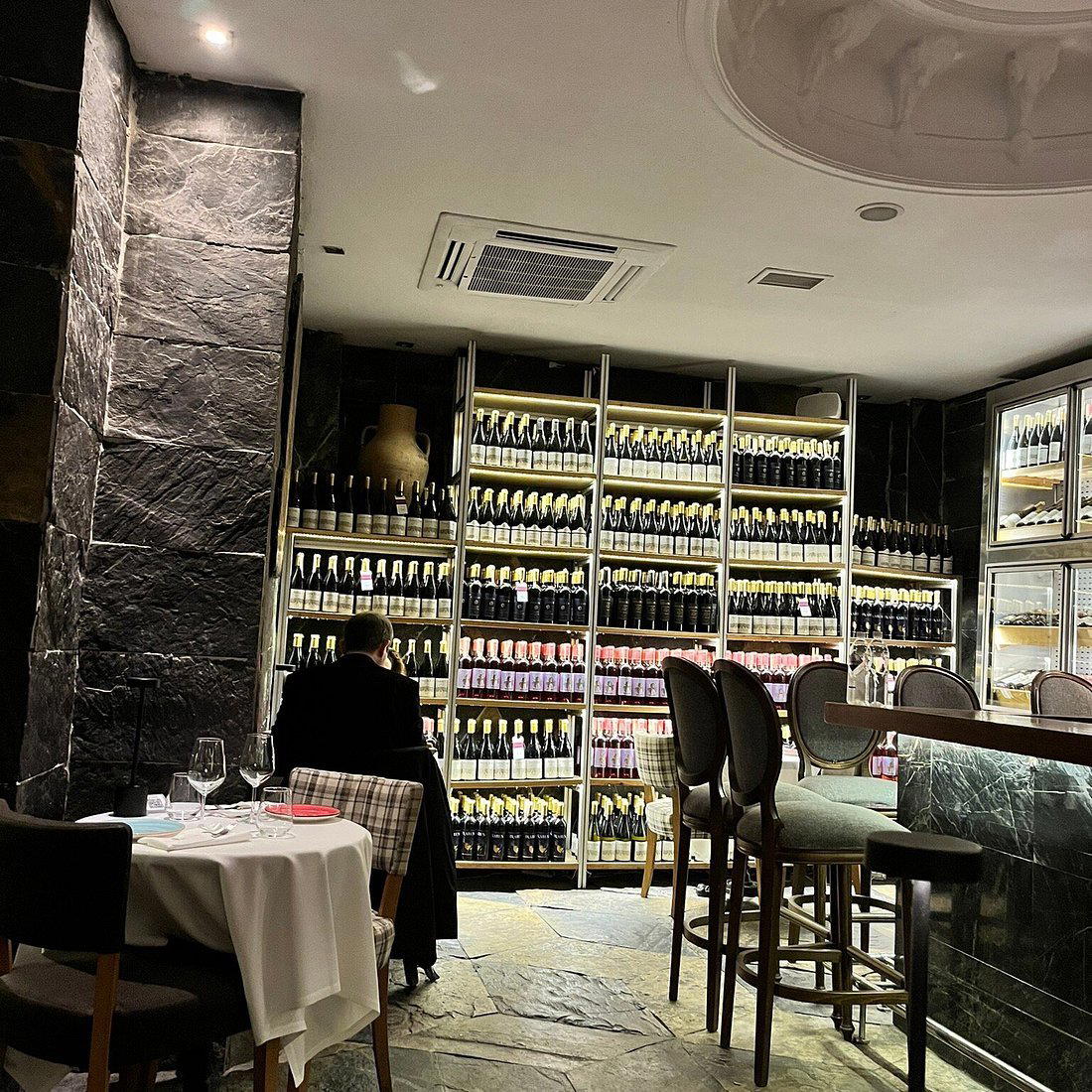
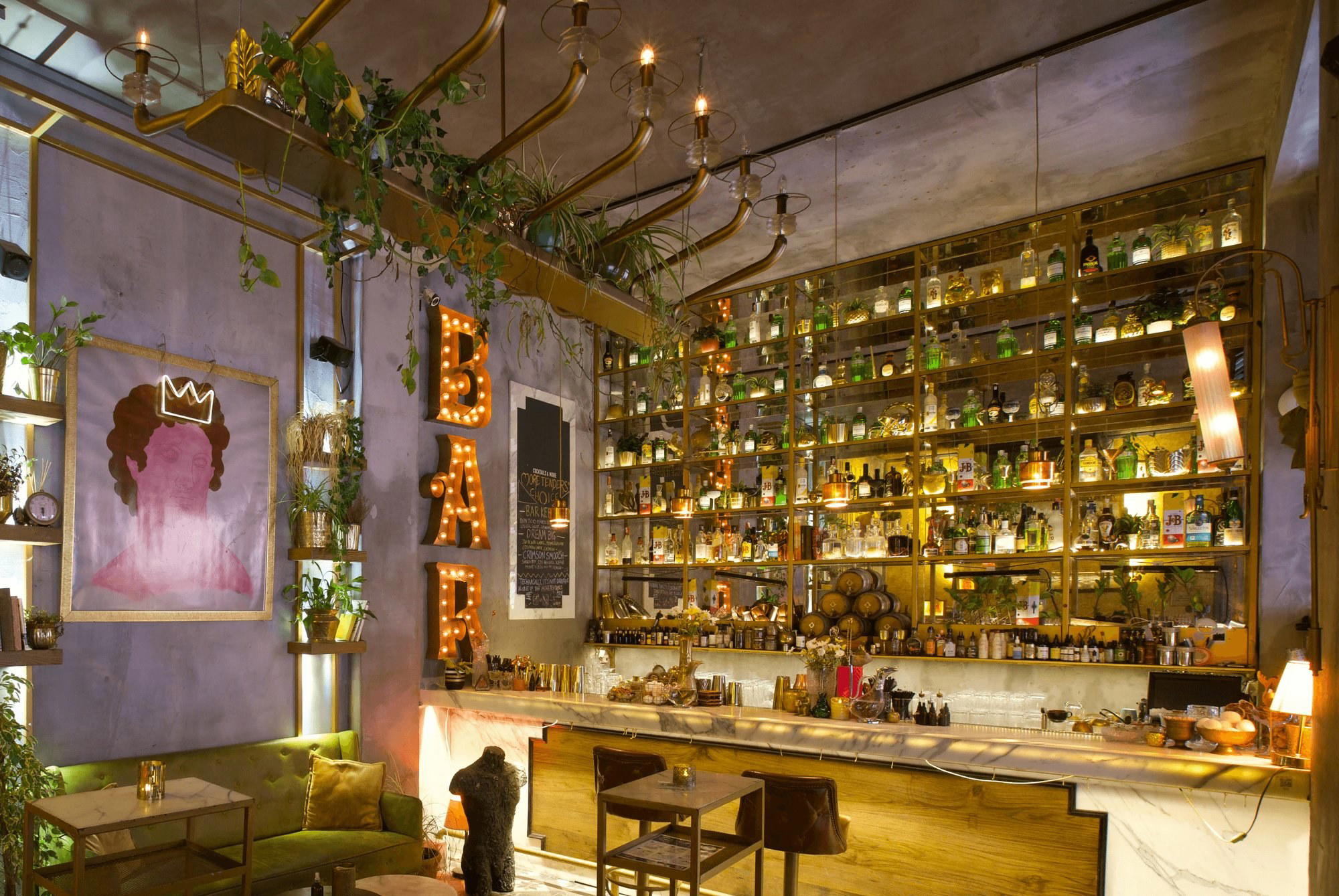
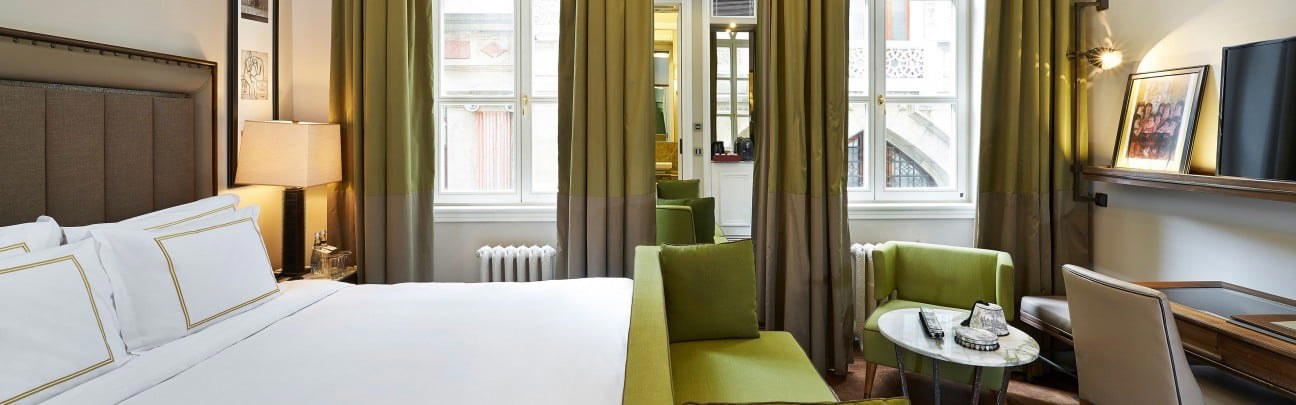
Cozy atmosphere with open fireplaces in winter, great for people watching on comfortable evenings, and American music in the background.