


1 Michelin Star · Gault & Millau Türkiye 3 Toques · The Best Chef One Knife
Our verdict
Arkestra holds a Michelin star (2024) in Etiler's villa-dining tier, where chef Cenk Debensason runs a fusion menu shaped by French training and American experience. The 1960s villa setting includes a dedicated Listening Room upstairs and Ritmo, a separate mezze space in the same building. Open Tuesday through Saturday from 6 PM, closed Sunday and Monday.

Pearl is the En Primeur Club membership app, where members save venues, book tables and use the concierge.
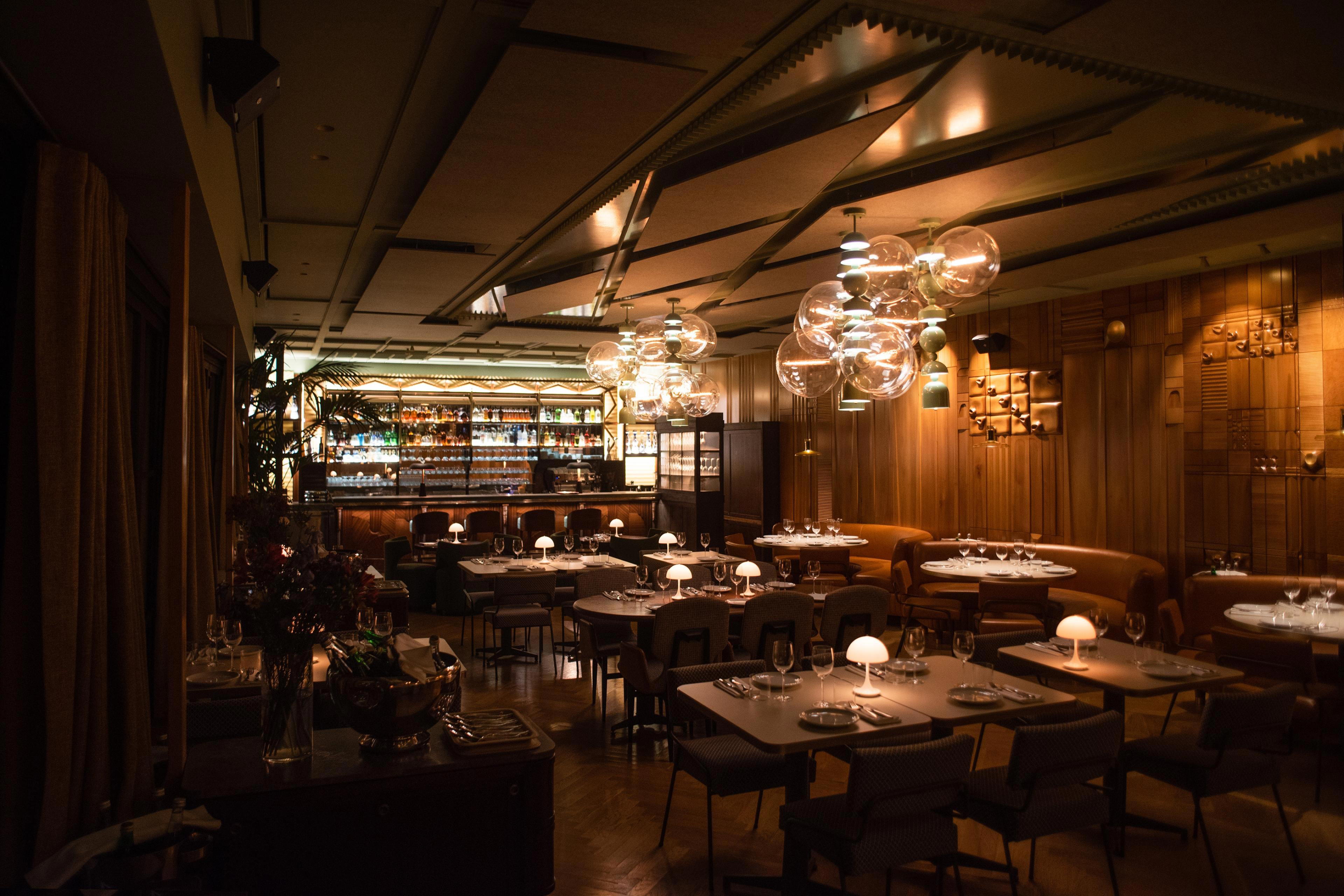
A Villa With Ambitions Beyond Its Postcode
The address in Etiler places Arkestra inside one of Istanbul's more residential dining pockets, away from the Bosphorus-view spectacle that defines the city's premium restaurant identity. The 1960s villa on Dilhayat Sokak reads, from the outside, like a private home that never quite abandoned its social ambitions. Inside, the period architecture carries a warmth that contemporary restaurant fit-outs rarely achieve: proportioned rooms, surfaces that hold light differently at different hours, and a physical separation between spaces that allows the building to hold more than one mood simultaneously.
That last point matters more at Arkestra than the address. The venue operates across distinct zones: a main dining room where the kitchen's fusion programme runs in full, a Listening Room on the upper floor for drinks paired with a carefully assembled playlist, and Ritmo, a more informal space in the same building where a small mezze menu anchors the offer. The result is a building that functions as an evening destination rather than a single-sitting restaurant, and that structural decision shapes how a visit here differs from Istanbul's other starred tables.
Where Arkestra Sits in Istanbul's Michelin Tier
Istanbul's Michelin-starred cohort spans two clearly defined registers. At the leading, Turk Fatih Tutak holds two stars and operates as the reference point for modern Turkish fine dining at its most technically rigorous. The single-star tier includes venues with distinct competitive identities: Mikla leads on Nordic-Anatolian crossover; Neolokal anchors itself in Anatolian ingredient research; Nicole has sustained a modern Turkish identity across seasons. Arkestra's 2024 Michelin star positions it within that single-star tier, but with a different orientation: the menu here is explicitly fusion, drawing on European classical technique and Asian flavour references rather than positioning Turkish cuisine as its organising principle.
That distinction is not merely curatorial. In a city where the most celebrated tables have increasingly committed to Turkish ingredient provenance and national culinary identity, a kitchen trained in France and shaped by time in the United States occupies a deliberate counterposition. Arkestra earns its star within the fusion category, a tier where Istanbul's Michelin footprint remains smaller, giving the restaurant a different competitive set than its address-peers at Casa Lavanda.
The Architecture of the Meal
Chef Cenk Debensason trained in France and developed his kitchen practice in the United States before returning to Istanbul, and the menu reflects that specific itinerary rather than a generic international sensibility. French classical technique appears as structural scaffolding: the vol-au-vent format, gribiche sauce, and precise vegetable cookery that characterises that tradition. But the flavour references move laterally into Asian registers, with Thai sweet-sour complexity deployed against seared fish, producing a tension between method and seasoning that defines the kitchen's signature register.
The progression across courses at Arkestra is calibrated to make that tension audible rather than smooth it over. Early courses tend to foreground the European classical foundation: clean lines, controlled acidity, technique on display. As the meal moves forward, the Asian flavour references accumulate in intensity, so the diner's frame of reference shifts without any single dish announcing a dramatic departure. This is a meaningful structural choice. Many fusion menus alternate between influences course by course, producing a kind of cuisine-hopping effect. The approach here is closer to gradual modulation, where the meal's arc reads as a coherent argument rather than a tasting sampler.
The green asparagus preparation described in documentation, with al dente texture and gribiche sauce carrying a spiced edge, illustrates the kitchen's method at a dish level: a French classical form carrying unexpected heat, the contrast doing the work that garnish or plating often perform elsewhere. The sea bass with Thai-inflected sauce operates similarly, placing a precisely seared piece of fish inside a sauce vocabulary that belongs to a different culinary tradition entirely. The dish works because the technique underpinning both elements is controlled to the same standard; neither component defers to the other.
The Listening Room and Ritmo: Using the Building Correctly
In Istanbul's premium dining tier, most venues treat their physical footprint as a backdrop for a single service format. Arkestra uses its villa across multiple registers, and understanding how to sequence the building is part of reading the visit correctly.
The Listening Room on the upper floor operates as a drinks space anchored by a music programme, with occasional DJ sets adding a live element. It functions well as a pre- or post-dinner destination within the same building, allowing the evening to extend without relocating. The playlist, assembled by the kitchen team, links the culinary and musical curatorial sensibilities into a single authorial voice across the venue, a detail that sounds programmatic in description but reads more naturally in practice.
Ritmo, the atmospheric space also within the villa, runs a smaller mezze format that allows entry to the building's register without committing to the full dining programme. For repeat visitors, or for those whose evening schedule doesn't fit a multi-course sitting, Ritmo provides a separate point of access to the same address. The mezze format in this context references Istanbul's broader tradition of grazing-centred social eating, placing it adjacent to but distinct from the main kitchen's European-Asian fusion programme.
Fusion Beyond Istanbul: The Wider Category
For readers tracking fusion at a serious level across European and Mediterranean destinations, the category's credentialled tier extends beyond Turkey. Ajonegro in Logroño and Couleurs de Shimatani in La Ciotat represent different national expressions of a similar impulse: classical European training redirected through non-European flavour references. Arkestra belongs in that peer conversation more naturally than it fits inside Istanbul's modern-Turkish-centric fine dining narrative.
Within Turkey, the regional spread of credentialled cooking continues to develop. Kitchen by Osman Sezener in Bodrum, Narımor in Izmir, and 7 Mehmet in Antalya each represent distinct regional traditions operating at a serious level. Agora Pansiyon in Milas, Ahãma in Göcek, and Aravan Evi in Ürgüp extend that picture into smaller cities and towns where ingredient-led cooking has found an audience outside the major urban centres.
Planning the Visit
Arkestra opens Monday through Saturday from 6 PM, closing at 1 AM, and is closed on Sundays. The Etiler address in the Beşiktaş district places the restaurant away from the tourist-facing waterfront, making a taxi or rideshare the practical arrival method for most visitors. The ₺₺₺₺ price positioning aligns with Istanbul's wider starred-restaurant tier, where per-head costs at dinner with wine are consistent across the single-star cohort. For a broader view of what else Istanbul's dining scene offers at this level, see our full Istanbul restaurants guide. The city's hospitality offer beyond the table is covered in our Istanbul hotels guide, Istanbul bars guide, Istanbul wineries guide, and Istanbul experiences guide.
Frequently asked questions
What are Arkestra's hours?
Hours at Arkestra: Monday 6 PM-1 AM Tuesday 6 PM-1 AM Wednesday 6 PM-1 AM Thursday 6 PM-1 AM Friday 6 PM-1 AM Saturday 6 PM-1 AM Sunday closed.
Where exactly is Arkestra?
Arkestra is located at Etiler, Dilhayat Sk. No:28, 34337 Beşiktaş/İstanbul, Türkiye, Istanbul.
Price and Recognition
| Venue | Cuisine | Price | Awards | Notes |
|---|---|---|---|---|
| ArkestraThis venue (the venue you are viewing) | Modern European with Global Influences | $100–150 | 1 Michelin Star · Gault & Millau Türkiye 3 Toques | Not listed |
| Turk Fatih Tutak | Modern Turkish Fine Dining | $200–300 | 2 Michelin Stars · World's 50 Best #66 | Modern Turkish, ₺₺₺₺ |
| Mikla | New Anatolian Kitchen | $100–150 | 1 Michelin Star · World's 50 Best #44 | Modern Turkish, Mediterranean Cuisine, ₺₺₺₺ |
| Neolokal | Modern Turkish Fine Dining | $200–300 | 1 Michelin Star · World's 50 Best #100 | Modern Turkish, Turkish, ₺₺₺₺ |
| Nicole | Contemporary Turkish Fine Dining | $150–200 | 1 Michelin Star · Gault & Millau Türkiye 3 Toques | Modern Turkish, Modern Cuisine, ₺₺₺₺ |
| Spago Istanbul | Modern International with Italian, Californian & Asian Influences | $100–150 | Michelin Plate · World's 50 Best #35 | Californian, Californian - French, International, ₺₺₺ |
Recognition history
Dated appearances from independent guides and award organizations, with the underlying list record or original source where available.
Michelin 1 Star
Michelin
Gault & Millau Türkiye 3 Toques
Gault & Millau · Gault & Millau Türkiye 2026 - 3 Toques
The Best Chef One Knife
The Best Chef
Full recognition history (4 entries)
Michelin 1 Star
Michelin
Continue exploring
More in Istanbul
Restaurants in Istanbul
All restaurants in Istanbul →
Bars in Istanbul
All bars in Istanbul →
Details
- Elegant
- Modern
- Trendy
- Sophisticated
- Cozy
- Ornate
- Date Night
- Celebration
- Special Occasion
- Business Dinner
- Open Kitchen
- Courtyard
- Private Dining
- Craft Cocktails
- Tasting Menu
- A La Carte
- Small Plates
- Vegetarian Friendly
Current opening hours
- Monday
- 6 PM–1 AM
- Tuesday
- 6 PM–1 AM
- Wednesday
- 6 PM–1 AM
- Thursday
- 6 PM–1 AM
- Friday
- 6 PM–1 AM
- Saturday
- 6 PM–1 AM
- Sunday
- Closed
Hours can change for holidays and private events. Hours as of .
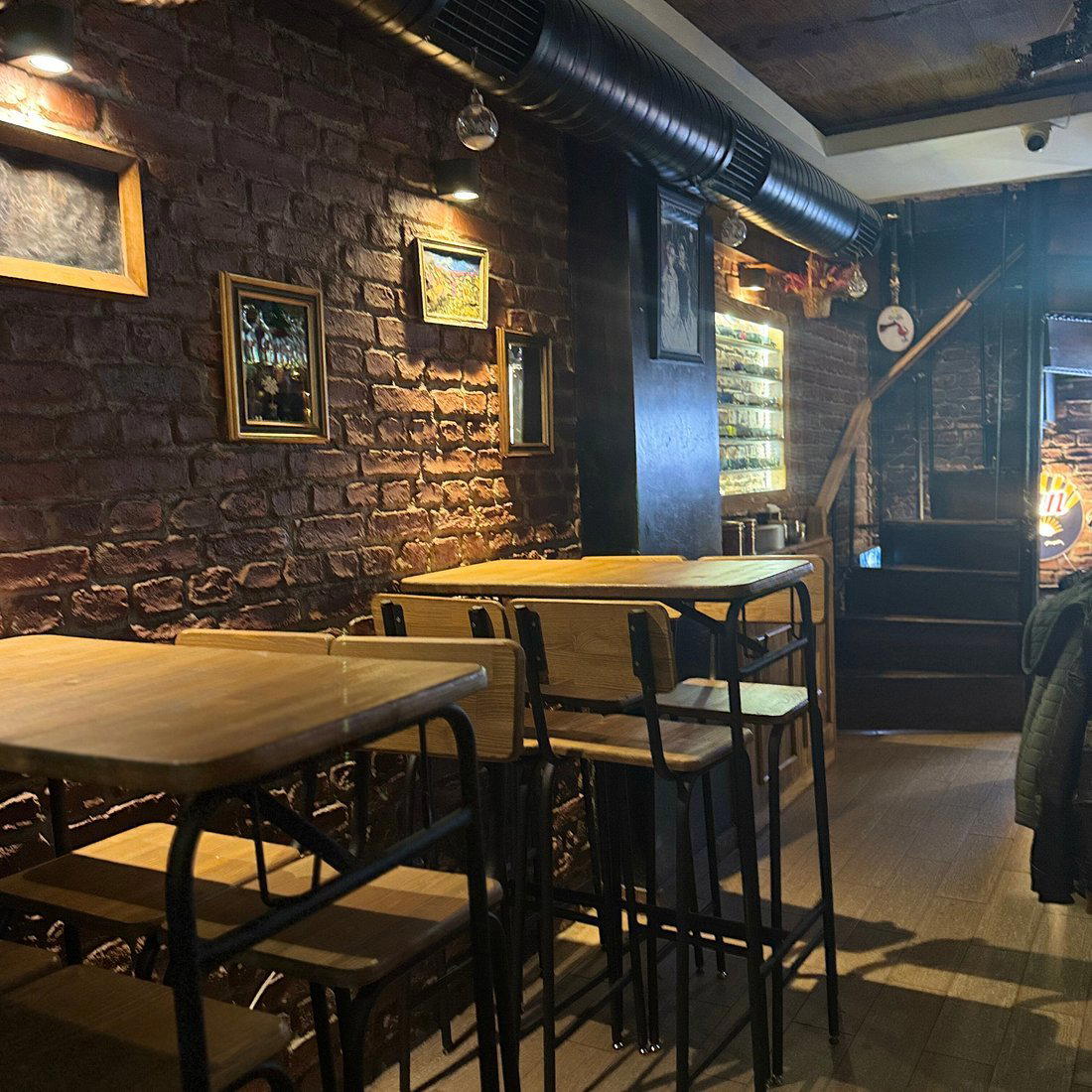
Relaxed opulence with wood-panelled walls, caramel-coloured leather booths, retrofuturist crystal chandeliers, and a warm welcoming atmosphere.