Our verdict
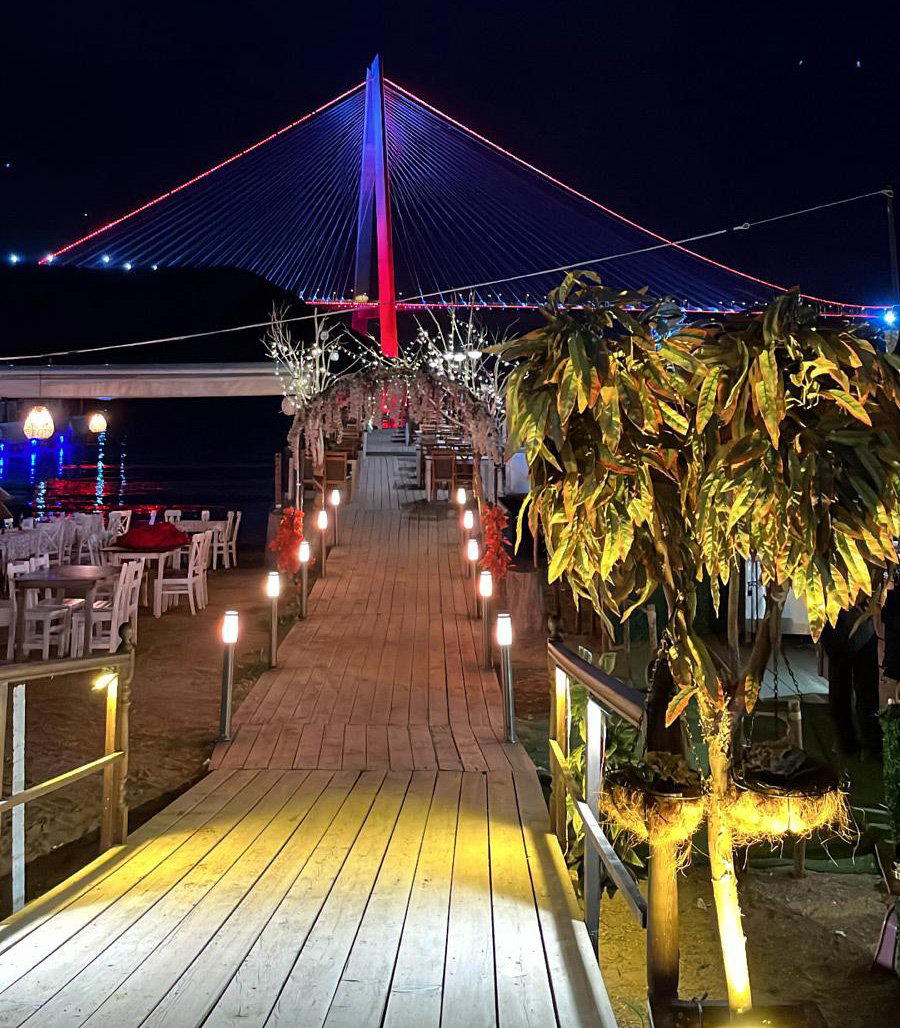
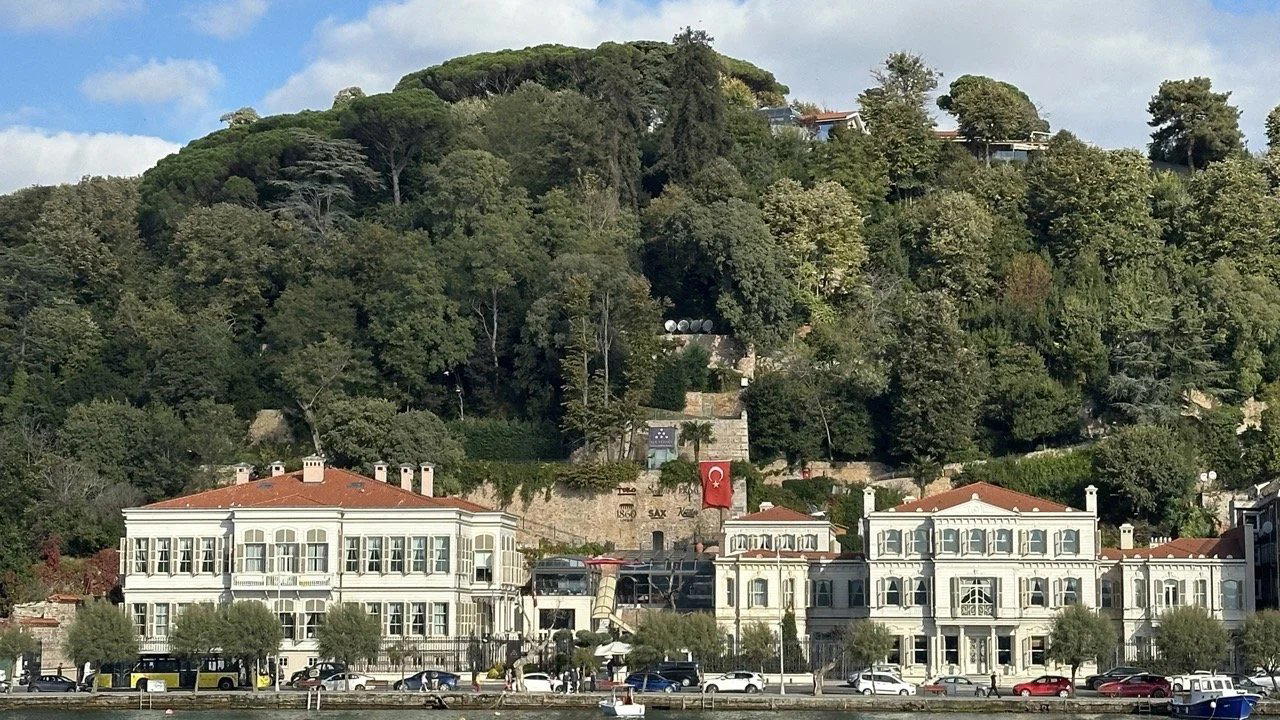
On the Bosphorus shore in Poyrazköy, one of Beykoz's most remote fishing villages, Poyraz Sahil Balık Restaurant operates in a tradition where the catch dictates the menu. The setting, open water on three sides, ferry access from the European shore, places sourcing at the centre of the experience. For Istanbul diners who treat the Asian side's upper coastal villages as a day-long excursion, this is a destination defined by proximity to the water rather than distance from the city.

Pearl is the En Primeur Club membership app, where members save venues, book tables and use the concierge.
The menu
What to order
- Tereyağlı İskorpit
- Seafood Platter
Where the Bosphorus Meets the Black Sea
The northern tip of the Bosphorus, where the strait opens into the Black Sea at Poyrazköy, operates on a different rhythm from Istanbul's more visited dining corridors. Reaching the village means committing to the journey: a road that follows the Asian shore through Beykoz district, past forests and small settlements that thin out as you approach the water. What awaits is a coastal strip where the fishing boats that supply the restaurants are often visible from the tables, moored at the same jetty the kitchen relies on each morning. That physical proximity between source and service is the defining logic of eating here, and Poyraz Sahil Balık Restaurant sits squarely within it.
Poyrazköy itself is among the least developed of the Bosphorus villages, which is precisely why its fish restaurants carry a different kind of authority. The Black Sea current pushes colder, nutrient-rich water through the upper strait, and the fishermen working these waters bring in species, lüfer (bluefish), palamut (Atlantic bonito), kalkan (Black Sea turbot), and istavrit (horse mackerel), whose quality is tied directly to the conditions at this particular junction of two bodies of water. A restaurant at this address does not need to source widely; the argument for eating here is geographic.
The Logic of the Catch
Turkish coastal dining, at its most grounded, follows a model where the menu is determined by what came in that day rather than by what a kitchen has committed to offer. This is not a concession to informality, it is the operating principle of the country's most respected balık lokantaları (fish restaurants), from the Aegean harbours covered in our Mezegi in Fethiye feature to the Bodrum waterfront where Maçakızı applies a more polished version of the same seasonal logic. At the village level, the constraint is more literal: the display case near the entrance holds whatever was hauled in, priced by weight, and the conversation with the waiter begins there.
The Black Sea fishing calendar adds a layer of specificity that rewards visitors who time their trip accordingly. Late autumn, roughly October through December, marks the height of the lüfer and palamut season, two fish that Istanbul's fish-eating culture elevates almost to the level of cultural ritual. Lüfer in particular divides by size into named categories (çinekop, sarıkanat, kofana, and the largest, lüfer proper), with each size commanding different preparation and a different price. Arriving at Poyrazköy during this window and eating whatever is freshest is the correct approach; arriving with a fixed dish in mind is not.
For those exploring the broader Beykoz food scene, Bayramoğlu Döner represents the district's terrestrial side, and our full Beykoz restaurants guide maps the range from coastal fish houses to inland meyhanes.
Where Poyrazköy Sits in Istanbul's Fish Restaurant Hierarchy
Istanbul's fish restaurant spectrum runs from the technically precise, Turk Fatih Tutak applies a modernist lens to Turkish ingredients at the ₺₺₺₺ tier, to the village-table model where simplicity of sourcing is the main claim. Poyrazköy's restaurants occupy the latter category, operating in the same tradition as the fish houses of Rumeli Kavağı on the European shore or Anadolu Kavağı further south on the Asian side. What separates them from the mid-city alternatives is not price sophistication or kitchen technique but the credibility that comes from geography: you are eating at the source.
That positioning matters in a city where fish restaurants are abundant but proximity to the actual fishing grounds is rare. The Bosphorus villages at the northern end of the strait have retained their fishing identity in a way that the more accessible, more touristic stretches further south have not. Poyrazköy is harder to reach and less photographed, which has kept its restaurant culture oriented toward the local and the functional rather than the decorative.
The comparison that holds internationally is less about fine dining, venues like Le Bernardin in New York City, where seafood sourcing is a stated institutional commitment at the top of the market, or Lazy Bear in San Francisco with its tasting format, and more about what happens when geography does the work that kitchen ambition usually has to. The credential here is the address, not the accolades.
Turkey's wider coastal dining culture offers useful reference points: Narımor in Izmir and Ahãma in Göcek work within Aegean sourcing traditions that share the same seasonal logic, while inland Anatolian cooking at places like Nahita Cappadocia in Nevsehir, Aravan Evi in Ürgüp, or Happena in Nevşehir demonstrates how differently Turkish kitchens behave when the sea is not the primary frame. The contrast sharpens what Poyrazköy's coastal houses are actually doing.
Planning a Visit to Poyrazköy
Getting to Poyrazköy from central Istanbul requires either the road along the Asian shore through Beykoz district or, for those approaching from the European side, a ferry connection to Anadolu Kavağı followed by road transport north. Neither route is quick, which functions as a self-selecting filter: the diners who make the trip tend to be committed to the outing rather than passing through. Weekend lunches are the dominant format, particularly during the autumn fish season, when tables fill with Istanbul families treating the journey as part of the meal. Arriving on a weekday, or outside the peak lüfer season, typically means a quieter room.
The address, Poyrazköy, Mendirek Yolu No:18A, Beykoz, places the restaurant along the harbour approach road, within the small cluster of fish restaurants that define the village's waterfront.
For those building a broader Turkish coastal itinerary, Divia by Maksut Aşkar in Marmaris, Yakamengen III in Datça, and Agora Pansiyon in Milas illustrate the Aegean register of the same sourcing tradition. Elsewhere in Anatolia, Kokorecci Asim Usta in Bornova, Kardeşler Restoran in Aksaray, and Sofram Restaurant in Niğde ground the reader in the non-coastal half of Turkish food culture, which makes the specificity of Poyrazköy's position all the more legible by contrast.
Frequently asked questions
Is Poyraz Sahil Balık Restaurant suitable for children?
Poyrazköy's village pace and the restaurant's waterfront setting at Mendirek Yolu make it a natural fit for families, there's space, open air, and a menu anchored to simply prepared fish rather than elaborate tasting formats. The journey from central Istanbul, roughly an hour along the Asian shore through Beykoz district, is the practical consideration for families to weigh.
Is Poyraz Sahil Balık Restaurant better for a quiet night or a lively one?
Poyrazköy sits at the far northern tip of the Bosphorus where the strait opens into the Black Sea, that geography alone keeps the crowd quieter than comparable fish restaurants closer to Beşiktaş or Kadıköy. Expect a relaxed, local register rather than a scene; weeknight visits in particular tend to draw residents from the Beykoz district rather than destination diners from across the city.
How do you get to Poyraz Sahil Balık Restaurant from central Istanbul?
The restaurant is located at Mendirek Yolu No:18A in Poyrazköy, at the northern tip of the Bosphorus in Beykoz district. From the European side, the ferry route via the Bosphorus to Anadolu Kavağı followed by a short taxi or dolmuş to Poyrazköy is the most practical approach; from the Asian shore, the road through Beykoz runs the full length of the strait. Either route takes roughly 60–90 minutes from central Istanbul depending on traffic and connection timing.
What's the signature dish at Poyraz Sahil Balık Restaurant?
No fixed signature dish is documented for Poyraz Sahil Balık, which is consistent with how the better catch-driven restaurants along this stretch operate: the menu follows what came in that morning rather than a standing list. Fish sourced directly from Black Sea waters at Poyrazköy tend to include species less common at central Istanbul fish markets, so the practical answer is to ask what arrived that day.
How do I find Poyraz Sahil Balık Restaurant?
Poyraz Sahil Balık Restaurant is located at Poyrazköy, Mendirek Yolu No:18A, 34829 Beykoz/İstanbul, Türkiye, Beykoz.
Do I need a reservation for Poyraz Sahil Balık Restaurant?
Contact details are not publicly listed for Poyraz Sahil Balık at Mendirek Yolu No:18A in Beykoz, which makes advance booking harder to confirm. Given Poyrazköy's limited number of waterfront tables and the distance involved for most visitors, arriving without any prior confirmation is a risk worth avoiding on weekends or during summer months when the village draws day-trippers from across Istanbul.
Fast Comparison
Comparable venues nearby, for context on price, style, and recognition.
| Venue | Cuisine | Price | Notes |
|---|---|---|---|
| Poyraz Sahil Balık RestaurantThis venue (the venue you are viewing) | Turkish Seafood | $20–30 | Not listed |
| Bayramoğlu Döner | Traditional Turkish Döner | $10–20 | Kavacık |
| Balıkçı Abdullah | Traditional Turkish Seafood | $50–100 | Pasabahce |
| Delicatessen | Turkish Deli & Charcuterie | Not listed | Harbiye |
| Agatha Restaurant | French, Italian, and Turkish Fine Dining | Not listed | Beyoglu |
| 34 Restaurant | Turkish & Mediterranean Fine Dining | $30–50 | Şişli |
Continue exploring
More in Beykoz
Restaurants in Beykoz
All restaurants in Beykoz →
Bars in Beykoz
Browse all →
Details
- Scenic
- Cozy
- Family
- Group Dining
- Casual Hangout
- Waterfront
- Terrace
- Local Sourcing
- Sustainable Seafood
- Waterfront
- A La Carte
Current opening hours
- Monday
- 10 AM–12 AM
- Tuesday
- 10 AM–12 AM
- Wednesday
- 10 AM–12 AM
- Thursday
- 10 AM–12 AM
- Friday
- 10 AM–12 AM
- Saturday
- 10 AM–12 AM
- Sunday
- 10 AM–12 AM
Hours can change for holidays and private events. Hours as of .
Deniz kenarı açık hava masaları ve manzaralı rahat atmosfer.