



3 Michelin Keys · La Liste Top Hotels · Vogue 2026 Vogue Best Hotels in Istanbul
A neoclassical former political prison converted by Four Seasons in 1996, this 67-room Sultanahmet property sits within walking distance of the Hagia Sophia and Blue Mosque. Scoring 96 points on the La Liste Top Hotels 2026 ranking, it pairs Ottoman-inflected interiors with a rooftop lounge, a glass-enclosed courtyard, and a restaurant running a dedicated kebab menu alongside Mediterranean cuisine.

Pearl is the En Primeur Club membership app, where members save venues, book tables and use the concierge.
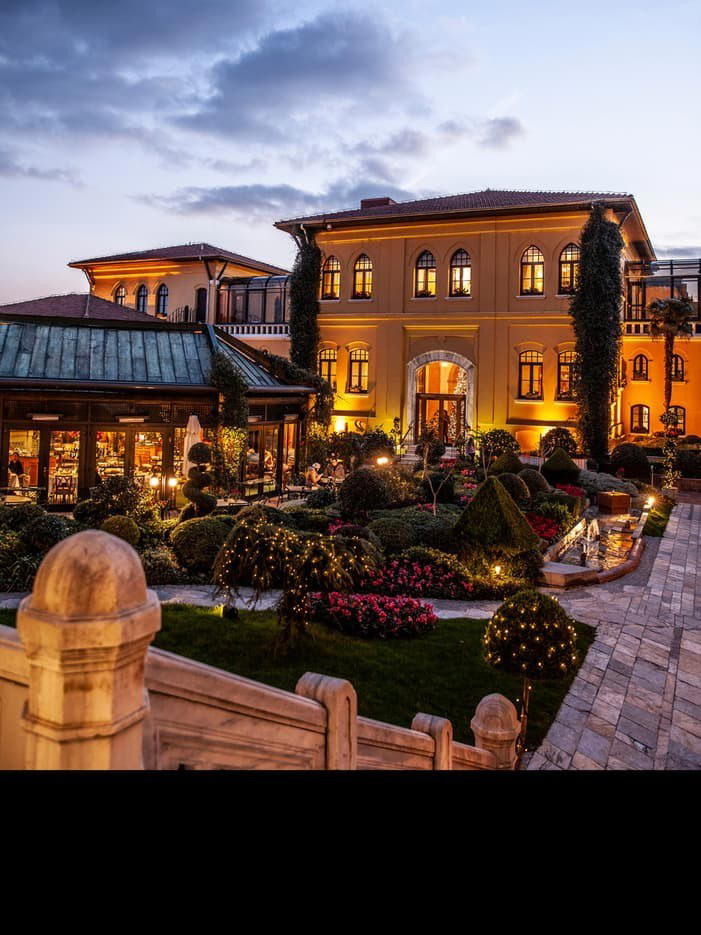
A Building That Carried Different Guests Before You
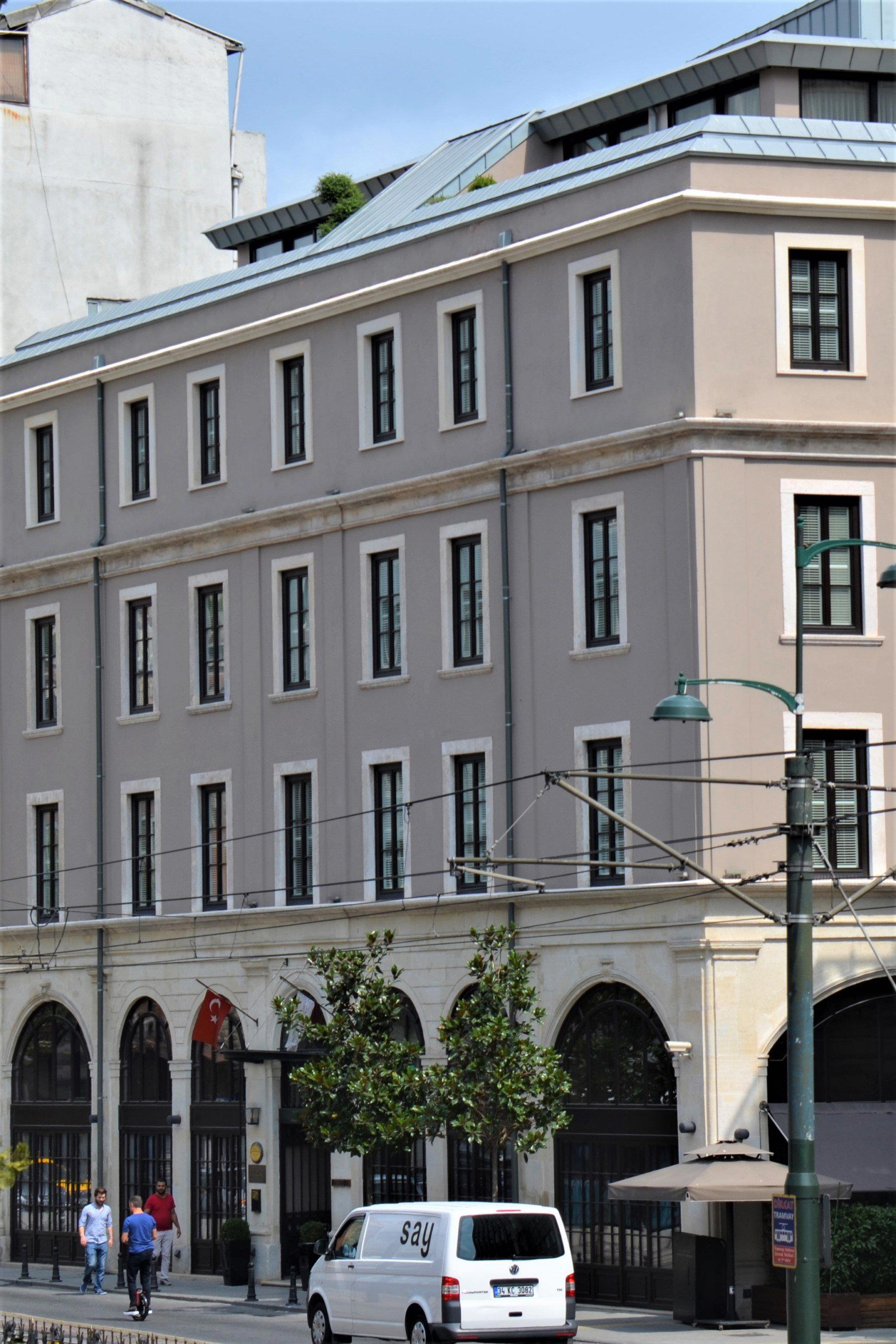
Most luxury hotels in Sultanahmet trade on proximity to Byzantine monuments. This one has its own history embedded in the walls. The neoclassical building that now houses Four Seasons Hotel Istanbul at Sultanahmet served as a prison before its 1996 conversion, and not an ordinary one: it held oppositional political figures and dissident writers, including the poet Nazim Hikmet. Graham Greene referenced it in Stamboul Train. The lemon-yellow facade, with its archways, balustrades, and limestone detailing, gives no sign of that past, but the interior carries the geometry of its former function in ways that shape how the property feels today.
The courtyard that now serves as a manicured refuge was once the exercise yard, the only place where prisoners could see open sky. That spatial logic, a contained rectangle with upward sightlines, now works in the hotel's favour. The courtyard reads as one of the most composed outdoor spaces in the neighbourhood, quieter and more considered than the terraces of competing properties nearby.
The Interior Architecture and What It Communicates
Few Four Seasons properties carry this level of site-specificity in their interiors. The design vocabulary here is Ottoman rather than generic luxury-international: ochre stonework, tiled tabletops, floors inlaid with Turkish geometric patterns, hand-woven kilims, and distressed paintwork applied by hand in the manner of artisans working Ottoman palace interiors for centuries. Wood and wrought iron are sourced locally. The effect is less five-star hotel and more compressed museum of material culture, without the institutional distance that implies.
The corridors display Iznik tiles, and these are not merely decorative: the hotel sells them, with shipping arranged on request. It is an unusual commercial gesture that reinforces the sense that the building is genuinely embedded in the craft traditions of the city rather than merely referencing them through surface decoration.
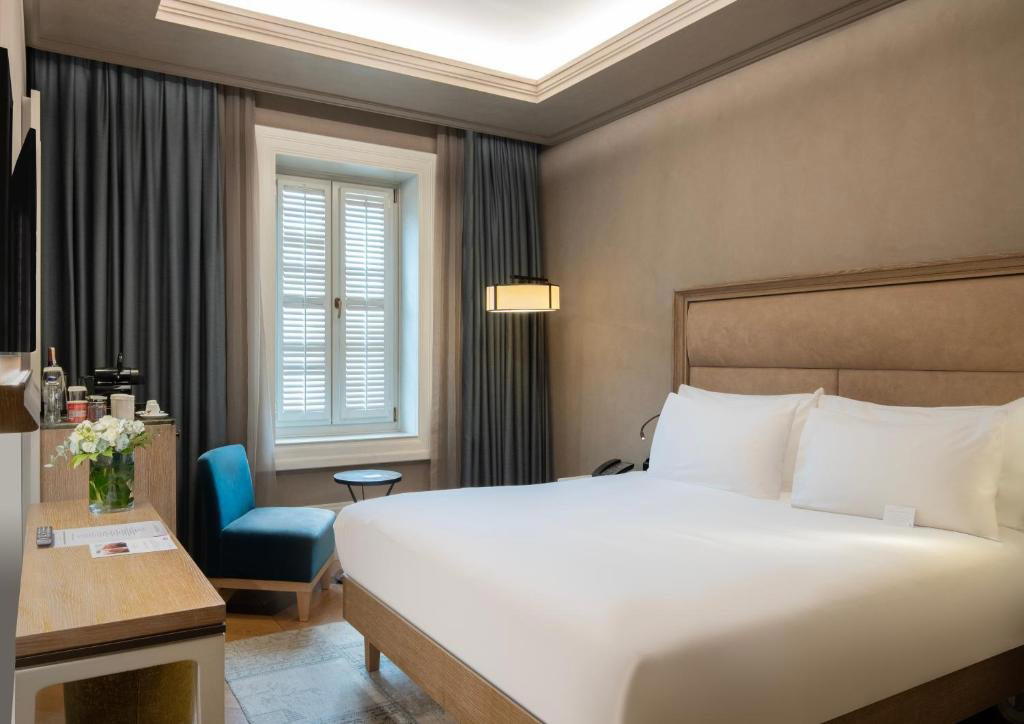
The 65 rooms and suites start at above 450 square feet, with high ceilings and remote-controlled window blinds. Large windows are not incidental. The property is noted for having more windows per room than any other Four Seasons hotel, and the views those windows frame are consequential: the Hagia Sophia and the Blue Mosque sit in direct sightlines. Positioning of this kind cannot be replicated by any new-build competitor in the district. Across Istanbul's broader hotel market, properties like Ajia and Bebek Hotel by The Stay offer Bosphorus-facing design-led alternatives, but neither places the guest within this particular historical and architectural frame.
The Marmara Suites and What the Fourth Floor Offers
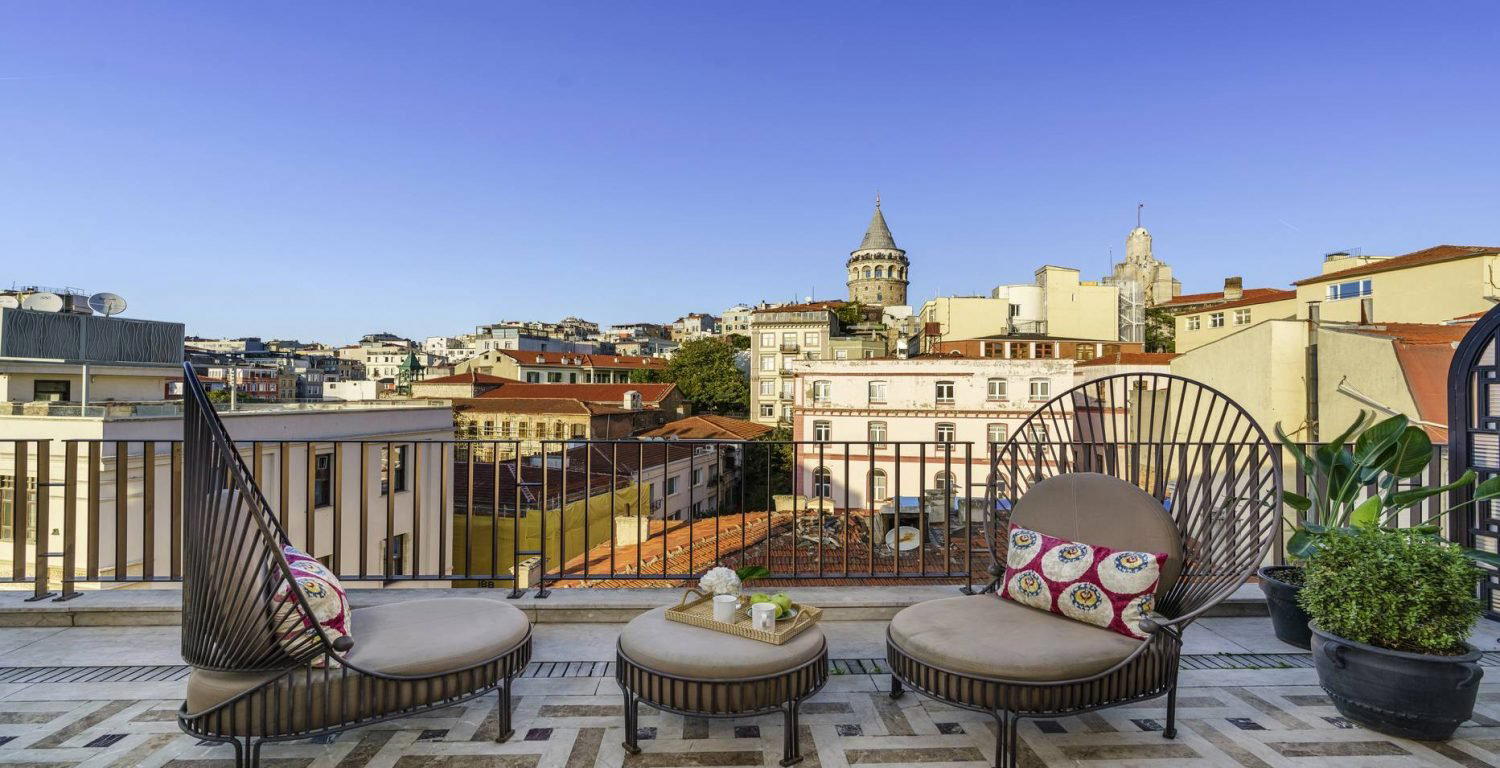
At the upper end of the room hierarchy, the Marmara Suites run to approximately 1,400 square feet and occupy the fourth floor. Each comes with three terraces, each oriented toward the Sea of Marmara and the Princes' Islands. Several of the 11 suites include steam rooms with marble seats designed to reference the Turkish bath format. These are not full hammam installations, but the material reference is clear, and for guests who want proximity to that tradition without leaving the property, the gesture is functional rather than purely decorative.
Dining Format and the A'Ya Rooftop
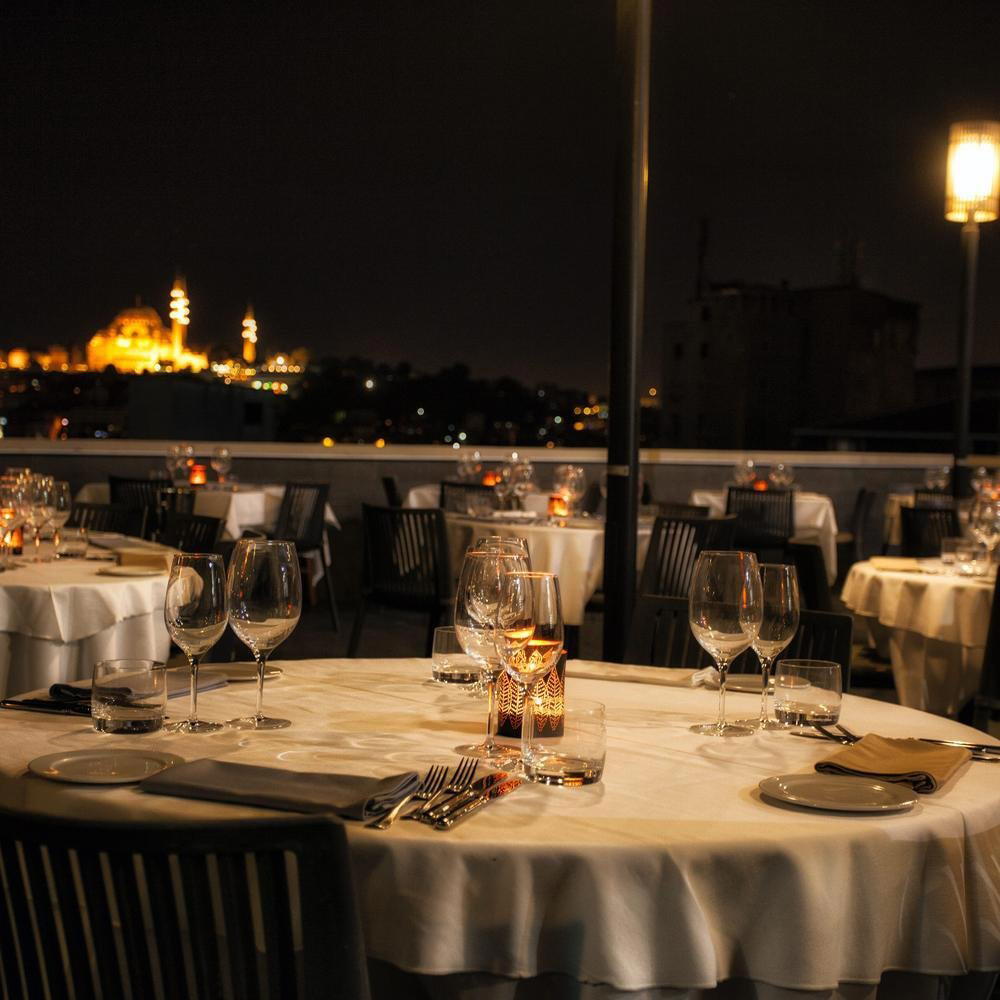
Seasons Restaurant operates on the terrace and in the glass-enclosed courtyard, running a Mediterranean menu alongside a dedicated kebab section under Chef Sadik Unal. The dual format reflects a broader question in Istanbul's hotel dining: whether international guests are better served by a safe Mediterranean context or by direct engagement with Turkish culinary tradition. Here, the kebab menu sits alongside rather than beneath the main offering, which positions it as an editorial choice rather than a concession.
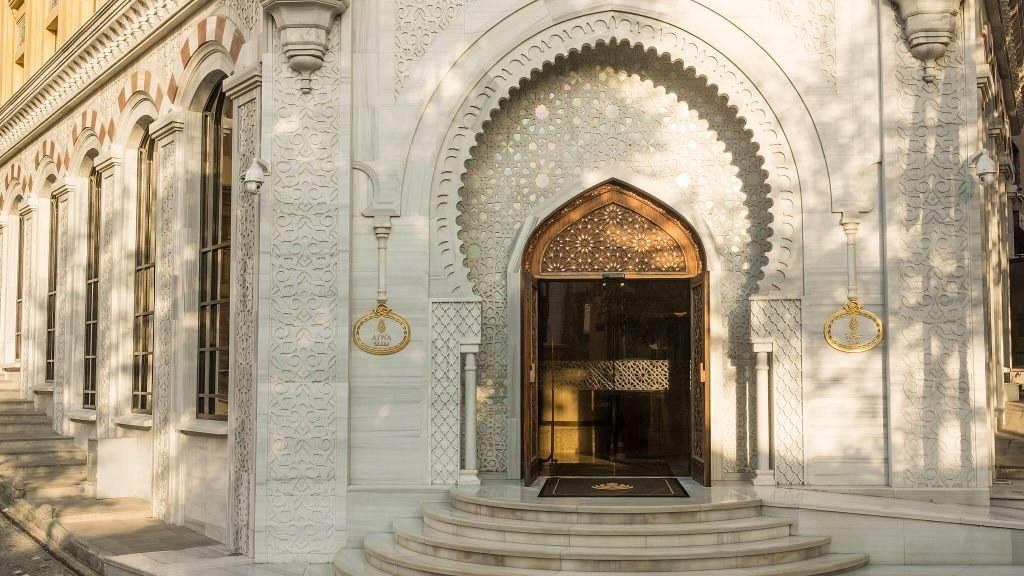
The A'Ya Rooftop Lounge presents the Hagia Sophia as a direct backdrop for afternoon tea and Turkish wines at sunset. In a district with considerable competition for rooftop views, the specific geometry here, looking across rather than down at the monument, distinguishes it from the refined terraces found at properties like AJWA Sultanahmet. For guests using the hotel primarily as a base for the historic peninsula, the rooftop functions as an orientation point as much as a hospitality venue.
The Two-Property Dynamic
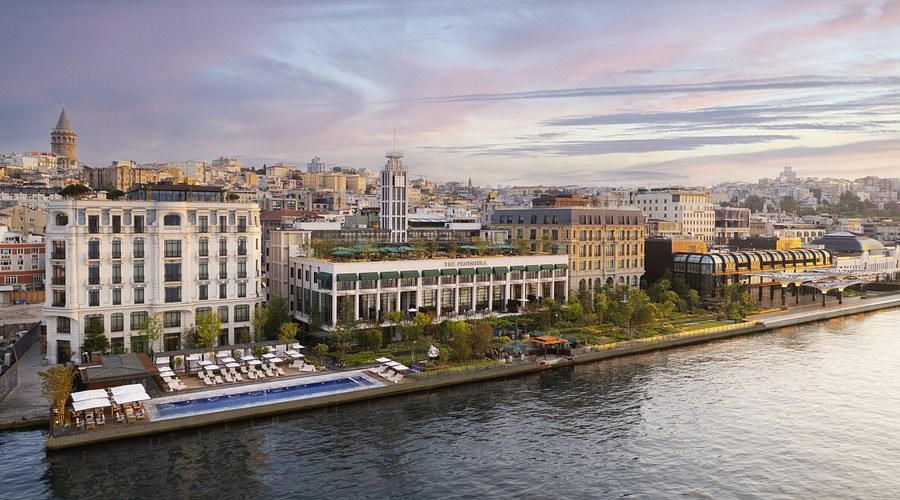
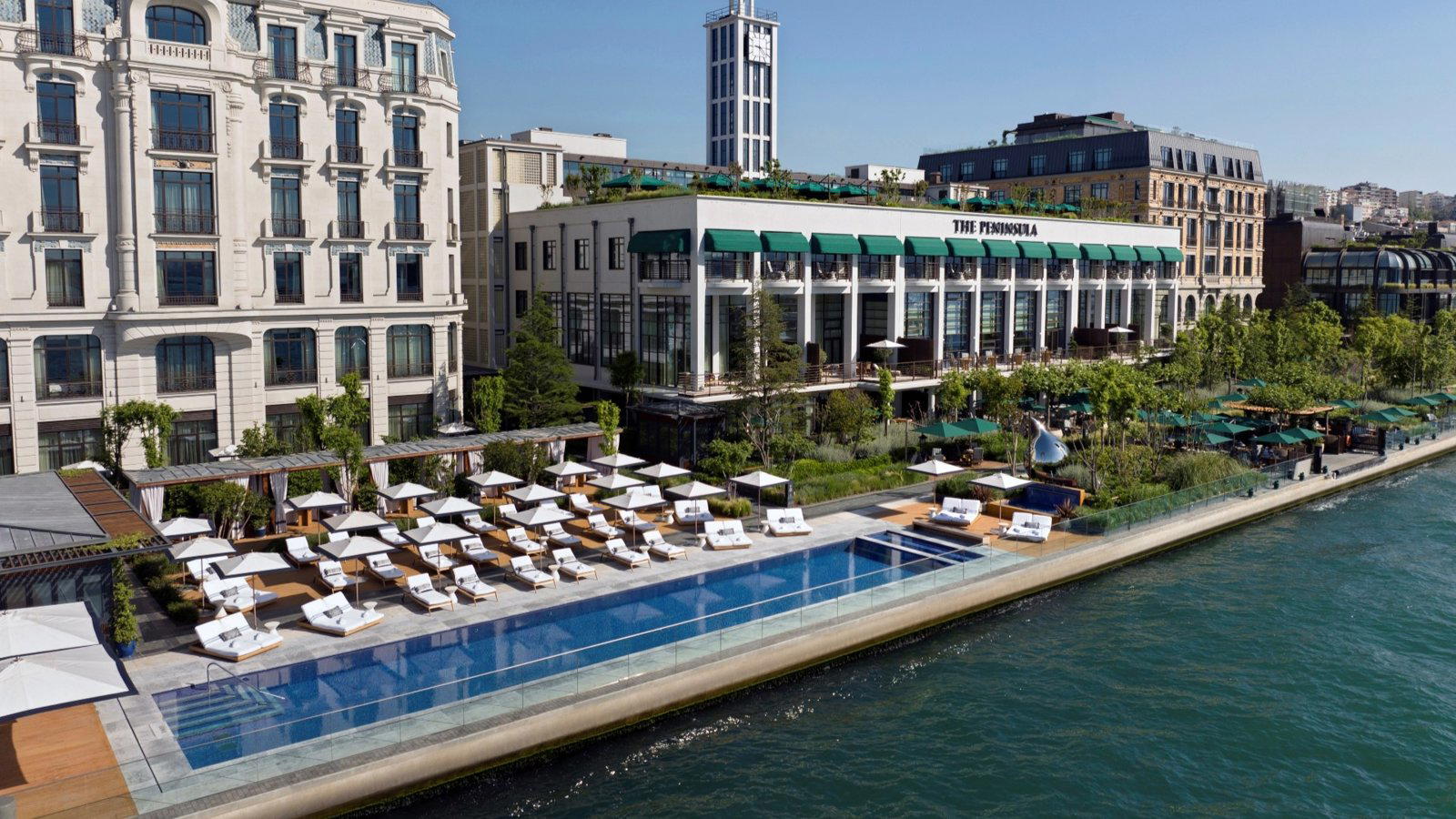
Istanbul's Four Seasons portfolio runs across two distinct properties with different neighbourhood characters. The Sultanahmet property prioritises historical proximity and compact scale. The Bosphorus property, a converted nineteenth-century Ottoman palace on the waterfront, offers a larger footprint, a waterfront pool, and a different social register. The brand operates a free shuttle between the two, and guests can check into one and use the facilities of the other. For travellers wanting Sultanahmet's archaeological density by day and Bosphorus swimming in the afternoon, this arrangement is practically useful rather than merely a cross-promotional detail. Guests planning a broader Turkish itinerary can also reference Argos in Cappadocia, MACAKIZI BODRUM, or Alavya in Alacati for properties operating in different parts of the country with their own site-specific logic.
Where It Sits in the Istanbul Market
Istanbul's upper hotel market has developed two broad orientations: Bosphorus-facing properties that prioritise waterfront scale and social programming, and Sultanahmet-anchored properties that trade on historical density and pedestrian access to the major monuments. The Four Seasons Sultanahmet belongs clearly to the second category, alongside boutique competitors including Akbıyık Cd. and Aliée Istanbul. What separates it from smaller boutique offerings in the same zone is the service infrastructure of the Four Seasons brand: the 24-hour staffing model, the packing and unpacking service, and the personalisation touches such as the guest's photograph on the room key card or a pet's photo placed on the desk. These are signals of a particular service tier rather than cosmetic amenities.
The property's 96-point score on the La Liste Leading Hotels 2026 ranking places it in measurable company globally. Rooms are priced from approximately $736 per night. For Istanbul visitors whose primary interest lies elsewhere in the city, properties such as 10 Karakoy, Address Istanbul, or Barcelo Hotel Istanbul offer different neighbourhood anchors. For context on the full Istanbul accommodation spectrum, see our full Istanbul hotels and restaurants guide.
Planning Your Stay
The hotel holds 67 rooms across a compact footprint, which limits availability during peak periods. Istanbul's Sultanahmet district draws heaviest traffic from April through June and September through October, when the monuments are accessible without the heat or crowd pressure of July and August. For guests travelling elsewhere in Turkey, connections to properties like Hillside Beach Club in Fethiye, D Maris Bay, or Kempinski Hotel The Dome Belek in Antalya extend the itinerary toward the coast. International comparisons within the small-footprint converted-building category might include Aman Venice or Aman New York, both of which operate within similarly layered architectural histories, though at a different scale and with different service models.
Comparable options at a glance, pulled from our tracked venues.
| Venue | Cuisine | Price | Awards |
|---|---|---|---|
| Four Seasons Hotel Istanbul at SultanahmetThis venue (the venue you are viewing) | This venue | Not listed | 3 Michelin Keys · La Liste Top Hotels |
| Çırağan Palace Kempinski Istanbul | Not listed | Not listed | Michelin Selected · La Liste Top Hotels |
| Fairmont Quasar Istanbul | Not listed | Not listed | Michelin Selected · Forbes Recommended |
| Four Seasons Hotel Istanbul at the Bosphorus | Not listed | Not listed | 1 Michelin Key · La Liste Top Hotels |
| JW Marriott Hotel Istanbul Marmara Sea | Not listed | Not listed | Michelin Selected · Forbes 4-Star |
| Mandarin Oriental Bosphorus, Istanbul | Not listed | $500–750 | 1 Michelin Key · La Liste Top Hotels |
Recognition history
Dated appearances from independent guides and award organizations, with the underlying list record or original source where available.
Michelin 3 Keys
Michelin
La Liste Top Hotels
La Liste
Forbes 5-Star
Forbes
Vogue 2026 Vogue Best Hotels in Istanbul
Vogue
Full recognition history (6 entries)
Forbes 5-Star
Forbes
Michelin 3 Keys
Michelin
Continue exploring
More in Istanbul
Hotels in Istanbul
All hotels in Istanbul →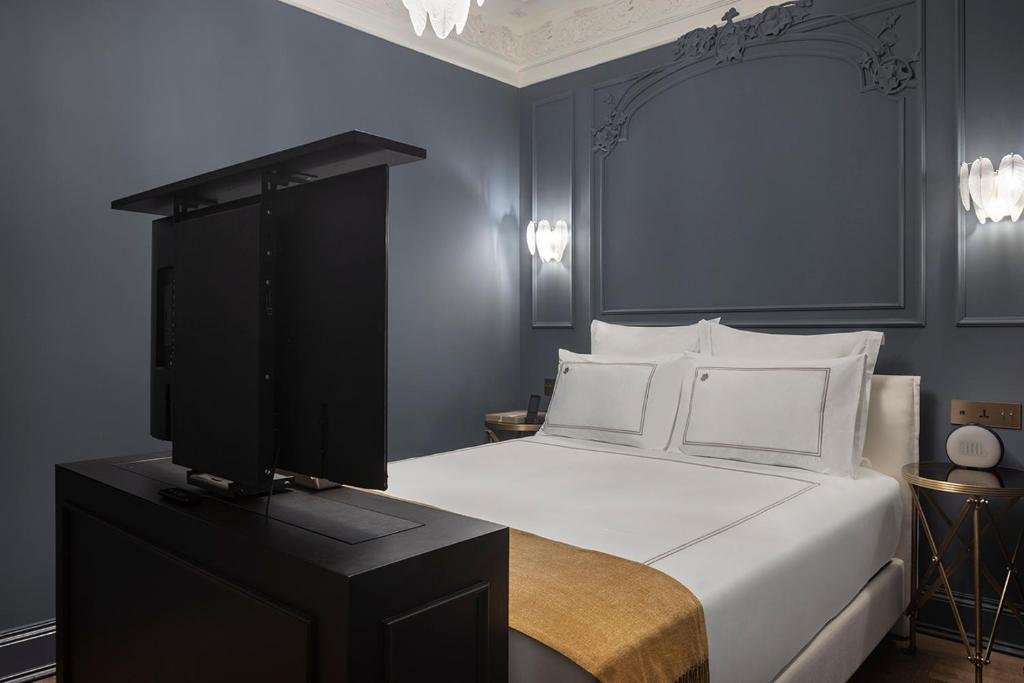
Details
- Elegant
- Quiet
- Classic
- Well Known
- Sophisticated
- Romantic Getaway
- Weekend Escape
- Family Vacation
- Anniversary
- Historic Building
- Garden
- Terrace
- Wi Fi
- Concierge
- Room Service
- Fitness Center
- Spa
- Valet Parking
- Business Center
- Garden
- Street Scene
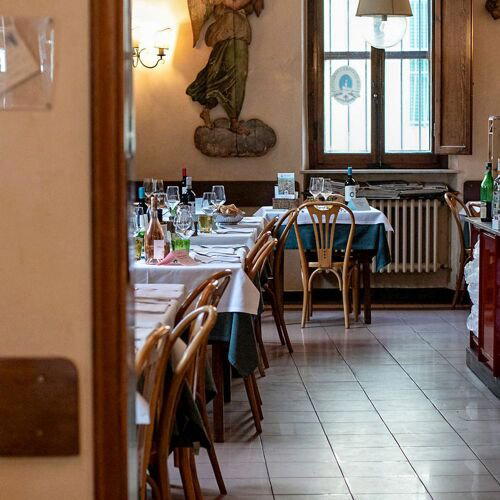
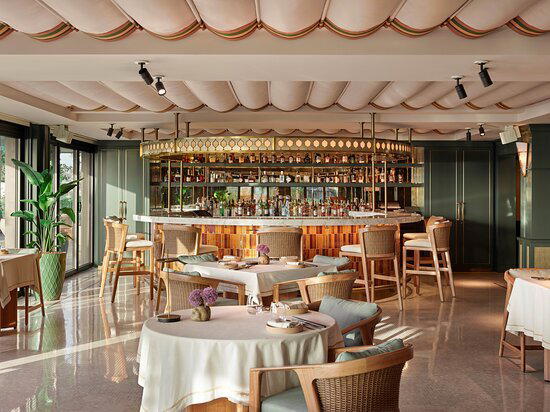
Quiet, intimate, and elegant, with a tranquil courtyard-garden atmosphere, warm yellow-ochre neoclassical interiors, and a refined residential luxury feel.