

Gault & Millau UAE Selected Restaurant
Our verdict
Kokorecci Asim Usta sits on Burak Reis Caddesi in Bornova, Izmir's most lived-in district, serving kokoreç in the tradition that has anchored Turkish street-food culture for generations. The format is direct and without ceremony: a specific preparation, executed repeatedly, in a neighbourhood that rewards exactly that kind of focused offer. For visitors tracing the ingredient-first strand of Aegean eating, this is where that thread runs closest to the street.

Pearl is the En Primeur Club membership app, where members save venues, book tables and use the concierge.
Where Bornova Eats Without Apology
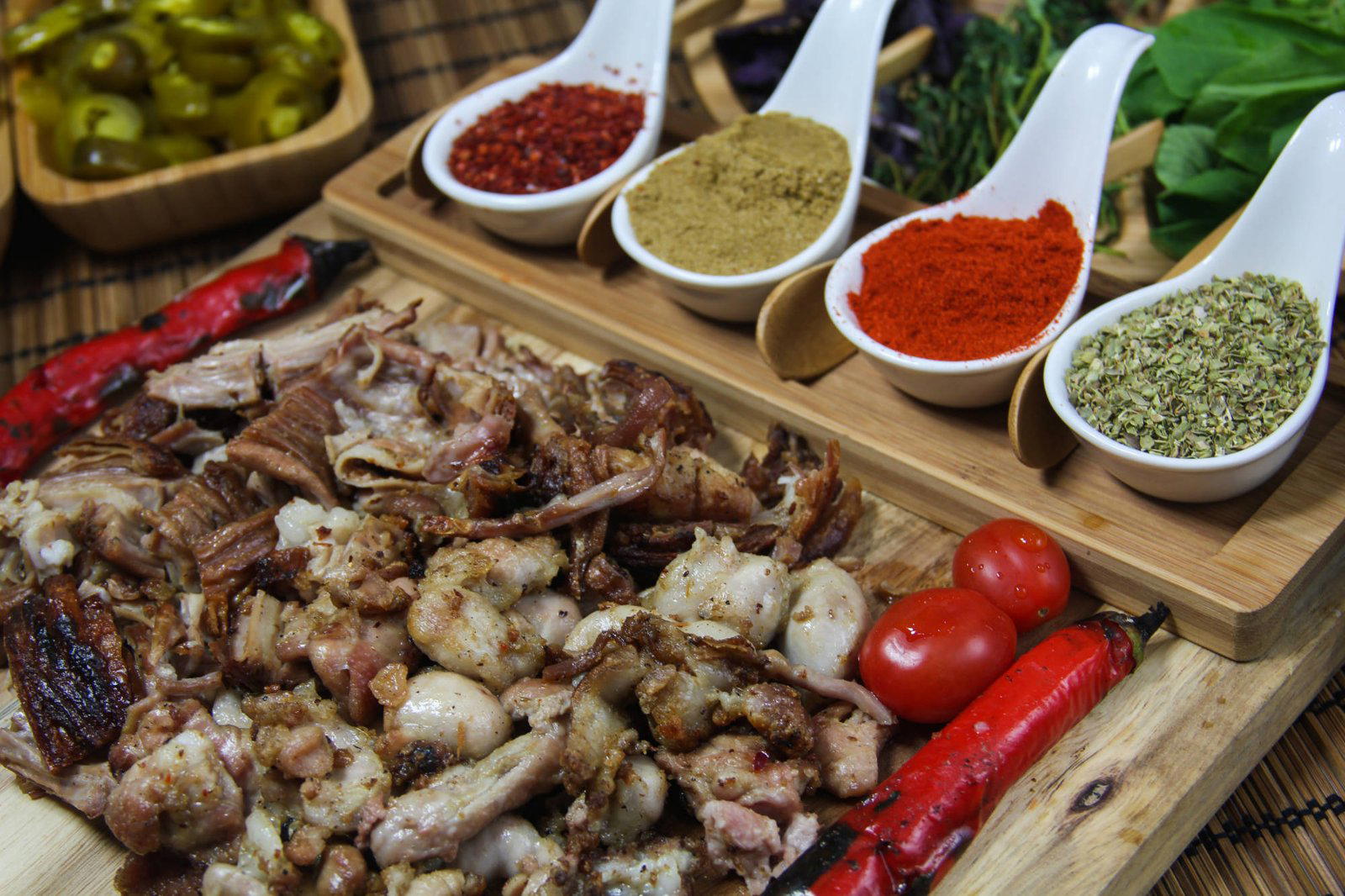
Bornova sits inland from Izmir's waterfront, east of the Kordon promenade that draws tourists and expense-account dinners alike. It is a university district, a residential district, a place where people eat because they are hungry rather than because they are performing. That social context matters when thinking about kokoreç culture in Turkey, because the dish itself has always belonged to the street rather than the dining room. Offal grilled on a rotating spit, seasoned with dried herbs and pepper, then chopped and loaded into a half-baguette: kokoreç is one of the few Turkish preparations that never made a credible move into fine-dining registers. Its credibility is entirely tied to the vendor's repetition, their sourcing, and the accumulated trust of a local customer base. Kokorecci Asim Usta operates within that tradition, at Rafet Paşa, Burak Reis Cd. No:226A, a fixed address in a district accustomed to fixed habits.
The Ingredient Logic Behind Kokoreç
Kokoreç is defined entirely by its raw material. The preparation relies on lamb or sheep intestines, wrapped around sweetbreads and offal, then wound tightly onto a spit and grilled over charcoal. Because the cut has no natural fat cap to forgive poor sourcing, the quality of the animal shows immediately in the finished product. Vendors who access consistent, well-cleaned intestine from suppliers they trust over years produce a result that is clean on the palate, with a firm bite and the char carrying the seasoning. Vendors who don't are easy to identify within a mouthful. This is why, in Turkish street-food culture, the sourcing relationship between a kokoreçci and their butcher or livestock supplier is the single most consequential variable in the offer. It is also why regulars return to the same stand rather than shop around.
The Aegean region historically had an advantage here. Western Anatolia's lamb supply, fed through the pastoral zones around Izmir and beyond, has long been regarded as among the country's most consistent. That regional context gives Bornova's kokoreç vendors access to supply chains that their counterparts in larger, more tourist-dense cities sometimes lack. The Aegean food culture more broadly, visible in restaurants like Narımor in Izmir, builds its credibility on exactly this kind of regional produce chain. Kokorecci Asim Usta sits at the unmediated end of that same regional tradition, without the table service or wine list, but drawing from the same geographic larder.
The Format and the Physical Scene
Approaching a kokoreçci in a Bornova side street, the experience registers through smell before sight. The charcoal and the fat and the dried oregano create a specific outdoor signal that functions, in Turkish cities, as a kind of informal landmark. Regulars do not consult maps. The spit turns continuously, the cook chops portions to order with a wide-bladed knife directly on the grill surface, and the bread is pressed flat and warm. The transaction is fast, the seating informal when it exists at all, and the price point keeps the format accessible across income brackets, which is part of what gives kokoreç its unusual social reach in Turkish urban life.
That accessibility is worth holding alongside the broader Turkish dining conversation. At the other end of the register, Istanbul's modern Turkish dining scene, represented by operators like Turk Fatih Tutak in Istanbul, is built around recontextualising traditional Anatolian ingredients in tasting-menu formats at ₺₺₺₺ price points. The distance between that end of the spectrum and a kokoreçci in Bornova is not a hierarchy so much as a demonstration of how much range the Turkish food culture actually contains. The sourcing logic is not dissimilar; what changes is the setting, the ceremony, and the price of entry. For context on how Aegean coastal dining develops these same ingredient traditions with more elaborate presentation, Maçakızı in Bodrum and Mezegi in Fethiye both work the same regional produce through more formal lenses.
Bornova as a Dining Context
Bornova's food scene is not organised around destination dining. Ege University anchors the district's daytime rhythm, and the eating culture that has grown around it skews toward repeated, affordable, specific offers: a particular börek shop, a particular döner, a particular kokoreçci. This is the context in which Kokorecci Asim Usta operates, and it is a context that rewards consistency over novelty. In districts like this, a vendor's longevity on the same street corner is itself a form of editorial endorsement, because the local market is unforgiving and has no particular reason to be loyal except quality and fair dealing.
Visitors exploring the wider Izmir dining scene can use our full Bornova restaurants guide to map the district's offer more completely. Those extending into Anatolia's interior will find different but comparably grounded cooking at Kardeşler Restoran in Aksaray and Sofram Restaurant in Niğde. For Cappadocian regional cooking, Nahita Cappadocia in Nevsehir and Aravan Evi in Ürgüp represent the more structured end of Anatolian hospitality. Back on the Aegean coast, Adil Müftüoğlu in Balcova operates in a similar spirit of neighbourhood-first, category-specific eating. Further afield, Agora Pansiyon in Milas, Divia by Maksut Aşkar in Marmaris, Ahãma in Göcek, Yakamengen III in Datça, Happena in Nevşehir, and Poyraz Sahil Balık Restaurant in Beykoz each trace different strands of Turkish regional eating. For readers cross-referencing global dining standards, Le Bernardin in New York City and Lazy Bear in San Francisco sit at the formal tasting-menu end of the spectrum that kokoreç culture most clearly defines itself against.
Planning Your Visit
Kokorecci Asim Usta is located at Rafet Paşa, Burak Reis Cd. No:226A in Bornova, reachable from central Izmir via the metro line that terminates at Bornova station. The format requires no booking and no dress code. Kokoreç is typically a midday or late-night proposition in Turkish cities, with the lunch hour and post-midnight windows seeing the heaviest trade. No website or advance contact information is available for this address. The most reliable approach is to arrive during peak hours and order directly at the counter.
Frequently asked questions
Is Kokorecci Asim Usta good for families?
Kokoreç is an offal preparation with a pronounced smell and strong flavour profile, lamb or sheep intestines wrapped around sweetbreads, charcoal-grilled. Children who eat broadly may find it interesting, but this is not a soft introduction to Turkish street food. The venue is on Burak Reis Cd. in Bornova, a functional neighbourhood setting rather than a family dining room, which sets the expectation correctly.
What's the overall feel of Kokorecci Asim Usta?
The format is a specialist street counter in Bornova's Rafet Paşa district, oriented around one preparation and a working neighbourhood clientele shaped partly by the Ege University crowd. There is no listed awards tier or curated atmosphere, the physical scene is the spit, the charcoal, and the chopping board. That specificity is the point.
How does a dedicated kokoreçci in Bornova differ from kokoreç at a general kebap house?
A specialist kokoreçci like Asim Usta on Burak Reis Cd. runs a dedicated spit continuously, which means the meat cycles through consistent heat and rendering rather than being prepared to order from a standing start. General kebap houses treat kokoreç as one line on a broader menu, and the result often reflects that secondary status. Bornova's university-district eating culture has sustained exactly this kind of single-focus counter, where the sole preparation receives the full attention of the operation.
What should I order at Kokorecci Asim Usta?
Kokoreç is the only preparation on offer, the establishment's name makes the scope clear. At a dedicated kokoreçci on Burak Reis Cd. expect the choice to come down to spice level and portion size rather than menu breadth. Ordering by weight or sandwich portion is standard practice at counters of this type across Izmir.
Where do I go for Kokorecci Asim Usta?
Kokorecci Asim Usta is located at Rafet Paşa, Burak Reis Cd. No:226A, 35500 Bornova/İzmir, Türkiye, Bornova.
Comparison Snapshot
| Venue | Cuisine | Price | Awards | Notes |
|---|---|---|---|---|
| Kokorecci Asim UstaThis venue (the venue you are viewing) | Turkish Street Food Kokoreç | $10–20 | Gault & Millau UAE Selected Restaurant | Not listed |
| Turk Fatih Tutak | Modern Turkish Fine Dining | $200–300 | 2 Michelin Stars · World's 50 Best #66 | Modern Turkish, ₺₺₺₺ |
| Maçakızı | Modern Aegean | $150–200 | 1 Michelin Star · World's 50 Best #96 | Modern Cuisine, ₺₺₺₺ |
| Mikla | New Anatolian Kitchen | $100–150 | 1 Michelin Star · World's 50 Best #44 | Modern Turkish, Mediterranean Cuisine, ₺₺₺₺ |
| Neolokal | Modern Turkish Fine Dining | $200–300 | 1 Michelin Star · World's 50 Best #100 | Modern Turkish, Turkish, ₺₺₺₺ |
| Vino Locale | Seasonal Mediterranean Fine Dining | $50–100 | 2 Michelin Stars · Gault & Millau Türkiye 3 Toques | Country cooking, ₺₺₺ |
Recognition history
Dated appearances from independent guides and award organizations, with the underlying list record or original source where available.
Gault & Millau UAE Selected Restaurant
Gault & Millau · Gault & Millau Türkiye 2026 - Selected Restaurant
Opinionated About Dining Newly Added European Restaurants
Opinionated About Dining
Full recognition history (3 entries)
Opinionated About Dining Casual in Europe Recommended
Opinionated About Dining
Continue exploring
More in Istanbul
Restaurants in Istanbul
All restaurants in Istanbul →
Hotels in Istanbul
All hotels in Istanbul →
Wineries in Istanbul
All wineries in Istanbul →
Details
- Well Known
- Rustic
- Lively
- Solo
- Casual Hangout
- Group Dining
- Standalone
- A La Carte
- Counter Dining
Current opening hours
- Monday
- 11:30 AM–8:30 PM
- Tuesday
- 11:30 AM–8:30 PM
- Wednesday
- 11:30 AM–8:30 PM
- Thursday
- 11:30 AM–8:30 PM
- Friday
- 11:30 AM–8:30 PM
- Saturday
- 11:30 AM–8:30 PM
- Sunday
- 11:30 AM–8:30 PM
Hours can change for holidays and private events. Hours as of .
Compact, no-frills and energetic, with a street-food counter feel where the rotating kokoreç spit and quick service are the focus.