
One of Ireland's oldest working distilleries, Kilbeggan has been producing whiskey on the banks of the River Brosna in County Westmeath since 1757. Awarded Pearl 3 Star Prestige in 2025, the site operates as both a working distillery and a deep archive of Irish whiskey tradition, placing it in a comparable set defined by heritage credentials rather than recent craft ambitions.
Pearl is the En Primeur Club membership app — saves, bookings, and concierge access live there. Same editors, same standards.
- Address
- Lower Main St, Kilbeggan, Co. Westmeath
- Phone
- +353 57 933 2134
- Website
- kilbegganwhiskey.com
 Saves & bookings on Pearl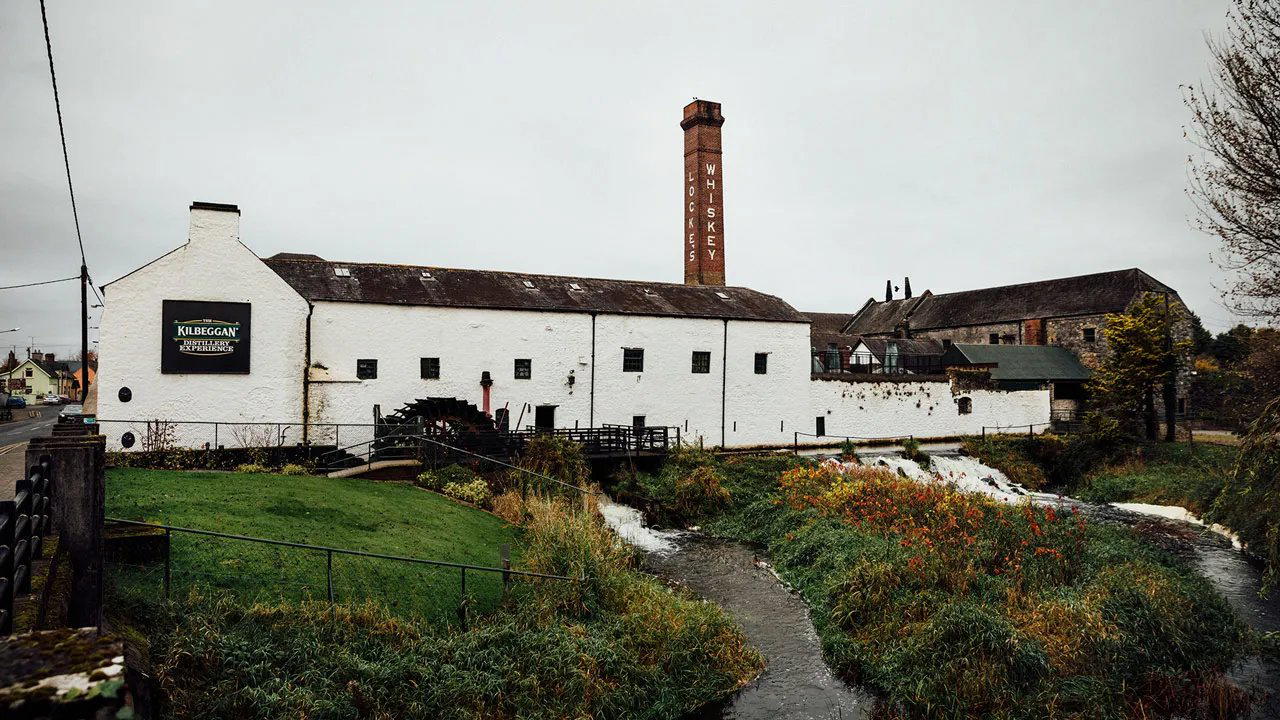
Where Irish Whiskey History Has a Postal Address
There is a particular quality of stillness that settles over distillery towns that have been doing the same thing for centuries. Kilbeggan, a modest market town in County Westmeath, carries that quality in concentrated form. Lower Main Street gives little away at first glance, but the building at its foot, a water-powered mill beside the River Brosna, its stone walls absorbing several hundred years of weather, announces itself not through grandeur but through sheer persistence. Kilbeggan Distillery has been on this site since 1757, which places it in a different temporal bracket from almost everything else in Irish whiskey. Distilleries founded in the twenty-first century craft their identity around innovation; Kilbeggan's identity is the site itself.
That longevity matters as a category signal, not simply as a marketing claim. The Irish whiskey industry spent most of the twentieth century in contraction, distilleries closed, blending houses consolidated, and the map of production shrank dramatically. Kilbeggan's survival through that period, however interrupted, gives it a documentary value that newer operations cannot replicate. In 2025, the distillery received a Pearl 3 Star Prestige award, a recognition that places it within the premium tier of Irish whiskey experiences.
Terroir and the River: What the Land Gives This Whiskey
The editorial angle on whiskey terroir is more contested than it is for wine, but the argument is worth making carefully here. The River Brosna, which powered the original mill wheel and shaped the site's geography, is not an incidental detail. Water source, ambient temperature, and the particular character of a location's microclimate all influence fermentation behaviour, barrel interaction, and the rate of maturation. In the Irish Midlands, the flat, bog-heavy terrain of Westmeath moderates temperature swings relative to coastal sites, producing a maturation environment that differs measurably from, say, the Atlantic-exposed conditions at Dingle Distillery in Kerry.
Waterford Distillery has made terroir in Irish whiskey its explicit intellectual project, mapping barley provenance by farm and publishing detailed crop-year data. Kilbeggan operates differently: its claim to place is longitudinal rather than analytical. Where Waterford asks what this year's barley from this field tastes like, Kilbeggan asks what this location has tasted like across three centuries. These are genuinely different questions, and both are worth asking. For visitors approaching the distillery through the lens of provenance and place, the Westmeath setting is not atmospheric backdrop, it is part of the argument.
Inside the Irish Whiskey comparable set
Irish whiskey has expanded rapidly since the early 2010s, moving from a handful of active distilleries to well over forty. At one end sit large-volume operations with high visitor numbers and broad international distribution, Jameson on Bow Street in Dublin is the most obvious example, processing hundreds of thousands of visitors annually in a slick, experience-designed format. At the other end sit single-focus craft operations with small output and specialist followings.
Kilbeggan occupies a position between those poles. The 2025 Pearl 3 Star Prestige award signals premium standing without repositioning it as a boutique craft operation. It shares that quality tier with operations like Slane Irish Whiskey in County Meath and Tullamore D.E.W. in Offaly, both Midlands-adjacent, both drawing on heritage narratives, both operating visitor centres that balance educational content with commercial throughput. What distinguishes Kilbeggan from that group is the physical weight of the site: working pot stills, original mill machinery, and a maturation warehouse that has been in continuous use for longer than most whiskey operations anywhere in the world have existed.
Further comparisons reveal the breadth of the current Irish whiskey scene. Powerscourt Distillery in Enniskerry plays the estate-and-landscape card in County Wicklow; The Shed Distillery in Drumshanbo has built its reputation on gin-led innovation before pushing into whiskey; Powers John's Lane operates within the Midleton complex in Cork, foregrounding single pot still as Ireland's most distinctive native whiskey style. Each of these makes a coherent case for its own position. Kilbeggan's case rests on a date, 1757, and the architecture and machinery that date implies.
What the Site Actually Delivers
Heritage distillery visits split broadly into two formats across Ireland and Scotland: the guided theatrical experience, where visitors move through curated rooms with narrated history and staged tastings; and the working distillery access model, where the operational reality of production is the content. Kilbeggan leans toward the latter. The pot stills are not props. The mill wheel is functional. The warehouses contain maturing spirit rather than empty barrels arranged for photographs.
For comparison, Aberlour in Speyside offers a useful Scotch whisky parallel, a working distillery in a small town, where the visitor experience is grounded in the reality of production rather than a visitor-centre simulation of it. Kilbeggan reads similarly. The physical evidence of what has been happening on this site since the mid-eighteenth century is the primary draw, and it requires no embellishment.
For those visiting as part of a broader Irish whiskey itinerary, Kilbeggan sits at a logical midpoint on any route connecting Dublin with the western distilleries. County Westmeath is accessible from the M6 motorway, and the town itself is compact enough that the distillery is the clear organising point for a visit. A stop here pairs naturally with Tullamore D.E.W., roughly thirty kilometres to the south, which offers a contrasting approach to Midlands whiskey heritage within the same day's range. Those travelling further west can connect onward toward The Shed in Drumshanbo, extending the itinerary into Connacht.
The distillery's address on Lower Main Street places it at the centre of Kilbeggan town, and it is walkable from any accommodation in the village.
Comparable Venues
Comparable venues nearby, for context on price, style, and recognition.
| Venue | Cuisine | Price | Notes |
|---|---|---|---|
| Kilbeggan DistilleryThis venue — the venue you are viewing | County Westmeath | $$ | |
| Teeling | Dublin | $$ | The Liberties |
| Jameson (Bow St.) | Winery | $$$ | North City Centre |
| The Shed Distillery | County Leitrim | $$ | Drumshanbo |
| Slane Irish Whiskey | Boyne Valley | $$$ | |
| Tullamore D.E.W. | County Offaly | $$ | Tullamore |
Continue exploring
More in Kilbeggan
Wineries in Kilbeggan
Browse all →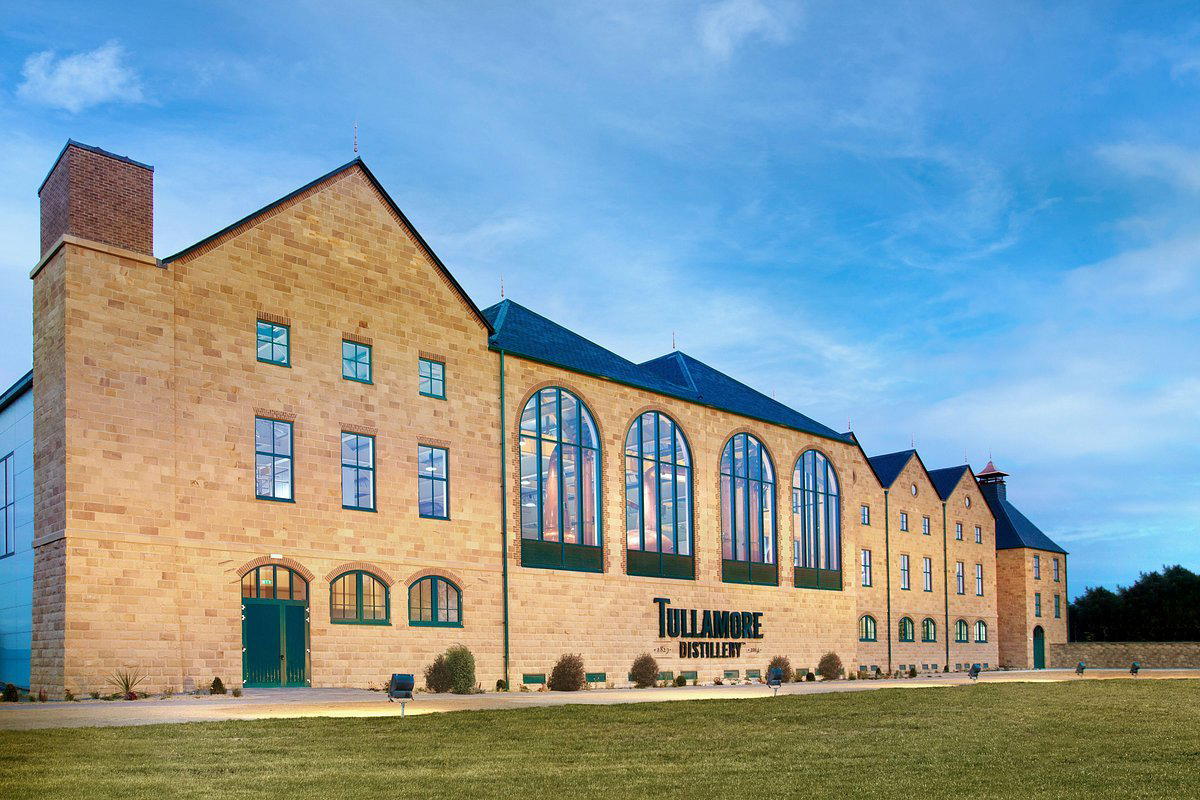
Restaurants in Kilbeggan
Browse all →
Hotels in Kilbeggan
Browse all →
At a Glance
- Historic
- Rustic
- Classic
- Scenic
- Group Outing
- Wine Education
- Historic Building
- Barrel Room
Historic and immersive atmosphere with preserved 19th-century machinery, steampunk aesthetic, and aromas of fermentation in a riverside setting.