
Waterford Distillery sits at a pivotal moment in Irish whiskey's reassessment of provenance, treating individual farm plots and barley varieties with the same rigour Burgundy applies to its vineyards. Holder of a Pearl 3 Star Prestige rating in 2025, the distillery operates from Grattan Quay, Waterford, Ireland, and represents one of the most analytically serious approaches to terroir-driven whiskey production in the country.
Pearl is the En Primeur Club membership app — saves, bookings, and concierge access live there. Same editors, same standards.
- Address
- Grattan Quay, Waterford, Ireland
- Phone
- +353 51 303 508
- Website
- waterforddistillery.com
 Saves & bookings on Pearl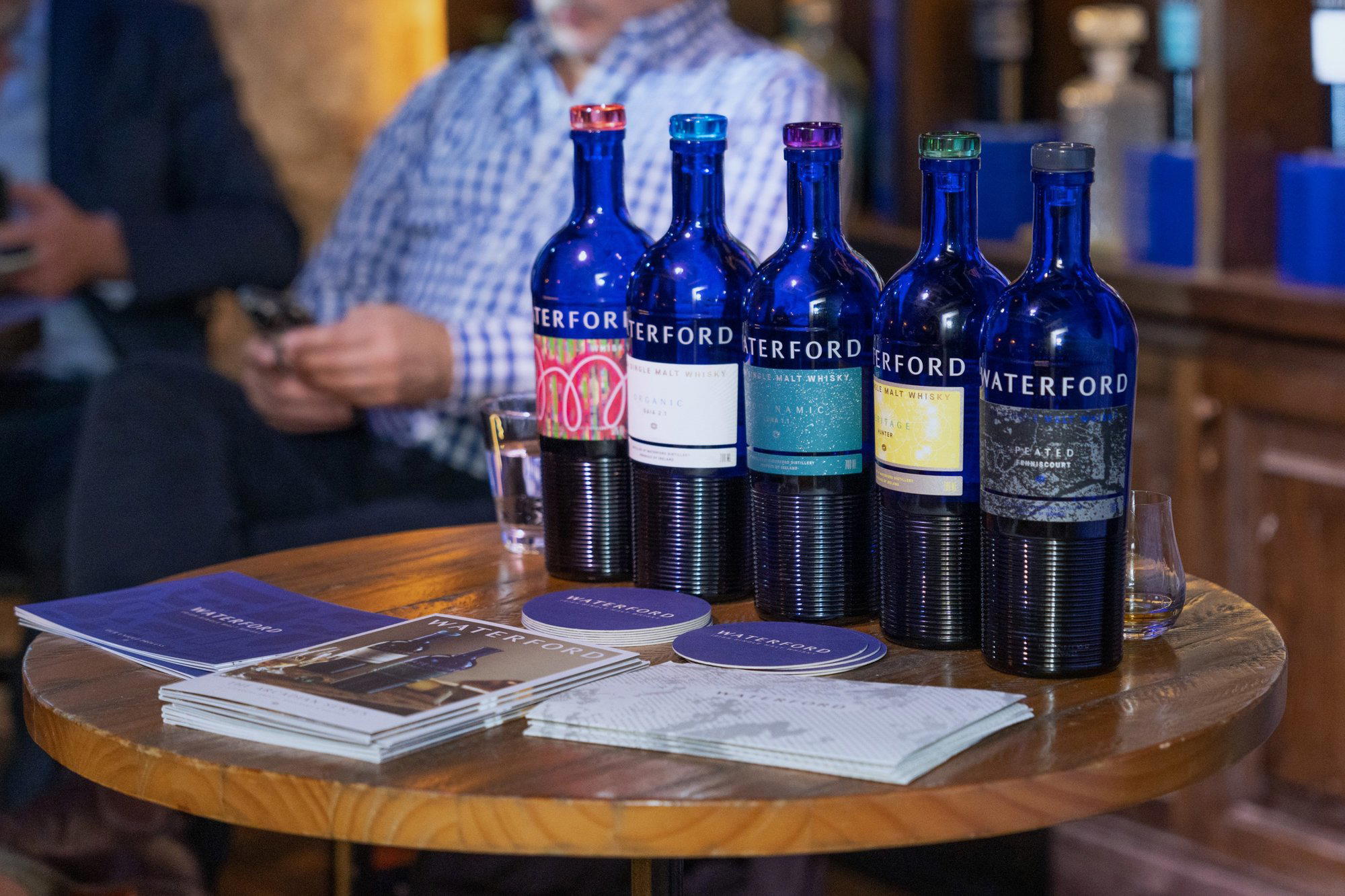
Where the Field Meets the Still
The road to Gibbethill, Kilculliheen follows the kind of quiet County Kilkenny countryside that has been growing malting barley for generations without anyone thinking too much about what that means for flavour. Waterford Distillery sits in that landscape and does think about it, systematically, obsessively, and with a paper trail that traces every cask back to a named farm and a named barley variety. Arriving here, you are not entering a heritage attraction or a brand experience centre. You are entering a working argument about where whiskey flavour comes from.
That argument is significant in the context of Irish whiskey's current moment. The category has expanded rapidly over the past decade, with new producers from Dingle Distillery in Dingle to Powerscourt Distillery in Enniskerry staking out positions across the island. Most of those positions are defined by format, finish, or brand narrative. Waterford's position is defined by agricultural origin, a distinction that places it in a different conversation from the volume tier occupied by Jameson (Bow St.) in Dublin or the heritage appeal of Kilbeggan Distillery in Kilbeggan.
The Terroir Argument in Practice
Irish whiskey has long been a blending tradition, where consistency across vatting is the goal and the grain's origin is incidental. Waterford runs a structural counterargument to that tradition. Its production model maps individual farm plots across Ireland, tracking the specific barley variety grown on each, the soil type underneath it, and the growing conditions in a given year. Each harvest is kept separate through malting, mashing, fermentation, distillation, and maturation. The result is a library of single-farm-origin distillates that can be assessed side by side.
This approach borrows more from Burgundian viticulture than from conventional distillery practice. Where producers like Tullamore D.E.W. in Tullamore or Powers John's Lane (Midleton) in Midleton work within established blending frameworks built for consistency, Waterford deliberately courts variation as data. The question they are trying to answer, does the specific field a barley plant grew in leave a detectable trace in the distilled spirit, is one the broader whiskey industry has largely not bothered to ask. Whether or not you find the answer persuasive, the question is more interesting than most of what gets asked in distillery marketing.
The 2025 Pearl 3 Star Prestige award reflects that seriousness. In a category where recognition often flows to heritage names or heavily marketed newcomers, a Prestige-tier result signals that the product quality aligns with the ambition. That places Waterford alongside a smaller cohort of Irish producers, including The Shed Distillery in Drumshanbo and Slane Irish Whiskey in Slane, which have attracted serious critical attention outside the traditional power centres of Midleton and Bushmills.
Barley Varieties and the Logic of Origin
The specific barley varieties Waterford works with matter in the same way that grape variety matters to wine drinkers, though the parallel is still unfamiliar to most whiskey consumers. Different heritage and commercial barley strains carry distinct enzymatic and flavour precursor profiles. How those precursors survive fermentation and distillation, and how they develop across years in wood, is exactly what Waterford's per-farm tracking is designed to measure.
Ireland's southeast has specific advantages for this kind of work. The counties around the Suir and Barrow river systems, the geography that Waterford sits within, have been producing malting-grade barley for centuries. The maritime climate moderates temperature swings, and the soil types in this corridor vary enough across relatively short distances to make farm-level differentiation plausible rather than theoretical. That agricultural specificity gives the distillery's argument a geographic grounding that a producer importing grain from elsewhere could not claim.
For comparison, look at how Scotch producers like Aberlour in Aberlour have built identity around water source and climate without making farm-level grain provenance central to their proposition. Waterford's model is more granular than anything currently operating at scale in Scotch production, which is either the distillery's genuine point of differentiation or an elaborate exercise in documentation depending on your prior beliefs about terroir's role in distilled spirits.
The Distillery as a Place to Visit
Visitor experiences at working distilleries across Ireland range from large-format tourist operations, the kind that process hundreds of people a day through branded tasting theatres, to smaller, appointment-led encounters where the emphasis is on the production itself. Waterford sits closer to the latter mode. The address at Gibbethill, Kilculliheen, is not in the centre of Waterford city, and the distillery is not set up as a high-footfall attraction. That is a deliberate reflection of what the operation is: a production facility where the farming relationships and the maturation programme are the story, not the gift shop.
For visitors who engage with it on those terms, the experience is closer to visiting a serious wine producer than a standard distillery tour. The conversation centres on agricultural choices, seasonal variation, and the traceability that underpins each expression. Visitors who want a glossy brand narrative with cocktail stations will find the tone more austere than what larger operations offer. Those interested in how whiskey flavour is actually built from the ground up will find it more substantive.
Compared to the more visitor-oriented format of Dingle Distillery in Dingle or the heritage tourism draw of Kilbeggan Distillery in Kilbeggan, Waterford operates at lower volume and higher information density. It is the kind of visit that benefits from some preparation, knowing what a single farm origin expression means, and why comparing two distillates from adjacent farms in the same year might tell you something a blended product cannot.
Planning Your Visit
Waterford Distillery is located at Grattan Quay, Waterford, Ireland, on the outskirts of Waterford city. Given the distillery's working production character and the specialised nature of its visitor programme, contacting the distillery in advance is advisable. Visiting in the autumn, when the annual harvest from the distillery's network of farm partners has been brought in, adds a seasonal dimension to the conversation about the barley programme. Waterford city itself supports a range of accommodation and dining options for those building a longer trip around the visit.
At-a-Glance Comparison
Comparable venues nearby, for context on price, style, and recognition.
| Venue | Cuisine | Price | Notes |
|---|---|---|---|
| Waterford DistilleryThis venue — the venue you are viewing | Irina barley, heritage barley | $$$ | |
| Roe & Co | Winery | $$$ | Liberties |
| Jameson (Bow St.) | Winery | $$$ | North City Centre |
| Slane Irish Whiskey | Boyne Valley | $$$ | |
| Teeling | Dublin | $$ | The Liberties |
| Powerscourt Distillery | barley | $$$ | Enniskerry |
Continue exploring
More in Waterford
Bars in Waterford
Browse all →
Restaurants in Waterford
Browse all →
Hotels in Waterford
Browse all →
At a Glance
- Scenic
- Rustic
- Elegant
- Intimate
- Wine Education
- Solo Exploration
- Group Outing
- Barrel Room
- Historic Building
- Organic
- Biodynamic
- Sustainable
- Waterfront
Modern industrial setting in a converted historic brewery on the River Suir, with knowledgeable guided tours and an impressive tasting room.