


A Michelin-starred barn conversion in rural Co. Galway, LIGИUM sits at number five on The Sunday Times Ireland's 100 Best Restaurants list (2025). Chef Danny Africano fires a surprise tasting menu over open wood flames, threading Irish produce through an Italian lens in a setting with large windows, minimalist Scandinavian lines, and throws on the chairs.
Pearl is the En Primeur Club membership app — saves, bookings, and concierge access live there. Same editors, same standards.
- Address
- Slatefort House, Bullaun, Co. Galway, H62 H798, Ireland
- Phone
- +353 87 330 0559
- Website
- lignum.ie
- Directions
- Get directions
 Saves & bookings on Pearl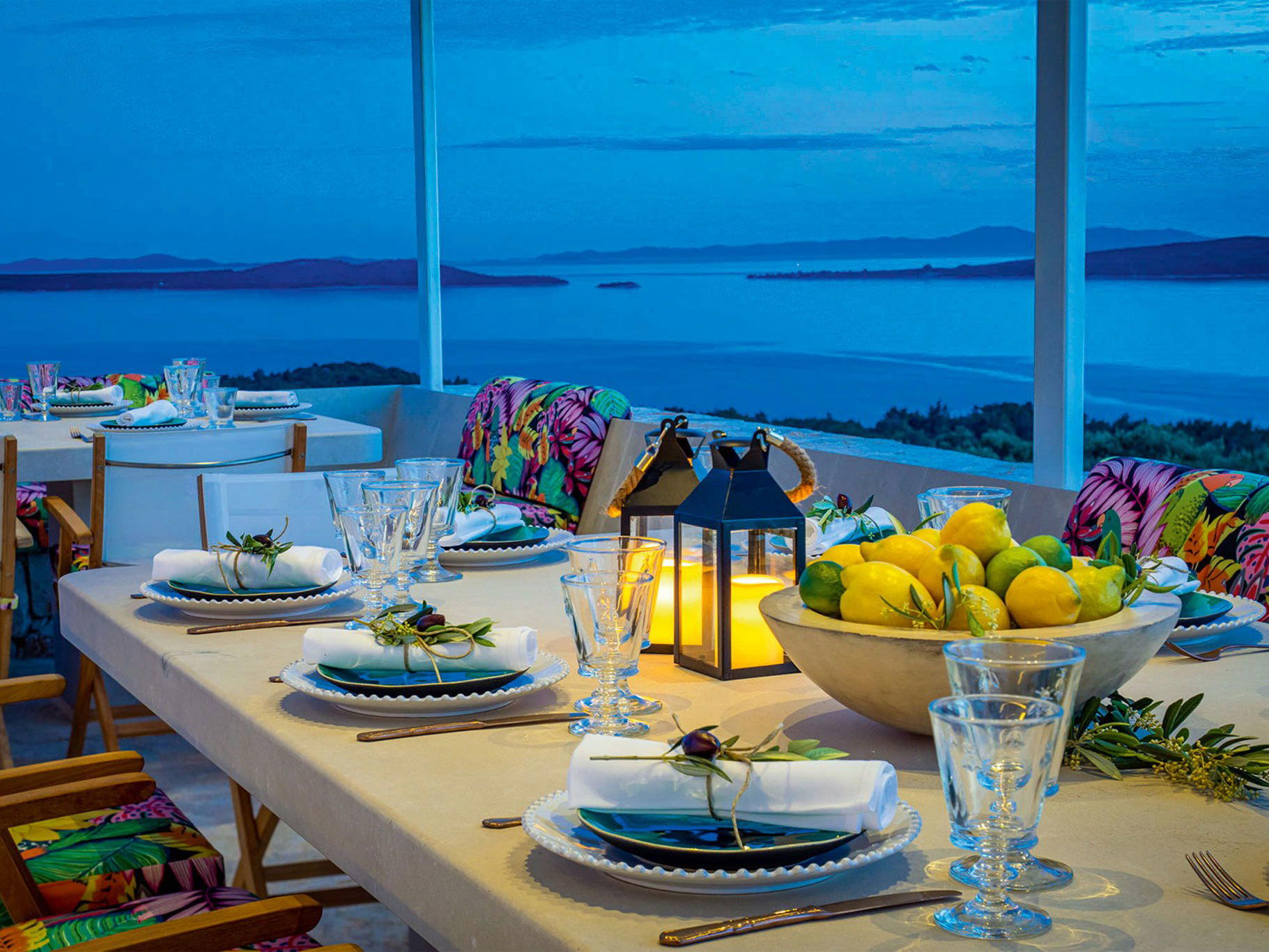
A Barn, a Fire, and a Franco-Italian Thread Running Through Connaught
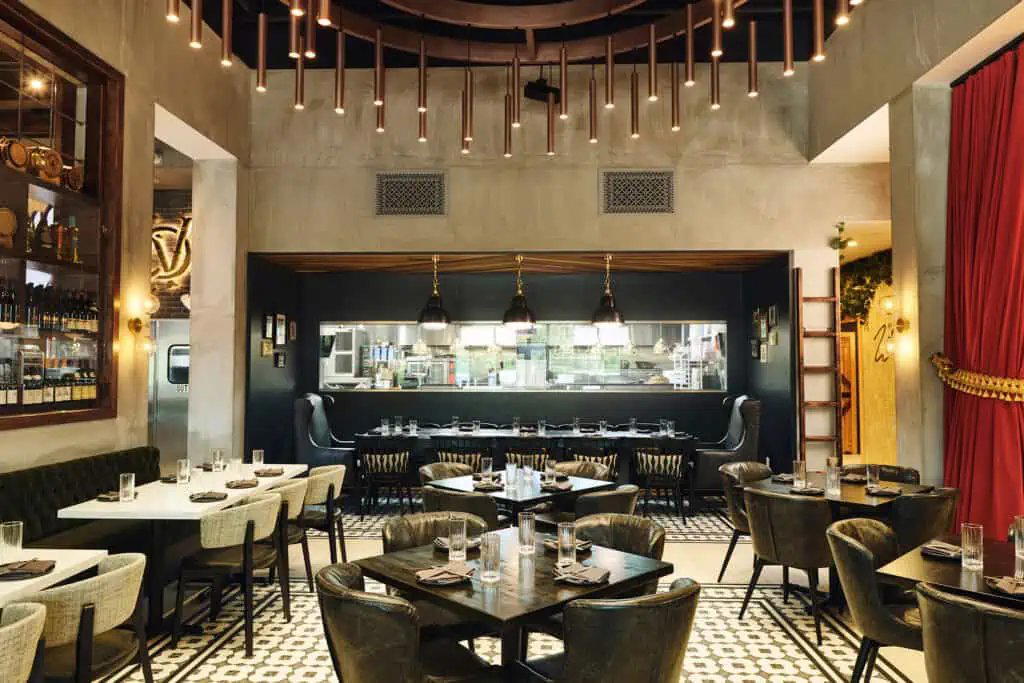
Rural Galway is where you find LIGИUM, a one-Michelin-star restaurant in Bullaun with modern wood-fired fine dining at the centre of its kitchen. The restaurant occupies a converted barn at Slatefort House in Bullaun, a townland so small it barely registers on the main road. Approaching the building, the large windows catch your eye first, warm light pressing through them against whatever the Atlantic evening is doing outside. Inside, the aesthetic runs Scandinavian: clean lines, minimal ornamentation, a roaring fire anchoring the room, and throws draped over the chairs in acknowledgement that this is Ireland and warmth is not a luxury. The name itself tells you something about the kitchen's methodology, Lignum is Latin for wood, and everything that follows is organised around that single ancient principle.
The broader West of Ireland dining scene has developed a habit of placing serious cooking inside agricultural or vernacular architecture. LIGИUM sits squarely in that tradition, sharing a sensibility with places like Aniar in Galway and Homestead Cottage in Doolin, both of which treat landscape and locality as the premise rather than the backdrop. What distinguishes the Bullaun address is the Italian inflection that runs through its Irish-sourced menu, a cross-pollination that shifts its comparable set slightly eastward toward creative kitchens elsewhere in the country and in Europe.
Open Fire as Method, Not Metaphor
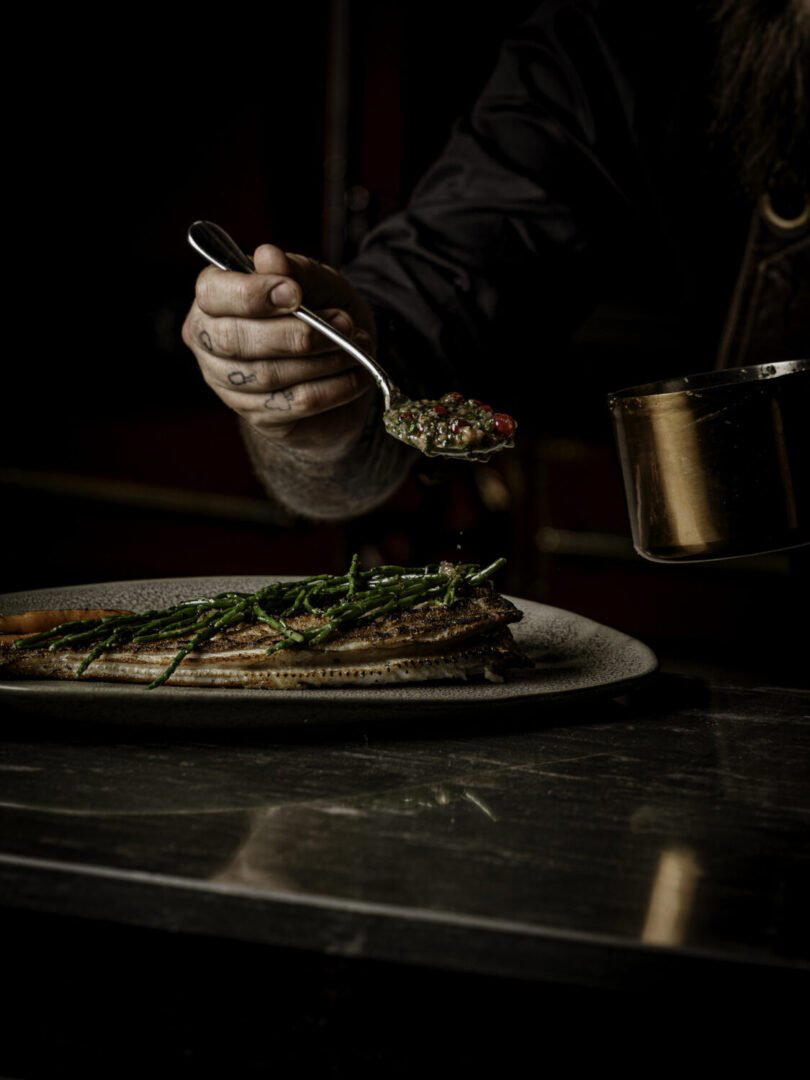
Wood-fired cooking has become something of a shorthand in contemporary fine dining, deployed sometimes as theatre rather than technique. The difference at LIGИUM is that fire is the structural logic of the entire kitchen, not one section of a larger story. The name commits the restaurant to that premise before a guest has read a single dish description. Cooking over open flame at this level requires a different kind of precision than induction or controlled gas: temperatures shift with the wood's moisture and the fire's age, and timing is calibrated against combustion rather than a dial. The smoky dimension that the process delivers is not an accent but a through-line across the tasting menu.
This approach places LIGИUM in a small cohort of Irish kitchens where elemental cooking methods are treated with the same rigour more commonly applied to French technique. Chestnut in Ballydehob and Terre in Castlemartyr operate in broadly comparable registers, where Irish produce and international cooking frameworks meet without either side dominating. At the summit of the national hierarchy, Chapter One by Mickael Viljanen in Dublin demonstrates how far that synthesis can be pushed at two-Michelin-star intensity. LIGИUM's single star and its position at number five in The Sunday Times Ireland's 100 Best Restaurants (2025) place it inside that serious tier without requiring the capital's infrastructure to sustain it.
Danny Africano and the Dual-Heritage Kitchen
Danny Africano's dual heritage is a genuine explanatory tool rather than a biographical footnote. Irish kitchens have spent the past two decades building a coherent vocabulary around domestic produce, from Connemara lamb to West Cork dairy to the shellfish of the Atlantic seaboard. What Africano contributes is an Italian inheritance that treats acidity, technique, and specific ingredients not as imports but as native fluency. The result is a tasting menu where an Amalfi lemon is not a garnish reaching for Mediterranean glamour but a functional acid that operates alongside a sweet Irish lobster tail as a structural pairing, each sharpening the other.
That kind of dual fluency is uncommon in Irish fine dining, which tends to organise itself around one dominant culinary tradition informed by local produce. The France-Ireland axis is well-established, running through Patrick Guilbaud at the summit of the Dublin hierarchy and through a generation of Irish chefs trained in French kitchens. The Italy-Ireland line is narrower, and Africano's cooking on that axis is, among Michelin-starred Irish restaurants, a relatively distinct position. For comparison outside Ireland, the creative synthesis his kitchen practises has structural cousins in Alléno Paris au Pavillon Ledoyen and Enrico Bartolini in Milan, both of which operate where classical tradition meets contemporary creative method, though at different price points and in different urban contexts.
The surprise tasting menu format puts the composition entirely in the kitchen's hands, with no à la carte fallback. The format demands a certain level of trust from the diner and, in return, gives the kitchen the latitude to execute a coherent sequence rather than a collection of individual orders. At restaurants operating in this register, from Liath in Blackrock to Bastion in Kinsale, the surprise or set tasting format has become the standard expression of serious intent.
Awards and Where This Places LIGИUM Nationally
The Michelin star and the.
At about $145 per person, LIGИUM sits at the same tier as Aniar, Campagne in Kilkenny, House in Ardmore, and Lady Helen in Thomastown, a cohort of destination restaurants in provincial Irish towns that have established themselves as self-sufficient draws rather than secondary options within a city itinerary. For those planning a trip to the West, the restaurant is worth treating as an anchor around which accommodation and the surrounding county is organised, rather than as a detour off a larger Galway circuit.
Another restaurant operating in the Irish South with dual-heritage creative cooking worth knowing in this context is dede in Baltimore, which draws on Turkish and Irish lines in a comparably rural coastal setting.
Planning Your Visit
LIGИUM opens Thursday and Friday from 6:30 PM to 9:30 PM for dinner, Saturday for both lunch (1 PM to 4 PM) and dinner (6:30 PM to 9:30 PM), and Sunday for lunch only (1 PM to 6 PM). Monday, Tuesday, and Wednesday are closed. The four-day-a-week schedule is typical of destination restaurants at this tier that prioritise consistency over volume. The Saturday lunch sitting is worth knowing about: midday service at a Michelin-starred tasting menu restaurant in a rural barn with a fire and countryside light coming through large windows is a different proposition from the standard evening format, and one that suits guests who prefer to drive home without the time pressure of an evening sitting. Given the rural location in Co. Galway, driving or a private transfer is the practical approach for most visitors; public transport connections to Bullaun are limited. Reservations are essential.
Quick Comparison
Comparable venues nearby, for context on price, style, and recognition.
| Venue | Cuisine | Price | Awards | Notes |
|---|---|---|---|---|
| LIGИUM | Modern Wood-Fired Fine Dining | $$$$ | Michelin 1 Star | Bullaun |
| Aniar | Modern Irish Terroir Tasting Menu | $$$$ | Michelin 1 Star | West End |
| The Morrison Room | Modern Irish Fine Dining | $$$$ | Michelin 1 Star | Carton Demesne |
| The Bishop's Buttery | Modern Irish Fine Dining | $$$$ | Michelin 1 Star | Cashel |
| Homestead Cottage | Modern Irish Fine Dining | $$$$ | Michelin 1 Star | Doolin |
| Lady Helen | Modern Irish Fine Dining | $$$$ | Michelin 1 Star | Thomastown |
Recognition history
Dated appearances from independent guides and award organizations, with the underlying list record or original source where available.
Michelin 1 Star
Michelin
Michelin 1 Star
Michelin
The Best Chef One Knife
The Best Chef
The Sunday Times Ireland’s 100 Best Restaurants #5
The Sunday Times
Michelin 1 Star
Michelin
At a Glance
- Elegant
- Cozy
- Modern
- Intimate
- Sophisticated
- Date Night
- Special Occasion
- Open Kitchen
- Extensive Wine List
- Local Sourcing
- Garden
Current opening hours
- Monday
- Closed
- Tuesday
- Closed
- Wednesday
- Closed
- Thursday
- 6:30–9:30 PM
- Friday
- 6:30–9:30 PM
- Saturday
- 1–4 PM, 6:30–9:30 PM
- Sunday
- 1–6 PM
Hours can change for holidays and private events. Last verified .
Relaxing and elegant dining room with minimalist wood-inspired decor, large windows overlooking gardens, roaring fire, and cozy throws on chairs.